I wrote about AI data centers.
If hyperscaler capex is a good metric for AI infrastructure investments ($150B+ from $AMZN $META $MSFT $GOOGL over the last four quarters, up over 50% Y/Y), then we’re seeing one of the largest computing infrastructure buildouts in history.
Inevitably, with a buildout of this size, much of the supply chain is stretched thin. I think there are opportunities to address bottlenecks at each layer of the stack (energy, construction, compute infra, and compute services).
This infrastructure investment sets up the first half of the value creation equation. The second half comes with application value created on the back end.
Sharing more thoughts on the buildout below.
Note: this image doesn’t touch on every company exposed to the data center. There are financiers, real estate developers, construction firms, and a host of other companies contributing to this buildout. As Morgan Housel says, “I’m likely to agree with anyone who points out what I’ve missed.”
Two in five home health patients get turned away, not because care isn't available, but because the admin overhead costs more than the agency gets paid.
$40B in referrals are rejected every year. That's the problem @AlexRWendland and Ryan Tolsma are rebuilding from scratch with @joinAdaptive.
AI-native operations. 100K+ visits delivered. 4.9% rehospitalization rate vs. 12.9% state average.
@Felicis investors @Pxd and @EricFlaningam sat down with Alex and Ryan to discuss the future they're building with Adaptive.
Beyond excited about this new role.
It’s a privilege to do this job every day. So thank you to the founders who have trusted me to be a part of your journey.
Big congrats to @EricFlaningam, now a partner at Felicis! His curiosity, judgment, and hustle led to our investments in @assort_health, Evertune, @RadiantNuclear, and @Agency and others in stealth.
https://t.co/HrsWHEx7gS
We are releasing a book today.
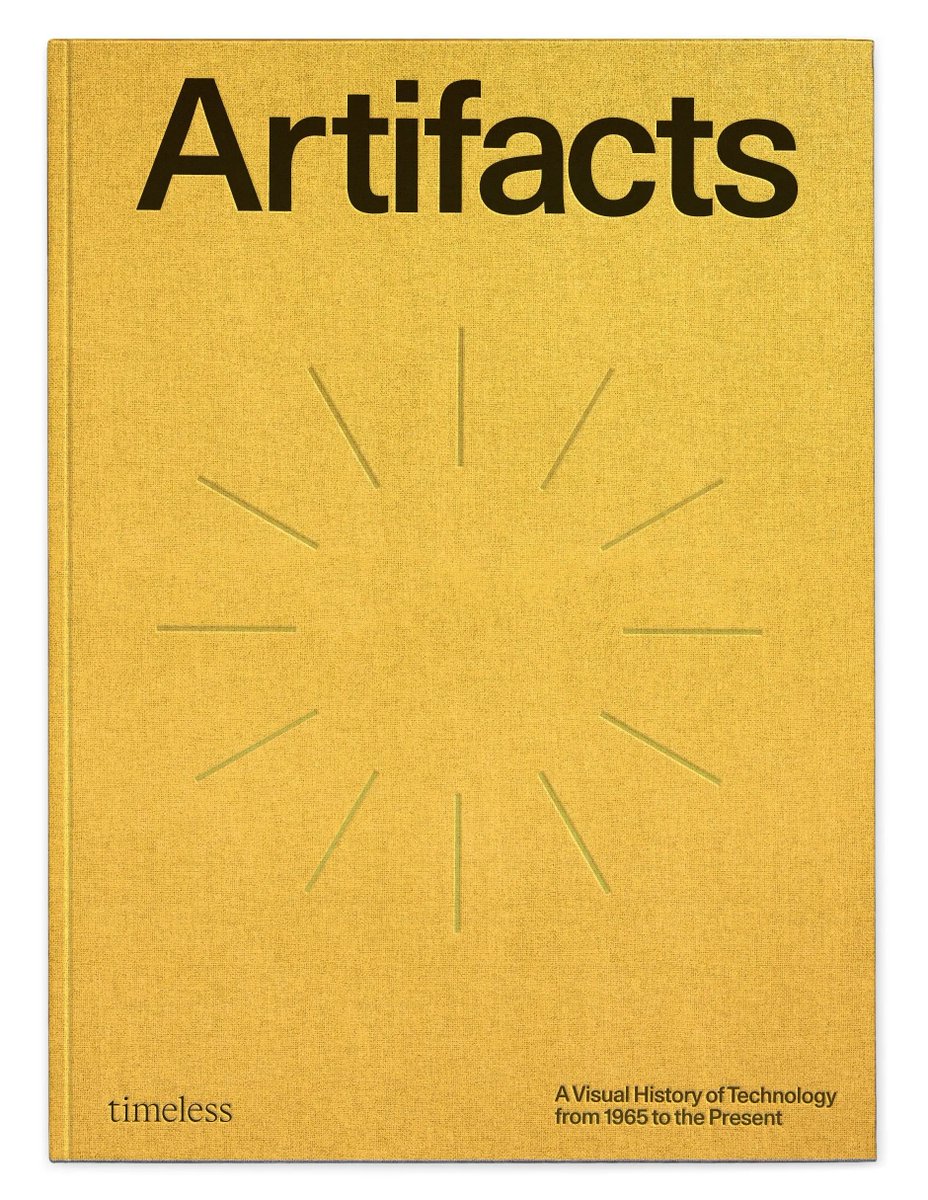
Artifacts: A visual history of technology from 1965 to the Present.
59 years. 296 breakthrough moments. 403 images.
A clean chronology of the innovations that built the modern world.
From microprocessors to mobile to AI.
Technology is the greatest story of human optimism.
It is the belief that fragile ideas can become world changing platforms.
Artifacts is that story, in print.
A curated gallery of modern computing that fits on your desk.
Proud to share it.
Link in comments.
Ever since Gaurav told me the idea for timeless conversations, it felt destined to become one of the few must-read pieces of content out there
The first one with Michael Dell did not disappoint, just an incredible focus and simplicity on building great businesses
Some observations (which seem very Munger-esque):
1. Wake up every day and solve the most immediate problems for your customers
This is what the company has constantly done well: understand how to solve valuable problems and make life easier for customers.
2. Know your circle of competence, and don't worry about what could've been
[Could you have been another hyperscaler?] I think that ship sailed by maybe 2014 or 2015. At that point the world didn't need another hyperscaler. Maybe we should have done that, but you can always play coulda, woulda, shoulda.
3. Invert, always invert
[You seem to build duration into everything that you do. For instance, you have a 35-year marriage; you don't drink; you regularly exercise. Why?] Because the opposite is horrible. I don't want the opposite of those things. It's pretty simple.
I'm long this project.
Today we begin the first 100 Year Conversation with @MichaelDell.
A project to capture timeless wisdom from leaders who have built institutions that endure.
At the heart of the work is one question:
How do you build something that lasts 100 years?
Few founders have endured through four eras of technology: PC, Internet, Mobile/Cloud, and now AI.
Michael Dell is one of them ↓
Open source business models are fascinating
1. Great way to get early users
2. Great marketing mechanism
3. Hard to get people to pay for addt'l features
4. Hard to protect value from larger platforms once the businesses mature
I like how Ali Ghodsi described it (lightly edited):
“You’re going to hit two home runs in a row after each other consecutively. The first home run is going to be your open source home run. You’re going to give away the software, and it better be a home run…Then you need to hit another home run…one that’s 10x better than the open source project.”
A few thoughts:
3/ Value creation vs value capture is still the biggest challenge in open source. For better or worse, the most valuable open source deployments haven't benefitted anyone, they've benefitted everyone.
(Claude helped pull these)
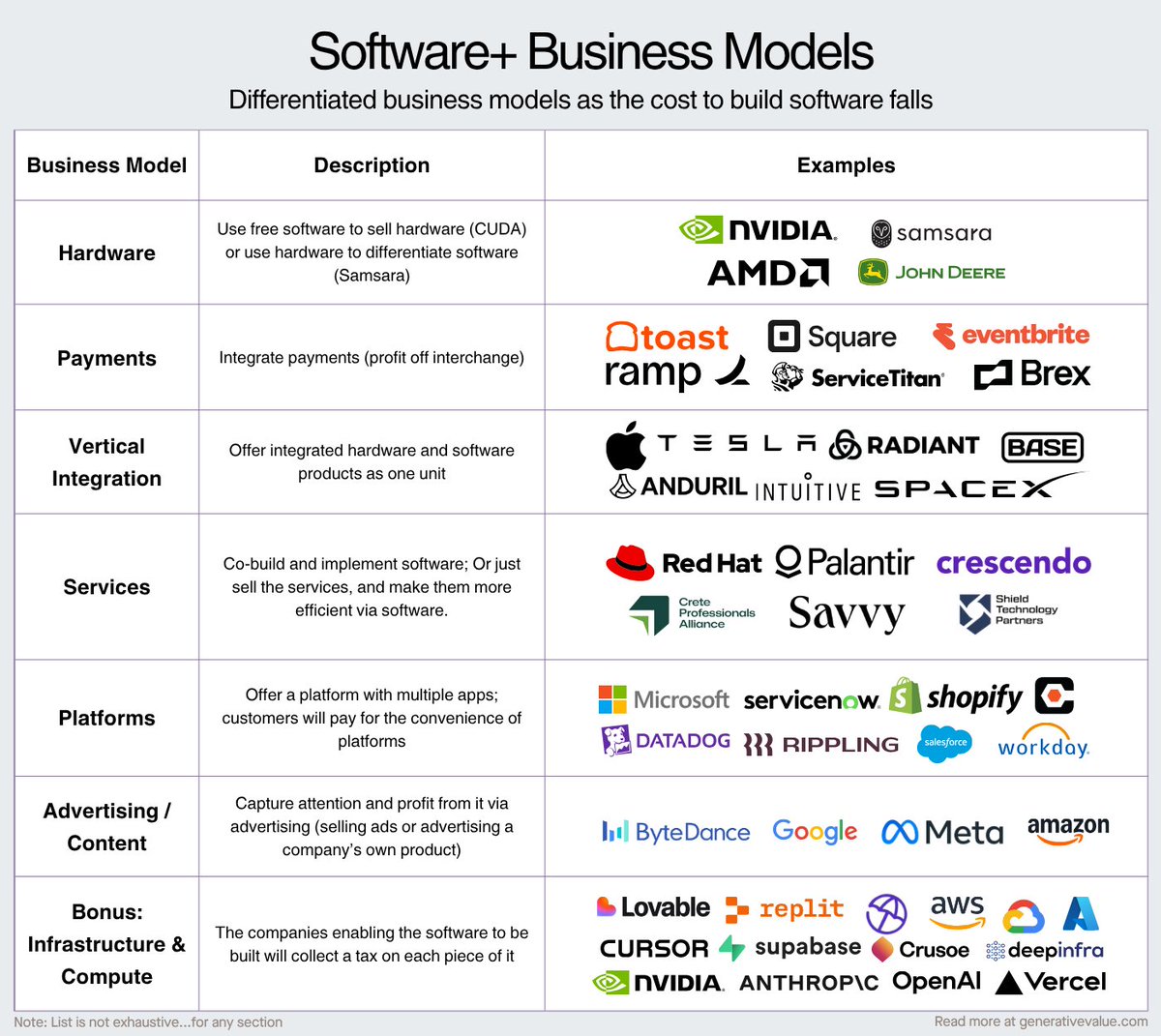
With Cursor/Lovable/Claude Code, the cost of software creation is approaching zero. I think this will fundamentally change software business models over the next decade.
Software itself will be less differentiated, meaning differentiation will have to come elsewhere; in many cases, the software itself will be "free" in order to charge for another offering.
As I see it, there are seven business models that benefit from this:
1. Hardware: Use software to sell hardware (or vice versa)
2. Vertical Integration: Offer vertically integrated hardware and software
3. Services: Charge for the work itself (accounting, legal) or offer services to integrate software into complex, custom deployments
4. Payments: Give away software, charge for interchange fees
5. Platforms: Customers will pay for the convenience of platforms, not the functionality of point solutions
6. Advertising: Software essentially becomes “interactive content.” Infinity bonus points if network effects are involved
7. Infrastructure / Compute: The platforms that enable software creation will collect their tax on each piece of it
So I’m writing a several-part series laying out a framework for business models in the age of “free software"
Note: this is a generalized framework with clear exceptions.
Note #2: this is the creation of software. Switching costs are still real, and existing systems of record may see pricing pressure, but will take a long time if ever to be “removed.”
Note #3: The more complex the software, the less this is true. I.e. EDA tools.
Note #4: The lower the fault tolerance, the less this is true. I.e. physical design tools (misplacing a screw on an airplane is catastrophic).
Note #5: This also means more and more value gets pushed to distribution and GTM.
Note #6: Open source has driven the “free software” market, especially in infrastructure, and I think it makes point #7 less clear.
@NikSingh19 Public Markets: ServiceNow expecting $1B in Now Assist Revenue next year
Private Markets: OpenAI expecting to get $20B in ARR by end of year, Anthropic to $9B ARR; plus rapidly growing startups all over the place
So yes, it's early AND we're also seeing rapid revenue growth
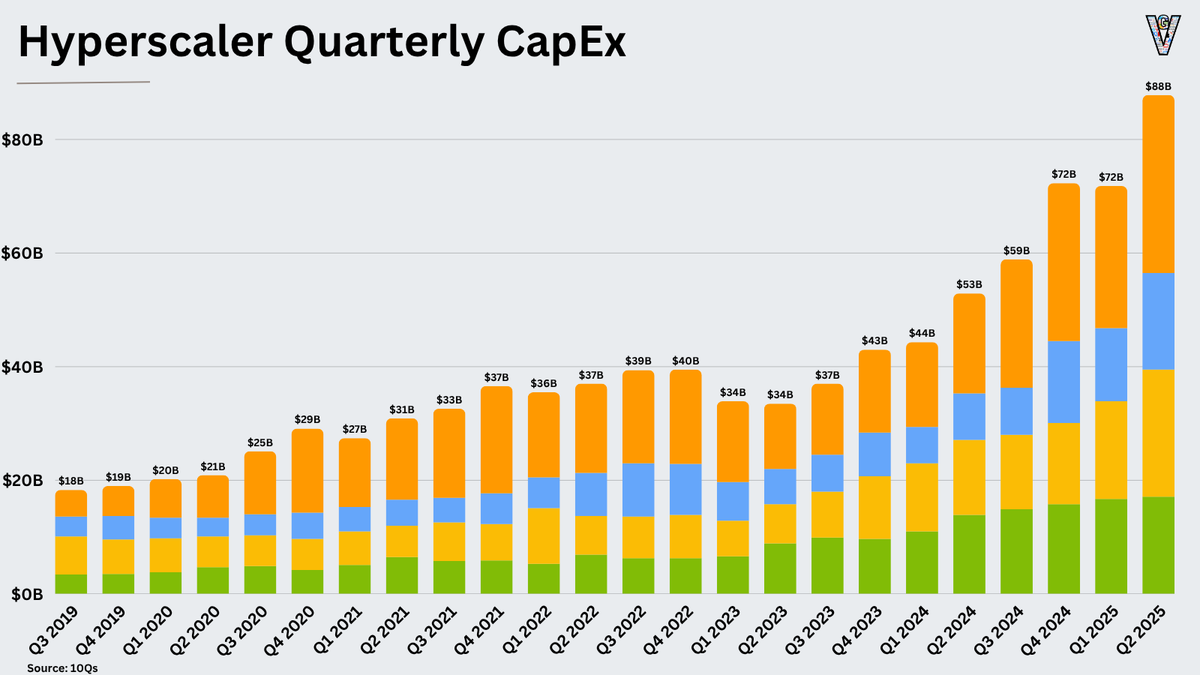
A lot of noise around hyperscaler CapEx (~$88B this quarter, up approximately 70% Y/Y). I think this makes more sense than it seems on the surface.
- First, they will always err on the side of overinvesting to ensure they don’t miss the land grab moment happening right now.
- Secondly, AI app demand is still surging (model companies are blowing past expectations)
- Third, they’re changing the shape of their investments (focusing more on short-lived assets for inference as opposed to long-term buildouts)
- Fourth, they have so much cash on the balance sheet that the reasonable investment alternatives are hard to find! It’s either dividends or AI investments.
Published an update on the hyperscalers with market share, revenue, and observations on the newsletter 1/