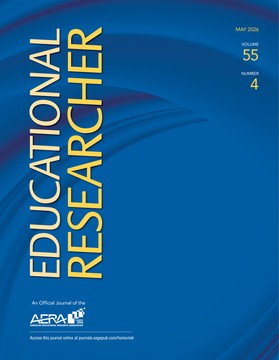
And we’re back! ER editors share their vision for their term, aiming to use a range of perspectives and methods to inform policy, practice and the discourse surrounding education & inviting readers’ insights and contributions in the process. ➡️ https://t.co/t7IuRHfvAi
Nearly a third of states have removed exit exams as a graduation requirement over the last 15 years. This brief finds that removing exit exams increased graduation rates by nearly 3 percentage points, with larger gains for students learning English: https://t.co/FuITIrUr7k
The 2026 AERA Presidential Address explores how historical signals reflect the established learning techniques taught by parents, educators, and artists. These signals offer insight into what history can teach us about the future of education: https://t.co/USpHwM61CR
The 2018 AERA Presidential Address highlights the overlooked challenges and systemic inequities faced by teachers. The article calls for a transformative shift in understanding and recognizing the importance of teachers in students’ education: https://t.co/Zg7NcZPb3P
A study examines fully online teacher preparation programs (TTPs) and their impact on student achievement and teacher attrition in Texas. Read more about the findings and emerging concerns surrounding online teacher preparation in Texas here: https://t.co/XcctreUERl
Does participation in dual language programs increase or decrease peer victimization for English Learners? A study provides valuable insight into whether school environments foster support, inclusion, and positive social development for EL students: https://t.co/fWsmEExfe5
A study across 4-year institutions in Georgia found a correlation between students’ perceptions of stronger instructor growth mindsets and their own academic performance. More about this insight on how perceptions and learning environments may connect: https://t.co/TKe8todISH
The Education Research in Conflict and Crisis (ERICC) offers insights into supporting children in conflict-affected and crisis settings, highlighting four key drivers that shape learning and development: access, quality, continuity, and coherence. ➡️ https://t.co/jyzVPo5YHB
Could supporting women’s advancement to the superintendency strengthen district-level early childhood education (ECE) efforts? This brief explores how closing the superintendent gender gap could contribute to strengthening ECE systems. Read more: https://t.co/5KW3ZH3TiI
How do children decide who to trust? Research in developmental psychology challenges the idea of children as autonomous learners and explores how sociopolitical contexts shape selective trust in young children. Read more: https://t.co/ojuXjWDii8
Artificial intelligence is rapidly transforming education, but who is it really being designed for? Learn more about how AI is shaping the future of education while ensuring equity and inclusion: https://t.co/vXFn3T7rpO