Right when the clock showed 0:07 they turned it to Pierce Brosnan.
It's either a wonderful coincidence or pure work of art by the cameraman.
Either way, bravo.
At Ground Zero, after the last living person was pulled out, the search dogs stopped eating.
So the police did something nobody had written down in any manual.
They climbed into the rubble, lay down, and pretended to be alive.
More than 300 dogs worked the World Trade Center site. They came from every corner of the country, on trucks and in cargo holds, with handlers who had been trained to do one thing. Find people who are still breathing under the ground.
That is what a search and rescue dog is built for. Not bodies. Life. They are trained on live human scent. When they find it, they bark, they dig, they light up, and the handler rewards them, and the whole thing means something.
The last living person recovered from Ground Zero was a woman named Genelle Guzman-McMillan. She had been buried for 27 hours. A dog found her.
She was the last.
After that, the dogs kept going out on twelve-hour shifts, across sixteen acres of smoldering steel, at temperatures that burned their paws, and they found nobody.
Nobody.
Day after day.
The handlers noticed it first. The dogs were changing. Their tails were down. They were not eating. They would come off the pile and lie flat and not look at anyone.
A veterinarian named Cindy Otto, who spent ten days there working night shifts to care for the animals, put it plainly. The dogs had been sent to find life, and every day they were finding the opposite.
It was breaking them.
An NYPD officer named Famiglietti described what happened next.
They pulled everybody off the rubble. Then they asked for volunteers.
The volunteers, police officers, went out into the debris and hid themselves. Under beams. In voids. Curled up in pockets of concrete. They were told to lie down like they were hurt. Then the handlers sent the dogs in.
Picture that.
A grown man with a badge, a man who had spent the last week pulling friends out of that same pile, lying down in it on purpose. Face down. Holding still. Waiting for a dog.
And the dog comes over the top of the wreckage, and catches the scent, and barks, and digs, and finds a person who is warm and moving and alive.
And the handler says good girl, good boy, and the whole team celebrates.
They called them mock finds.
They did it for the dogs.
They did it so the dogs would remember what they were for.
One of those dogs was a two-year-old golden retriever named Bretagne. She came from Texas with her handler, Denise Corliss. It was her first deployment. They worked ten days at Ground Zero. They found no survivors.
But firefighters would come off the pile, stone-faced, not speaking, and see the dog, and something would break open in them. They would kneel down. They would put their face in her fur.
One day a man walked up to Bretagne and started petting her. He told Corliss his best friend loved golden retrievers.
Corliss asked where his friend was.
The man pointed at the pile.
"He's in there somewhere."
He kept petting the dog.
Bretagne went on to work Hurricane Katrina and Rita. She retired at 10. She was the last known surviving search dog of 9/11.
On June 6, 2016, at age 16, she was carried into a veterinary office in Texas to be put to sleep.
Outside, a dozen firefighters from her fire department stood in a line in their dress uniforms, in the heat, and saluted as she went past.
They draped her in an American flag on the way out.
Three hundred dogs went into that pile looking for the living.
They found one.
And when they could not find any more, the men they worked beside laid down in the rubble and let themselves be found, so the dogs would not lose heart.
That is the whole story of Ground Zero, really.
Nobody could save the dead.
So they saved each other. 🇺🇸
You called the flight attendant.
Said you felt “uncomfortable.”
Said my dog looked “dangerous.”
Asked why a German Shepherd like that was even allowed to fly.
Ma’am, let me introduce you to Duke.
That “dangerous” German Shepherd spent six years deployed as a Military Working Dog alongside U.S. Special Operations. He wasn’t trained to intimidate civilians — he was trained to come home with everyone.
Duke is a certified Multi-Purpose K9.
Tracking hostile targets through desert heat that melted boot soles.
Detecting explosives before they became folded flags on grieving mothers’ laps.
Clearing compounds before young soldiers ever stepped through the door.
He’s been shot. Twice.
And he never broke command.
That scar on his shoulder you keep staring at? Shrapnel from an IED overseas. After the blast knocked him off his feet, ears ringing, body bleeding, Duke got back up and swept the perimeter. He located two secondary devices hidden along the exit route before his handler physically carried him out.
The limp you noticed when we boarded? That came from taking rounds during an ambush so his handler — a 22-year-old soldier on his first deployment — could make it home, hold his newborn son, and build a life outside a war zone.
Duke has military commendations.
He has a Purple Heart.
Official after-action reports credit him with saving more than forty American lives.
Know what else he has?
Zero bite incidents.
Not one. Ever.
The “intense look” you’re afraid of? That’s discipline.
The stillness that makes you uneasy? That’s control.
The size that worries you? That’s the same strength that dragged wounded men to safety.
The only people Duke has ever been trained to engage were armed combatants actively trying to kill U.S. service members.
Right now, he’s retired.
Twelve years old.
Arthritis in his hips.
Still scans every doorway out of habit.
Still positions himself between me and strangers without thinking.
He’s not scanning you because he wants to hurt you.
He’s scanning because once upon a time, if he didn’t, people died.
So no, ma’am — I won’t be changing seats.
He’s allowed to fly.
He’s earned every mile in this cabin.
But if you’d like to say something, you’re welcome to say thank you.
Trust me.
He’s heard far worse — from people who were actually dangerous. 💙🐾 🐕🦺🐕🦺
The sexual revolution destroyed women's bargaining power and men have been the primary beneficiaries ever since.
Before the 1960s, if a man wanted physical intimacy, the price was commitment. Marriage. A ring. A promise before God and family.
The sexual revolution removed that requirement entirely. Women were told that casual sex was empowering. That waiting was old-fashioned.
But men and women are not the same. Men can walk away from casual hookups. Women are left with emotional attachment and potential pregnancy in a dating market where commitment is no longer expected.
The cruel irony is that the movement marketed as women's liberation primarily served men's interests. Men got access without commitment. Women got freedom without security.
Look around at the results: record-low marriage rates, record-high antidepressant prescriptions among young women, and a generation of men who see no reason to grow up.
Who was really liberated here?
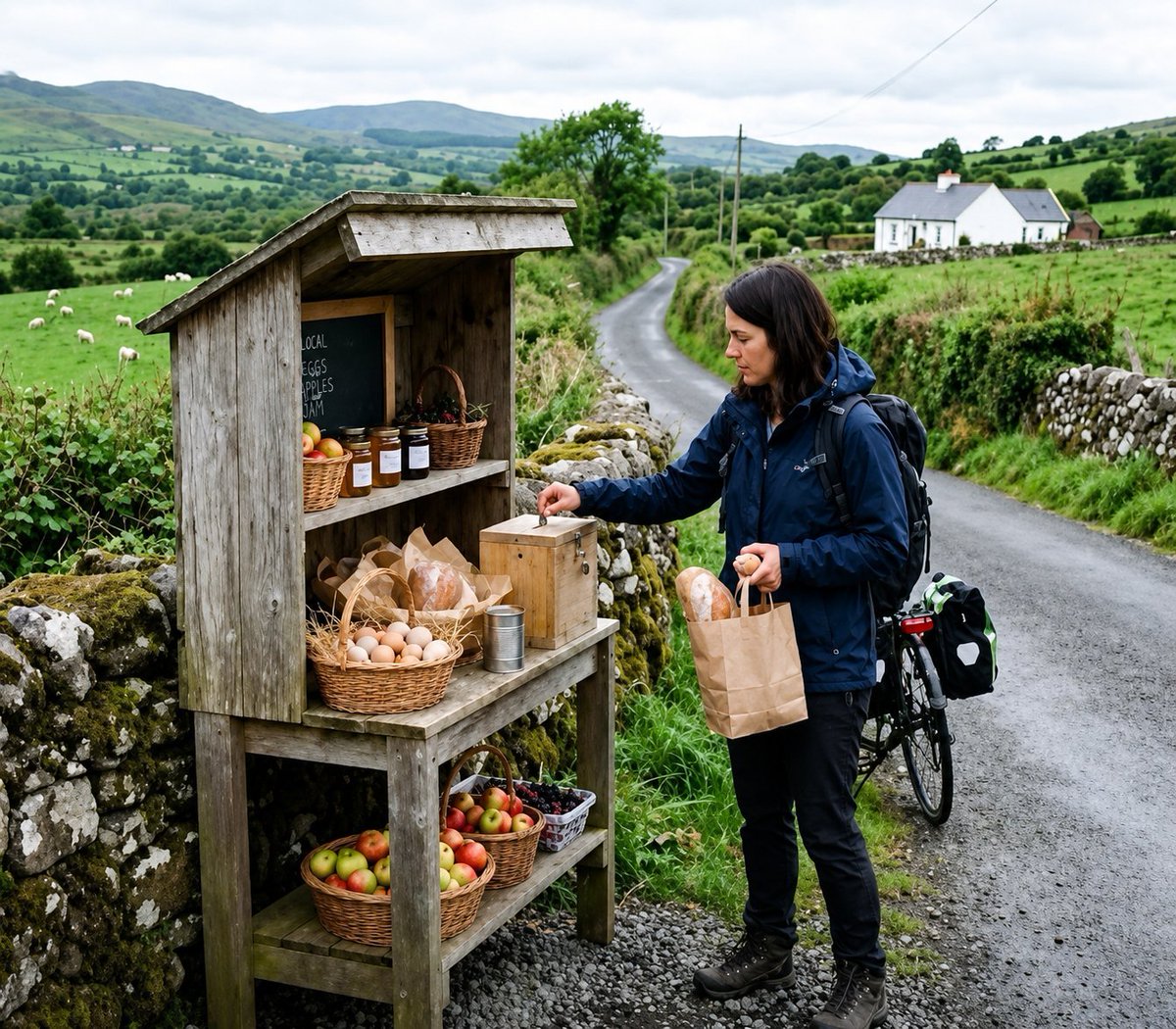
Along quiet rural roads in Ireland, small honesty shelves sit by the stone walls fresh eggs, homemade bread, apples, and jars of jam left out with nothing but a wooden money box.
No one is watching.
No cameras.
No staff.
You take what you need and leave what is fair.
The whole system runs on nothing more than trust between strangers.
These simple stands have become part of the Irish countryside’s quiet rhythm a small daily reminder that honesty still works when people choose to honour it.
Novak Djokovic in his documentary on why he refused the COVID vaccine:
"Because I didn't need it. Why should I get the vaccine? I'm healthy, I'm an athlete. I had corona. I had immunity. I wasn't a threat to anyone. There was no reason for me to get vaccinated. It's my freedom to choose which that fundamental right that you have as a human being on this planet — the freedom to choose — which was taken from a lot of people."
Po 20 latach małżeństwa muszę w końcu powiedzieć to głośno...
Z moją żoną nie łączy mnie już nic.
Poznaliśmy się na egzaminie na filozofię ponad 20 lat temu. Byliśmy młodzi i głupi, nie słuchając rozsądnych opinii szybko wzięliśmy ślub.
A potem życie zrobiło swoje i dziś żyjemy w dwóch różnych światach.
Ona: dzieci, szkoła, dydaktyka, nauka, góry, natura, koty, dramaty.
Ja: firmy, fundusze, inwestycje, biznes, miasto, beton, psy, komedie.
Ona: kreatywna, empatyczna, marzycielska.
Ja: analityczny, rzeczowy, osadzony w faktach.
Zero wspólnych pasji.
Zero wspólnych zainteresowań.
Nie śmieszą nas te same rolki na Instagramie.
Każdy terapeuta ze śniadaniowej telewizji wystawiłby naszemu małżeństwu akt zgonu. Znajomi pewnie się zastanawiają, kiedy ogłoszę rozwód.
No to ogłaszam...
Kocham tę kobietę bardziej niż 20 lat temu!
I kiedy wieczorem opowiada mi o rzeczach, które kompletnie mnie nie interesują, słucham jej z przyjemnością, której nie tłumaczy żaden poradnik.
Bo przez te 20 lat zrozumiałem coś, co przeczy wszystkiemu, co wciskają nam media.
Wspólne pasje to nie budulec związku. To dekoracja. Ludzie po latach idą różnymi drogami, w różnym tempie i to nie jest awaria. Tak wygląda życie.
Prawdziwy budulec jest inny. Chcesz dla drugiej osoby lepiej niż dla siebie. Jej potrzeby stawiasz nad swoje. Wolisz dawać, niż brać. Jeśli tego nie ma, nie uratują was nawet identyczne playlisty.
Więc jeśli twoja druga połówka to twoje przeciwieństwo, przestań to naprawiać. Może właśnie tam mieszka wasz sekret.
Nie musicie kochać tych samych rzeczy.
Wystarczą te same wartości, ten sam kierunek, szacunek do różnic i troska o drugą połowę większa niż o siebie.
I na koniec coś, co zrozumiałem dopiero niedawno...
Przez 20 lat moja żona każdego dnia miała powody, żeby wybrać inaczej. Innego człowieka, inne życie, inny świat; bliższy jej gór niż mojego betonu.
Mimo to każdego dnia wybierała to samo... mnie.
Miłość to nie jest coś, co się czuje. To coś, co się codziennie wybiera.
Od 21 lat jestem czyimś wyborem i jestem z tego naprawdę dumny...
If anybody wants to know why Gen X is always mad, it's because they had to replace their record collections with a tape collection that they had to replace with a CD collection that they had to replace with an MP3 collection, and now they need a subscription to listen to music
Nicklas Nilsson förklarar skillnaden mellan höger och vänstermänniskor i klockren text på Facebook:
"Om en högerpolitisk person är bög, så är han det, och bryr sig inte om vad andra tycker.
Om en vänster är bög, så kräver han lagändringar, protesterar mot allt och alla, och gör det till en politisk kamp.
Om en höger är vegan, så äter han helt enkelt inte kött.
Om en vänster är vegan, så vill han förbjuda kött, stoppa matproduktionen och protestera utanför bondgårdar och hönsfarmer.
Om en höger inte gillar vapen, så köper han inga.
Om en vänster inte gillar vapen, så förs��ker han förbjuda dem, hindra alla andra från att äga ett, och hatar dem som har.
Om en höger oroar sig för klimatet, så flyger han mindre, kör elbil om det passar honom och sorterar sitt avfall.
Om en vänster oroar sig för klimatet, så vill han förbjuda fossilbilar, flygresor och kött för alla andra, protestera utanför fabriker och kräva att staten tvingar fram förändringen.
Om en höger vill ge sina barn en bra skolgång, så flyttar han till ett område med bra skolor, eller väljer en privatskola eller engagerar sig själv.
Om en vänster vill ge sina barn en bra skolgång, så kräver han mer skattepengar från alla, lika resultat för alla, förbud mot friskolor och protesterar mot varje skillnad.
Om en höger klagar på sitt jobb eller arbetsplats.. det gör han det inte. Han byter jobb eller startar ett eget företag.
Om en vänster klagar på sitt jobb – så är det chefen, företaget eller kollegorna det är fel på. Han kräver kollektivavtal, strejk, förändringar för hela orten och protesterar mot företaget så att det ska passa honom.
Om en höger är missnöjd med sin bostad eller hyra, så flyttar han, renoverar eller köper något annat.
Om en vänster är missnöjd med sin bostad eller hyra, så kräver han hyresstopp, mer bidrag, regleringar för alla och protesterar mot hyresvärdar och politiker.
Om en höger misslyckas med en affär eller en investering som går snett, så reser han sig upp, dammar av sig och försöker igen imorgon.
Om en vänster har slut på pengar den 24:e, så skyller han på att de rika har för mycket och måste bidra mer, skyller på att lotterivinsten inte gick hem förra veckan och muttrar att han har så himla otur.
Om en höger ser det här – så skickar han det till några kompisar för ett gott skratt.
Om en vänster ser det här – så försöker han argumentera emot, få det bortplockat och radera mig från Facebook."
🗣️ Luis de la Fuente:
“I’m so happy we won the World Cup. This is the happiest day of my life, thanks to Ferran Torres’ goal. But we also need to talk about the VAR and the referee. I have never seen a bigger robbery in my coaching career than this. It looked like they wanted Argentina and Lionel Messi to win it again so badly.
The referee was practically Argentina’s 12th man on the pitch. In the first half, there were several fouls that he ignored, but the worst was the challenge on Dani Olmo. Mac Allister tackled him with both feet, which is a red-card offense, but the referee and VAR ignored it.
There was also the challenge on Yamal, where a player stepped on his ankle from behind. The referee ignored it, and VAR didn’t intervene either.
Argentina should be ashamed of receiving such favoritism in a World Cup final. They had the officials on their side, but we were fully prepared for everything. In the end, football won.”
Wool is a technology so good that if a startup unveiled it tomorrow, it would raise a fortune.
Run through the spec sheet with a straight face.
It keeps you warm even when it's soaking wet, which almost nothing else does. It is naturally flame-resistant. It doesn't catch and melt onto your skin like plastic does. It chars, refuses to sustain the flame, and puts itself out when you take the fire away. It manages moisture, breathes, and resists smell so well you can wear it for days. It bends tens of thousands of times without snapping.
And when you're finally done with it, you can put it in the ground and in a matter of months it's gone, rotted back into the soil, feeding it nitrogen on the way out.
Then there's the supply chain, which is the part no engineer could ever replicate. It grows back. Every year, on its own, on nothing but grass and rain, on a sheep that was going to stand on that hillside anyway. A self-renewing, fireproof, compostable insulation fibre with a production input of weather.
We replaced it with polyester. Oil, spun into thread, that melts on you in a fire, sheds plastic into the sea with every wash, and sits in landfill for centuries when you're done.
We had the better version the whole time. It says baa.
Chloe woke up on Saturday feeling, in her own words, radiant, grounded, and deeply aligned. Here is what she ate, wore, and used to get there.
7:30am. Quinoa breakfast bowl. Chloe feels virtuous, because quinoa is a humble Andean supergrain. The global craze for it between 2010 and 2014 sent prices through the roof, drove Bolivian farmers into wall-to-wall monoculture on fragile high-altitude soil, thinned out the llama herds that used to manure that soil, and tipped parts of the Uyuni salt flats toward outright desertification. It also priced the grain out of reach for many of the Andean families who had eaten it for four thousand years, who switched to white rice so the West could feel rustic. Chloe drizzles hers with agave and feels connected to the earth.
Coconut yoghurt on top, chosen over dairy to spare the planet. A much-argued Exeter study found that coconut oil threatens more endangered species per tonne than palm oil does, because coconuts grow on small tropical islands packed with creatures that exist nowhere else, several of which the plantations have already helped extinguish. The study started a row, as these things do. Chloe heard about neither the study nor the row. She heard the word coconut and felt clean.
8:30am. Gets dressed, feeling effortless. The vegan leather boots: "vegan leather" is polyurethane, which is plastic, which is crude oil. They shed microplastics with every step and, once they crack, sit in landfill for centuries barely changed. The bamboo-viscose cardigan: sold as natural, in reality wood pulp dissolved in carbon disulphide, a chemical with a long and grim medical record among the workers who handle it, spun from pulp that increasingly comes out of ancient forest. Chloe looks lovely. Chloe feels light.
10:00am. Drives to the farmers' market in the electric car, feeling like part of the solution. The battery runs on lithium, evaporated out of the brine beneath Chile's Salar de Atacama, where extraction has dropped the groundwater by roughly a third since 2005, battered the flamingos, and pulled sacred water out from under the Lickanantay people, who were never really asked. It runs on cobalt too, and we both know where the cobalt comes from. Chloe's car emits nothing from the back of it. The emissions all happened somewhere she will never have to look.
1:00pm. Buys a houseplant, feeling nurturing. It was raised in a Dutch greenhouse heated on natural gas and potted in peat, cut from a bog that spent ten thousand years quietly locking carbon away and gave a good slug of it back the moment the spade went in. Chloe sets it on the windowsill. The windowsill looks wonderful.
4:00pm. Vegan dark chocolate, feeling indulgent but responsible. The cocoa came from West Africa, where the appetite for chocolate has flattened a staggering share of the forest inside two generations and leans on the labour of well over a million children. The wrapper said cruelty-free. It was talking about the rabbit.
9:00pm. Chloe posts the day. Caption: living gently. Sixty-one likes.
Chloe has never felt more in harmony with the planet.
The planet, where it can still be reached for comment, would like a word about the harmony.
Imagine being able to make stone translucent.
Giovanni Strazza possessed that extraordinarily rare skill. His bust of the Virgin Mary, executed in flawless Carrara marble, is one of the most impressive feats by any sculptor.
Strazza's "wet drapery" technique continued the legacy of previous Italian sculptors like Giuseppe Sanmartino, who produced mind-bending veils from marble a century earlier — the famous "Veiled Christ" is a canonical example.
The tradition also dates back to much earlier sculptors known for carving intricate folds, in particular Renaissance artists like Michelangelo and ancient masters from Greece's Hellenistic period.
But in the mid-19th century, Strazza took the technique to its extreme. The subtle layered effect he achieved allows the viewer to easily discern Mary's facial features from the delicate veil, and at the same time creates the illusion of total weightlessness.
How he created something so soft and fluid from solid stone, using only basic hand tools, is a mystery.
»Eine neue Studie der Technischen Universität Athen stellt die Klimawissenschaft auf den Kopf. Sie zeigt: In den letzten 40 Jahren hat sich die isotopische Signatur des atmosphärischen CO2 nicht verändert – menschliche Emissionen sind schlicht nicht erkennbar. Damit wird die Grundannahme der UNO und des IPCC, wonach fossile Brennstoffe die Hauptursache des Klimawandels seien, fundamental infrage gestellt.
Seit Jahrzehnten predigen die Hohepriester des Weltklimarats (IPCC), dass die Menschheit durch ihre fossilen Emissionen das Klima der Erde ins Wanken bringe. Das Mantra lautet: Mehr CO2 in der Luft, mehr Hitze auf dem Planeten, mehr Katastrophen vor unserer Haustür. Doch eine neue Studie aus Griechenland zerschmettert dieses Glaubensgebäude – und das mit nüchternen, überprüfbaren Daten. Demnach hat sich die isotopische Signatur des atmosphärischen CO₂ in den letzten 40 Jahren nicht im Geringsten verändert. Mit anderen Worten: Es gibt keine Spur fossiler Brennstoffe in unserer Luft. Der Mensch ist im atmosphärischen Kohlenstoffkreislauf schlicht nicht erkennbar.« 👇🏻
Mehr dazu: https://t.co/BjzV55EPrm