President - Cloud Computing Innovation Council of India( CCICI ), CMD & CEO - ESDS Software, President - Bharat Digital Infrastructure Association (BDIA)
A GPU is an investment. Its value depends on how well we use it.
In earlier posts, I wrote about Intelligence per Megawatt and Intelligence Density. The first measures intelligence per unit of power. The second measures useful work per unit of space.
Now we turn to compute.
Picture a factory with 100 machines. Only 60 do useful work. The rest wait. The factory does not earn its full return.
Al infrastructure faces the same test.
A GPU sits idle when no suitable task is ready to run. It loses valuable time when data arrives late. It runs a light task on a premium chip while a heavier job waits in the queue. Poor scheduling and inefficient software quietly cap the output, even when the hardware is world class.
More GPUs add capacity. They do not fix these gaps.
Compute Yield measures how much useful work we extract from the compute we deploy.
Take two Al facilities with the same number of GPUs. One schedules workloads well and keeps its systems productive. It completes more tasks at lower cost. The other needs more resources for the same result.
The hardware is identical. The yield is not.
Leaders should ask:
• How much of our installed compute delivers useful work?
• How long do our GPUs sit idle?
• What does each unit of useful output cost?
• Are the right GPUs matched to the right workloads?
• Can better scheduling raise output without new hardware?
• When do we add capacity, and when do we improve what we have?
Capacity is what we build. Yield is what we earn.
The real measure of Al infrastructure is not how much compute we deploy, but how much useful work it delivers.
The Al Factory Era will be defined not by the compute we deploy, but by the value we derive from it.
Airlines understand the cost of an aircraft sitting on the ground.
Al infrastructure faces a similar challenge.
GPUs need efficient scheduling, the right workloads and capacity that matches demand. The asset creates value when it is put to work.
Al infrastructure faces a demanding economic equation.
• Token prices are falling,
• Workloads are growing
• Capital costs remain high
• Hardware generations are advancing quickly
Operators must keep improving output while managing the cost of running and renewing their infrastructure.
Consider what happens when a model has to load, a workload scales up or a service needs to restart.
GPUs can sit idle while the system gets ready. Across a large fleet, these delays can affect utilisation and operating costs.
(Tweet Continue… On Next Post)
Every Al company is racing to hire talent.
But one of the most expensive assets in Al is an idle GPU.
It keeps costing money through depreciation, power, cooling and interest, even when it produces nothing.
This is where tokens per megawatt becomes an important measure.
Peak computing power tells us what the hardware can do. Productive output tells us what it actually delivers.
Over time, that difference will matter more to the economics of Al infrastructure.
A megawatt tells us how much power an Al system consumes. It does not tell us how much useful intelligence it produces.
Two Al systems can consume the same 1 MW and still deliver very different results.
As Al infrastructure grows more power hungry, the better question is becoming clear: How much intelligence can we produce from every megawatt?
This is the thinking behind the Al Factory Era.
#AlFactory #AlInfrastructure #DataCenter #Artificialintelligence
#IntelligencePerMegawatt
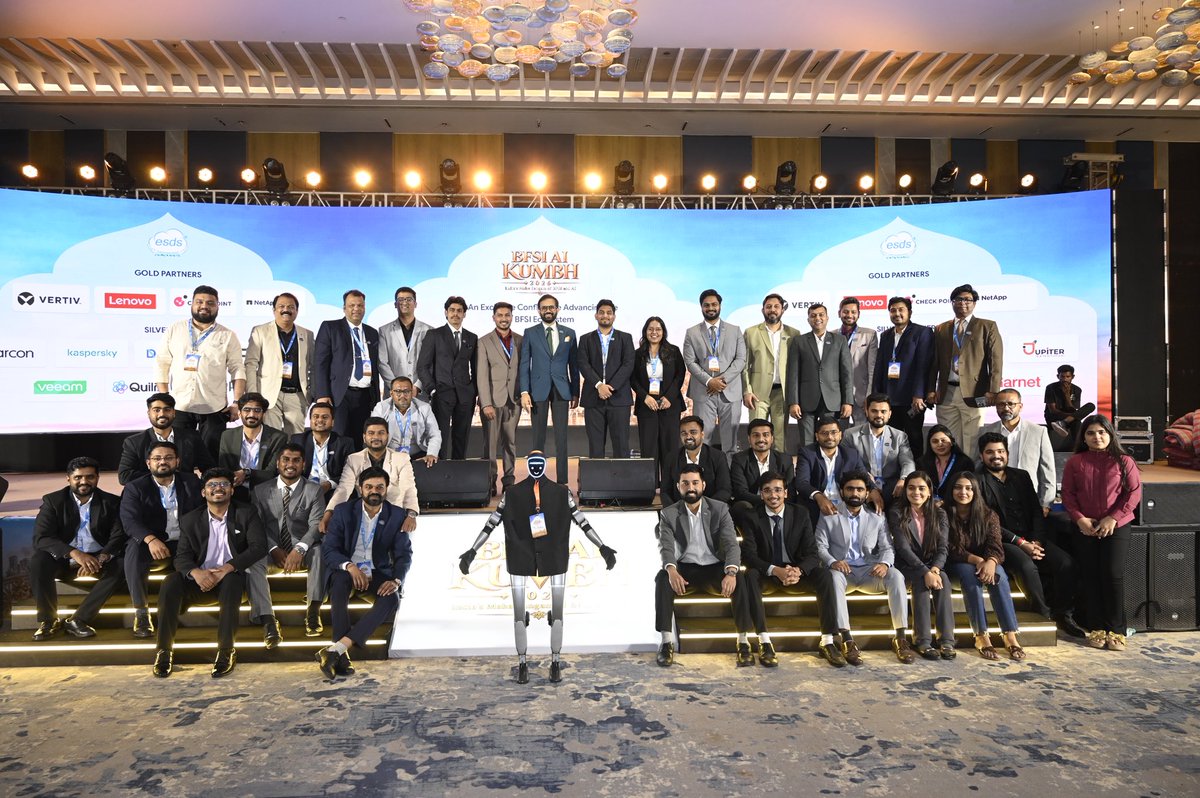
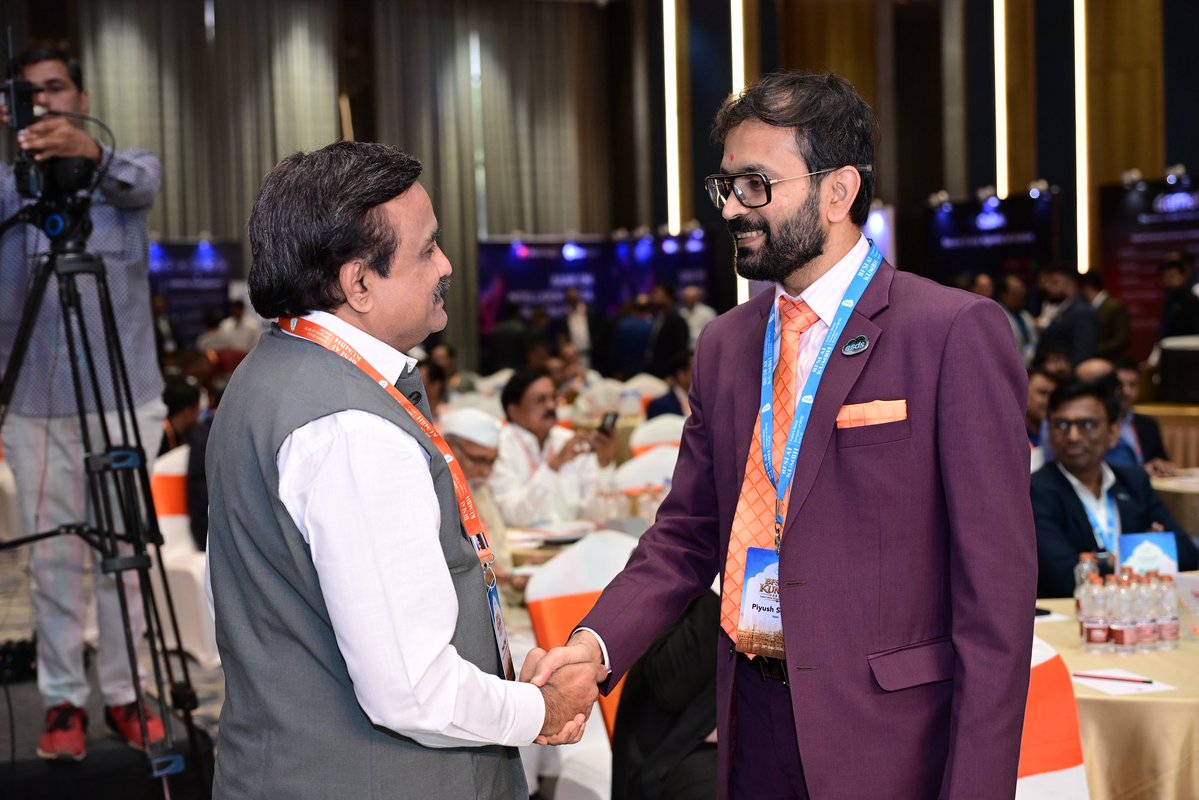
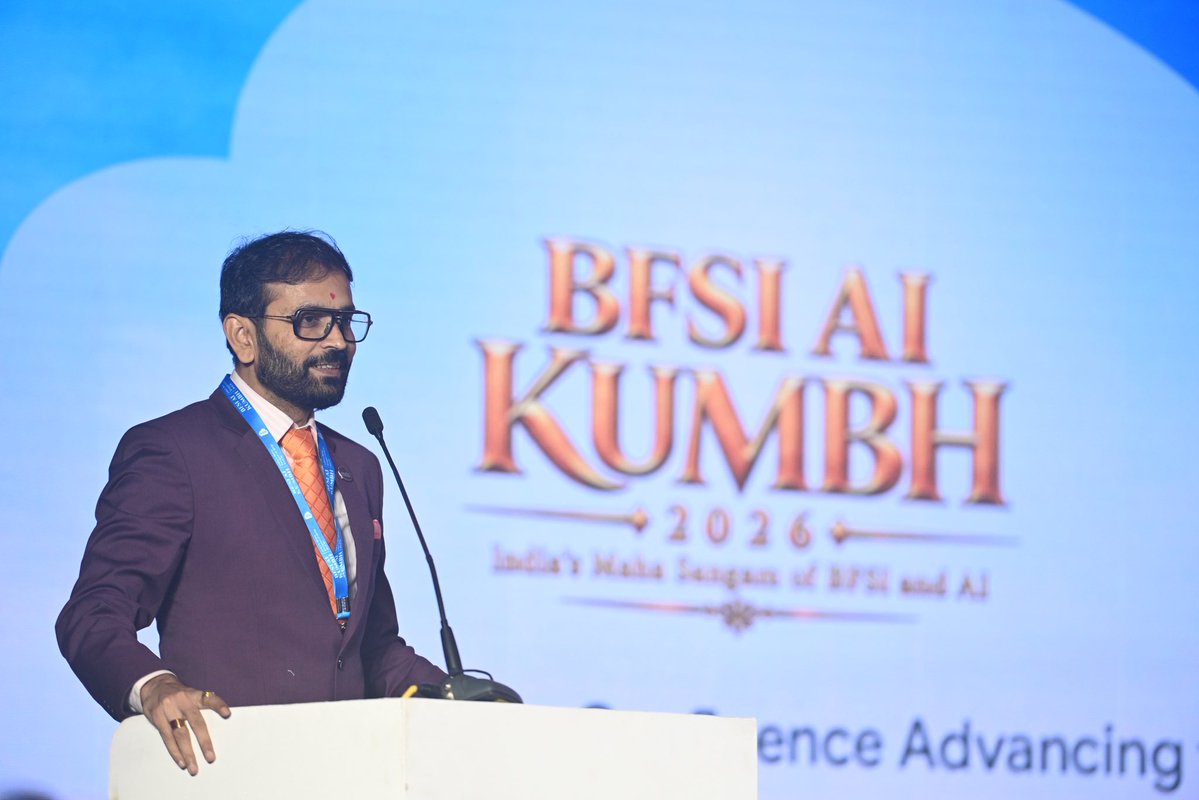
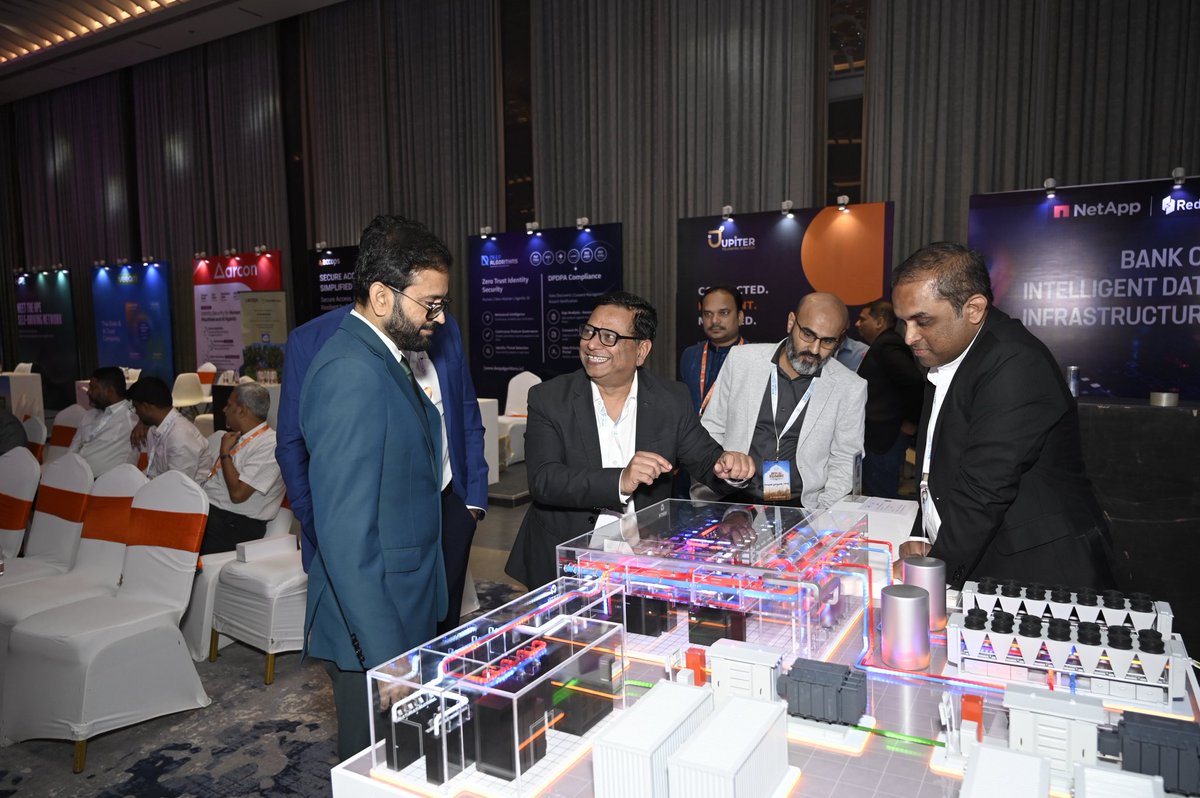
Three days in Nashik. 300+ banking leaders. 36+ technology partners. One question kept coming back in different forms:
As Al moves deeper into BFSI, how do we make sure innovation keeps pace with trust?
The urgency is real. In the first six months of 2026 alone, Indians filed 12.7 lakh cyber-fraud complaints and reported losses of over ₹10,000 crore. Maharashtra, our own state, lost more money than any other. Only about 29% of it could be frozen in time.
At BFSI Al Kumbh 2026, we spoke plainly about the threats Al has made cheaper and faster:
- Deepfake voice and video: a “chairman” approving a transfer he never approved
- Flawless phishing in Marathi and Hindi,
written by machines at scale
- Mule-account networks run by software, moving money before anyone notices
- Digital-arrest scams that exploit a customer’s trust in a uniform on a video call
- Customer data sitting in systems banks
cannot audit, under laws they do not control
Crime used to need skill. Now it needs a subscription.
The response has to be collective. That was the most important outcome of these three days. Banking leaders agreed to work closely with ESDS and our partners on real-time fraud detection, sovereign and auditable data, and resilient infrastructure, so their customers get banking that is faster and safer. No cooperative bank should have to fight this alone.
My connection with BFSI is personal. My father spent part of his career with Bank of Baroda. Growing up, I saw that banking runs on trust. Today, trust is no longer just about reputation. It is about resilience.
There were lighter moments too. A robot that could converse, dance and demonstrate Kung Fu reminded us that technology can still surprise us.
Al will change BFSI. With 170+ BFSI institutions working with ESDS, our responsibility is to make that change useful, secure and worthy of the trust this sector has built over generations.
Thank you to every banker, partner and team member who made the Kumbh happen. The work starts now.
#BFSIAlKumbh #AlinBanking
#CyberSecurity #DigitalTrust #sovereigncloud
Some journeys take years to build, but only a few moments get remembered.🏆
As ESDS entered a new chapter earlier this month, I have been thinking about the many chapters that came before it.
How a boy from Malkapur, who once decided he would never touch a computer, eventually built a technology company.
How a 22,500-a-month job in Mumbai lasted only four months. How eight partners began working from a room in a kindergarten school, received their first € 80,000 cheque from an American client and slowly found their way forward. How a decision to build a data centre in Nashik at the age of 27 was met with laughter, only to become the beginning of another chapter. And how, years later, five days in Mumbai, with little sleep and no spare clothes, became part of the fight to build an Indian technology business.
I wrote about those years in my book, Entrepreneur with The Fire Within.
It is not a book about building a company alone. It is a personal account of the experiences, choices and lessons that shaped my journey as an entrepreneur and in many ways, shaped the person I became along the way.
Today, people see ESDS at a new stage in its journey. But much of what shaped that journey remains less known.
This book is about those stages.
The early years. The uncertainty. The setbacks. The people. The choices. And the lessons that stayed.
I am sharing it again for those who may want to know the journey behind the milestone.📖
The Book Is Available On- https://t.co/wu6UmieQac
#entrepreneurwiththefirewithin #book
Frontier AI is reshaping the threat landscape, making secure core banking and customer protection more critical than ever.
At ESDS, we’re taking the challenge head-on.
Come join us at BFSI AI Kumbh in Nashik. I look forward to meet you there.
📍 Nashik | 🗓️ 26–27 Sept 2026
The US will build Al infrastructure for its needs. India must build for the scale and requirements of its own economy.
The opportunity is to build the power, compute and infrastructure ecosystem that allows Indian Al to grow at scale, with reliability and sustainability. That will be the foundation on which India's Al ambition is built.
Jensen Huang recently spoke about the economics of building 1 GW Al factories in the US. India is a different market. But the scale of Al infrastructure being discussed raises a larger question: what will India need to build to support its own Al growth?
#AI#india#jensenhuang
The government itself describes its Al approach as "full-stack", spanning energy, infrastructure, chips, models and applications. That is the right way to look at the problem.
An Al ecosystem cannot be built by focusing on the GPU alone. (Ministry of Electronics & Information Technology, 2026)