Philippines - China tensions
By Sass Rogando Sasot.
Excellent take >>>>
1/2
There is something the Chinese Embassy Manila needs to understand about perhaps a lot of Filipinos and their difference with the Chinese. It is neurological difference shaped by experience.
Chinese people are shaped by persistent practice of patience and depth of understanding and a more geometric perspective of the world. This is what the writing of Chinese characters has shaped your brains: one has to memorize stroke order, direction, pressure points, and geometric balance of each character. It is a rhythm you are used to. It is not the rhythm that dominates the lives of Filipino.
The Filipino people are mostly shaped by drama: from TV to politics, where "one liners" become a story. The nervous system of Filipinos is shaped to be reactive to surface appearances, the louder the voice the more powerful one is. Because of this experience shaping, the Filipino understanding of the world is not geometric but largely episodic: a series of scenes, confrontations, and emotional climaxes. What matters is not whether a thing is true but whether it plays well: whether the line lands, whether the moment trends, whether the villain is hateable enough and the victim pitiable enough for the audience to feel something.
The Chinese people are trained and practices depth. The Filipino people are mostly trained on intensity.
This is why the Filipino public can forgive almost anything if the performance is good and why it can turn on someone with terrifying speed if the performance falters. Politics becomes teleserye: the betrayal, the reconciliation, the tearful apology, the dramatic exit. The question is never "What actually happened?" but "How did it feel?" and "Whose side are we on?"
And so the nation runs on kilig and galit, on awa and gigil. These are emotions that arrive fully formed, demanding immediate expression. Nuance is read as weakness. Silence is read as guilt. The one who speaks loudest and longest wins the room, even if the room is on fire.
But this is not the whole story. Underneath the noise, there is another rhythm: slower, quieter, harder to film. It lives in the palengke haggling, in the jeepney driver who lets a student ride free, in the bayanihan that no camera catches. It is a way of knowing the world that doesn't need a soundtrack. It is the Philippines that endures when the drama ends and the screen goes dark.
And this is what we commonly share: The Chinese and Filipino do not forget kindness. We just don't arrive at remembering them in the same way.
The Chinese geometric understanding of the world builds gratitude into the architecture itself. A debt of kindness is a line drawn between two points, and that line must be honored, if not by the one who received, then by the generation after, and the one after that. It is why a Chinese grandmother will still speak of a bowl of rice given in 1942 as though it were yesterday. Time does not erase the debt; time compounds it. Bao en, repaying kindness, is not sentiment but structure, a load-bearing wall in the moral house. You remember because the geometry demands it. The ledger must balance. This is reflected in the nuances of your foreign policy: You never forget kindness, and that makes your foreign policy not total in its animosity with other countries. You look at the geometry and you see it is not flat, like how the strokes of Chinese characters have curves, and must curve to achieve geometric balance.
U.S. policy toward Russia and Ukraine has reached a turning point:
1. The President just waived sanctions on Russia, weeks after he signed the Graham bill that imposes them. He struck a deal to buy Russian diesel despite previously putting tariffs on countries, like India, that import Russian oil. And the President announced an energy ceasefire that, while desirable, neither Russia nor Ukraine agreed to.
2. Then there’s the mounting pressure on Ukraine. Trump called for Zelensky to be replaced by new leadership. Ukraine’s Starshield service slowed, making it harder to counter incoming drones and missiles. The administration reportedly threatened to cut intelligence and weapons sales if Kyiv didn’t stop striking Russian energy sites.
3. All that has happened over just the past week. In total, it marks a sharp shift away from supporting Ukraine and toward relaxing the pressure on Moscow. Why?
4. It’d be nice to believe that the administration has reached some new, heretofore unimagined theory of victory, in which Russian aggression won’t succeed but Ukrainian independence will.
5. Nyet such luck. The driver of this policy shift appears to be the President’s desire to lower diesel costs before the midterm elections.
6. Diesel prices are high, mostly because of the Iran war, which admits of no near-term solution. So the administration wishes to boost Russian supplies, even at the price of hobbling Ukraine’s offensive against Russian refineries. The rest seems personal frustration that Zelensky, quite understandably, won’t comply.
7. Domestic political considerations always influence U.S. foreign policy, but here we face the worst of all worlds. Diesel prices are unlikely to come down much and, even if they do, the President’s party looks likely to lose at least one house of Congress anyway.
8. The bigger casualty here is U.S. support for the victim and U.S. pressure on the aggressor. Perhaps forgotten after 4+ years of war is that it is about more than Ukrainian survival.
9. The cardinal rule of the postwar world is a prohibition against forcible conquest. Countries can’t simply decide they’d like to take another’s territory and wage war to get it.
10. Allowing that, and without imposing severe costs for it, is a step toward a global law of the jungle. The U.S. has resisted that for 80 years, and for a simple reason: we’ve seen that world before, and it was not good.
11. Americans thus have stake in ensuring Ukrainian survival. At stake is far more than the price of diesel.
12. At this turning point, the saving grace is that U.S. policy is likely to turn again. In our era of inconstancy, Washington might tack back toward Kyiv - after the elections, or if diesel prices retreat, or in light of Russian depredations, or just because. Given the costs piling up now, that return cannot come soon enough.
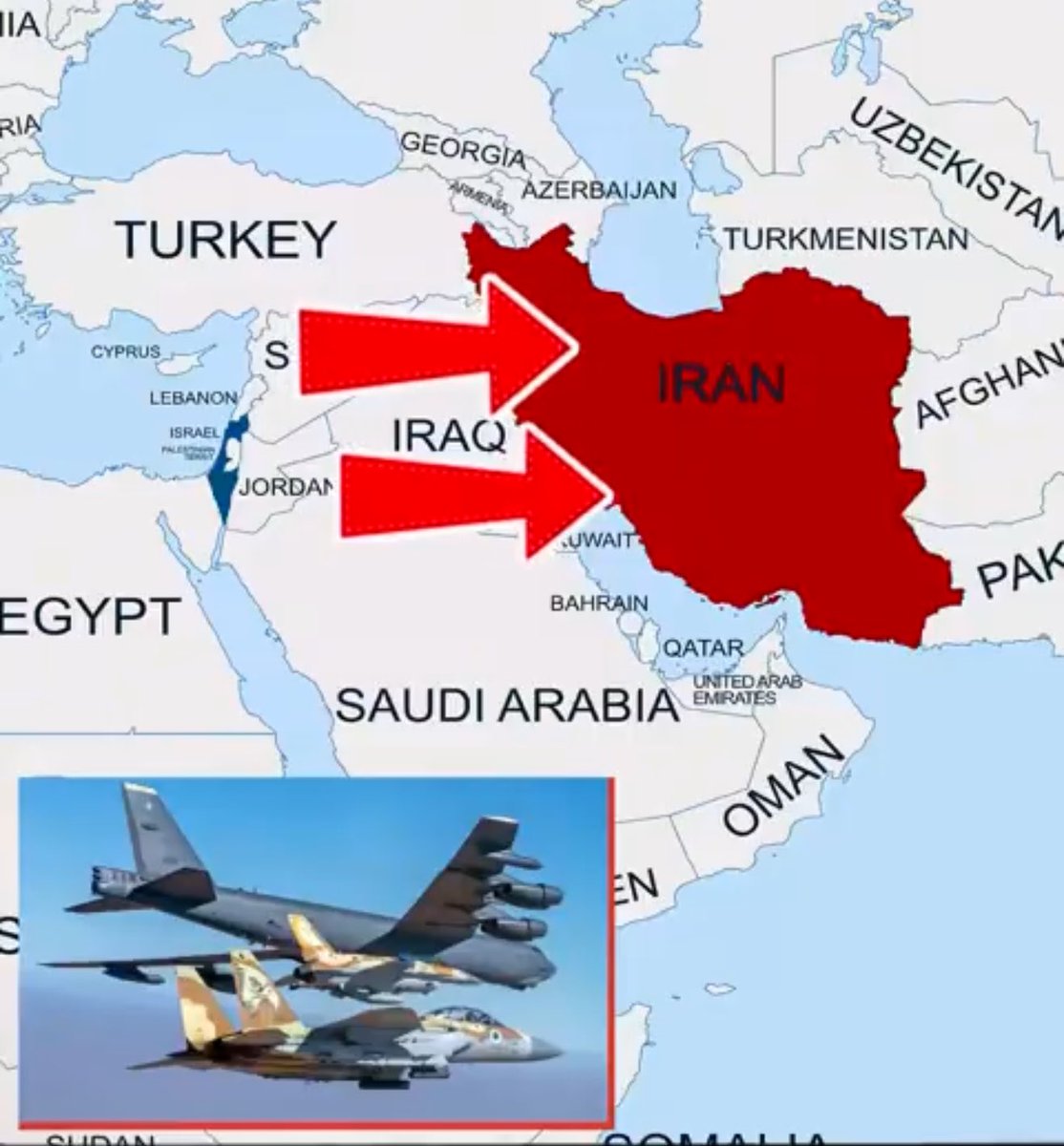
Oil prices are currently climbing because, most likely, insiders know that Israel and the US are about to attack Iran again. There are multiple other signs that this could be the case, and I suspect that the entire 'election in Israel' joke could a psyop designed to support a surprise attack (alternately, rumours of a possible escalation could be a psyop to bolster Netanyahu). Unusual aircraft movement and a renewed buildup of forces have also been seen in the region, alongside warnings issued by local Western puppets that something big may be approaching.
Iran has been giving fresh signals of it intentions in the case of war #3 forced on it.
Israel's full control of US affairs means the US will not stand idle as Yemen brings down Saudi Arabia - the crown jewel of the West's Arab Brothel architecture, which is itself part of the bigger Zionist Brothel apparatus.
Ever since October 7 I've said that the face of the region are going to dramatically change. I am certain that this wekend,or mayne 12 weekends down the line, events will prove me right. There is no going back to pre-October 7 reality: that world is dead and gone
The USS Theodore Roosevelt aircraft carrier will arrive in the Middle East by the end of October, and the midterms will be over by November 3.
After that, the regional war will likely resume.
So, what is the current status of the axis of resistance?
While the axis has been severely degraded from the last three years of on-and-off regional war, Iran and Ansarallah have become very emboldened by their recent successes, and it appears that the informal alliance is beginning to make a comeback.
- Iran likely has satellite intelligence being provided by Russia in response to American intelligence being provided to Ukraine, so the accuracy of their strikes and the value of their targets hit will be much higher. This, coupled with the critical U.S. interceptor missile shortages, is how Iran has established strong deterrence, and is why they are able to consistently strike ships in the Strait of Hormuz without any American retaliation, and even target U.S. bases without retaliation as we saw earlier this year.
- Ansarallah maintains a high capacity to launch ballistic missiles, cruise missiles, and drones at Saudi Arabia, even while actively fighting a large-scale ground war against the Saudi-backed PLC, which obviously takes up a lot of resources. They remain by far Iran's strongest ally in the region, and will be very useful to their war effort. Therefore, it's likely that Israel and the U.S. will resume strike operations against them, especially amid the major frontline advances being achieved by Ansarallah against the PLC in Yemen. I also think there will probably be a new PLC counteroffensive soon with Saudi air support in order to salvage the situation, potentially even pre-emptively due to a possible future threat to Aden by the Houthis. Such as operation could also involve American and Israeli air support if they don't suffer munition shortages from their strikes on Iran.
- Hezbollah is weakened, but has been able to consolidate control over the remaining parts of southern Lebanon in recent months following the end of the most recent phase of the war with Israel. They maintain the majority of their drone operators and FPV drone capacity, and still have a lot of long-range rockets in the Bekaa Valley. It's estimated that at least 2,000 elite Hezbollah Radwan operatives are still entrenched between the Israeli positions and the Litani River. Thousands more fighters are present throughout the Bekaa Valley and north of the Litani River. They will be weakened further if another war breaks out, but will remain largely a capable fighting force, unlike their various Palestinian militia allies in the West Bank and the Gaza Strip.
- With the withdrawal of all U.S. forces from Iraqi territory, Iranian-backed militias are also emboldened, and retain significant capabilities to target Saudi Arabia, especially as they no longer have to focus much on targeting U.S. forces in Iraqi Kurdistan. As such, we will probably see a new wave of U.S. strikes on them if the war restarts
- Hamas, the PIJ, and other allied Palestinian groups will not take part in the next phase of the war, as they no longer remain a capable fighting force. Only some small decentralised Hamas and PIJ cells retain the neccesary combat capabilities, and with the complete dismantling of the post-war Hamas command structure by Israel in the last several months, and ongoing processes to replace Hamas' governance with a new Palestinian government friendly to Israel, it's unlikely that they will pose any major threat. It seems that after nearly 80 years, Palestinian armed resistance within Israel and the Palestinian territories can soon be considered dead.
As for the American-Israeli alliance, I believe there's a solid chance we will see the UAE get directly involved in striking Iran (if they haven't already in the most recent phase of the war), at least in some limited capacity. Saudi Arabia likely wont be, as they will be tied up in Yemen dealing with the Houthis. But, interceptor missiles remain a very big issue for this alliance, and with Iran and Ansarallah maintaining their strong missile capabilities, they will lose a lot more valuable infrastructure and will probably suffer additional casualties among personnel.
Israel will most likely be spared the majority of the damage, due to its long distance from Iran meaning only a small portion of Iranian missiles can reach them; their small size making air defence a lot easier to fully cover their airspace; and because they have one of the strongest air defence networks in the world. As we saw in the most recent phases of the war, in my opinion, Iran will once again likely not focus on targeting Israel, as it is less cost-effective, and will not result in much significant damage to their military infrastructure. The Gulf States will again bear the brunt of the attacks, along with U.S. forces stationed in the region, providing Israel with ample opportunity for a new intensified war against Hezbollah in Lebanon.
BREAKING: Donald Trump is reportedly considering firing Defense Secretary Pete Hegseth after the November 3 midterms, potentially turning his own Pentagon chief into the fall guy for the unpopular Iran war as he seeks to protect his political legacy and anti-war image, per Dominic Michael Tripi and multiple reports.
The precedent is George W. Bush, who fired Donald Rumsfeld one day after Republicans suffered major losses in the 2006 midterms over the Iraq war. With the Iran conflict dragging on and fuel prices rising, Trump could now be preparing a similar political sacrifice — distancing himself from the war by removing the man leading the Pentagon.
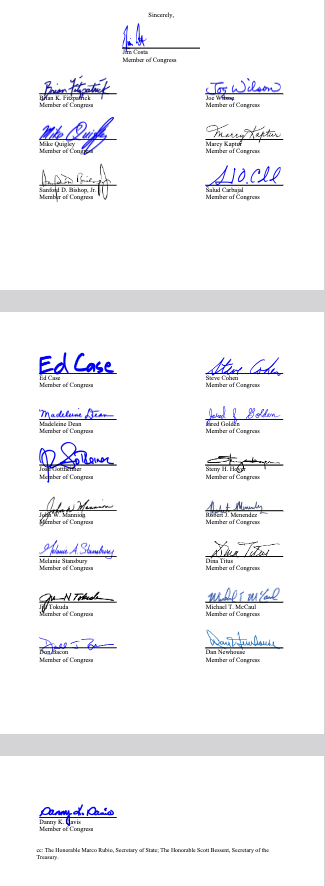
BREAKING!!! In a bipartisan letter to POTUS, 22 lawmakers urge Trump to fully enforce Russia sanctions ahead of an Oct. 18 deadline, targeting Moscow’s energy revenues and sanctions evasion to pressure Putin to negotiate peace in Ukraine.
It is rumored that on October 15th, Cai Qi, the second-highest-ranking figure in the Chinese Communist Party (CCP) and a member of the Politburo Standing Committee, joined forces with Zhou Hongxu, the director of the Central Security Bureau, to launch a coup and seize control of Xi Jinping, the CCP's top leader.
Another rumor claims that Xi Jinping, due to health reasons, has lost the ability to continue wielding power, thus Cai Qi, as the CCP's second-highest-ranking figure, naturally stepped in to take control.
Currently, all public events attended by Xi Jinping are being conducted by a body double. While this information cannot be confirmed, the rumor is widely circulating within the CCP.
TRUMP’S MIDTERM DESPERATION ANALYSIS:
Just in the last week, we have seen President Trump become increasingly desperate to in the lead-up to the U.S. midterms, and this has been reflected in how he is approaching short-term, bass akwards measures to temporarily blunt gasoline and diesel prices in the United States.
Just this morning, it was reported by Reuters that Energy Secretary Wright floated at a Gulf conference that the United States was looking at potentially unsanctioning Shadow Fleet vessels. This is in an attempt to address the through-the-roof shipping coasts right now that are directly impacting pain at the pump.
Beyond this, we have seen the considerations of a diesel export ban and dyed-diesel measures, alongside Europe being strong-armed into releasing further emergency reserves despite that likely being actively detrimental to their own security in advance of a winter that will likely see extreme U.S./Iran and Saudi/Yemen escalation against energy infrastructure and available supply.
Even yesterday, it was reported by the Financial Times that the Trump Administration had broached the idea of unfreezing Russian assets in the EU in an attempt to entice Putin to the negotiating table for an end, or temporary cessation, of the Russia/Ukraine War. Speaking of Russia, the United States also authorized General License 135 that allowed for the purchasing of Russian diesel in yet another example of desperation.
When the Trump Administration reaches the point of unsanctioning Russian diesel, potentially unsanctioning Shadow Fleet vessels tied to Iran, and torching international relations to get a front-loaded, pre-midterm emergency release of European strategic reserves…
This isn’t about Trump caring about Americans pain at the pump. He has made it VERY clear multiple times that he does not care about that. “Iran cannot have a nuclear weapon,” he says. He doesn’t care if you pay more at the pump and suffer financially from it…
He just doesn’t want it to sink HIM at the midterms. So he’ll pull desperately out of the bag of bass akwards tricks in order to provide short-term relief at the expense of medium and long-term strategy.
This is the Donald Show. We’re just mere pawns to be manipulated into saving him at the midterms.
New! @NavalWarCollege/@ChinaMaritime Note 25—“Precluding the Powerful Enemy: A New PLA Concept for a #Taiwan Conflict”
https://t.co/BMdbo8zCfM
From #CMSI Director CAPT @ChrisHSharman, @USNavy (Ret.):
#China PLA Watchers: What does the PLA think it must do to dissuade the United States from intervening in a Taiwan conflict?
And if deterrence fails, how does it plan to stop the @DeptofWar from contributing to Taiwan’s defense?
The PLA has a term for this 2-part challenge: preclusion or shezu (慑阻). The concept combines deterrence and denial into a single approach for countering U.S. military intervention in a Taiwan conflict.
The term has appeared with increasing frequency in PLA reporting & academic writing since 2022.
So what exactly is preclusion? Moreover, what can this emerging PLA concept tell us about PLA strategy?
To find out, download China Maritime Studies Institute’s (CMSI) Note #25 authored by Professor Ryan Martinson/@rdmartinson88.
This note offers unique insights into a new PLA concept for a Taiwan conflict. Certainly worth your time!
Key Takeaways:
⚓ In recent years, the PLA has employed a new concept—“preclusion” (shezu)—that captures the 2 related missions of deterring and denying U.S. military intervention in a Taiwan conflict.
⚓ While the precise origin of the term is unknown, as early as 2019 it appeared in an internal PLA article written by a PLA Navy admiral with direct responsibility for commanding forces in a Taiwan campaign. This early use of the concept suggested that “deterrence” (慑) & “denial” (阻) were 2 steps in a 3-step graduated PLA response to U.S. military intervention.
⚓ Since the intensification of PLA operations around Taiwan that began in 2022, the term has frequently appeared in both PLA reporting & academic writing.
⚓ In Chinese military strategy, “preclusion” would seek to combine defensive operations on “interior lines” & offensive operations on “exterior lines.” The former would rely on shore based cruise & ballistic missiles “to use the land to control the sea,” while the latter would favor long-range air & naval operations to envelop the approaching enemy.
⚓ The “preclusion” concept is essential to PLA thinking on “cognitive warfare,” which seeks, among other aims, to deprive the adversary of the will to intervene on Taiwan’s behalf.
⚓ Precluding U.S. military intervention in a Taiwan conflict is an apparent driver of the PLA Navy’s development & employment of carrier strike groups. It is the core focus of PLA Air Force training & operations beyond the First Island Chain.
BREAKING: Iran has announced it will sink US aircraft carriers and kill their crews using its advanced Qasem Basir anti-ship missiles, with IRGC Navy Commander Rear Admiral Ali Azmaei declaring his forces are “counting down” and waiting for American warships to approach the Strait of Hormuz “so that we can sink them, per IRNA.
Azmaei claimed a $13 billion US warship retreated 700 kilometers from the strait, saying it “dared not approach,” and accused Washington of turning its fleets into “fuel smugglers.”
The Qasem Basir is a solid-fueled ballistic missile with a 1,200-kilometer range, a 500-kilogram warhead, and electro-optical seekers that track moving naval targets without GPS. CENTCOM confirmed the IRGC fired ballistic missiles at a US carrier and destroyer on September 5, with both evading and no personnel harmed, while Iran aired footage claiming the warships were hit.
NEW — 600 U.S. Troops are heading to Latin America in what @adam_wola says is the largest single deployment in memory, outside an invasion, natural disaster. @EricSchmittNYT@GregJaffe
https://t.co/0bCFGC8UfL
Faytuks Network: U.S. Army says representatives of eight countries, Albania, Canada, Croatia, Egypt, Japan, Kuwait, Morocco and Panama, signed statements of intent to participate in its UAS/cUAS marketplace.
BIG | 🇺🇸🇮🇷‼️‼️ U.S. military airlift activity across the Eastern Mediterranean and Middle East has reportedly surged, raising questions about whether Washington is preparing for another round of military operations against Iran.
Flight-tracking data attributed to Flightradar24 indicates that American military cargo flights have increased by approximately 80% compared with August. C-17 Globemaster III aircraft account for most of the movements, while activity involving the larger C-5 Galaxy transport aircraft has reportedly doubled. The accompanying flight map shows military aircraft movements recorded during the past 24 hours, reflecting a broader increase in activity over the last two weeks.
The reported buildup could indicate efforts to replenish ammunition, reposition equipment and strengthen American forces across the region. Such logistical preparations would be important for any renewed campaign against Iran, although increased transport activity alone does not confirm that Washington has decided to resume military strikes.
See the latest updates with us: @visionergeo
🇺🇸⚡ U.S. military airlift activity across the eastern Mediterranean and Middle East has surged over the past two weeks.
Flight tracking data from FR shows U.S. military cargo flights up 80% compared with August. C-17s account for most of the activity, while C-5 heavy transport flights have doubled.
This is only a 24-hour snapshot.
TRUMP REPORTEDLY TELLS NETANYAHU TO PREPARE FOR ANOTHER STRIKE ON IRAN 🇺🇸🇮🇱🇮🇷
Another confrontation with Iran may be approaching, and the timing is raising questions in Washington.
According to Israel’s Channel 12, the United States and Israel are discussing a possible joint military operation against Iran within the next two weeks, potentially before Israel’s upcoming elections.
Prime Minister Benjamin Netanyahu has reportedly raised the prospect of renewed strikes several times during conversations with President Donald Trump. One American official claims Trump responded with a brief instruction: “Go ahead and prepare.”
That is not confirmation that an attack has been authorized. Military preparations can proceed without a final political decision, and no order to launch the reported operation has been confirmed.
But the electoral dimension makes the discussions particularly sensitive.
American officials reportedly believe Netanyahu sees his leadership during wartime as a political advantage ahead of the Israeli vote. That assessment raises questions about how domestic political considerations might intersect with decisions carrying enormous regional consequences.
A coordinated American-Israeli operation would also carry risks far beyond Iran itself. Tehran could retaliate against Israeli territory, American forces or regional infrastructure, potentially drawing other countries into another round of fighting.
The next two weeks could therefore become a particularly sensitive period for Middle Eastern security.
For now, the reported discussions remain contingency planning rather than a confirmed military operation. But the combination of renewed strike preparations, Trump’s reported response and Israel’s approaching elections makes the situation one to watch closely.
🚨 TRUMP JUST BRIEFED THE NATION FROM THE SITUATION ROOM TONIGHT:
The last time a president did this during an active bombardment, Bush announced the ground war had begun.
– 49 Tomahawks fired at Iranian targets as close as 40 miles from Tehran
– Fighter jets swept Iranian radar and air defenses near the Gulf ahead of the strike package
– Trump, Vance, Kushner, and Witkoff all present in the Situation Room — TONIGHT
– Iran had spent months routing every message through Pakistani and Qatari intermediaries — refusing direct contact
– Then the Tomahawks started hitting
– Mid-bombardment, top Iranian officials picked up the phone and called the White House DIRECTLY
– Trump: bombing will "stop shortly" — then came the condition
– "Sign the deal or we'll bomb the S out of them TOMORROW NIGHT"
– The deal on the table: open the Strait of Hormuz and close the nuclear path — BOTH
– This is the first direct Iran-to-White House communication after months of proxy diplomacy
– The last time Iran broke from intermediaries and went direct, it was the back-channel that ended the hostage crisis
– Situation Room confirmed: the call happened MID-BOMBARDMENT — not after, not before — DURING
– Tehran now has one night to decide between a signature and another strike package
– The Strait of Hormuz carries 20% of the world's oil — TONIGHT that's the price of the deal
Trump doesn't brief the nation from the Situation Room to announce a ceasefire. He does it when he wants the world to know the other side just blinked.
Whatever Iran decides before morning — it's MARKET MOVING. It's WAR CHANGING. And the clock is already running.
I'll keep you updated as this unfolds, turn on notifications this is EXTREMELY important. A lot of people will wish they followed me sooner.
I'll keep you updated. Turn on notifications. 🚨