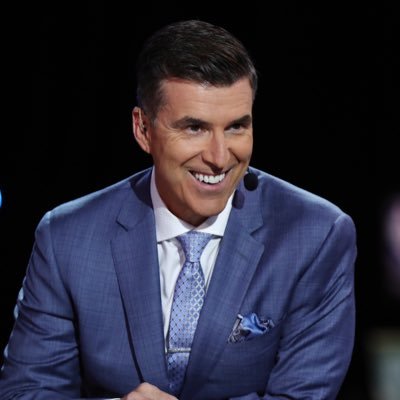
Reminder!!! Listen to the Dari Nowkhah Show w/ @JoshOnREF 9-noon CT daily…
Also, The Plank Show (Chris/Blake), Steelman and Thune, Locked In (Thune/Grayson Singleton) and the RUSH (Teddy Lehman/Tyler McComas).
Just get the KREF APP and listen from ANYWHERE!! @KREFsports
The cornerstone of the state court lawsuits against the NCAA seeking another year of eligibility has been a breach of the implied covenant of good faith (evidence of arbitrary enforcement or bad faith is required to make that claim) in performing the contract between the NCAA and member institutions, of which college athletes are intended, third-party beneficiaries. That status is what allows them to sue for breach of contract. Countless courts have rightly issued injunctions on those grounds.
The main reason, but not the only reason, I’m so confident the Conferences will prevail in litigation against college athletes is that, if you apply the law as it stands in every state, it is legally impossible for the players to prove a claim against the Conferences for breach of the implied covenant of good faith as third-party beneficiaries of a contract: 1) there is no factual or legal basis to argue that the Conferences’ Constitutions or Bylaws make the players third-party beneficiaries of the contractual relationship between the Conferences and their schools; and 2) neither the recent “NFL/NBA rule” nor the SEC intraconference transfer rule have been applied inconsistently, arbitrarily, or in bad faith.
Contrast these Conference rules with the NCAA’s ridiculously inconsistent application of its own rules. The comparison is like apples to oranges.
Whatever state trial judges may do, all of these cases will ultimately be decided by applying the law that exists in every state. There is no state - including Louisiana - where the law supports a valid legal claim for breach of contract against any Conference. As for the players’ lawyers’ assertion that a Conference can be enjoined as the alter ego of the NCAA or for acting in concert with the NCAA, that argument is likewise contrary to the established law in every state. As they say in Louisiana, that dog won’t hunt.
Nor do I believe there is any basis for alleging that any Conference has violated the Sherman Act or its state law counterparts. No one seems to take that assertion seriously - not even the people making it.
Like it or not, the evidence and applicable law is what determines final outcomes when cases are appealed - not what lawyers say in interviews or on social media. Similarly, where state law is involved in a federal court case invoking the U.S. Constitution (such as the Big 12’s lawsuit), federal district judges will carefully apply the law of the state where the controversy arose and are known for their unwillingness to heed to pressure from any Governor or fan base.
That’s why I’d be telling any school that is considering putting a former NFL or NBA player on their roster they will likely regret making such a risky decision - one that will probably be career-ending for anyone who was willing to take that gamble.
That’s my professional opinion after being in this business for forty years - not to suggest that should slow down the critics and self-taught X-Lawyers. 😬
All you fans of programs who have "all new offensive lines," don't watch Florida State tonight.
They won't make you optimistic. New Mexico State's vaunted pass rush is destroying them.
🔥 LISTEN TO THE NEW EPISODE ! 🔥
NOW AVAILABLE ON APPLE & SPOTIFY
SEC Network lead anchor Dari Nowkhah (@ESPNDari) joins The Huddle Up Podcast to talk all things college football! 🏈
This is an episode you DO NOT want to miss!
Full episode below ⬇️⬇️
Apple Podcasts: https://t.co/VGxsWZL16L
Spotify: https://t.co/LeNmjLUjDI
OU will play in the SEC Championship Game if….?
Josh Pate answered that question today on the Dari Nowkhah Show.
“If they play a style of football that a Brent Venables team should be able to play offensively.”