check out Trash-Mex Tapes 3: “What Are These?” where I discuss this tape about time-travel & reincarnation & uses clips from the classic Mexican film Marcelo y Maria (1966)📼🇲🇽🎞️🌌➡️
https://t.co/sibw1OJaJi
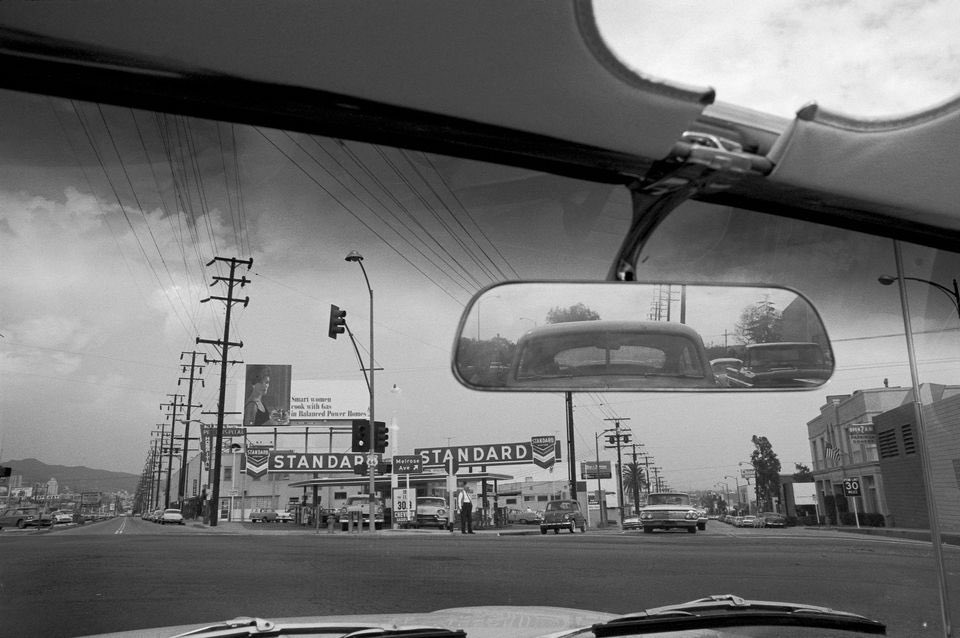
Dennis Hopper was given a camera by his wife following a lean period in acting during the late fifties and early sixties when he became something of a persona non grata in Hollywood with a reputation for being difficult to work with.
Alfred Hitchcock explains why he was against showing explicit violence in his movies:
"Interviewer: Do you enjoy making people frightened, scaring them?
Hitchcock: Oh yes. Fear is a basic emotion. People like to be scared if they can control it. That’s why people go on the fast rides at amusement parks and to movies like mine. They want to be scared for some inner emotional reason. They don’t want to be scared in a real sense, though. They want to be scared of non-existent things like monsters and theatrical characters. Imagination plays an important part in what I do, the way I scare people.
Interviewer: You do not believe in explicitness in your technique?
Hitchcock: Not in the terrifying scenes. Only for the expositions, the setting up of the stage, so to speak, so people know all the facts, so they can be frightened the way I want them to be frightened. Explicit violence is never as good as people can make violence in their heads. In 'Psycho' (1960), I never show the knife touching the girl, for example. It’s all suggested.
In 'Frenzy' (1972), the n*de girl is dumped from the truck in a bikini of potatoes wired to her body, but the mind fills in the nakedness. I never take a chance at offending anyone. That would spoil their enjoyment of my films. I usually allow the editing to do the suggesting. Again in 'Frenzy', I let the murderer take the girl to his room and then I pull the camera away, allowing the audience to listen and imagine what is taking place in the room above. All they see is a window. My films are largely reaction films. I never do whodunits.
Interviewer: Why not?
Hitchcock: Because whodunits are not emotional experiences. Murder mysteries are intellectual puzzles and most of the audience wants to experience, not think. Thinkers don’t function well if they get emotionally involved.
In that scene in 'Frenzy', the murderer takes the girl upstairs and says to her, “You know, you’re my kind of girl.” Now we know from previous events that he will ki!! her. When the camera retreats down to the street and we see the window, the audience is automatically clued to think “he is killing her, but no one will hear it.”
(Alfred Hitchcock's interview with Allen Leider, 1978)
P.S: On this day, 54 years ago, "Frenzy" (1972) premiered at the Cannes Film Festival, France.
Robert Bresson on how painting influenced his films:
"Interviewer: Your approach to the real, in 'Four Nights of a Dreamer' (1971) more than in any of your other films, seems to come from painting. Would you agree?
Bresson: I am trying to get closer and closer . . . But you know, everything—whether person or object—can be evasive. I do what I can . . . And, also, I do my best to make what I feel—my impressions and sensations—happen on screen. . . . That said, it’s almost impossible to have been a painter and to no longer be one. Painting taught me . . . to mistrust painting in films.
Interviewer: To mistrust the picturesque?
Bresson: Yes, to be wary of the reigning “postcardism,” especially in color films. People go crazy for it. But beautiful photography is always detrimental to what’s essential. It’s possible, on the other hand, that painting helps me with the composition of images."
(Robert Bresson's interview with Claude Beylie, 1972)
P.S: On this day, 55 years ago, "Four Nights of a Dreamer" (1971) premiered at Cannes, France.
Lucio Fulci on why people misunderstood 'The Beyond' (1981) & the movies he thinks even idiots can understand:
"I like 'The Beyond' (1981) very much because I think it was an interesting attempt. People who blame 'The Beyond' for its lack of story have not understood that it's a film of images, which must be received without any reflection.
They say it is very difficult to interpret such a film, but it is very easy to interpret a film with threads: any idiot can understand Molinaro's 'La Cage aux Folles' (1978), or even Carpenter's 'Escape from New York' (1981), while 'The Beyond' or Argento's 'Inferno' (1980) are absolute films."
(Lucio Fulci's interview to Starbust Magazine, 1982)
P.S: On this day, 45 years ago, "The Beyond" (1981) was released in Italy.
Thodōros Angelopoulos on his film language & the reason for not liking some of Andrei Tarkovsky's movies:
"Interviewer: The most important thing in your films seems to be the consistence of every single shot. It has to have its own force and build up its intensity as it goes.
Angelopoulos: It is for this reason that my personal film language is based on expanding the dimension of time. Before you enter into the gist of any given shot, you have to be given the time to find out the relations between the actor and the landscape. For this reason, I love Tarkovsky's 'Stalker' (1979); 'Nostalghia' (1983), I like less; 'The Sacrifice' (1986), I do not like at all. As far as I am concerned, the Holy Trinity-that of the actor, the landscape, and the camera-is perfect in Stalker.
Interviewer: In most of your films, there seems to be a sense of melancholy for the past. But the two children, who are not subject to this melancholy, are pulling you in a different direction.
Angelopoulos: I believe the past is my own personal past dragged into the present by my occupation as a filmmaker. The tree at the end of 'Landscape in the Mist' (1988) is the tree from 'Voyage to Cythera' (1984), a reference to my own personal film Landscape. In the course of this picture, the children cross a film landscape in order to reach, at the end, a different film landscape, which, I believe, should offer them renewed hope.
I would like to believe the world will be saved by the cinema. Cinema is my world and it is the scope of all my journeys. I am always searching for secret little utopias that will enchant me; I am doing my best to believe in the relevance of these trips I am constantly embarking on through my films."
(Thodōros Angelopoulos's interview with Serge Toubiana & Frederic Strauss, 1988)
P.S: Remembering the great Greek filmmaker Thodōros Angelopoulos on his 91st birthday.
Clip from:
Landscape in the Mist (1988)
Director: Thodōros Angelopoulos