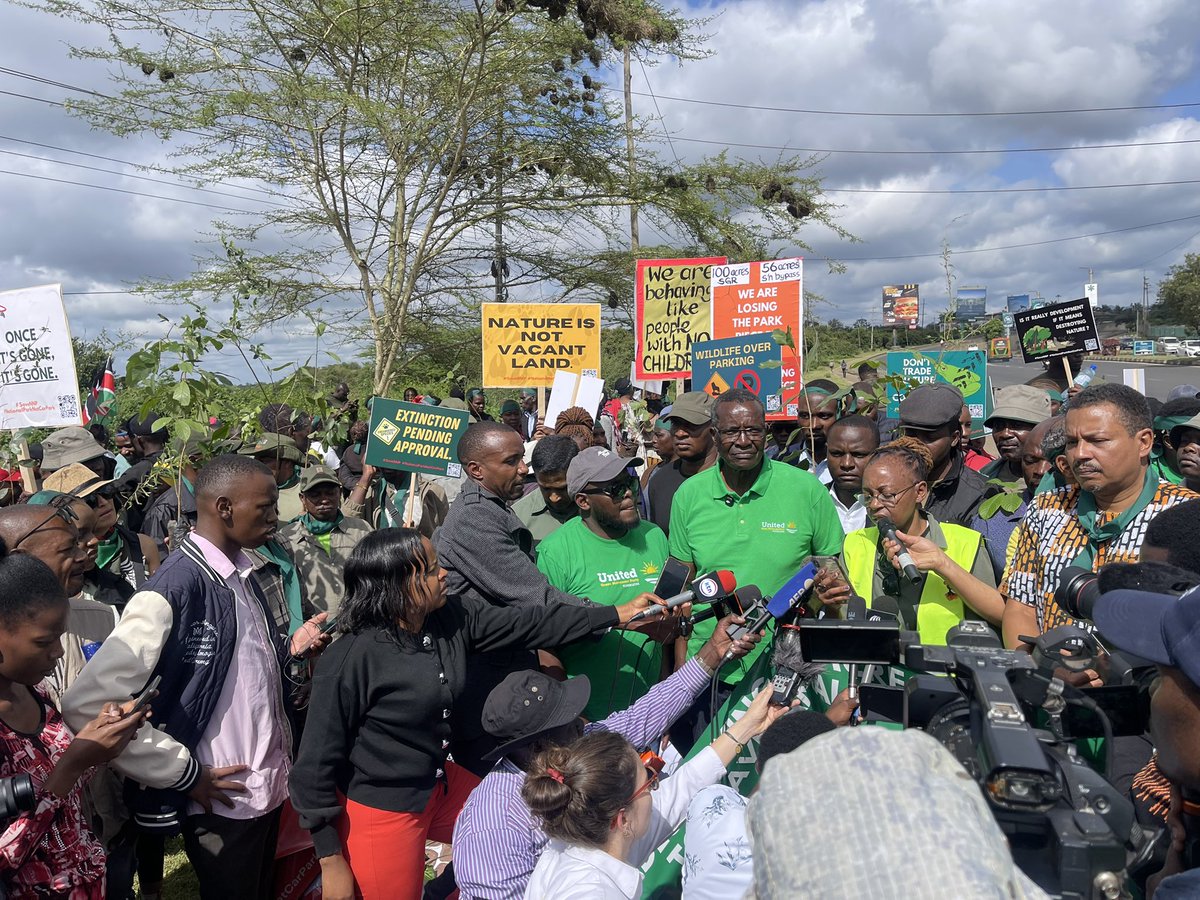
Today, Kenyans, environmental defenders, and human rights activists came together to stand for #NairobiNationalPark to demand transparency and accountability!
Our Park is not for sale, we will continue to speak out until its protection!
#NationalParkNotCarPark#SaveNNP
We condemn the arrest of peaceful protesters advocating for the protection of #NairobiNationalPark
Nairobi National Park is not for sale. We demand the immediate release of those arrested and respect for the rights to peaceful assembly, expression, and public participation.
#NairobiNationalPark is not a parking lot.
Today, we stood against plans to excise 90 acres of protected park land for a 1,300-car parking facility. Nine unarmed activists were arrested during the peaceful protest.
Protect nature. Defend civic space.
#NationalParkNotCarPark
We continue to urge President @WilliamsRuto not to assent to the proposed amendments to the FCM Act. Section 56(2) would make it easier for the @KeForestService to issue easements and wayleaves in public forests, putting these critical ecosystems at risk. #SaveOurForests
1/2 Nairobi National Park will not be destroyed in one dramatic moment.
On the contrary it’s being systematically erased, quietly, bureaucratically. One “small” project at a time. First the Southern Bypass, then the SGR, then the ICD road, and now another chunk of protected park land is being sacrificed, this time allegedly for a relocated animal orphanage and infrastructure linked to the Bomas International Conference Centre (BICC). But when you look closely at the documents, the story stops making sense. Because buried inside the Environmental Impact Assessment (EIA) are plans for a parking lot designed for 1,300 vehicles. That is not normal wildlife facility parking capacity. That is mall-scale infrastructure. The same EIA states parking provision for only 50 buses and 100 cars in one section, then suddenly expands into a gigantic 1,300-vehicle parking complex elsewhere in the document. The obvious question becomes: who exactly is this parking lot meant to serve, and why should protected national park land be surrendered for it?
Friends of Nairobi National Park (FoNNaP), together with JustAct and Kituo Cha Sheria, have now moved to court to challenge the project and expose what they argue are contradictions, procedural violations, and serious environmental risks surrounding the development. The issue is not whether the Nairobi Animal Orphanage deserves better facilities. Of course it does. The issue is why the government insists on building it inside a protected ecosystem when it could literally be built elsewhere in Nairobi or anywhere else in Kenya without destroying wildlife habitat. Once protected land is lost, it is gone forever.
The most alarming part is that the project documents themselves are riddled with inconsistencies. One section says the project requires 26 acres of land, another says 64 acres, another declares 76.6 acres, while KWS presentations reportedly referenced 89 acres. Which is it? How can an environmental assessment be considered credible when nobody can consistently explain how much land is actually being taken from the park? Then comes perhaps the most disturbing detail of all: a proposed 10-kilometre perimeter fence. Ten kilometres. That would enclose roughly 1,500 acres of land inside Nairobi National Park. Why does an animal orphanage need a 10km perimeter fence? What exactly is being enclosed? What future developments does this create space for? In a country where land grabbing has become normalized and where public land mysteriously transforms into commercial opportunities overnight, these are not paranoid questions. They are necessary questions.
Especially because the same documents explicitly describe integration with the Bomas International Conference Centre through a walkway over Langata Road. KWS insists there is no connection between the massive parking infrastructure and the BICC, but common sense raises unavoidable questions. Why would an animal orphanage require parking infrastructure comparable to major shopping malls in Nairobi? Why has NEMA reportedly refused to release the BICC EIA documents that could clarify these linkages? What are Kenyans not supposed to see?
Even more troubling is that the area being developed is classified in the 2020–2030 Nairobi National Park Management Plan as a “low-use zone” where development, including roads, is prohibited because of the ecological sensitivity of the habitat. Yet the EIA reportedly ignores this entirely. People familiar with the park also dispute claims that the area is rarely used by wildlife. Conservationists and regular park visitors say lions, leopards, black rhinos, birds, and numerous other species actively use this ecosystem. Grasslands are not “empty land.” Forests are not the only ecosystems that matter. Open habitat is critical to wildlife movement, biodiversity, water systems, and ecological balance.
Today’s @NationAfrica reveals how Kenya could open its public forests to destruction through a proposed amendment to Section 56(2) of the FCM Act. The Bill awaiting President @WilliamsRuto's assent allows roads and utilities in forests. #SaveOurForests
https://t.co/tfNyYijY0F
While construction continues inside Nairobi National Park, we are fighting in court.
We have formally challenged the ongoing project through the Environment & Land Court.
It is now an active legal case. And we need each and every one of you to raise your voices against this.
Read. Share. Ask questions. Stay informed.
#SaveNNP
#NationalParkNotCarPark
The Senate has passed the Forest Conservation and Management (Amendment) Bill, 2025, including changes to Section 56(2).
This is a defining moment for Kenya’s forests, and our future generations.
Join the spaces tonight from 7.30PM https://t.co/WWVuke7rlB
#SaveOurForests
Dear Kenyans, unfortunately, the Senate has today passed the proposed amendment to FCM Act including Section 56(2), without any amendments and through an alarmingly rushed process. We urge President William Ruto not to assent to the Bill. Our forests must live. #SaveOurForests
Kenya’s public forests are under threat!
Join us tonight at 7.30 PM on X Spaces as we unpack what’s at stake for our forests, Constitution, and future generations.
Set your reminder & join here: https://t.co/WWVuke7rlB
#VoteNOSection56(2) #SaveOurForests#HandsOffOurForests
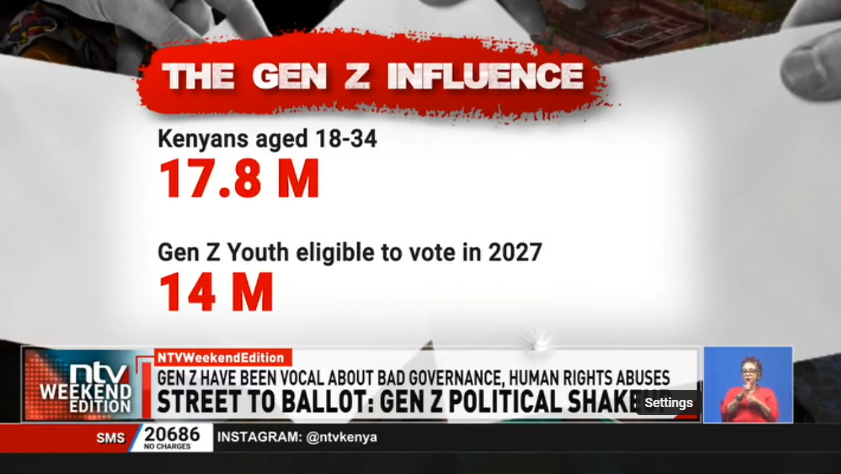
Kenyan police have turned Nairobi into a war zone, using tear gas, flash bangs and water cannon trucks indiscriminately against mostly peaceful protesters.
PS: Please don't crowd around my team when you see us. It makes our signal terrible like this
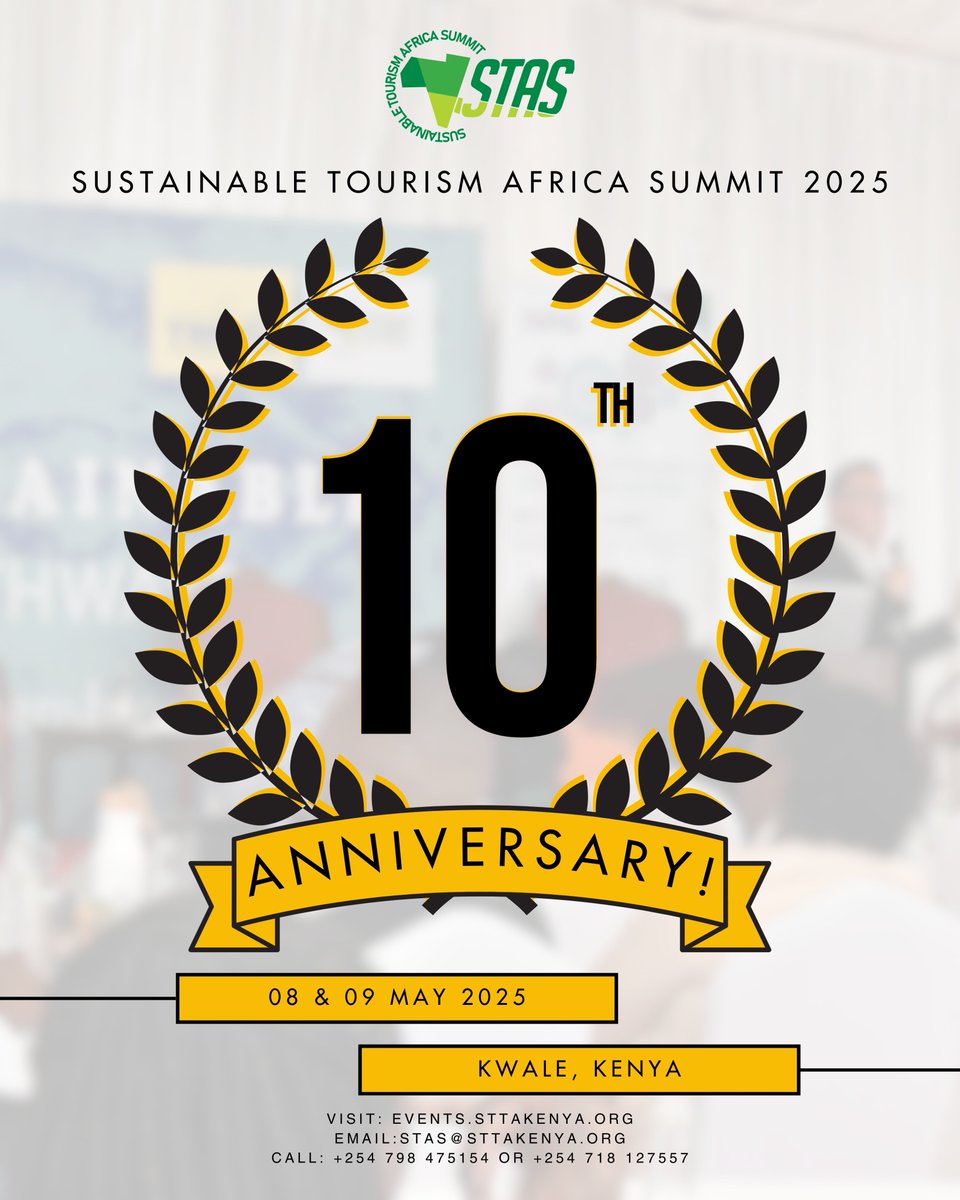
#STAS at 10
#STAS2025 is not just a summit—it’s a milestone! We are celebrating 10 years of driving #sustainabletourism dialogues in Africa!
Theme: Making Sense and Cents of Sustainability: Building Sustainable Brands
Date: May 8 - 9, 2025
Venue: Diamonds Leisure Beach & Golf Resort, Diani, Kenya
This year, we are taking it a step further with hands-on workshops to help you:
✅ Create a sustainability strategy for your business (Day 1)
✅ Develop a climate action strategy (Day 2)
And the best part? You’ll walk away with a certificate to showcase your learning!
Secure your early bird ticket today! 👉 https://t.co/dt7y510F4W
Early bird discount ends April 4th!
#SustainableTourism #ClimateAction #STAS2025 #SustainableTourismAfrica #TourismSummit #SustainableTravel #GreenTourism #ClimateAction #NetZeroTourism #EcoFriendlyTravel #RegenerativeTourism #ResponsibleTravel #Ecotourism #ClimateFriendlyTravel #TourismMSMEs #SMEClimateAction #InnovationInTourism #SustainableBusiness #ClimateResilience #TourismLeaders #TourismNetworking #TravelIndustryEvent #SustainableDestinations #Africa #Diani
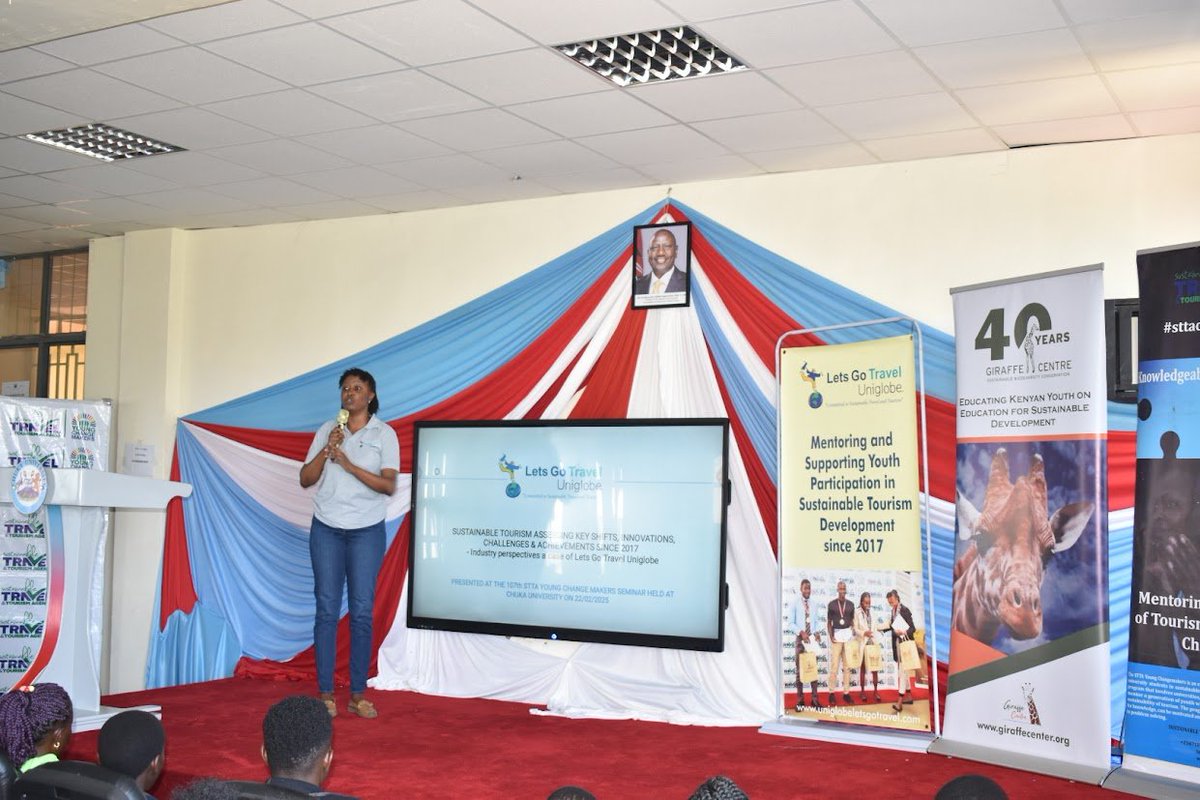
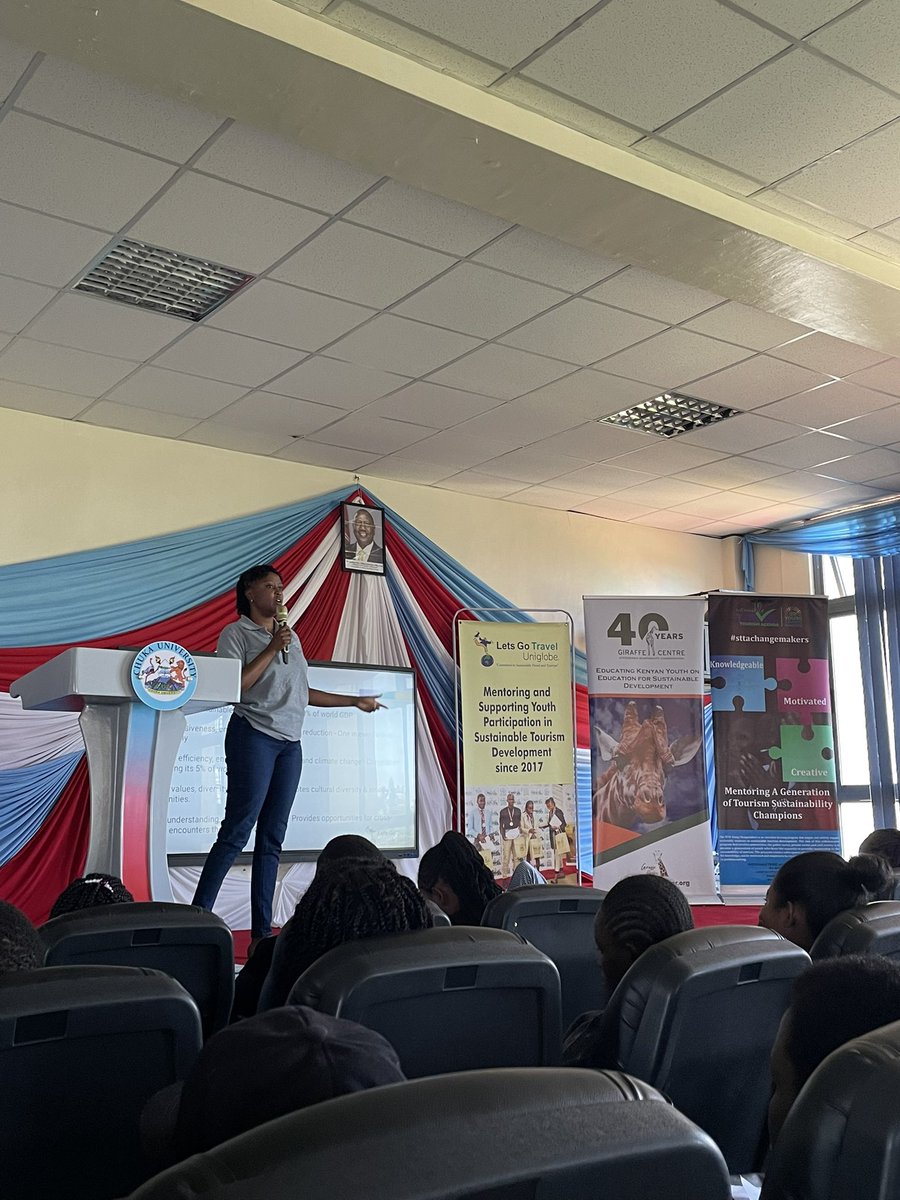
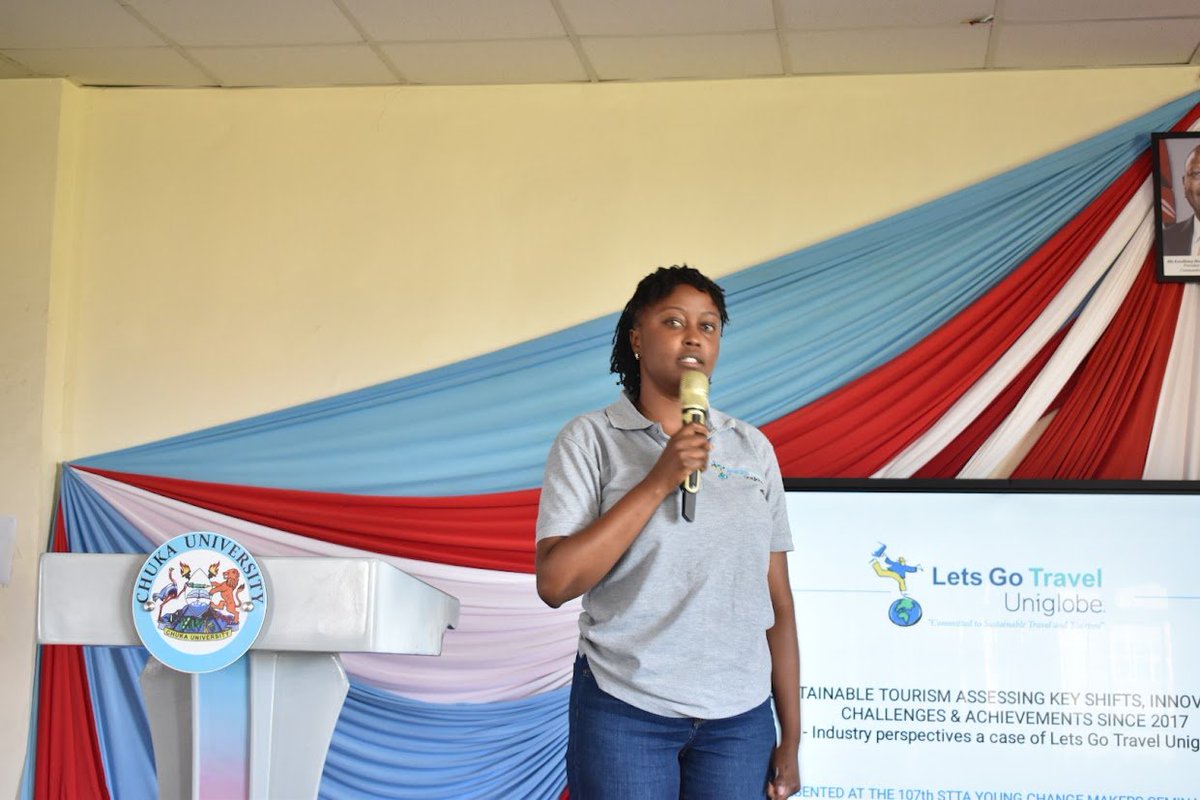
Esther shares industry perspectives a case of @LetsGoTravelKE reinforcing our commitment to sustainability focused on climate change action, regenerative travel, digital transformation, equitable community development and resilience building.
#LetsGoTravelKE#YouthEmpowerment
@EstherMuthee5 from @LetsGoTravelKE giving a tour operator perspective on the topic of discussion. She shares that today's tourists are well versed on matters sustainability and are actively looking for options that reflect the values of #sustainabletourism#Youthintourism
These incredible sustainable tourism operators, academics, podcasters, writers, young professionals, and leaders graced our monthly webinars as co-hosts of @GonaJudy and @DominicWanjiru5 in 2024.
Thank you
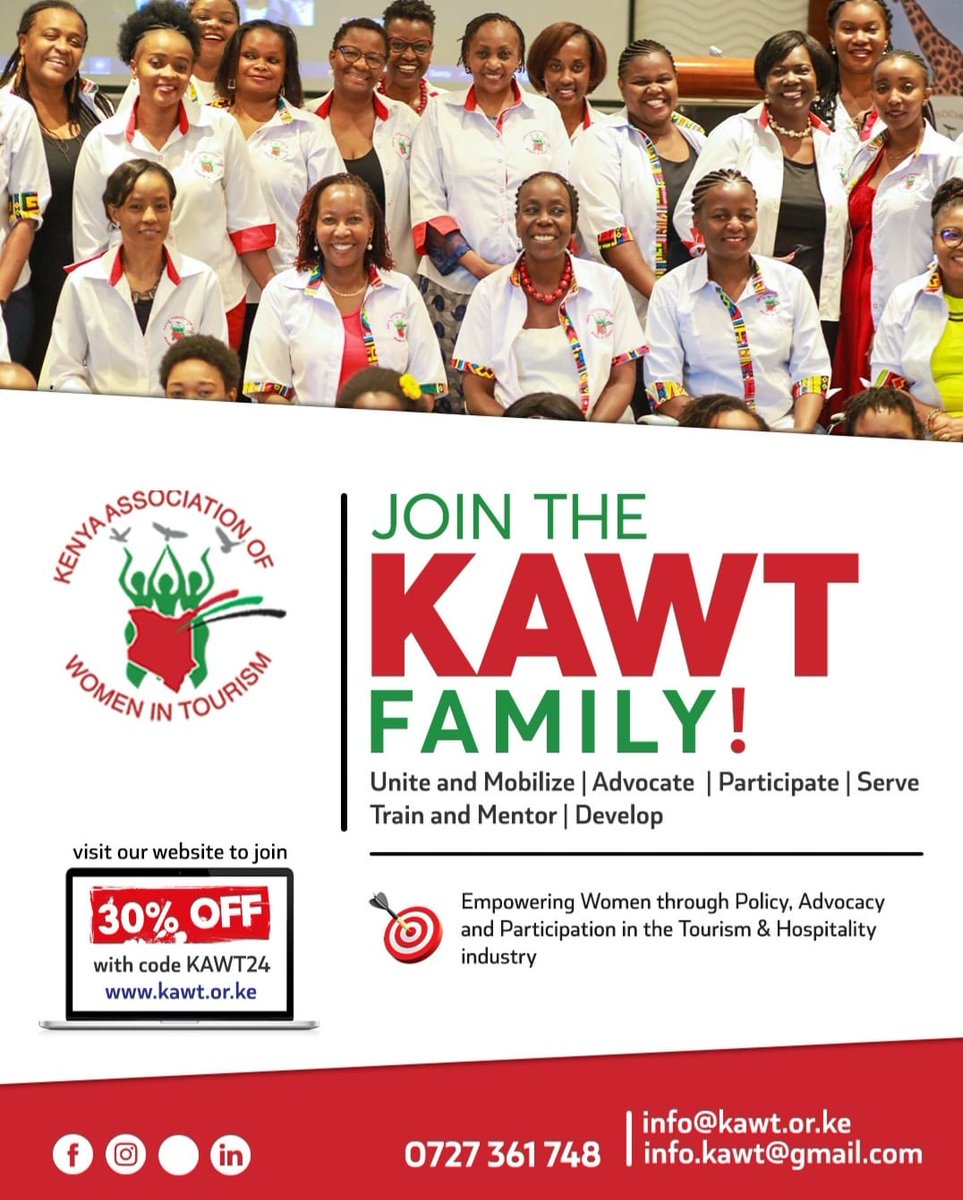
This November, we’re growing the Kenya Association of Women in Tourism (KAWT) family! Join a network of women driving change, and uplifting each other in tourism & hospitality. Sign up with 30% off using code KAWT24 at https://t.co/ouE1B2Lh4q #Womenintourism#KAWT