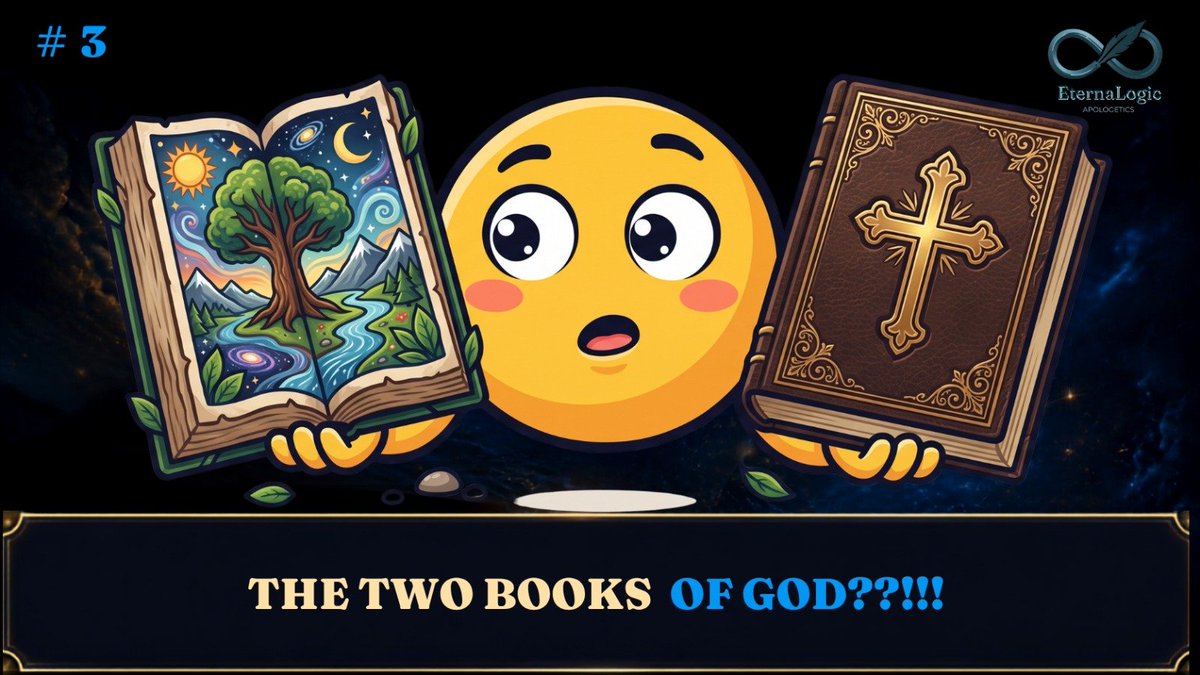
Episode 3 of the Podcast is out now .
Catch it on YouTube via the link below 👇🏾
https://t.co/V74j4Na1q5
For the audio lovers it's also available on Spotify👇🏾
https://t.co/RDdOTqDQ9h
The Very first episode of The EternaLogic Podcast is out, catch it now on Youtube 👇
https://t.co/cfdBeF6ZRY
For the Audio Lovers the episode it is also live on spotify 👇
https://t.co/vznUBrTOdy
Let’s wrestle honestly with the trustworthiness of God’s Word from Genesis to Revelation and discover why millions throughout history have staked their lives on the Bible as the infallible authority for faith and life.✨
This Friday, we will honestly examine the biblical texts on God’s wrath, justice, judgement, and His commands regarding warfare. We’ll explore how these fit within the broader story of Scripture, God’s holiness, human sinfulness, and the unfolding plan of redemption.
✝️One God, Two Testaments: Is God’s Character Consistent from the Old to the New?✝️
This Friday, we explore the tensions, continuities, and unified character of God across both Testaments through honest biblical, theological, and historical discussion.
Bring your notes, questions, and an open mind for honest conversation. All seekers, skeptics, and believers are warmly welcomed.
📅Date: Friday, 27th April 2026
⏰Time: 7:30 PM – 9:00 PM EAT
📍 Platform: Google Meet Join here: [https://t.co/qfNhOYhw1V]
Our last Friday's Meeting Recording is now on YouTube.
Find the link below 👇🏾
https://t.co/aVvJ8YV98V
For the audio lovers it is also available on Spotify
https://t.co/vRmV064GFi
Bring your notes, questions, and an open mind for honest conversation! All seekers, skeptics, and believers are warmly welcomed.
📅Date: Friday, 3rd April 2026
⏰Time: 7:30 PM – 9:00 PM EAT
📍 Platform: Google Meet Join here: [https://t.co/qfNhOYhw1V]
All seekers, skeptics, and believers are warmly welcomed.
📅Date: Friday, 27th March 2026
⏰Time: 7:30 PM – 9:00 PM EAT
📍 Platform: Google Meet
Join here: [https://t.co/qfNhOYhw1V]
Let’s engage together with history, evidence, and open conversation.✨
✨✨The Twentieth and Twenty-First Centuries: Renaissance and Specialization in Christian Apologetics✝️✝️
From Eclipse to Explosion – The Rebirth of a Disciplined Defense
🌟 Phase 2 – Sketching & Visualization – is officially underway!🌟
Phase 2 focuses on sketching the Tabernacle exactly as described: translating those precise scriptural details into accurate diagrams, floor plans, elevations, sectional views, and initial concept sketches.
“America went to the moon,” your friend says.
You reply, “I don’t believe that.”
Then they ask you, “Well, why not?”
You respond, “I just don’t.”
Is that a rational answer?
No.
To be rational, we should have justifications and reasons for every position we take toward every claim we hear.
Why don’t you believe in the moon landing?
Well, maybe you’ve seen videos or documentaries suggesting it was staged.
Maybe you saw supposed evidence that it was filmed in a studio.
Whatever the reason is, you SHOULD have a reason.
And guess what, that reason is open to scrutiny and criticism.
And the same thing applies if you say, “I lack a belief.”
Lacking a belief is still a position.
If I say I lack a belief the moon is real, I should be able to explain why I take this position.
Lacking a belief can be just as irrational as holding a belief.
My point here is that all claims and positions toward those claims are based on our prior beliefs, and those beliefs should be rational and justified.
Now, notice what I’m not saying.
I’m not saying that the person who makes the claim doesn’t have any responsibility to support their claim.
Of course they do.
If I say, “America went to the moon,” then yes, I should be able to support that claim with evidence or justification.
That’s part of rational discourse.
But the person who hears the claim and decides to disbelieve it, or decides to withhold belief, also has a burden of proof for their position.
If you’re going to take any kind of position toward a claim… even if it’s just, “I don’t believe you,” then you should have a rational justification behind it.
You can’t just say, “I lack belief because rocks are hard,” or “I’m just unconvinced,” and act like you’ve contributed something meaningful.
That’s not how truth-seeking works.
Many atheists claim they’re not making a claim at all, they’re just “lacking belief.”
But lack of belief isn’t neutral.
To lack belief in a claim you’ve been presented with still means you’ve taken a position: you’ve decided not to accept it.
And that decision, if rational, will be based on reasons and your already held beliefs, even if you’re not aware of them.
Those reasons might include, “There’s not enough evidence,” or “The evidence I’ve seen isn’t persuasive,” or “Other explanations seem equally likely.”
But each of those reasons is still a belief, and those beliefs are open to critique.
Furthermore, your disbelief, or your lack of belief, is always based on your own beliefs.
If those beliefs are irrational and leading you to disbelieve a claim that you should believe, then those beliefs need to be on the table.
The Crisis of Reason – When Christianity Had to Prove Itself.
Last week we walked with medieval minds who assumed faith and reason belonged together.
This week we face a very different world, one where faith was summoned to the bar of reason and asked to justify itself.








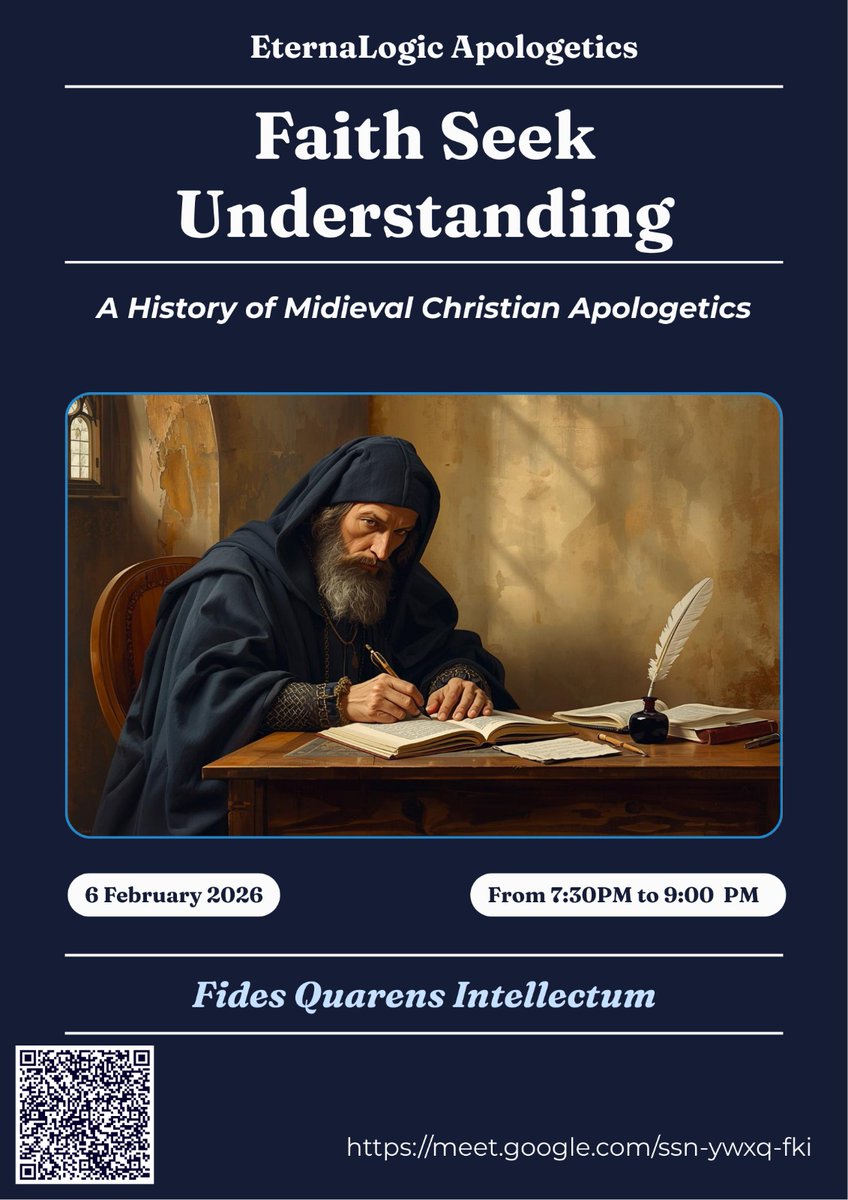
![EternaLogic_Apl's tweet photo. Bring your notes, questions, and an open mind for honest conversation. All seekers, skeptics, and believers are warmly welcomed.
📅Date: Friday, 27th April 2026
⏰Time: 7:30 PM – 9:00 PM EAT
📍 Platform: Google Meet Join here: [https://t.co/qfNhOYhw1V] https://t.co/GV7bimRGXq](https://pbs.twimg.com/media/HF2U8vTXIAAnSsW.jpg)
![EternaLogic_Apl's tweet photo. Bring your notes, questions, and an open mind for honest conversation! All seekers, skeptics, and believers are warmly welcomed.
📅Date: Friday, 3rd April 2026
⏰Time: 7:30 PM – 9:00 PM EAT
📍 Platform: Google Meet Join here: [https://t.co/qfNhOYhw1V] https://t.co/IIFOXMypr3](https://pbs.twimg.com/media/HE2B7-uWQAATgcT.jpg)
![EternaLogic_Apl's tweet photo. All seekers, skeptics, and believers are warmly welcomed.
📅Date: Friday, 27th March 2026
⏰Time: 7:30 PM – 9:00 PM EAT
📍 Platform: Google Meet
Join here: [https://t.co/qfNhOYhw1V]
Let’s engage together with history, evidence, and open conversation.✨ https://t.co/5AoVXL9JSB](https://pbs.twimg.com/media/HEUl1LpWAAAPJ72.jpg)