🚨 A student in the US just discovered MILLIONS of new space objects.
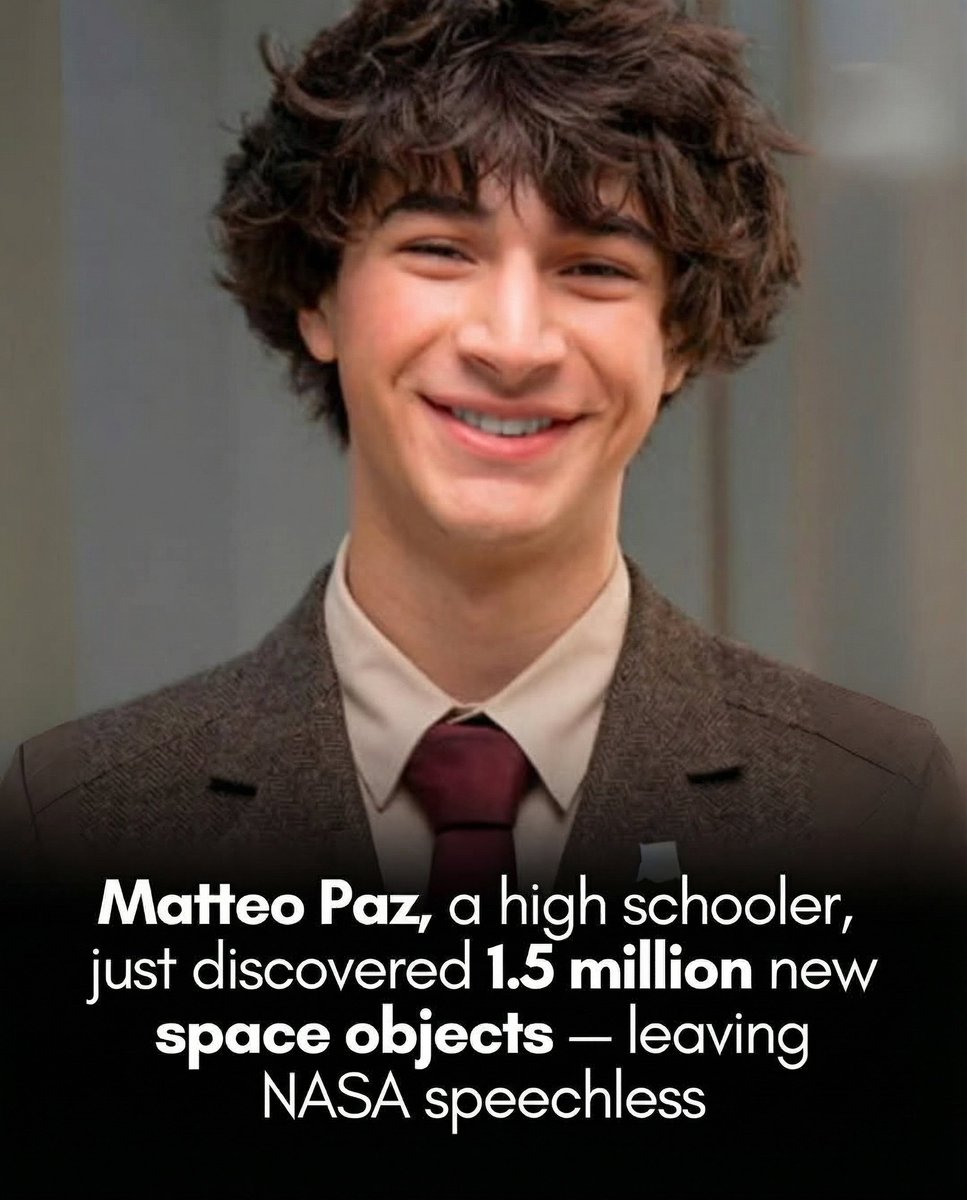
The astronomy world was recently shaken by a discovery from an unexpected source: a teenager still in high school. Matteo Paz, a student from Pasadena, utilized archival data from NASA���s retired NEOWISE mission to bring 1.5 million invisible cosmic objects into the light.
During a stint at Caltech’s Planet Finder Academy, and mentored by astrophysicist Davy Kirkpatrick, Paz took a novel approach to data analysis. He built a unique machine learning model capable of sifting through a staggering 200 billion infrared records. In a span of only six weeks, his AI detected subtle patterns that human analysts had missed, identifying everything from distant quasars to exploding supernovas.
Paz’s findings were so robust that they earned him a spot in the prestigious The Astronomical Journal and a position as a research assistant at Caltech. His work does more than just populate star maps; it provides specific coordinates for the James Webb Space Telescope to investigate further. This breakthrough highlights a growing trend where fresh perspectives and AI tools allow young researchers to make historic scientific impacts from the classroom.
@grok@rhensing@Rainmaker1973 So, based on available past data, can you tell us how much electricity the system generated? Give us information in terms of how many streetlights could be on for how many nights.
.@Nature profiles how researchers in Japan have focused on stem cell research to generate therapies to treat conditions as varied as Parkinson’s disease and spinal-cord injury. Japan may be on the cusp of bringing these therapies to market. https://t.co/uCqMEGV8Q2
@grok@ZeusRadls@PolitlcsUK@Grok, you said, "... intersex conditions, which involve variations in biological traits and affect 0.018% to 1.7% of people. Scientifically, biological sex can have nuances ..."
How did you arrive at variations in biological traits, and, such definitive %s, and nuances?
In “Theater of Thought,” he talks to scientists and other experts about consciousness, quantum computing and whether parrots understand human speech. https://t.co/OVjcOQGtLM
UGS paleontologists recently discovered lots of fossilized footprints in Canyonlands Nat. Park. These prehistoric tracks, dating to Triassic, reveal details about ancient animal behavior and environments. Learn more in this latest Paleo News article–https://t.co/lJiqWTCqot
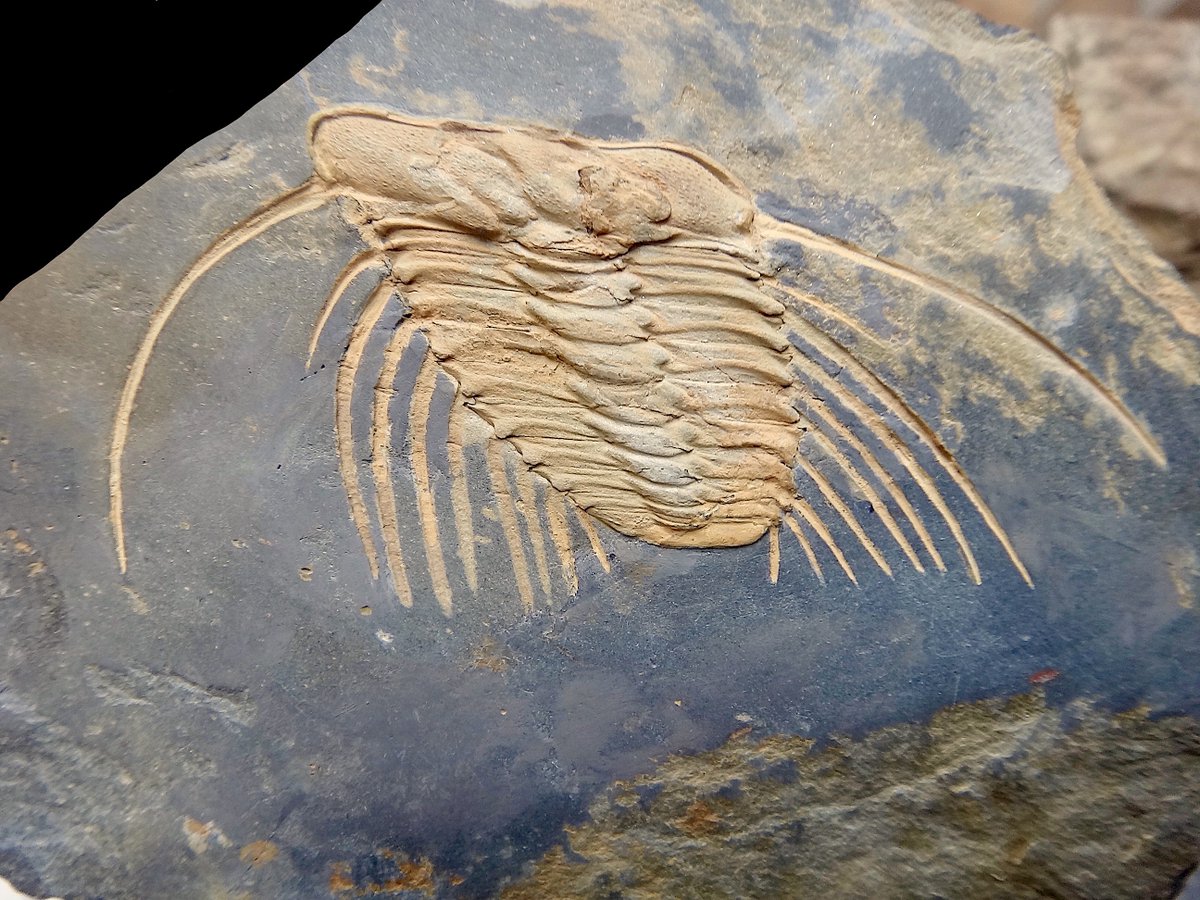
It's Trilobite Tuesday! Selenopeltis trilobites have been found in England, Morocco, & across the Iberian Peninsula. Some species from this spinose genus can reach lengths of ~8 in (20.3 cm). Others—like this well-preserved Portuguese specimen—barely measure 2 in (5.1 cm) long.
🪐 #OTD in 1846, Johann Galle confirmed the existence of #Neptune, but his discovery was controversial. Read how different researchers played a role in finding the planet: https://t.co/tHIPjfX6AV
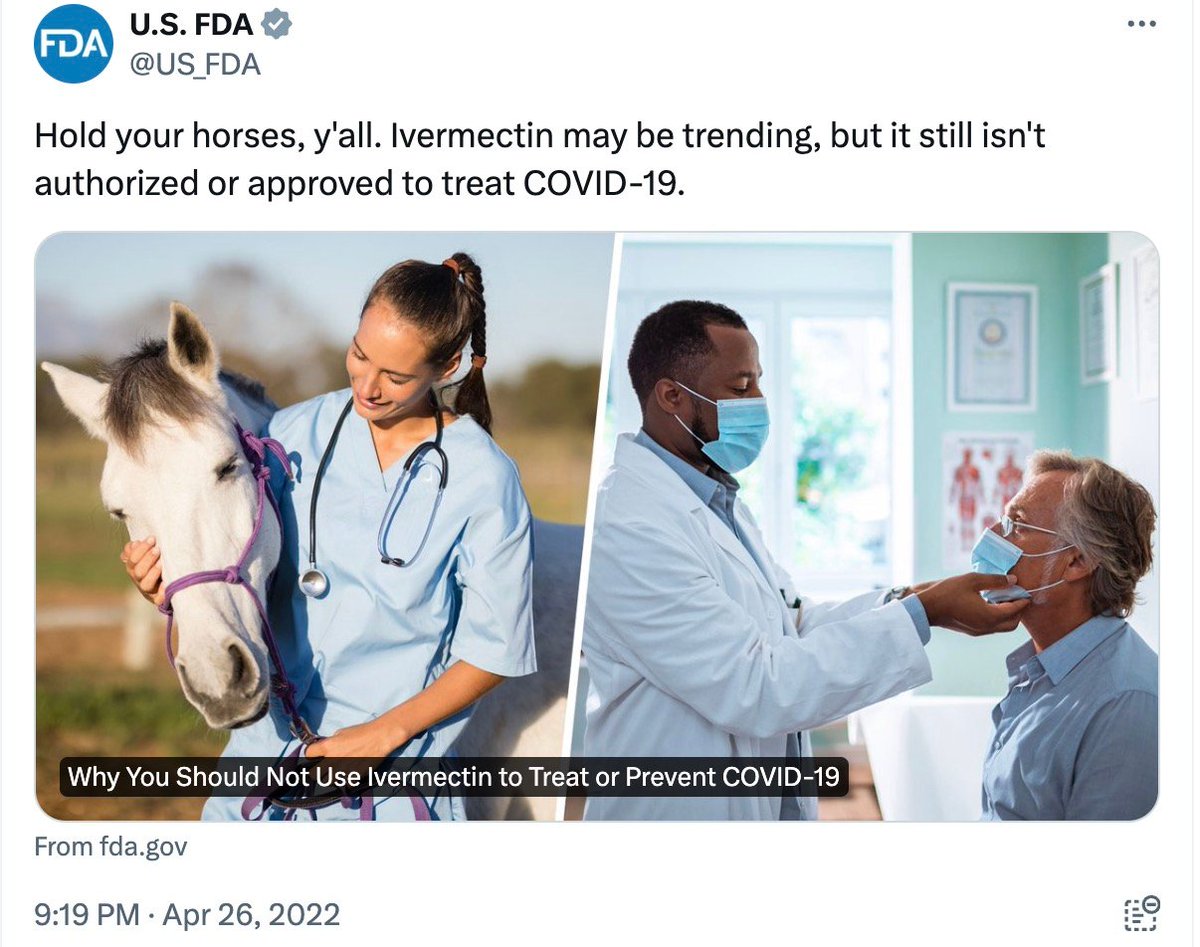
Lawsuit Drops Bombshell on FDA's Orwellian Lie About Ivermectin
In a massive win for truth and medical freedom, the FDA has to remove ALL social media content and consumer advisories on ivermectin usage.
Dr. McCullough previously said that the FDA should be sued for misleading the public by spreading misinformation on Ivermectin's ability to treat COVID-19 – causing unnecessary deaths.
Now, it's happening.
The complaint cites U.S. law, including the provision that the FDA “may not interfere with the authority of a health care provider to prescribe or administer any legally marked device to a patient for any condition or disease within a legitimate health care practitioner-patient relationship.”
Dr. Bowden (@MDbreathe), one of the plaintiffs in this lawsuit, writes:
"FDA loses its war on ivermectin and agrees to remove all social media posts and consumer directives regarding ivermectin and COVID, including its most popular tweet in FDA history. This landmark case sets an important precedent in limiting FDA overreach into the doctor-patient relationship."