Like all of us, every word has a story to share, if we’re willing to listen.
Etymology is an art which allow us to relate to our words. Not as tools for gain, but as partners in healing the world.
This new year, become an etymologist.
Fall in love with your every word.
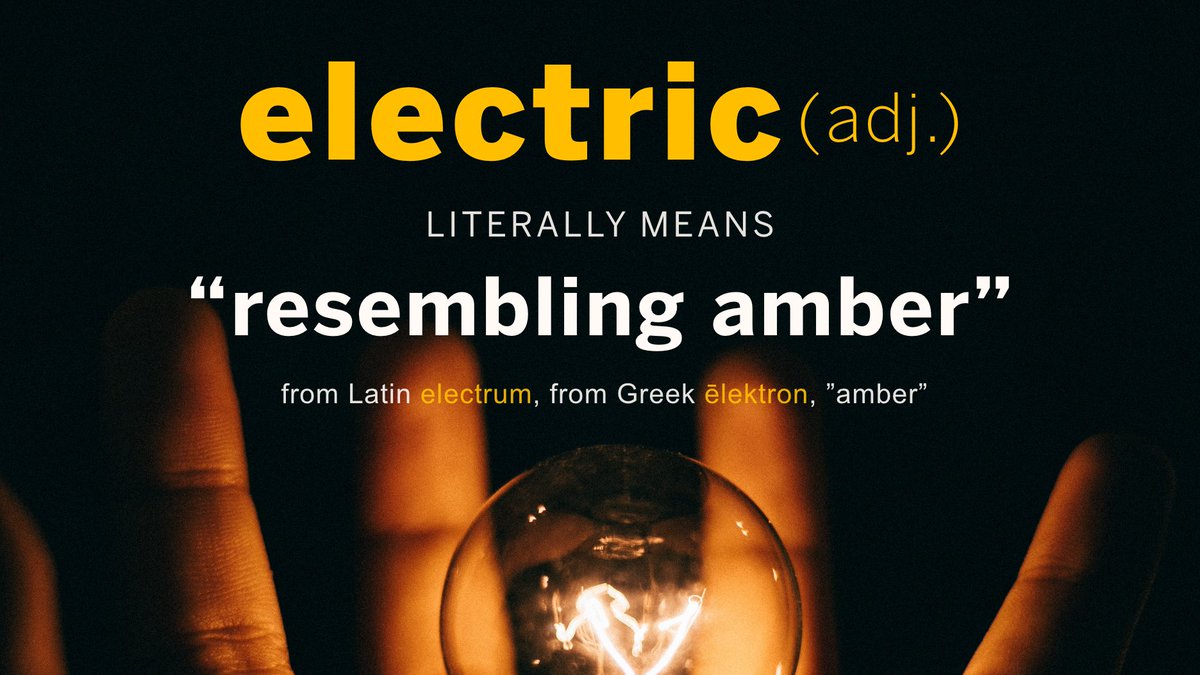
The word ELECTRIC was first coined in 1600 by physicist William Gilbert as Modern Latin electricus (literally "resembling amber"). The word comes from Greek ēlektron ("amber"), because when amber is rubbed against cloth it generates static electricity.
Ahoy! Today's #etymology is "opportunity," which comes from the Latin phrase "ob portum veniens," meaning “coming toward a port” (from ob “toward” + portus “port”). And as any sailor will tell you, opportunities are all about how you use the wind...
Need more proof that #etymology is magic? The word 'fascinate' comes from Latin fascinātus, past participle of fascināre, which literally means to "cast a spell on".
What's the #etymology behind the #coronavirus? The word 'corona' comes from Latin, and literally means a "crown". The name 'Coronavirus' refers to the fact that the virus has crown-like spikes which protrude from its membranes. 👑
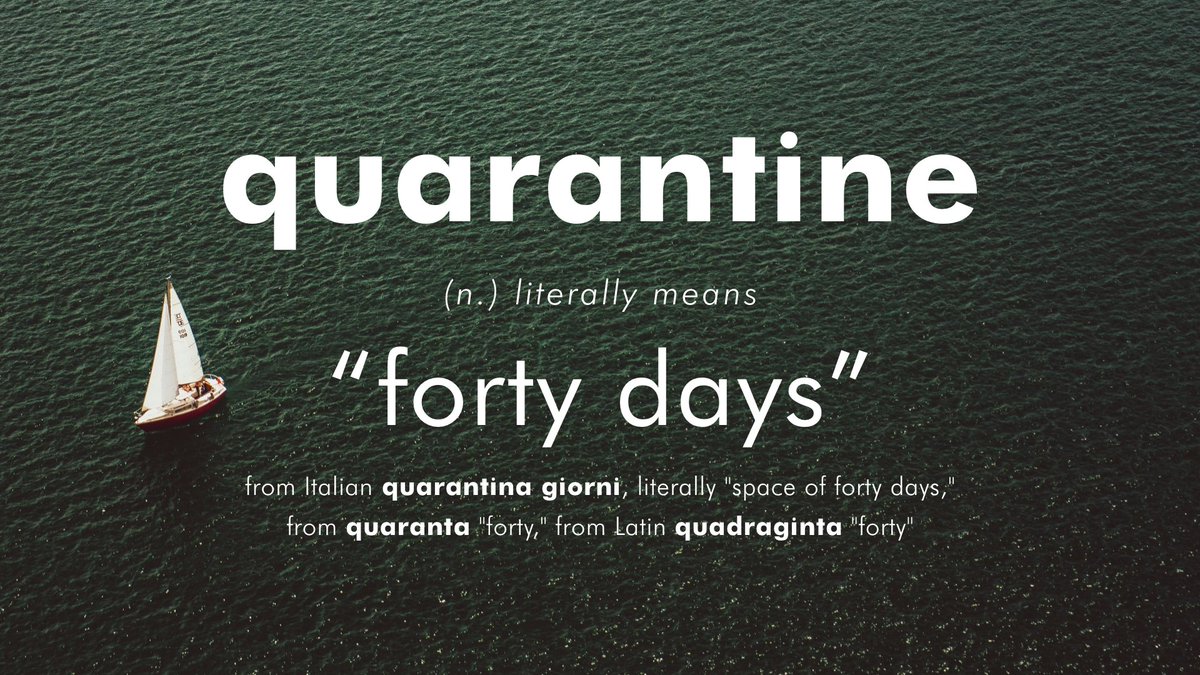
Here's some #etymology for the times. The word "quarantine" literally means "forty days," and refers to the 17th century practice of requiring ships from plague-stricken countries to wait outside the port, isolated for 40 days as a prevention against epidemic.
Did you know the word 'lady' literally means "bread-kneader"? It comes from the Old English roots hlāf (“bread, loaf”) + dīġe (“kneader”). So what about all you "lords" out there? Well, "lord' comes from Old English hlāfweard, which literally means... "bread-keeper".
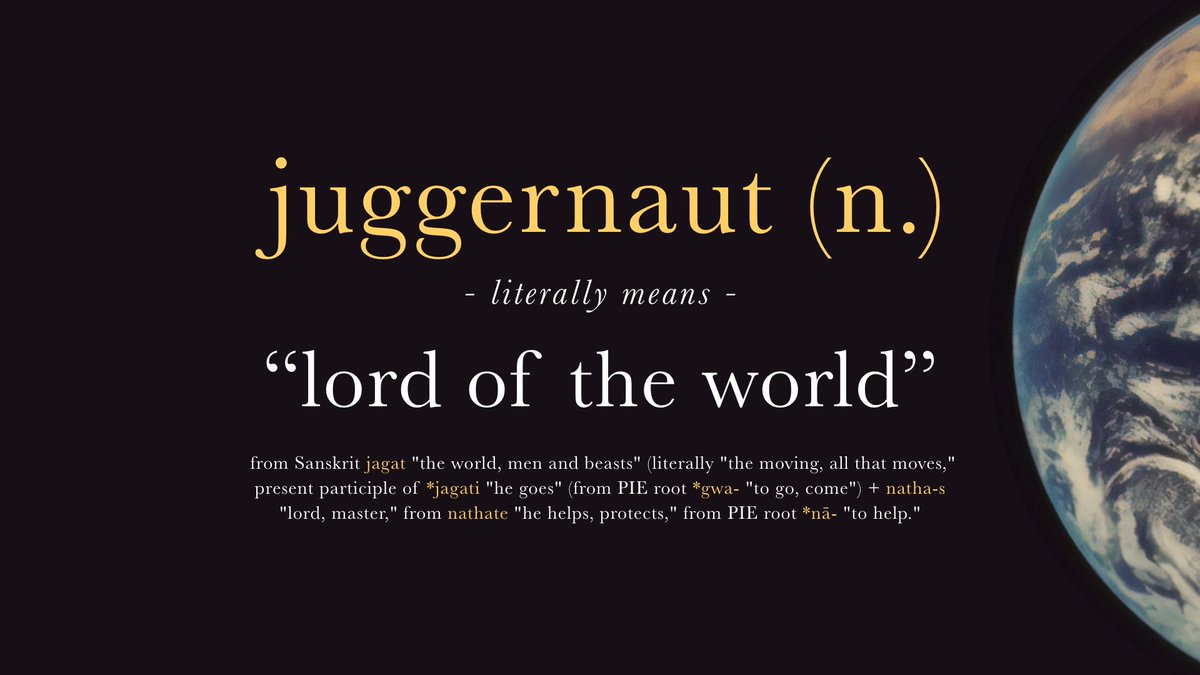
The word 'juggernaut' (n.) is derived from Sanskrit Jagannath, meaning "lord of the world" (from jagata "world" + natha "lord"). Jagannath is one of the names of Krishna found in the Sanskrit epics.
Here's some spooky #etymology. 'Mortgage' literally means "death pledge" (from Old French mort "dead" + gage "pledge"). Interestingly, this doesn't refer to an owner's death, but the contract itself. Either you pay it off and the debt "dies", or your claim to ownership does. ☠️
The word 'rosemary' comes from Latin rosmarinus, which literally means "dew of the sea" (from ros "dew" + marinus "of the sea, maritime). Ros comes from the PIE root *ers-, meaning "to be wet", and marinus comes from the PIE root *mori-, meaning "body of water". #etymology
Ever wonder about the #etymology of the word 'etymology'? It comes from the Greek word etymologia, which literally means "study of the true sense (of a word)", from -logia "study of" + etymon "true sense." Entomology? That's the study of insects.