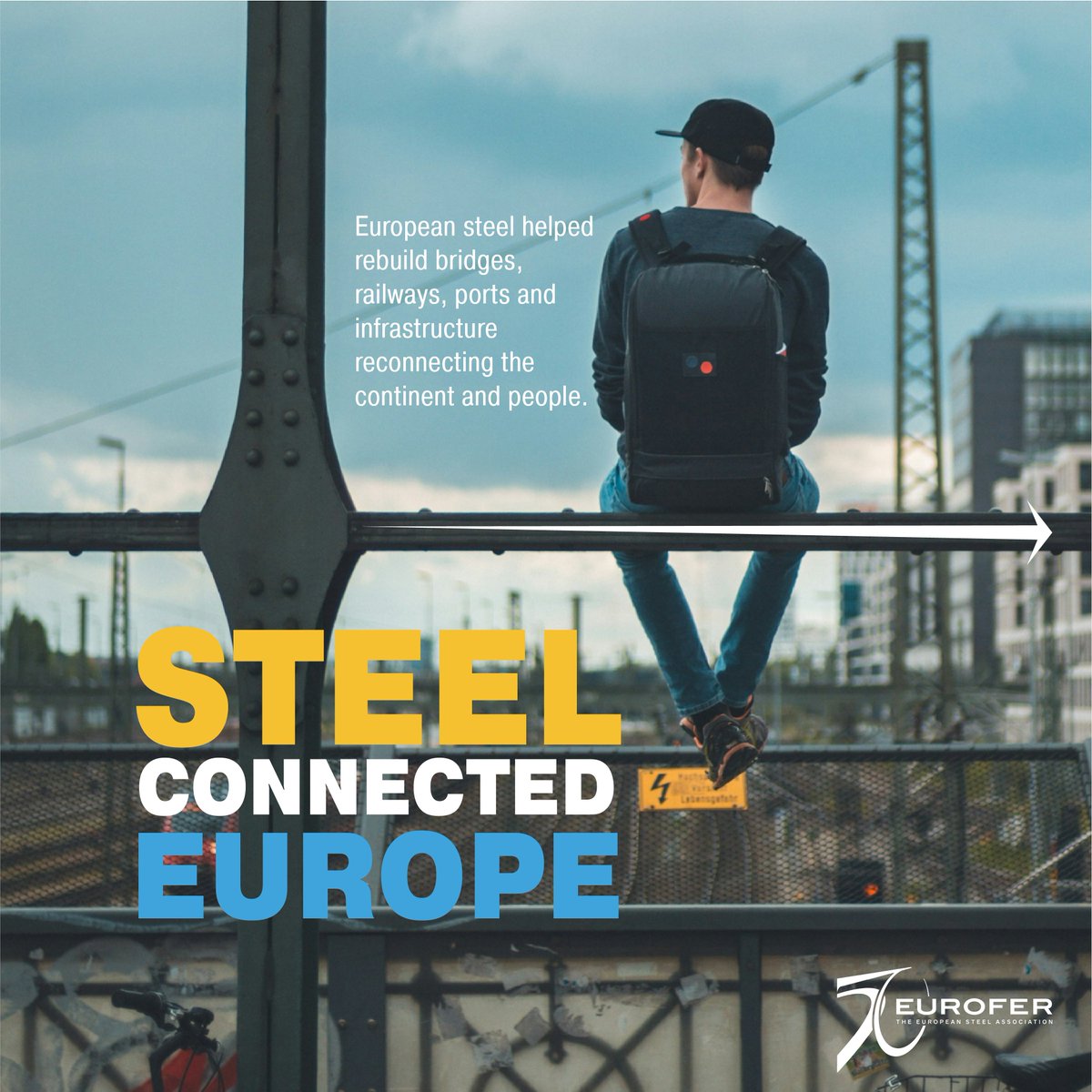
🇪🇺 Today on Europe Day, we remember how Europe chose cooperation over conflict. 🕊️
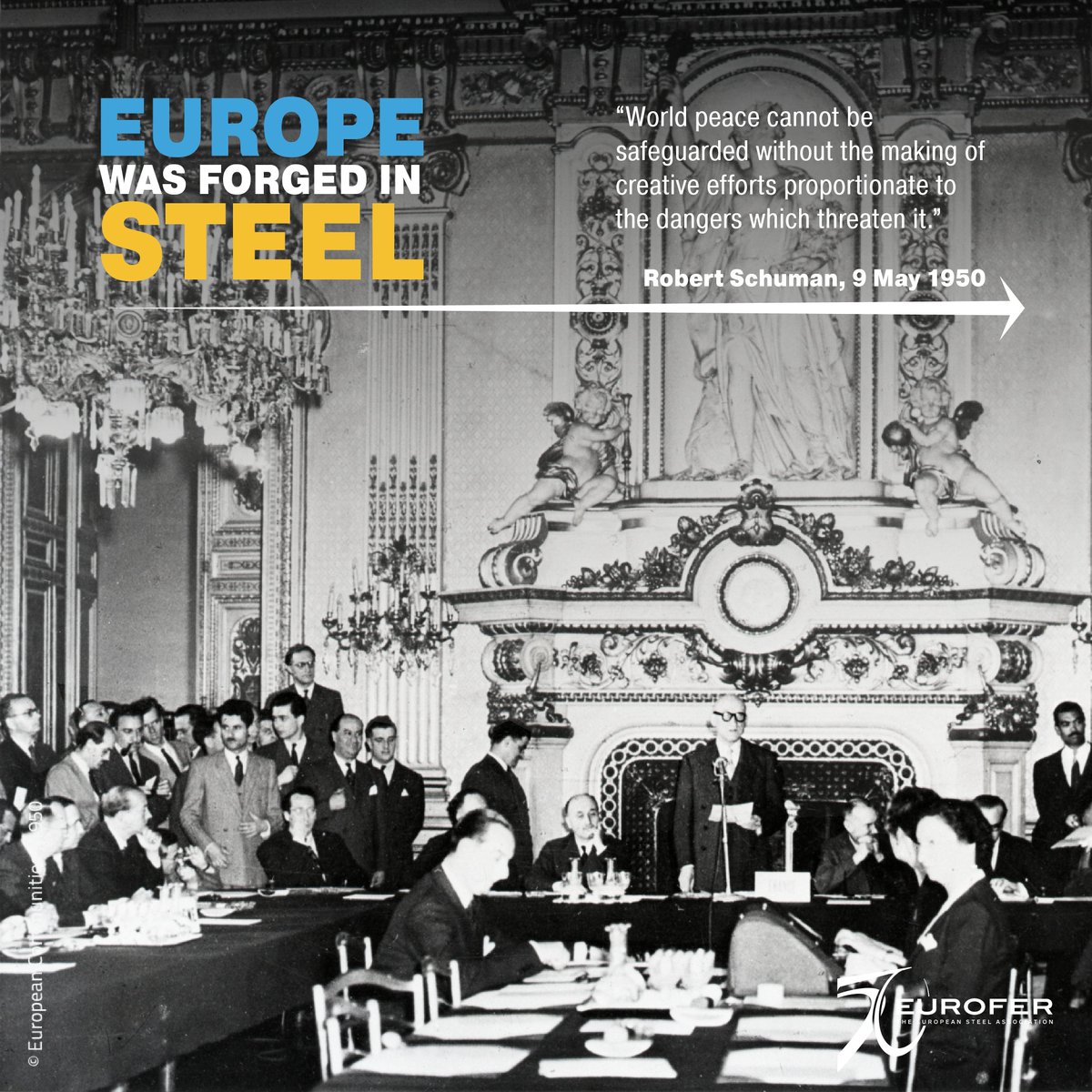
On 9 May 1950, the Schuman Declaration proposed placing coal and steel production under a common European authority.
This laid the foundations for what would become today’s European Union.
📘 𝐄𝐮𝐫𝐨𝐩𝐞𝐚𝐧 𝐒𝐭𝐞𝐞𝐥 𝐢𝐧 𝐀𝐜𝐭𝐢𝐨𝐧 2026 𝐢𝐬 𝐎𝐔𝐓 𝐍𝐎𝐖: 𝐂𝐨𝐦𝐩𝐞𝐭𝐢𝐭𝐢𝐯𝐞𝐧𝐞𝐬𝐬, 𝐝𝐞𝐜𝐚𝐫𝐛𝐨𝐧𝐢𝐬𝐚𝐭𝐢𝐨𝐧 𝐚𝐧𝐝 𝐭𝐡𝐞 𝐫𝐨𝐚𝐝 𝐚𝐡𝐞𝐚𝐝
As global competition intensifies and investment conditions come under increasing pressure, maintaining a strong steel industry in Europe is essential for economic resilience, strategic autonomy and the green transition.
📖 Read the @EUROFER_eu Annual Report 2026: https://t.co/xhF1Co6Moj
♻️🚢 It’s time to fix the double standards in ship recycling.
Together with @RecyclingEur and the NGO Shipbreaking Platform Platform, @EUROFER_eu is calling on the @EU_Commission to strengthen the implementation of the EU Ship Recycling Regulation and ensure that ship recycling facilities in third countries meet standards equivalent to those required in Europe.
Today, practices that would not be permitted in the EU can still be used to recycle EU-flagged vessels abroad.
If Europe is serious about promoting safe, environmentally sound and circular ship recycling, the rules must apply equally to all facilities seeking access to the European market.
Our recommendations include:
🔹 A clear ban on beaching and landing as dismantling methods
🔹 Equivalent authorisations and permits for third-country yards
🔹 Established a clear timeframe for inclusion or removal of ship recycling yards
🔹 Obligations to shipowners or states coming from other should be included in the guidelines.
🔹 Assessment of third countries yards should also cover facilities receiving and processing secondary raw materials from these yards, including steel processing installations
A genuine level playing field is essential not only for workers and the environment, but also for strengthening Europe’s recycling industry and securing valuable secondary raw materials.
📄 Read our joint position below.
The @Europarl_EN has approved the new trade measure for steel
The EU is taking action to preserve its domestic steel industry in the face of global overcapacity, trade diversion and rising geopolitical tensions.
The trade measure adopted by the European Parliament today – which must be in place by 1 July - will strengthen the EU’s ability to respond to import surges through:
✅ reinforced tariff-rate quotas
✅ stronger anti-circumvention provisions
✅ enhanced monitoring tools
✅ a 50% tariff above quota levels
At the same time, Europe will continue to remain one of the world’s most open steel markets.
A competitive and resilient steel industry is essential for Europe’s automotive sector, defence capabilities, energy transition, infrastructure and manufacturing future.
But protecting steel production alone is not enough.
The same thinking must now extend across the entire value chain, including downstream steel-containing goods, to ensure Europe does not lose both production and demand simultaneously.
🗞️Read the full press release: https://t.co/466PPRqBS1
𝐓𝐨𝐦𝐨𝐫𝐫𝐨𝐰’𝐬 @Europarl_EN 𝐯𝐨𝐭𝐞 𝐨𝐧 𝐭𝐡𝐞 𝐧𝐞𝐰 𝐄𝐔 𝐬𝐭𝐞𝐞𝐥 𝐭𝐫𝐚𝐝𝐞 𝐦𝐞𝐚𝐬𝐮𝐫𝐞 𝐢𝐬 𝐚𝐛𝐨𝐮𝐭 𝐟𝐚𝐫 𝐦𝐨𝐫𝐞 𝐭𝐡𝐚𝐧 𝐣𝐮𝐬𝐭 𝐬𝐭𝐞𝐞𝐥.
It is about whether the EU will continue produce the materials needed to support its automotive industry, energy transition, infrastructure, defence and manufacturing base.
For too many years, the European steel industry has been pushed to the brink: EU steel production hit historic lows in 2025 while imports reached record highs.
The new EU steel trade measure will help:
➡️ protect European steel production
➡️ safeguard hundreds of thousands of jobs
➡️ restore capacity utilisation
➡️ support continued investment in decarbonisation
This is not about closing Europe’s market.
The EU will remain one of the world’s most open steel markets, with around 18 million tonnes of steel imports continuing to enter tariff-free each year.
The proposal is WTO-compliant and has been strengthened by the European Parliament and Council of the European Union.
At a time of growing geopolitical uncertainty, this is also about Europe showing it can deliver for its industries, economies, regions and communities.
It demonstrates that the EU is prepared to act to defend its industrial base, strategic autonomy and economic security.
Timing is now critical.
The current steel safeguard expires on 30 June 2026. This new trade measure must enter into force by 1 July, otherwise the European steel industry risks being left exposed at a time of unprecedented global pressure.
👀 Watch the trade debate live today between 5pm-10pm: https://t.co/yc88Q1G4T1
Read the European Parliament plenary agenda: https://t.co/sqCy0fBTly
#EPlenary
🇪🇺 Today on Europe Day, we remember how Europe chose cooperation over conflict. 🕊️
On 9 May 1950, the Schuman Declaration proposed placing coal and steel production under a common European authority.
This laid the foundations for what would become today’s European Union.
Since then, steel has remained central to Europe’s development:
🔹connecting industries and supply chains
🔹building infrastructure
🔹strengthening Europe’s security and resilience
🔹enabling the clean transition
⚠️ Across Europe today, industry is sending a stark warning.
Companies from across 19 plants in Europe today held a one-hour suspension of production; a powerful signal from the electromechanical and electrical steel value chain, led by ESN Electromechanics Synergy Network based in Parma.
Their message is clear: without urgent action, entire industrial supply chains are at risk.
👉 EUROFER backs this call.
The EU’s steel trade measure is a crucial step forward which can help safeguard over 230,000 jobs, protect European steel capacity and support decarbonisation.
But this is only one side of the equation - We must also secure demand within Europe.
Protecting upstream steel production is essential, but so is ensuring that downstream industries can continue to operate and invest in Europe.
As ESN highlights: “Safeguarding the entire value chain - from magnetic laminations to electric motors and transformers - means protecting an industrial ecosystem that is critical to the energy transition, competitiveness, and Europe’s strategic autonomy.’
A strong European steel industry depends on a strong, competitive and protected value chain: from raw materials to final products.
Europe must act decisively to:
👉 address global overcapacity
👉 protect its industrial base and value chains
👉 and secure the conditions for a successful low-carbon transition
The alternative is clear: growing dependence on imports and the irreversible loss of strategic capacity.
🗞️ Read ESN manifesto: https://t.co/yYh5fiGXUF
🇪🇺 75 years on, Europe continues to build together. 🇪🇺
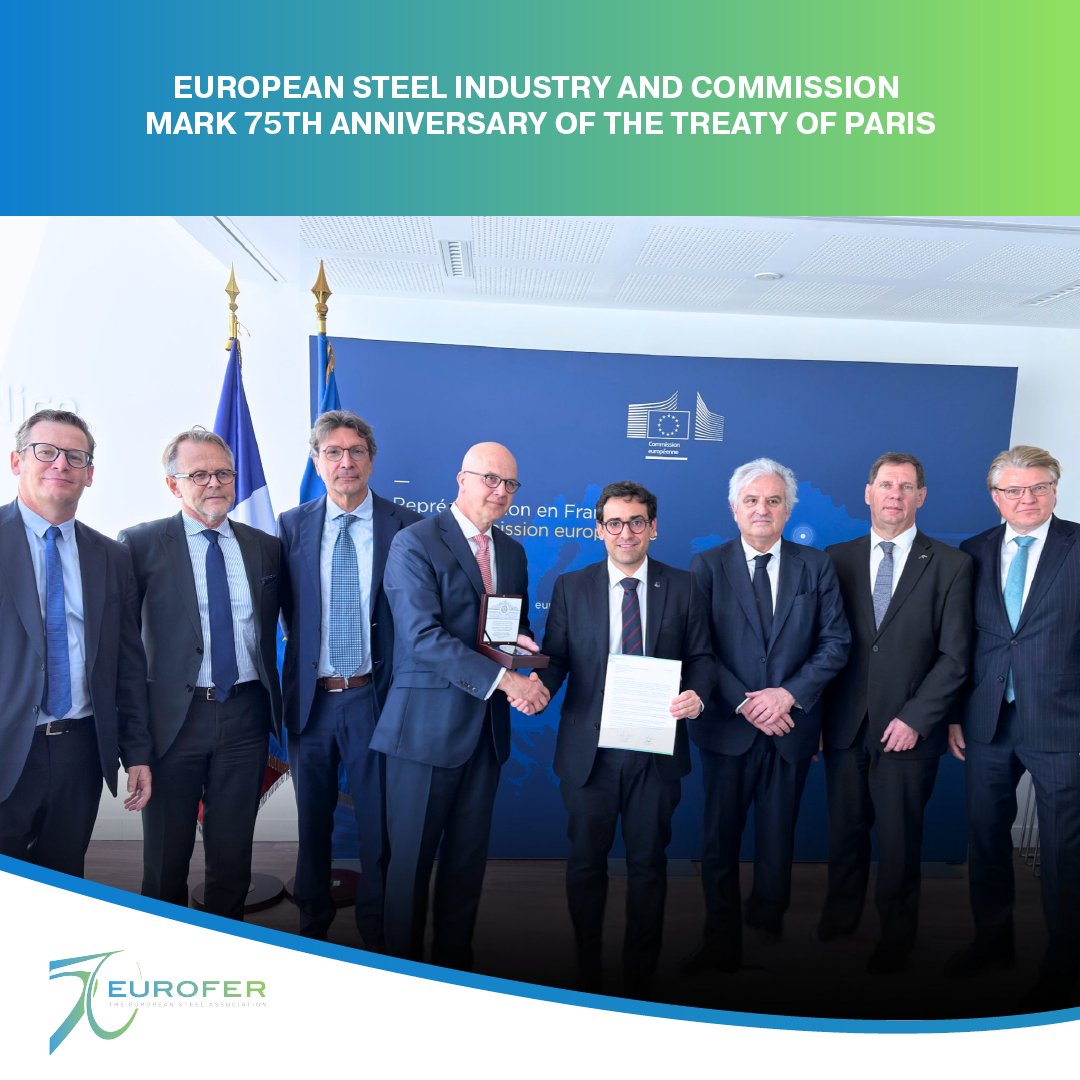
Today in Paris, Europe’s steel industry met with Executive Vice-President @steph_sejourne to mark 75 years since the Treaty of Paris was signed.
Today’s exchange was a reminder of what Europe can achieve when it works together and what still needs to be done.
Europe’s steel industry and EU institutions must continue working together to build a competitive, resilient and autonomous European future.