The Scientific Advice Mechanism provides independent scientific evidence & policy recommendations to the European institutions via the College of Commissioners
We're leaving X. 👋
Stay updated across all leading platforms:
LinkedIn: https://t.co/uXCdQ25qq8
Bluesky: https://t.co/t6O6DTuirz
Instagram: https://t.co/ZBfaZYhvPL
Threads: https://t.co/AtUTtNPGiW
Mastodon: https://t.co/bvmTRdZHwp
YouTube: https://t.co/uqtPLJQjw4
See you there!
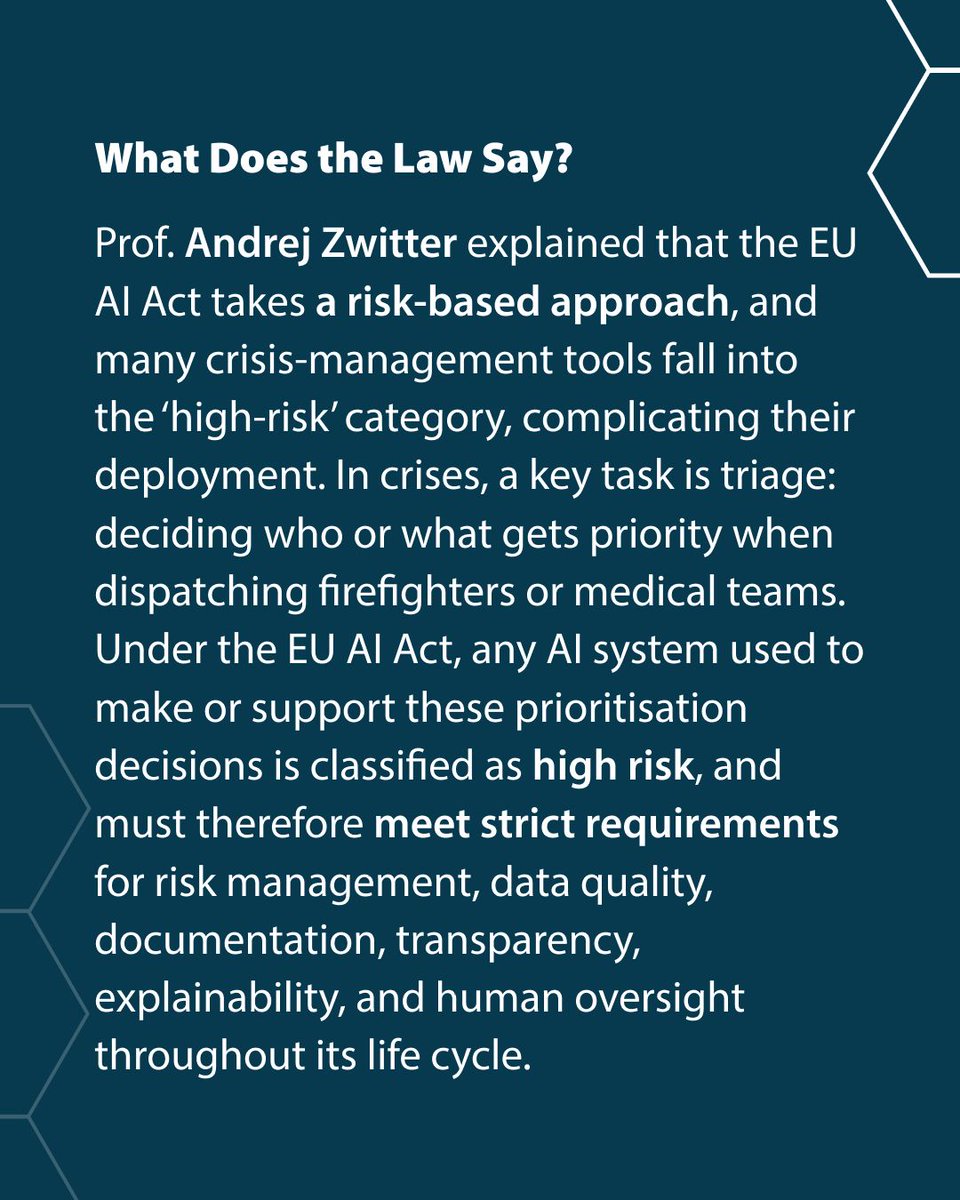
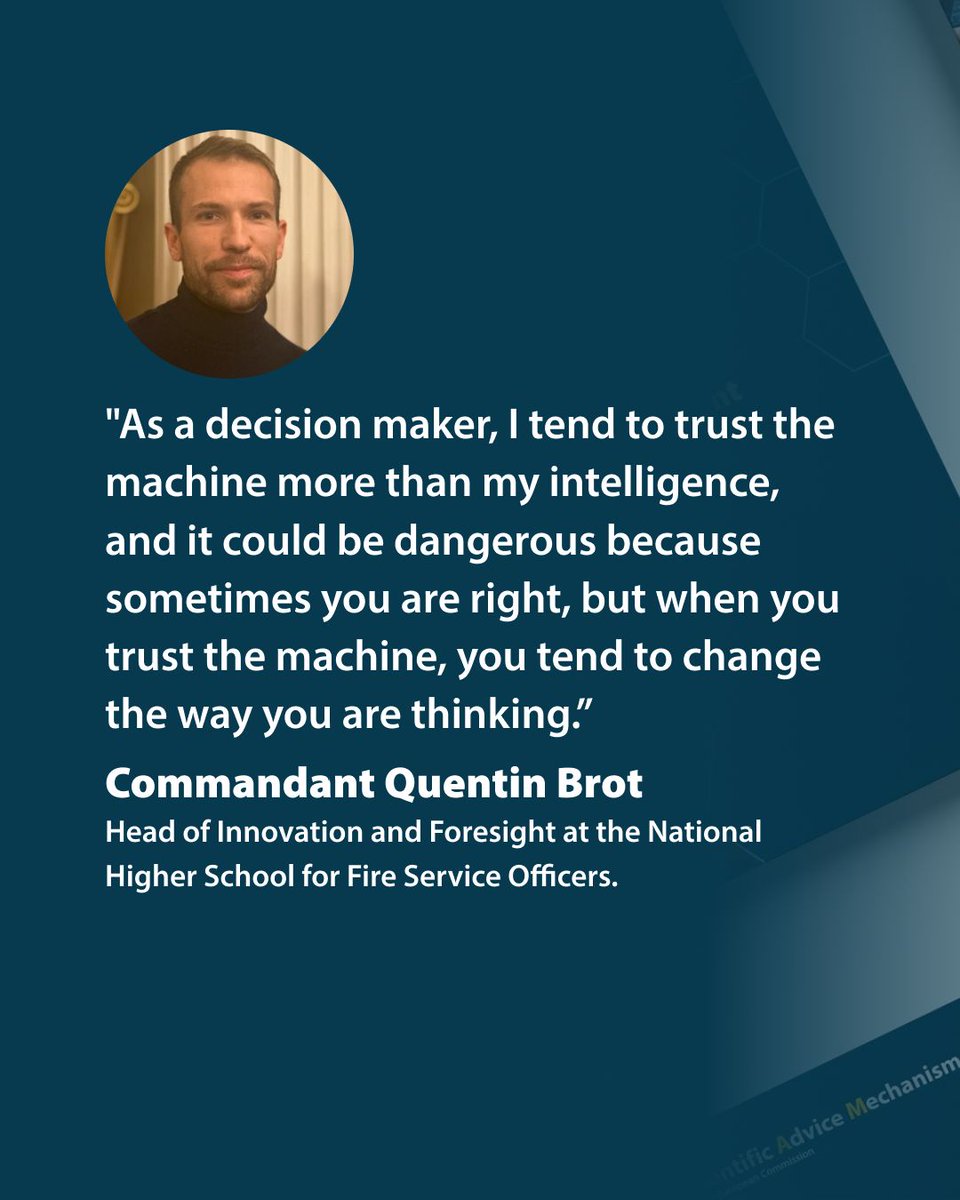
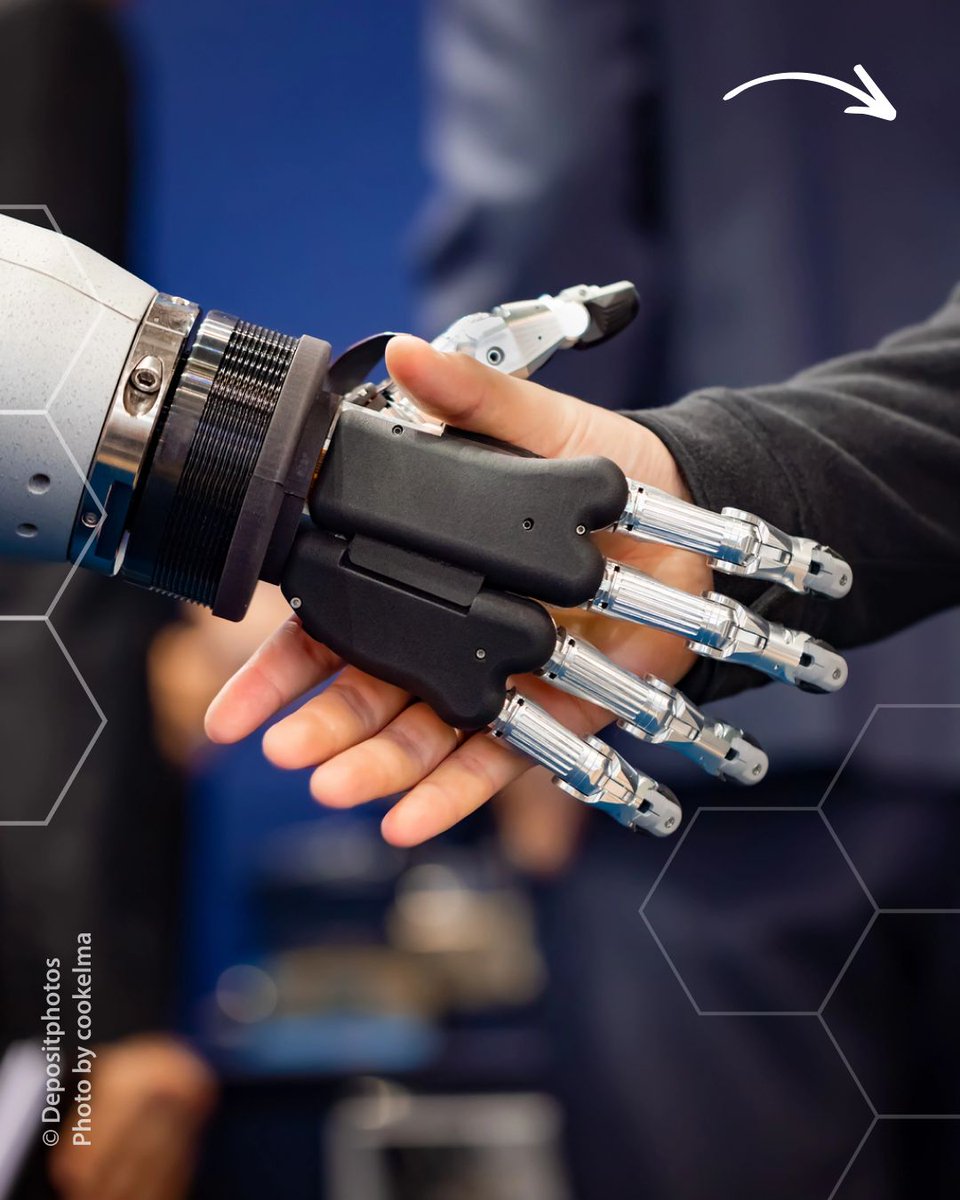
What made it particularly valuable was the diversity of perspectives, all converging on one message: the question is not whether AI has potential in crisis management, but whether we have the governance, the data quality, and the institutional readiness to use it responsibly.
2/2
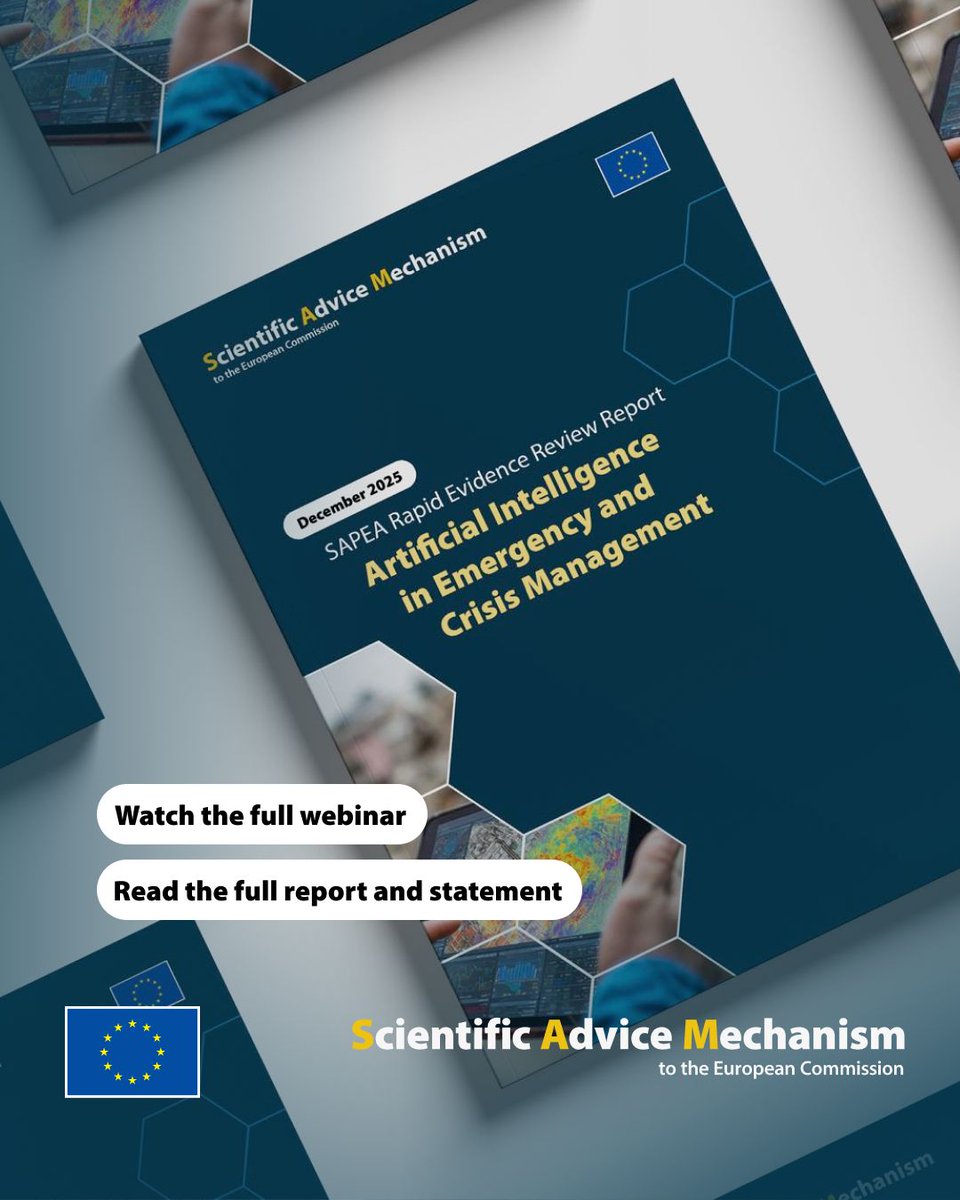
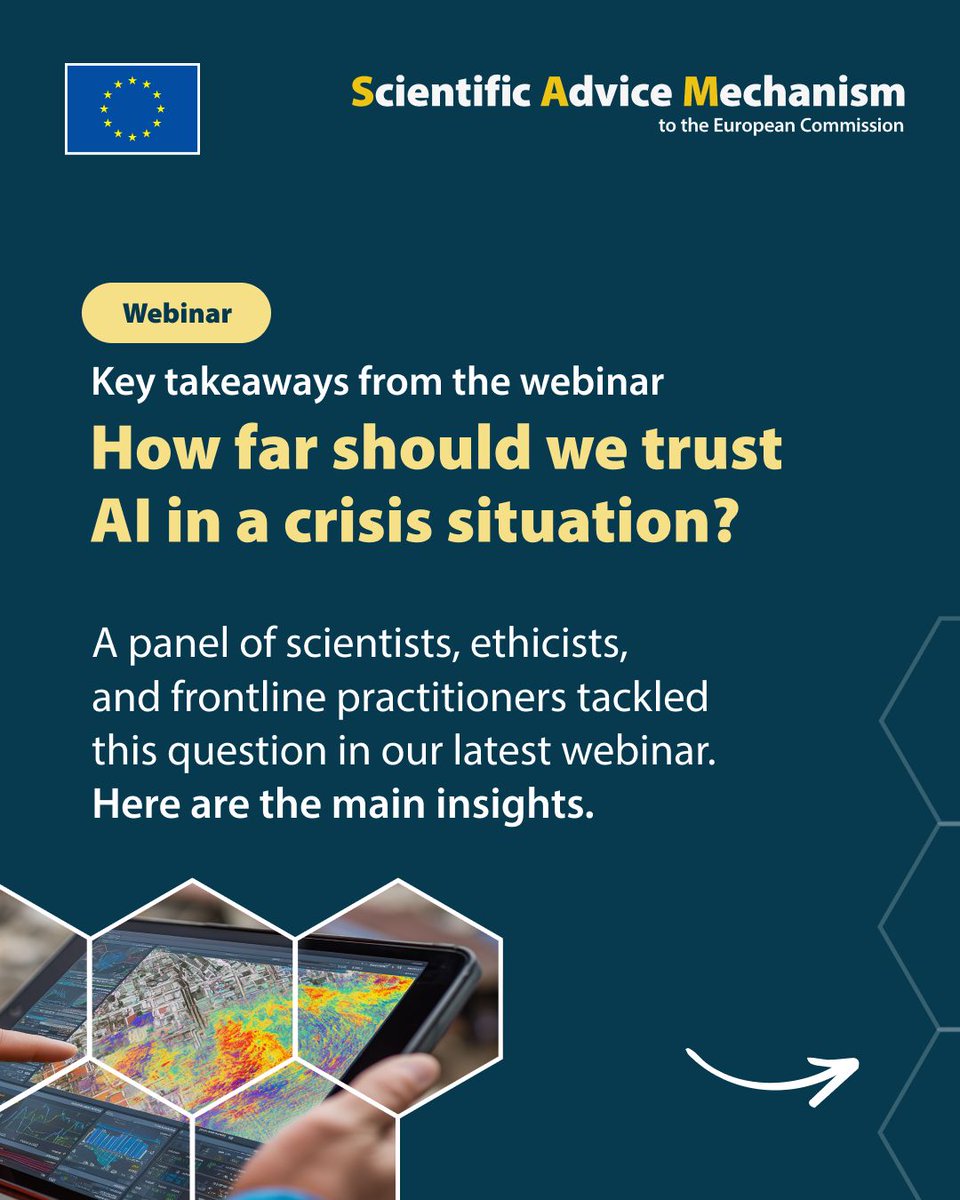
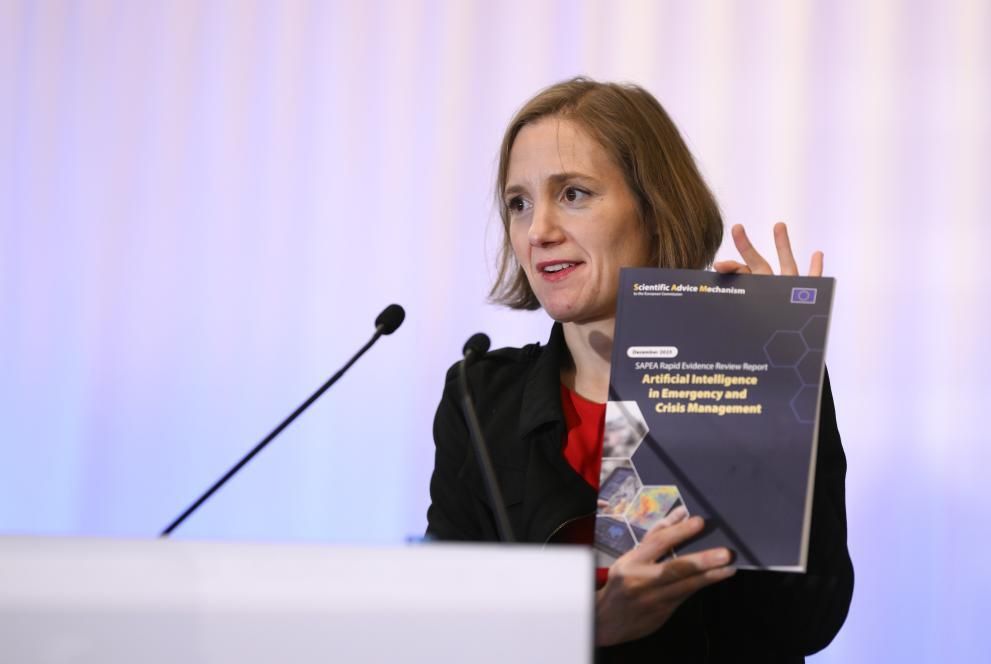
The Scientific Advice Mechanism recently held a webinar asking: “How far should we trust AI in a crisis situation?”
Watch the full webinar: https://t.co/VGBcxrt4DJ
Read our full article: https://t.co/JjGT3mELoQ
Access the reports: https://t.co/7eDW3akYQL
1/2
Starting today at 3:00 p.m. Brussels time, our webinar on ‘How far should we trust AI in a crisis situation?’ will explore whether artificial intelligence can be used responsibly, ethically, and safely in emergency and crisis management. https://t.co/P3Ep0MaP3x
Euro-CASE hopes to bring a diverse group of up to 300 leaders from across Europe for this event, including stakeholders from government, academia, industry, and civil society. Please contact [email protected] for further information and to register for the conference.
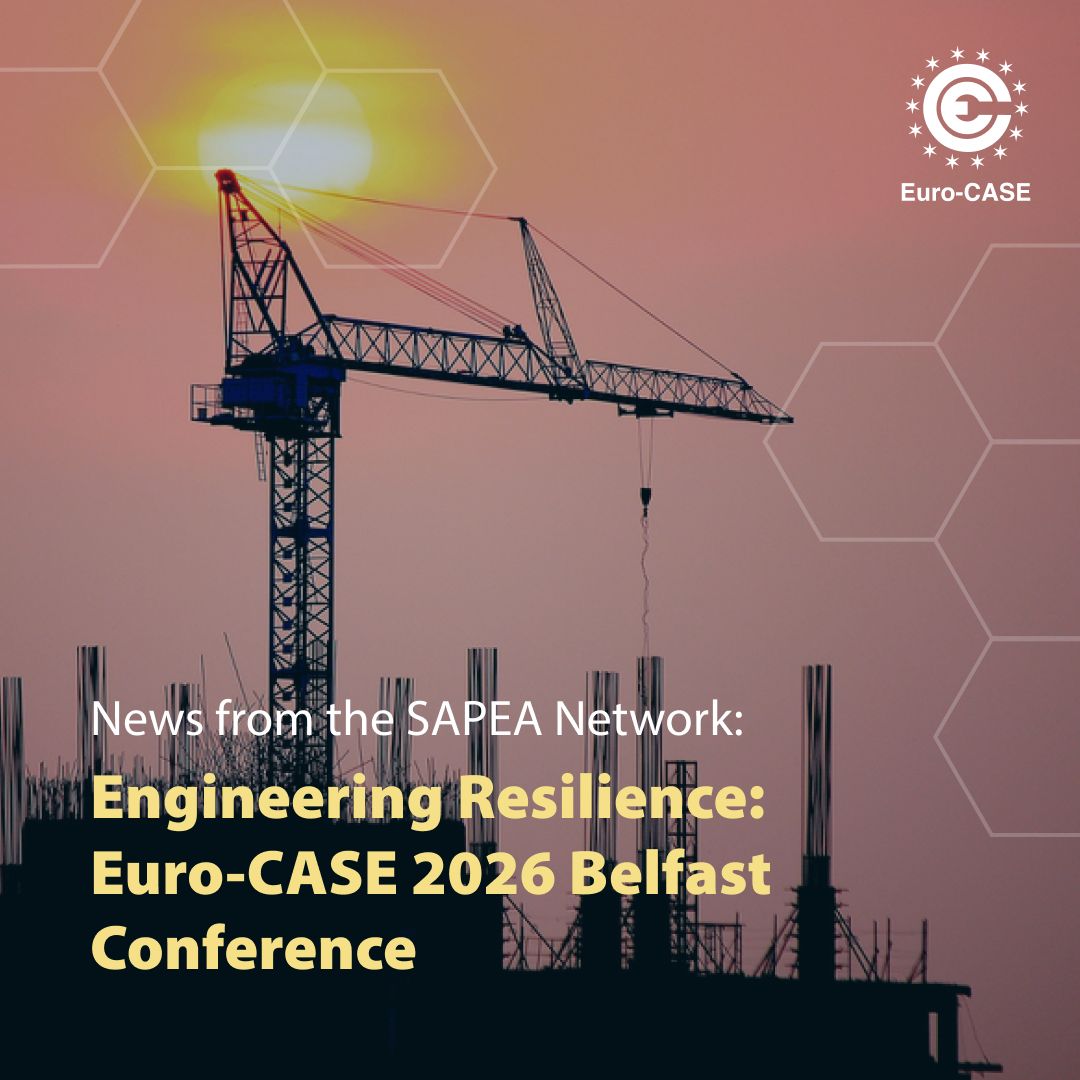
The 2026 Euro-CASE Annual Conference, "Engineering Resilience, securing Europe’s critical infrastructure in a changing world", will be organised in Belfast (Northern Ireland) on November 19, 2026. Additional details available on the Euro-CASE website: https://t.co/Lezabkl2hC
The even will steer conversations on how engineering thinking can strengthen Europe's critical infrastructure resilience, taking into account key challenges, geopolitical tensions, and system interdependencies.
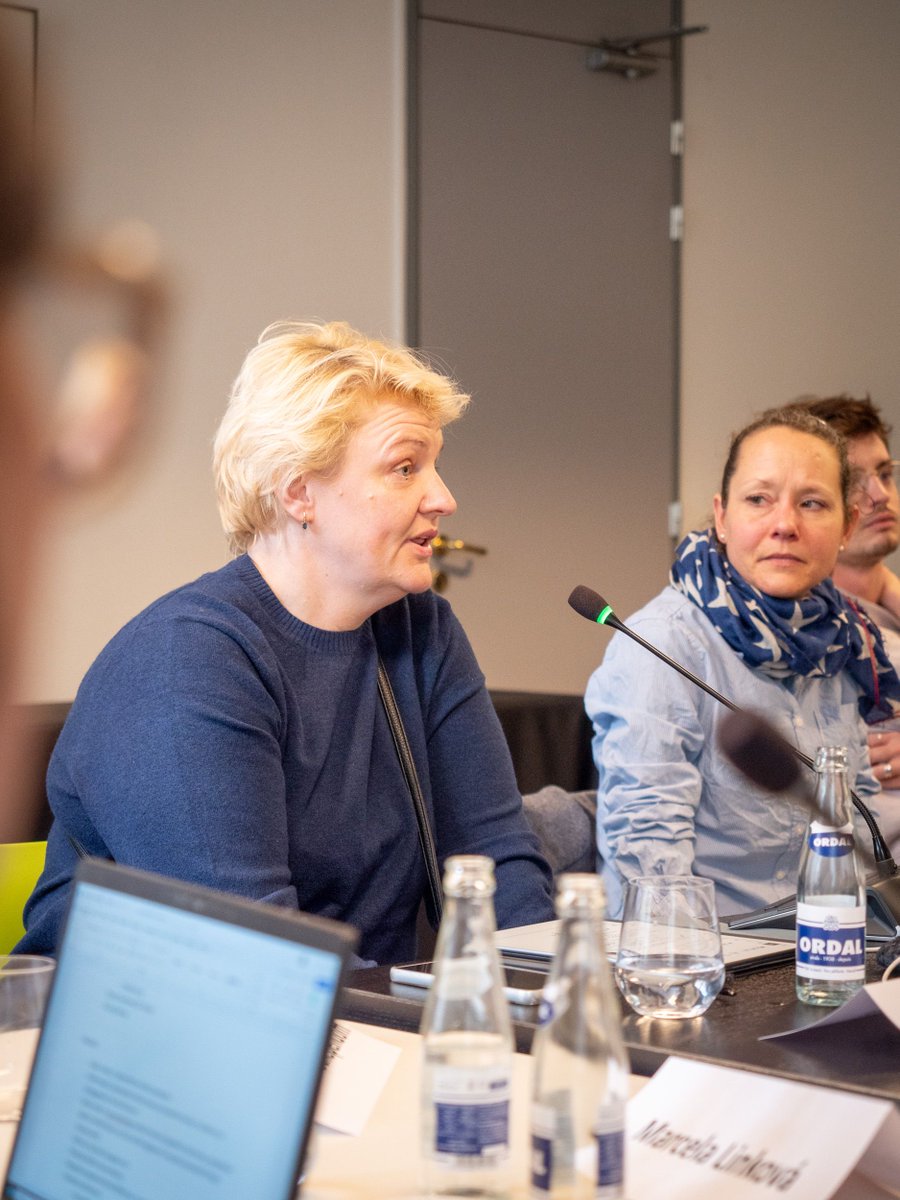
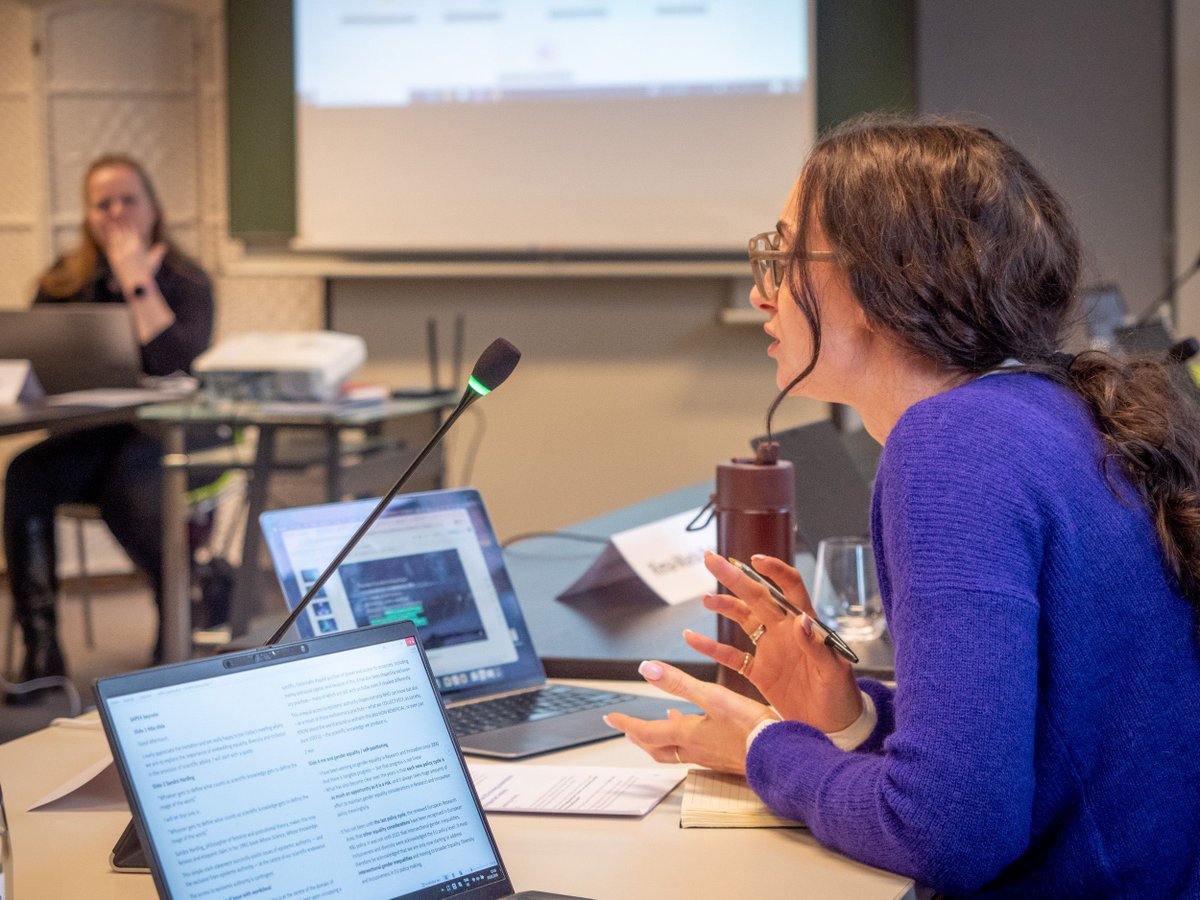
The session focuses on embedding EDI principles more deeply into SAPEA's scientific advisory work and activities.Participants also aim to develop concrete actions that will cascade through SAPEA's network of academies, ensuring that all voices are represented in shaping policies.
SAPEA is enhancing its EDI Strategy: Dr Jennifer McMahon (Chair of SAPEA EDI Working Group) and Noel de Miranda (President of YASAS, part of SAPEA) discuss a pivotal meeting bringing together equity, diversity, and inclusion experts from across Europe.
https://t.co/W0S8wzp1NT
Today is the International Day of Women and Girls in Science. SAPEA is developing a strategy to embed EDI principles across its scientific advisory work and activities, thereby contributing to sound, legitimate, and high-quality science advice. Read more: https://t.co/W0S8wzp1NT
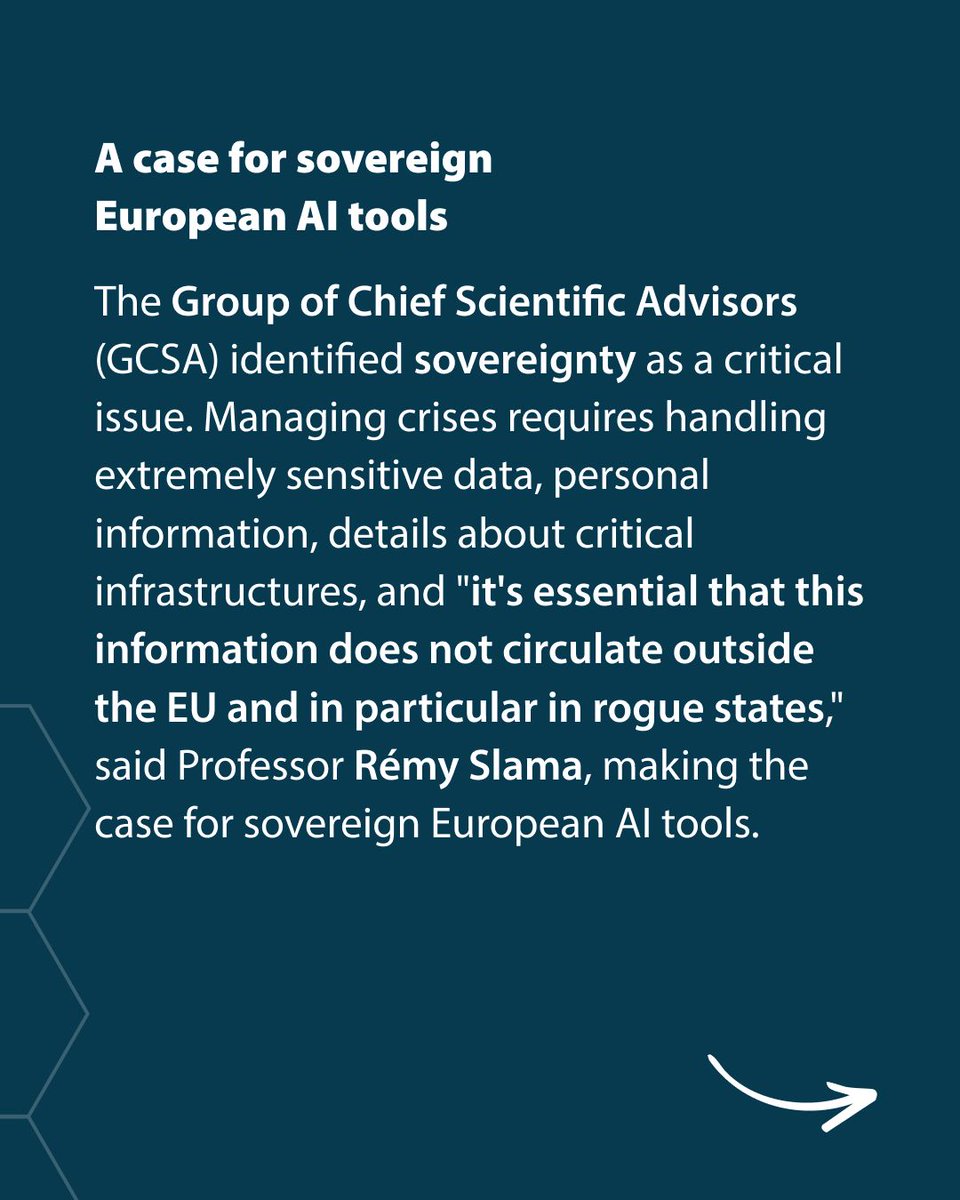
Following the publication of the Rapid Evidence Review, the Group of Chief Scientific Advisors issued a statement welcoming the report and stressing that the availability of AI tools must not replace inclusive decision-making. https://t.co/mweHJpDIt4
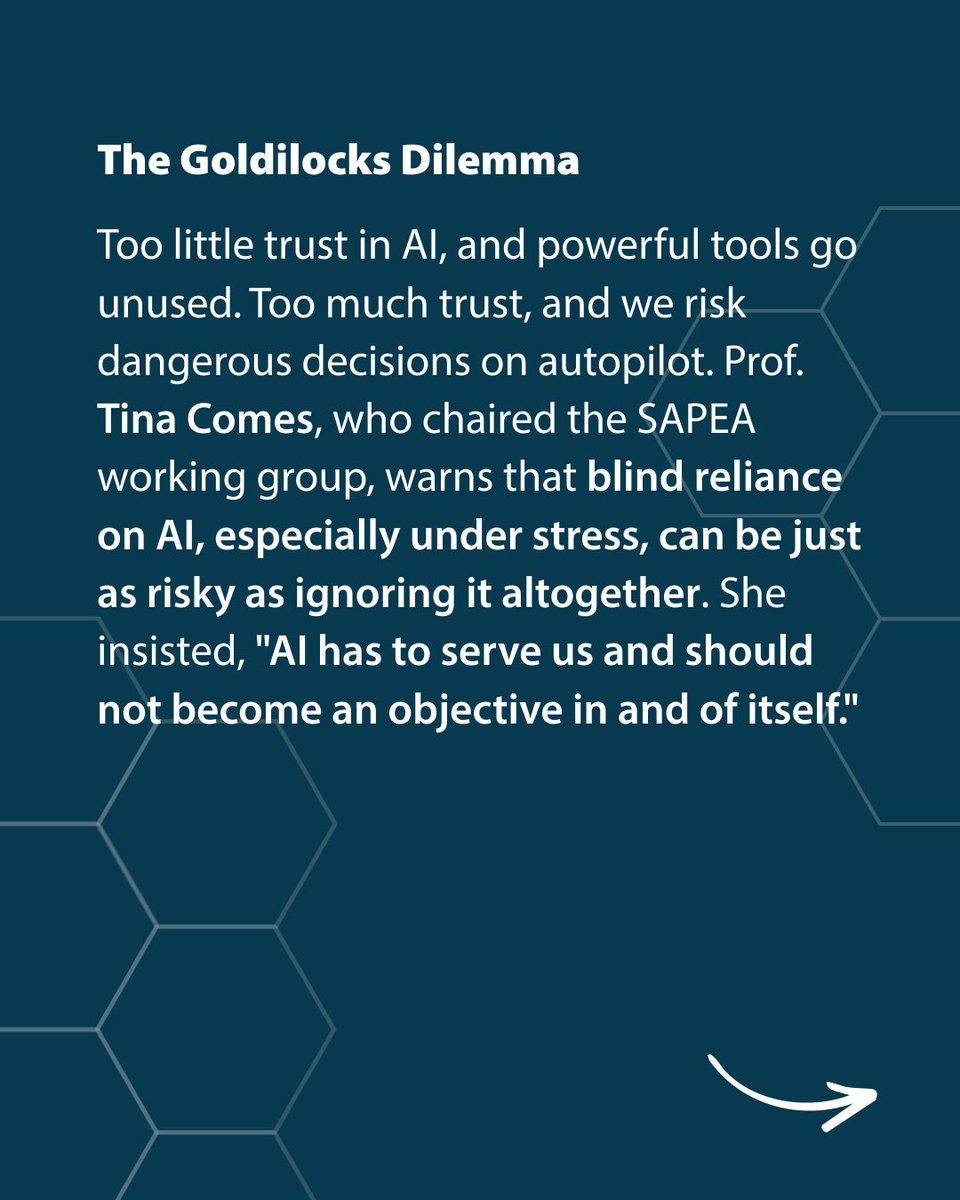
An insightful interview with Prof. Tina Comes on the role of responsible AI in disaster management. What stands out is the emphasis on AI as a tool that must be guided by transparency, accountability, and ethical oversight. https://t.co/gfDHoE0Jmu
The SAM is hosting a free webinar on "How far should we trust AI in a crisis situation?" on Wednesday, 25th February at 14:00 GMT (London) | 15:00 CET (Brussels) | 16:00 EET (Athens) – don't miss it! Register now to be part of this essential conversation.
https://t.co/x4lWIId9LD
Founded in 1993, the NAMS is the country’s leading institution dedicated to medical research, clinical excellence, and public health. It brings together a vast network of research institutes, hospitals, and expert scientists working across disciplines.
The Federation of European Academies of Medicine (FEAM) welcomed the National Academy of Medical Sciences of Ukraine as a new member. It reinforces the importance of solidarity, scientific cooperation, and shared values across Europe. https://t.co/PgZADxDoO4
This STOA workshop will explore how to integrate the social sciences and humanities into the design of key initiatives to align EU research with citizen needs and democratic values, and to better inform public policies and drive economic growth.
,"Humanities and social sciences at the heart of Europe's future: Interdisciplinary approaches to global challenges", a European Parliament's Panel for the Future of Science and Technology (STOA) workshop will take place on Tuesday, February 3 at 15:00 CET
https://t.co/MB9mnE4z9C
All European Academies (ALLEA) has awarded the 2025 Madame de Staël Prize to Maria Leptin, President of the ERC, in recognition of her exceptional leadership in European research and her commitment to advancing frontier science. Read more: https://t.co/uaBqsi6vPQ
Could you trust an AI to make life-or-death decisions during a crisis?
Join us for a thought-provoking webinar. Register now.
Wednesday, 25th February
15:00 GMT (London) -16:00 CET (Brussels) -17:00 EET (Athens)
https://t.co/x4lWIId9LD