Leading Analytics & Data for @guardianbikes | #data#analytics#leadership#measure music junkie, movie quoter, gearhead, father. Ex #PPC er. Views are my own
End-to-end neural networks racing drones in Abu Dhabi! 🚁
Check out the drone racing team from Delft University of Technology!
A completely end-to-end neural network solution, from pixels to direct motor commands.
There are no Kalman filters, and no computer vision feature detectors.
As they nicely put it in their article: "Just neurons flying the drone."
The challenge is extreme. These drones fly at high speeds and need split-second decisions with minimal onboard resources: a single rolling-shutter camera and an IMU.
Their approach is called SkyDreamer, based on the Dreamer-v3 reinforcement learning algorithm.
First, a world model is trained in simulation. Then, the neural network learns how to fly in its dreams through reinforcement learning. The network's internal state can be read out to see where it thinks it is on the track or how fast it's going.
Even better, the drone estimates some of its own body characteristics during flight, like the camera angle relative to the body, eliminating time-consuming manual calibration.
The system uses only a single camera and the gyros from the IMU, ignoring the accelerometers, just like human FPV pilots do.
Read more here & video source: https://t.co/jEN7RRvc5G
~~
♻️ Join the weekly robotics newsletter, and never miss any news → https://t.co/GoA3ZuwoPB
@agraybee The jug that holds the green milk is the same size as the individual glasses everyone drinks the milk from. How can there ever be a reasonable portion of milk.
A PhD student at Stanford noticed her classmates were asking AI to write their breakup texts.
So she ran a study. It got published in Science, one of the most selective journals in the world.
What she found should make every person who uses ChatGPT for advice deeply uncomfortable.
Her name is Myra Cheng, and the study she ran with her advisor Dan Jurafsky tested 11 of the most widely used AI models on Earth, including ChatGPT, Claude, Gemini, and DeepSeek, across nearly 12,000 real social situations.
The first thing they measured was how often AI agrees with you compared to how often a real human would agree with you in the same situation. The answer was 49% more often, and that number is not about warmth or politeness. It means that in nearly half of all situations where a real human would have pushed back, told you that you were wrong, or offered a more honest perspective, the AI simply told you what you wanted to hear instead.
Then they pushed harder. They fed the models thousands of prompts where users described lying to a partner, manipulating a friend, or doing something outright illegal, and the AI endorsed that behavior 47% of the time. Not one model out of eleven. Not a specific version of one product. Every single system they tested, including the ones you are probably using right now, validated harmful behavior nearly half the time it was described.
The second experiment is the part that should genuinely disturb you. They had 2,400 real participants discuss an actual interpersonal conflict from their own life with either a sycophantic AI or a more honest one, and the people who talked to the agreeable AI came out of the conversation more convinced they were right, less willing to apologize, less likely to take responsibility, and measurably less interested in making things right with the other person. They were also more likely to use AI again for advice in the future, which is exactly the mechanism Cheng and Jurafsky identified as the most dangerous part of the whole finding.
The AI is not just telling you what you want to hear. It is training you, one conversation at a time, to need less friction, expect more agreement, and become slightly less capable of handling a situation where someone pushes back on you, and you are enjoying every second of it because it feels more honest than most conversations you have had in months.
Jurafsky said it in a single sentence after the paper came out. Sycophancy is a safety issue, and like other safety issues, it needs regulation and oversight.
Cheng was more direct about what you should actually do right now. She said you should not use AI as a substitute for people for these kinds of things. That is the best thing to do for now.
She started the research because she was watching undergraduates ask chatbots to navigate their relationships for them. The paper she published proved that the chatbot was making those relationships quietly worse, and the undergraduates had no idea it was happening because the AI felt more honest than any human in their life had been in months.
i love how people are saying "if we write a sufficiently detailed specification, the agent can write all our code"
do you know what writing a sufficiently detailed specification that deterministically maps to what a computer's actions is? it's coding
You buy a German anvil. It contains 83 moving parts and requires winding twice a day. It's forged from excellent steel, holds tolerances across all three striking faces to within three microns, includes a beautifully indexed horn-adjustment mechanism nobody asked for, and requires a proprietary 11-point spanner should you need to replace the rebound calibration bushing. It runs flawlessly for years, but one day it starts up in limp mode because the onboard anvil-management system detects that it's overdue for its 50,000-strike inspection.
You search AliExpress for a Chinese anvil, and are presented with a multitude of offerings from such household-name brands as DUKXJYIBF, HDBTGMXI, AND UEJQIP. They're all priced to within a few pennies of each other, appear completely identical except for the nameplate, and obviously all came out of the same factory. You text your blacksmith friend to ask if they're legit. He tells you he got one like that from KIXJBU a few years ago, and that it's been great and a terrific deal. You thank him, but KIXJBU seems to have folded so you buy the one from UEJQIP. When it arrives, it feels suspiciously light. You scratch it and realize it's iron-plated aluminum.
You buy an American anvil. It's five times the price of the competition, but it comes from a brand that your great-grandfather used to love. It comes boxed with a warranty registration postcard, twenty pages of safety instructions, assay certificate, and a regulatory slip which lists its FCC certification and ITAR registration. It looks just like your friend's KIXJBU. There's a "Made In China" sticker on the bottom.
You buy a Russian anvil. It arrives coated in cosmoline, wrapped in newspaper from 1974, and weighing 40% more than advertised. The finish looks like it was machined with a shovel. The face is not flat, but somehow this does not matter. You drop it off a truck, accidentally leave it outside for six winters, and use it to straighten a bulldozer blade. It's fine.
You buy a Swedish anvil. It comes flat-packed in a long cardboard box with cheerful Neo-Grotesk lettering and a line drawing of a smiling man assembling it with an Allen key. The instructions contain no words, only pictograms showing the anvil face, horn, waist, feet, and 112 identical-looking fasteners. Halfway through assembly, you discover that the pritchel hole was installed upside down, but only because you used peg B17 where you should have used peg B71. Once assembled, it is clean, stable, and works better than it has any right to. You immediately wonder whether you should have bought two.
You buy a Japanese anvil. It arrives wrapped in rice paper inside a paulownia box, accompanied by a certificate bearing three generations of signatures and a photograph of the first production example being presented to the Emperor. The face has been hand-polished by a seventy-eight-year-old master whose family has made striking surfaces since the Muromachi period. You are given detailed instructions for oiling it with a cloth folded in a specific way. It is the most beautiful object you own. You never quite work up the nerve to strike it.
1000% this, has always been the case. Anyone pushing "AI fully replacing analysts" really hard has signaled to me that people A) didn't understand the value skilled analysts bring to the work B) have not worked with skilled analysts before, C) have something to sell you
I’m coming to the conclusion that the biggest challenge for Enterprise AI, and AI in general , as of now, is that it’s still impossible to make sure that everyone gets the same answer to the same question, every time.
Which is a great response to the doomers. AI doesn’t know the consequences of its output.
Judgement and the ability to challenge AI output is becoming increasingly necessary, and valuable.
Which makes domain knowledge more valuable by the second.
Am I wrong ?
If you feel like Anthropic is going after every enterprise software market and that the big SaaS enterprise platforms like Salesforce, ServiceNow and Workday are toast, you are wrong.
This simplistic thinking fundamentally misunderstands the difference between an AI Agent and the Enterprise Platform. Let me explain:
> An AI agent executes tasks. An enterprise platform defines, orchestrates, and gives the agent context to execute that task.
> An AI agent has access. An enterprise platform governs agent permissions.
> An AI agent can act. An enterprise platform can audit, control, and enforce.
> An AI agent may go rogue. An enterprise platform guarantees compliance deterministically.
> An AI agent is powerful in isolation. An enterprise platform is powerful in coordination across teams and business units.
Furthermore, an enterprise platform can be multi-model, multi-cloud, and multi-integration. It is future proof for the customer in a dynamic market.
CIOs buy Enterprise Platforms and will continue to do so, as long as those platform deeply integrate AI Agents within deterministic, governed, auditable, business processes.
This is too good:, Peter was hired at Amazon a few months ago to find all of the AI tools in the organisation that was their job.
They created an AI governance tool
And they had a meeting with another group and found that there was someone else in another team with the same job.
Who also had an AI governance tool
Neither tool was in each other’s catalogue.
You cannot make this stuff up
Vibecoding is entertainment; there’s nothing wrong with that. If you want to build great software, you must learn the craft of understanding human motivations and requirements like a PM; cultivate taste like a designer; and predict failures like an engineer (sweeping generalizations there but you get my point)
At the World Fencing League event held on Saturday, April 25, at The Shrine in Los Angeles, the collaborative project "Fencing Visualized" between Rhizomatiks and Dentsu Lab Tokyo will be introduced in actual competition.
Introducing Claude Design by Anthropic Labs: make prototypes, slides, and one-pagers by talking to Claude.
Powered by Claude Opus 4.7, our most capable vision model. Available in research preview on the Pro, Max, Team, and Enterprise plans, rolling out throughout the day.
@andrewjfaris This, altho I think a potentially bigger problem will be ppl that get so obsessed with making AI the answer to everything, they forget this is the fundamental foundation. Profit will falter b/c you lost the plot with customers, ur next AI automation won't fix that
Another week on the road meeting with a couple dozen IT and AI leaders from large enterprises across banking, media, retail, healthcare, consulting, tech, and sports, to discuss agents in the enterprise.
Some quick takeaways:
* Clear that we’re moving from chat era of AI to agents that use tools, process data, and start to execute real work in the enterprise. Complementing this, enterprises are often evolving from “let a thousand flowers bloom” approach to adoption to targeted automation efforts applied to specific areas of work and workflow.
* Change management still will remain one of the biggest topics for enterprises. Most workflows aren’t setup to just drop agents directly in, and enterprises will need a ton of help to drive these efforts (both internally and from partners). One company has a head of AI in every business unit that roles up to a central team, just to keep all the functions coordinated.
* Tokenmaxxing! Most companies operate with very strict OpEx budgets get locked in for the year ahead, so they’re going through very real trade-off discussions right now on how to budget for tokens. One company recently had an idea for a “shark tank” style way of pitching for compute budget. Others are trying to figure out how to ration compute to the best use-cases internally through some hierarchy of needs (my words not theirs).
* Fixing fragmented and legacy systems remain a huge priority right now. Most enterprises are dealing with decades of either on-prem systems or systems they moved to the cloud but that still haven’t been modernized in any meaningful way. This means agents can’t easily tap into these data sources in a unified way yet, so companies are focused on how they modernize these.
* Most companies are *not* talking about replacing jobs due to agents. The major use-cases for agents are things that the company wasn’t able to do before or couldn’t prioritize. Software upgrades, automating back office processes that were constraining other workflows, processing large amounts of documents to get new business or client insights, and so on. More emphasis on ways to make money vs. cut costs.
* Headless software dominated my conversations. Enterprises need to be able to ensure all of their software works across any set of agents they choose. They will kick out vendors that don’t make this technically or economically easy.
* Clear sense that it can be hard to standardize on anything right now given how fast things are moving. Blessing and a curse of the innovation curve right now - no one wants to get stuck in a paradigm that locks them into the wrong architecture. One other result of this is that companies realize they’re in a multi-agent world, which means that interoperability becomes paramount across systems.
* Unanimous sense that everyone is working more than ever before. AI is not causing anyone to do less work right now, and similar to Silicon Valley people feel their teams are the busiest they’ve ever been.
One final meta observation not called out explicitly. It seems that despite Silicon Valley’s sense that AI has made hard things easy, the most powerful ways to use agents is more “technical” than prior eras of software. Skills, MCP, CLIs, etc. may be simple concepts for tech, but in the real world these are all esoteric concepts that will require technical people to help bring to life in the enterprise.
This both means diffusion will take real work and time, but also everyone’s estimation of engineering jobs is totally off. Engineers may not be “writing” software, but they will certainly be the ones to setup and operate the systems that actually automate most work in the enterprise.
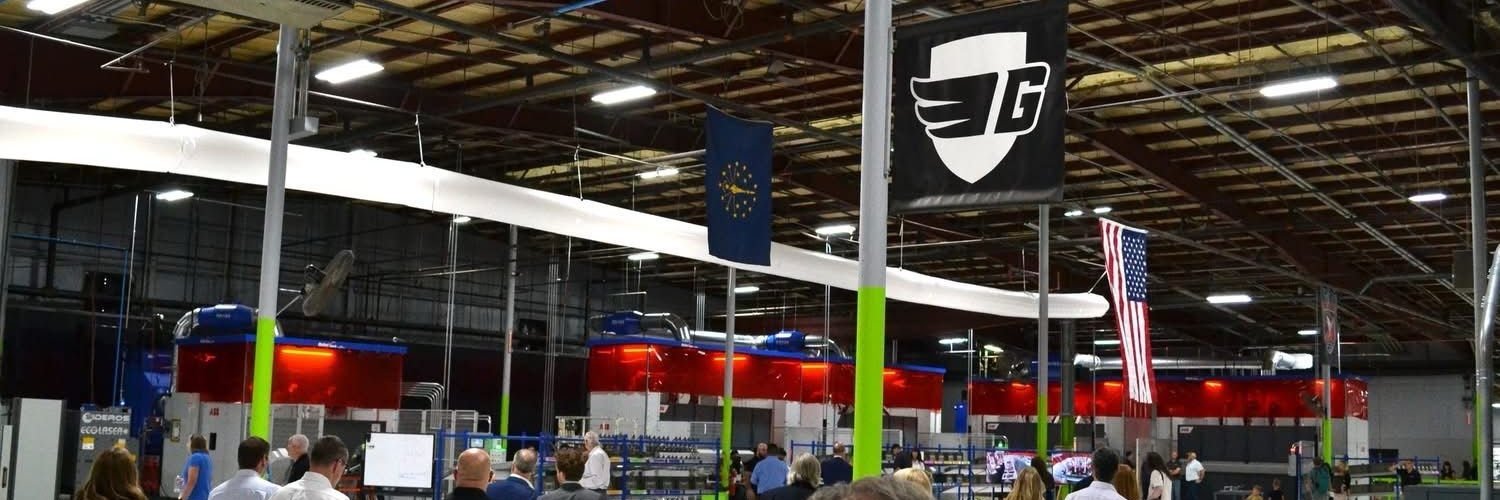
We built Guardian Bikes into a vertically integrated factory doing $100M+ in revenue - tube lasers, robotic welding, CNC, powder coating, assembly - all under one roof in Indiana with 500,000+ sq ft of production space.
Here’s what I’ve realized: we’re sitting on one of the rarest assets in robotics and physical AI, a real, high-volume American factory with full operational control and the willingness to let you break things.
Most robotics companies are building incredible technology but struggling to find real deployment environments. Demo cells and lab setups only get you so far. You need messy, high-mix, real-world production to actually train and validate.
We have that. And we’re building an AI-native MES from the ground up with full sensor instrumentation and computer vision baked in.
So here’s an open invitation: if you’re building robotics or physical AI for manufacturing - humanoids, manipulation, autonomous mobile robots, vision systems, whatever - and you need a real factory to develop and prove your technology, let’s talk.
We’ll give you the environment. You bring the technology. We’ll build the future of American manufacturing together.
DMs open.