More and more, Britons are realizing that Brexit is an act of war by fascist russia against Europe. Elite capture in the United Kingdom is real and Nigel Farage is a preeminent russian asset.
I've been warning about Brexit as a russian active measure since before the referendum.
“When the last tree is cut, the last fish is caught, and the last river is polluted; when to breathe the air is sickening, you will realize, too late, that wealth is not in bank accounts and that you can’t eat money.”
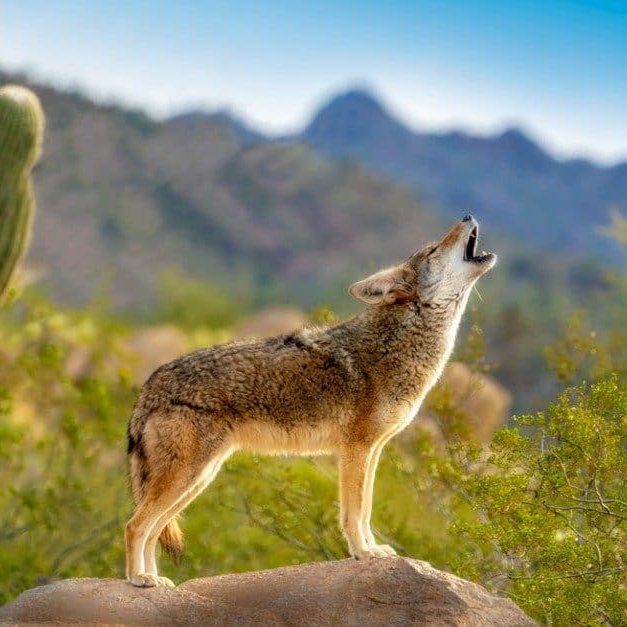
In 1994, the governor of Texas declared a public health emergency. Two separate rabies outbreaks were spreading rapidly toward populated areas, one moving through coyotes in South Texas, one through gray foxes in West-Central Texas. Thousands were receiving post-exposure treatment, and several people died.
The response was to airdrop fish-flavored vaccine packets from low-flying aircraft.
In 1995, Texas DSHS, USDA Wildlife Services, and other partners began dropping oral rabies vaccine baits across Texas. Each bait is a small fishmeal-coated packet with a liquid vaccine inside. An animal bites through, swallows the vaccine, and if it takes, develops immunity. The program dropped 850,000 baits in 18 Texas counties in its first year alone.
The dog-coyote variant of rabies, which had caused 122 cases in 1994, dropped to zero by 2000. The CDC declared the United States free of canine-to-canine transmitted rabies in 2008. The gray fox variant, which peaked at 244 cases in 1995, fell to zero in 2010–2012.
One cow tested positive in 2013, and after expanded baiting, no additional Texas gray fox variant cases have been detected.
The vaccine is considered safe for pets and livestock, too. If a dog eats one, or even several, it may get an upset stomach, but USDA says the baits do not pose a long-term health risk.
The USDA's own economic analysis found that every dollar spent on the coyote program in Texas saved between $4 and $13 in post-exposure treatment costs.
The federal government has been airdropping fish-flavored vaccines to wild animals for 30 years, and it's one of the most effective public health programs most Americans have never heard of.
A parasite has now sickened 145 people across multiple states.
It’s called Cyclospora. The symptoms aren’t subtle: prolonged watery diarrhea, cramping, fatigue, nausea, and bloating. Unlike a typical “24-hour stomach bug,” this illness can last for weeks.
A few important points:
• It’s usually linked to contaminated fresh produce, not meat or sushi.
• Washing fruits and vegetables is still a good idea—but normal home washing, vinegar, or baking soda have not been shown to reliably remove or kill Cyclospora.
• The source of the current outbreak is still under investigation.
• The preferred treatment is Bactrim (TMP-SMX), although many healthy people eventually recover without antibiotics.
This is also a reminder that food safety doesn’t begin in your kitchen. It begins in the field, during irrigation, harvesting, processing, and distribution.
As always, follow the evidence—not the rumors.
This is your friendly reminder that data centres don’t actually need water. They need a cooling system and are using water because it’s the cheapest way to do it.
Spraying roundup on weeds in the cracks of your driveway is kind of silly. Boiling water will do the same job better.
Pour it straight onto the weed and down into the crack. The heat ruptures the plant on contact and it wilts within the day. A stubborn deep-rooted one might need a second pour, but that's the whole method.
Roundup's own label tells you to keep it out of storm drains. And a driveway is basically a funnel straight into one. Every rain carries whatever you sprayed down the gutter and, in most towns, straight into the nearest creek with nothing in between.
Boiling water kills the weed and stops at the weed.
"Rescuing" a jar of tadpoles out of a drying up pond and dumping them in another feels like a kindness. In reality, it can be one of the most destructive things a backyard naturalist can do.
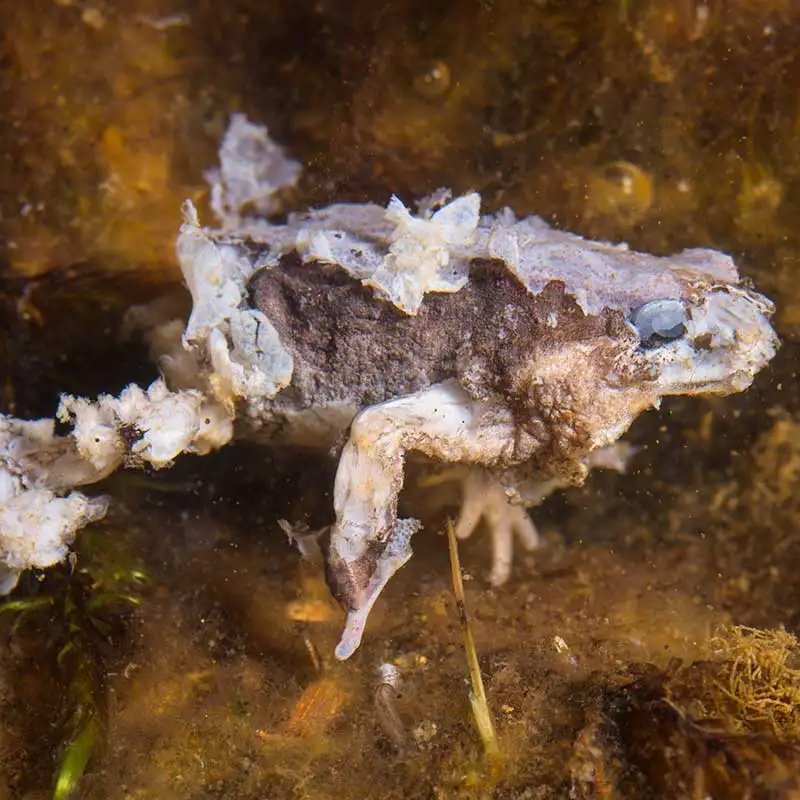
There's a fungus you should know about called chytrid. It eats the skin off frogs and salamanders, the skin they use to breathe and drink, and it kills them.
It is, no exaggeration, the most destructive wildlife disease ever recorded. It has driven the decline of more than 500 amphibian species and pushed around 90 of them to extinction.
And here's how it travels: water, mud, gear, and moved amphibians. The zoospores live for weeks in a bucket of pond water. Worse, some frogs carry it without getting sick, so the healthy-looking frog you relocate can seed an outbreak that wipes out the pond you moved it to.
You don't have to be a villain to do this damage. You just have to move a frog, a tadpole, or a fish from one water body to another with good intentions.
So don't. Leave them where they are. If you wade or fish across different ponds, rinse and dry your boots and gear in between. The kindest thing you can do for the frogs is nothing.
Nobody wants a city on Mars. Nobody wants AI in every app. Nobody wants a robot butler. Nobody wants data centers everywhere. Nobody wants flying cars or humanoid robots. We want clean water, we want bees to survive, and we want a habitable planet.
here's the full clip of Rep. Emilia Sykes's brilliant line of questioning that made Chris Wright squirm by confronting him with the completely unhinged comments Trump just made in the Oval Office about inflation and the war in Iran
Rep. Angie Craig demolishes Ag Secretary Brooke Rollins: "Joe Biden is no longer the president. Mr. Trump is. Your party controls Congress. You own these numbers at this point. I'm sick of hearing you blame an administration from a year and half ago. You own every single bit of this."
Finnish scientists trucked in real forest dirt and grass and laid it over the gravel at four daycare yards. They let the kids dig around in it for a month. The blood tests came back with changes the researchers hadn’t expected to see so fast or so clear.
The study ran at ten daycares in two Finnish cities with 75 kids aged three to five. Four of the yards got the forest treatment: about a tennis court worth of soil and grass laid over the gravel, plus planters and peat blocks the kids could dig and climb on. Three others stuck with their normal gravel yards. The last three were daycares where the kids were already visiting real forests every day.
After one month, the variety of bacteria living on the kids’ skin shot up, and the kind that helps train the skin’s immune defenses jumped the most. Their gut bacteria started to look like the gut bacteria of the forest-visiting kids. Their blood showed more of the immune cells whose job is to keep the body from freaking out at harmless stuff like pollen and peanuts, and overall inflammation dropped. The kids on the plain gravel yards showed none of this.
Childhood asthma in the US doubled between 1980 and 1995. Food allergies in kids jumped 50 percent between 1997 and 2011, then jumped another 50 percent between 2007 and 2021. And peanut allergies in one-year-olds tripled between 2001 and 2017.
The Finnish researchers think one of the reasons is simple: kids today don’t get dirty enough. 37 percent of American preschoolers now spend an hour or less outside on a normal weekday. Their immune systems are getting trained in environments stripped of the bacteria humans have always lived around.
Aki Sinkkonen, who led the study, put it in plain words: “It would be best if children could play in puddles and everyone could dig organic soil.” The Finnish government is now helping pay for daycares across the country to make the same changes.
A great whale sequesters about as much carbon as 1,000 trees when it dies.
Whale falls are some of the most important carbon sequestration events in the ocean. Each carcass becomes its own ecosystem on the seabed, hosting deep-sea organisms that depend on it for decades. The carbon doesn't go back into the atmosphere.
While alive, whales do something even more important. They dive to feed in deep water, then surface to breathe and defecate, pumping iron and nitrogen from the deep sea up to where phytoplankton can use it.
Phytoplankton produce roughly half of Earth's oxygen and absorb enormous quantities of CO2 every year. Healthy whale populations make phytoplankton populations more productive than they otherwise would be.
When we kill whales for oil and meat, we dismantle a global carbon-cycling system that took millions of years to evolve. Some great whale species are still at 3 to 5% of their pre-whaling numbers.
A whale you'll never see is doing climate work the entire planet depends on. The fewer of them there are, the worse the work gets done.
Dirty bird feeders kill birds and can make you sick too.
A 2021 salmonella outbreak spread through bird feeders across the western US and killed enough pine siskins that 14 people across 12 states were hospitalized from cross-contamination.
Mycoplasmal conjunctivitis spreads the same way: birds touch the contaminated surface, swell up, go blind, starve.
Clean your feeders every two weeks: 1:9 bleach to water. Scrub, rinse, dry fully before refilling.
A feeder you don't clean can quickly become a contagion station.
They will want to rewrite the history books, and the only way to verify the facts will be to go directly to the primary sources.
Those who know the language of our ancestors will be able to discern the truth.
Those who do not know it will be at the mercy of whichever ideological translator holds an academic position.
Therefore, it is essential for the future survival of Western civilization that we all begin to learn Latin.
Right on the heels of scientists discovering that a very potent peptide in bee venom can rapidly destroy aggressive cancer cells- esp the kind in breast cancer- our govt's decided to close the nation's Bee Research Lab in Maryland.
I swear to you, they want us all dead.
Particularly women.
This admin's depravity knows no bounds.
Farmers have figured out that the cheapest pesticide is a strip of flowers.
When you plant wildflowers through a crop field, not just around the edge but in strips running through the middle, you get ladybugs, lacewings, hoverflies, and parasitic wasps living in the field instead of visiting it.
They eat the aphids, the caterpillars, and the mites for free, all summer long.
In controlled trials, fields with tailored flower strips had leaf-beetle numbers 40 to 50% lower and crop damage cut by around 60%, enough to drop below the threshold where spraying was even considered worth it.
The flowers attract a standing army to our fields.
We spent decades engineering chemicals to kill the insects eating the crop, when the insects that eat those insects would have worked for the price of seed.