Jim Goad—one of the most significant countercultural figures of the last forty years—has died. A writer and alternative magazine publisher, Goad adopted an exaggerated form of lower-class white masculinity. Despite being from suburban Philadelphia, he identified as a redneck. Through relentless provocation, he showed that white, masculine cultural markers could have a transgressive edge. In doing so he anticipated both millennial hipsterism and the rise of Donald Trump.
Born on the outskirts of Philadelphia in 1961, Goad was a sensitive and literary young man. In time, he found his way into the punk scene, and from there into alternative publishing. Though Goad had a bachelor’s degree in journalism from Temple University, he rejected the values of the university class. Along with his wife, Debbie Rosalie, he founded ANSWER Me!, a magazine that celebrated every offensive thing, from suicide to racism to misogyny.
The most controversial episode in the history of ANSWER Me! came in 1994 when it published a “Rape Issue.” A prosecutor in Bellingham, Washington charged the owners of a newsstand with felony obscenity for selling copies of the magazine. The ACLU rallied to Goad’s side, but he received nothing like the support from the liberal establishment that Andres Serrano or Robert Mapplethorpe did for their blasphemous and obscene imagery. As Goad intuited, something important was changing in American culture. “Transgressive” art that was coded as left-wing was achieving its own kind of respectability. Real transgressive energy was shifting from the left to the right, as an emerging progressive-feminist hegemony came to replace the religious conservatism that had once set the limits of acceptable speech.
In 1997, Goad published his best-known book, The Redneck Manifesto. It was a full-throated defense of “rednecks, hayseeds, bumpkins, crackers, hillbillies, peckerwoods, Bubbas, yokels, lintheads, shit-kickers, and poor white trash.” Goad argued that these people had become the one group in America it was acceptable to treat with contempt. Published by a mainstream press, the book was greeted respectfully—until Goad was arrested for domestic violence (an incident that would seem to vindicate critics of the “Rape Issue”). After serving time in prison, he drifted toward what would come to be known as the alt-right. His fierce belief in free speech and all-purpose political incorrectness took on a more ominous coloring when he stopped publishing an independent zine and began writing columns for Counter-Currents, an avowedly white nationalist magazine.
Despite all this, Goad retained his admirers. The liberal comedian Margaret Cho was a fan of ANSWER Me!. She gave a complete run of it to her friend Quentin Tarantino. Chuck Palahniuk, author of Fight Club, was an even more ardent devotee. In 2018, he recommended Goad in an interview with the Hollywood Reporter, saying, “My taste is for the extreme.” Patton Oswalt, the now ostentatiously woke comedian, was also praising Goad in interviews as recently as 2014. All of these people honed a transgressive edge influenced by Goad.
But Goad’s most important disciple was Gavin McInnes, cofounder of Vice, the magazine that defined millennial hipsterism’s aesthetic and cultural energy. Referring to his work at Vice, AdBusters described McInnes as “one of hipsterdom’s primary architects.” This is true, but the blueprint he used was drawn up by Goad. In its early years, Vice was ostentatiously politically incorrect, anti-feminist, and anti-anti-racist. As McInnes has said, ANSWER Me! “was the impetus for VICE MEDIA’s early fearless attitude.” Vice embraced white masculinity as a sign of authenticity.
It thereby established the pattern for millennial hipsterism more generally. As Mark Greif, a founding editor of n+1, has noted, “hipster values exalt political reaction, masquerading as rebellion, behind the mask of ‘vice.’” Hipster vice gave people oppositional energy “by going back to the imagination of the trailer park, and of Merle Haggard, as somehow embodying the kind of ritual power which you too can have access to—of a lower-class, a white ‘outlaw’ Other.” Significantly, this power was masculine. The stereotypical markers of hipster culture—shaving implements, work boots, whisky—are male-coded. Greif lamented “male domination of the [hipster] category.” But that was essential to its appeal. If the future was female, hipster fashion looked to the past.
As millennial hipsterism receded, the idea that there could be something transgressive in white and masculine cultural markers assumed new political potency. The 2016 Trump campaign was powered by its embrace of the white working class. It also drew energy from its rejection of feminist conceits. While critics charged Trump with racism and misogyny, his supporters reveled in official obloquy, gleefully accepting Hillary Clinton’s epithet, “deplorables.” When Trump stood for a mugshot in 2023, his outlaw appeal was underlined. His initial rise and later return to office suggested that, in a society devoted to feminism and diversity, whiteness and masculinity possess a countercultural energy.
The first person to recognize this was the troubled, troubling figure of Jim Goad. For more on his influence, see my article in @firstthingsmag:
https://t.co/92NsfdGJLi
⚠️ GRAPHIC CONTENT WARNING: This video contains the sound and visual of gunfire. It is disturbing but shows no blood or wounds. Viewer discretion is strongly advised. ⚠️
This video, captured by the 27-year old man threatening and pursuing Johnson on the 16th Street Maul, shows a shooting that happened on 5/3/26.
DPD then shot Johnson several times inside an apartment vestibule a block away. Both men survived their injuries.
Johnson was initially charged with first-degree assault with a deadly weapon but the case was later downfiled to misdemeanors. After review of Denver Police body camera footage, the Denver DA decided not to file charges against the officers involved.
Downtown Denver, including the 16th Street Maul corridor, continues to struggle with persistent crimes of disorder and violence despite major public investments. The city bought the Pavilions mall specifically to stop it from becoming a dead, crime-magnet property right in the middle of downtown, yet problems clearly remain.
This raises serious concerns for people living, working and enjoying downtown. Denver will keep spiraling if people feel they must arm themselves for protection when visiting the area or simply choose to avoid downtown completely.
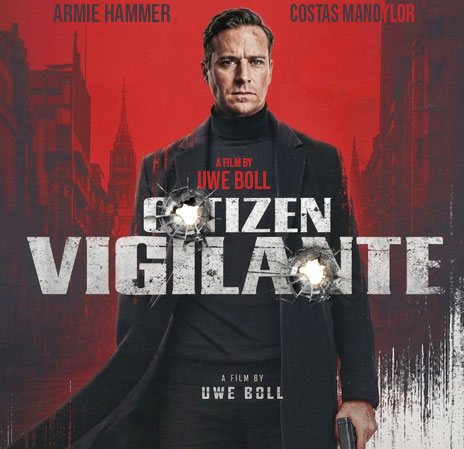
Yesterday, I watched Citizen Vigilante thinking maybe the critics were wrong and the audience was right.
The reality is somewhere in the middle.
If you really loved this movie, I’m sorry, but I can’t trust your taste in movies. Some people want to love the message so badly that they stop seeing the movie for what it actually is and only see what they wanted it to be. That kind of bias makes your opinion useless as a critic.
But on the other side, some people will hate this movie only because of what it stands for, without admitting that there are some interesting ideas in it.
For me, Citizen Vigilante is a very bad movie with an excellent message.
That being said, even the message goes too far into this cold, destructive revenge fantasy. The main guy is not a hero. He is a complete maniac, and instead of making us root for him, the movie slowly makes us hate him. He starts hurting innocent people just to prove his point in the most reckless and stupid way possible.
And I’m not even talking about the terrible scenes, the moments that drag forever, and the awful music. Seriously, I think I could have done better.
The only positive thing about this movie is the message, and even then, the movie plays its cards badly.
Huge disappointment.
4/10, mostly because I liked the core message and I did enjoy seeing the victims get revenge.
It's a great irony that many totalitarian surveillance and security measures are really only good at surveilling and securing against people with no ill intent. All the while the same implementations have no defense against someone with all ill intent.
It should become clear the more one sees this sort of thing. These measures aren't meant for bad guys. They're meant for you.
���#BREAKING: Police in Indiana are asking the public's help to identify the person who cut down 2 Flock cameras in Goshen.
A city councilman responded by saying, "It's just a part of life these days. There's no sense in being destructive to get your point across.”


![matthewschmitz's tweet photo. Jim Goad—one of the most significant countercultural figures of the last forty years—has died. A writer and alternative magazine publisher, Goad adopted an exaggerated form of lower-class white masculinity. Despite being from suburban Philadelphia, he identified as a redneck. Through relentless provocation, he showed that white, masculine cultural markers could have a transgressive edge. In doing so he anticipated both millennial hipsterism and the rise of Donald Trump.
Born on the outskirts of Philadelphia in 1961, Goad was a sensitive and literary young man. In time, he found his way into the punk scene, and from there into alternative publishing. Though Goad had a bachelor’s degree in journalism from Temple University, he rejected the values of the university class. Along with his wife, Debbie Rosalie, he founded ANSWER Me!, a magazine that celebrated every offensive thing, from suicide to racism to misogyny.
The most controversial episode in the history of ANSWER Me! came in 1994 when it published a “Rape Issue.” A prosecutor in Bellingham, Washington charged the owners of a newsstand with felony obscenity for selling copies of the magazine. The ACLU rallied to Goad’s side, but he received nothing like the support from the liberal establishment that Andres Serrano or Robert Mapplethorpe did for their blasphemous and obscene imagery. As Goad intuited, something important was changing in American culture. “Transgressive” art that was coded as left-wing was achieving its own kind of respectability. Real transgressive energy was shifting from the left to the right, as an emerging progressive-feminist hegemony came to replace the religious conservatism that had once set the limits of acceptable speech.
In 1997, Goad published his best-known book, The Redneck Manifesto. It was a full-throated defense of “rednecks, hayseeds, bumpkins, crackers, hillbillies, peckerwoods, Bubbas, yokels, lintheads, shit-kickers, and poor white trash.” Goad argued that these people had become the one group in America it was acceptable to treat with contempt. Published by a mainstream press, the book was greeted respectfully—until Goad was arrested for domestic violence (an incident that would seem to vindicate critics of the “Rape Issue”). After serving time in prison, he drifted toward what would come to be known as the alt-right. His fierce belief in free speech and all-purpose political incorrectness took on a more ominous coloring when he stopped publishing an independent zine and began writing columns for Counter-Currents, an avowedly white nationalist magazine.
Despite all this, Goad retained his admirers. The liberal comedian Margaret Cho was a fan of ANSWER Me!. She gave a complete run of it to her friend Quentin Tarantino. Chuck Palahniuk, author of Fight Club, was an even more ardent devotee. In 2018, he recommended Goad in an interview with the Hollywood Reporter, saying, “My taste is for the extreme.” Patton Oswalt, the now ostentatiously woke comedian, was also praising Goad in interviews as recently as 2014. All of these people honed a transgressive edge influenced by Goad.
But Goad’s most important disciple was Gavin McInnes, cofounder of Vice, the magazine that defined millennial hipsterism’s aesthetic and cultural energy. Referring to his work at Vice, AdBusters described McInnes as “one of hipsterdom’s primary architects.” This is true, but the blueprint he used was drawn up by Goad. In its early years, Vice was ostentatiously politically incorrect, anti-feminist, and anti-anti-racist. As McInnes has said, ANSWER Me! “was the impetus for VICE MEDIA’s early fearless attitude.” Vice embraced white masculinity as a sign of authenticity.
It thereby established the pattern for millennial hipsterism more generally. As Mark Greif, a founding editor of n+1, has noted, “hipster values exalt political reaction, masquerading as rebellion, behind the mask of ‘vice.’” Hipster vice gave people oppositional energy “by going back to the imagination of the trailer park, and of Merle Haggard, as somehow embodying the kind of ritual power which you too can have access to—of a lower-class, a white ‘outlaw’ Other.” Significantly, this power was masculine. The stereotypical markers of hipster culture—shaving implements, work boots, whisky—are male-coded. Greif lamented “male domination of the [hipster] category.” But that was essential to its appeal. If the future was female, hipster fashion looked to the past.
As millennial hipsterism receded, the idea that there could be something transgressive in white and masculine cultural markers assumed new political potency. The 2016 Trump campaign was powered by its embrace of the white working class. It also drew energy from its rejection of feminist conceits. While critics charged Trump with racism and misogyny, his supporters reveled in official obloquy, gleefully accepting Hillary Clinton’s epithet, “deplorables.” When Trump stood for a mugshot in 2023, his outlaw appeal was underlined. His initial rise and later return to office suggested that, in a society devoted to feminism and diversity, whiteness and masculinity possess a countercultural energy.
The first person to recognize this was the troubled, troubling figure of Jim Goad. For more on his influence, see my article in @firstthingsmag:
https://t.co/92NsfdGJLi](https://pbs.twimg.com/media/HNsE8SvXgAAXaRr.png)