Your stock drops 8% and you have no idea why.
You check the news: nothing. You scroll X: nothing.
Paste the ticker into https://t.co/lYXEsuq3pG and get the actual reason in seconds. Any stock, ETF, or crypto.
@antibearthesis The 103% cloud growth is real. So is the miss, the cash burn, and $GOOGL admitting AI search makes less money than regular search. Turns out "growing fast" and "making money" aren't the same trade, and with the 10-year near 5%, "trust us, someday" gets sold.
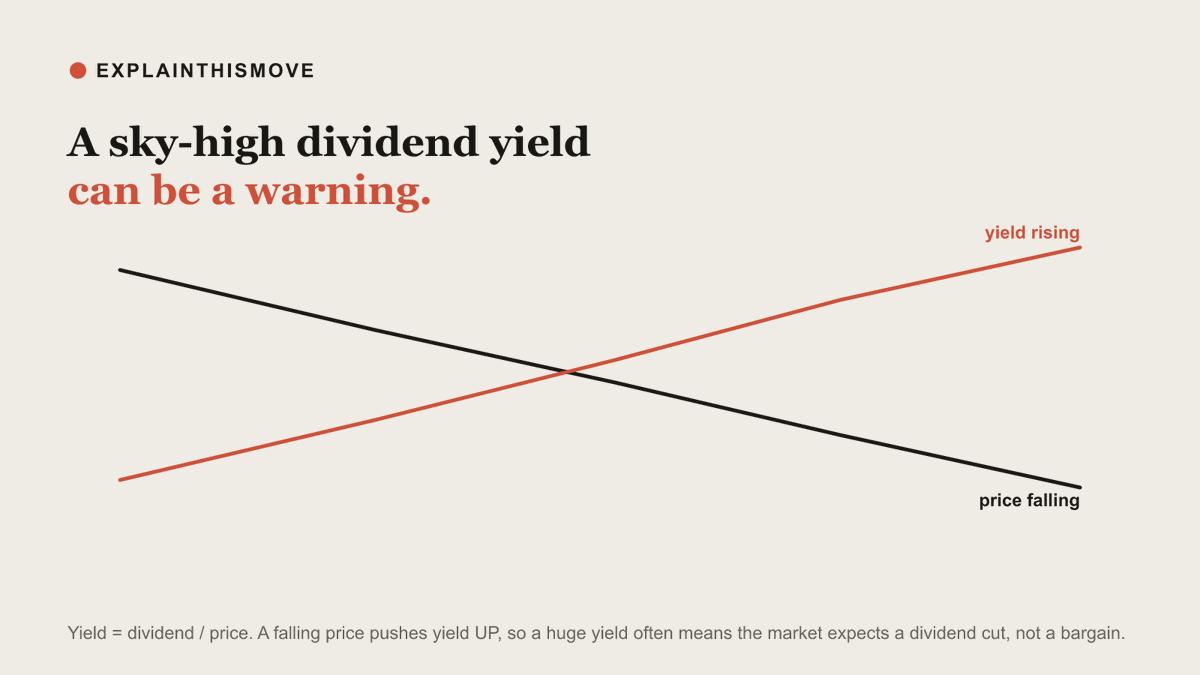
A 12% dividend yield looks like free money. It's often a warning.
Yield = dividend / price, so when a stock's price collapses, the yield shoots UP.
A sky-high yield usually means the market expects a dividend cut.
Save this.
$SPXD $SPY $QQQ $DIA
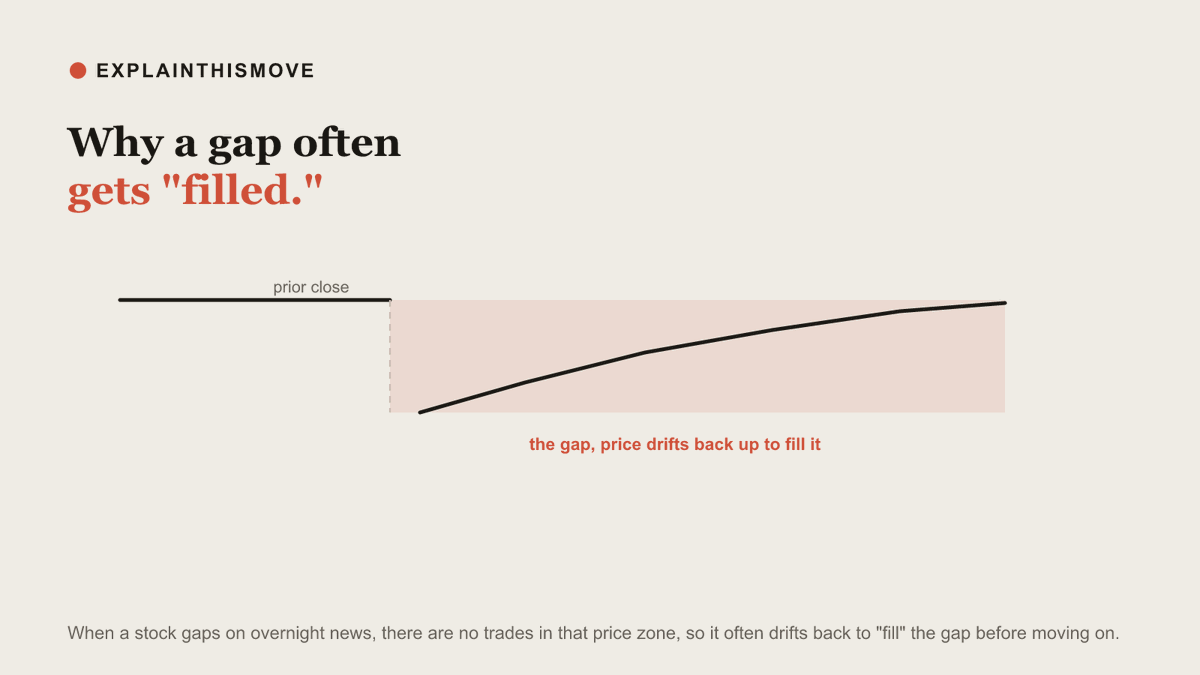
When a stock gaps up or down overnight, you'll hear traders say it'll "fill the gap."
Here's why: no shares traded in that price zone, so price frequently drifts back through it before continuing.
A gap is a magnet, until it isn't.
Save this.
$SPY $AAPL $AMD $MRVL $INTC
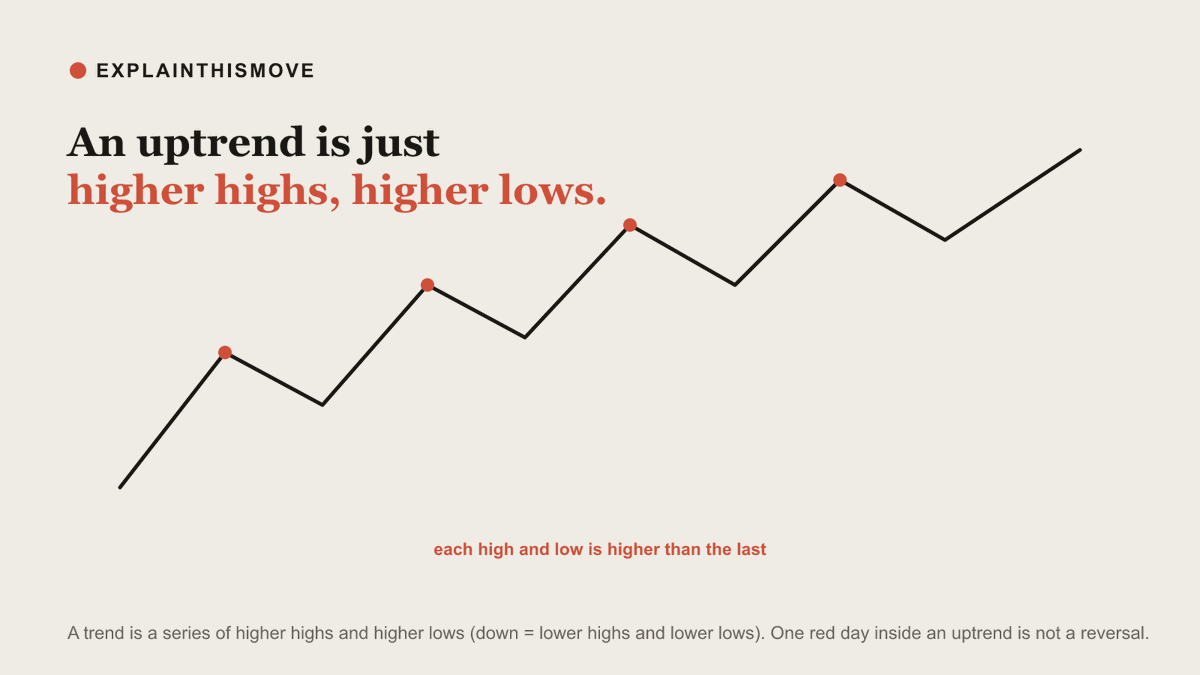
An uptrend has a simple definition: higher highs and higher lows.
A downtrend is the opposite, lower highs and lower lows. One red day inside an uptrend isn't a reversal, it's noise.
The trend breaks when the pattern breaks.
Save this. $SPY $QQQ $PLTR $NVDA
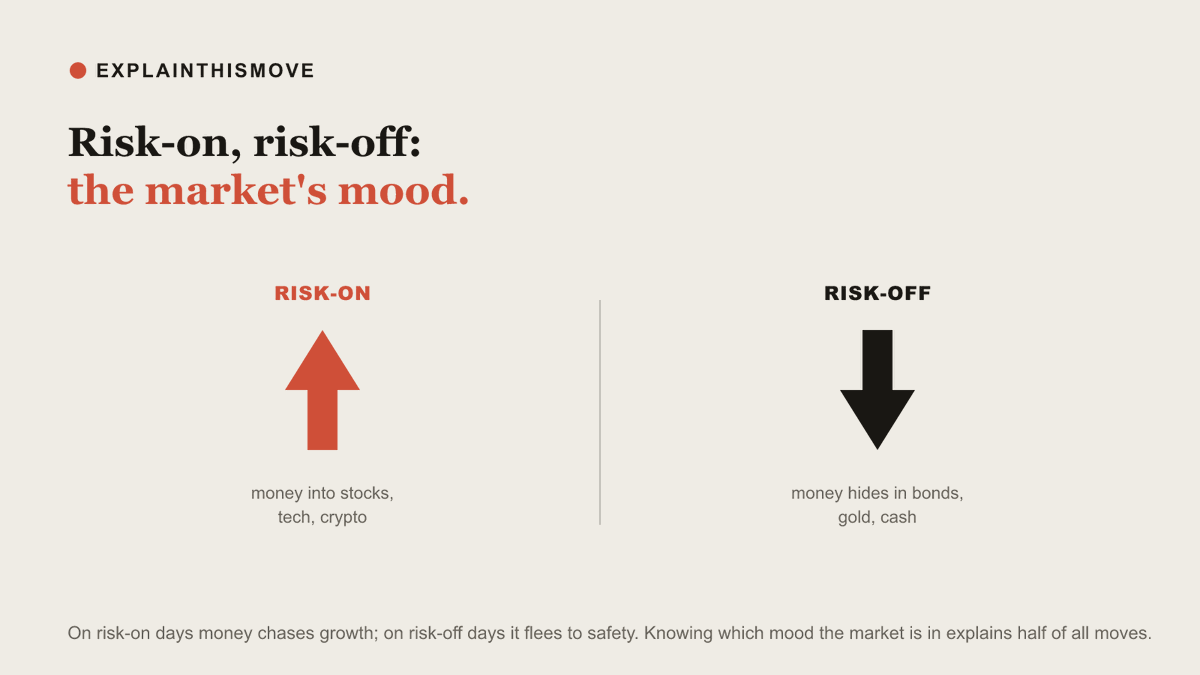
Two phrases that explain half of all market days: "risk on" and "risk-off"
Risk-on, money chases stocks, tech, crypto.
Risk-off, money hides in bonds, gold, and cash.
Figure out which mood the market's in and a lot of moves suddenly make sense.
Save this.
$SPY $BTC $TLT
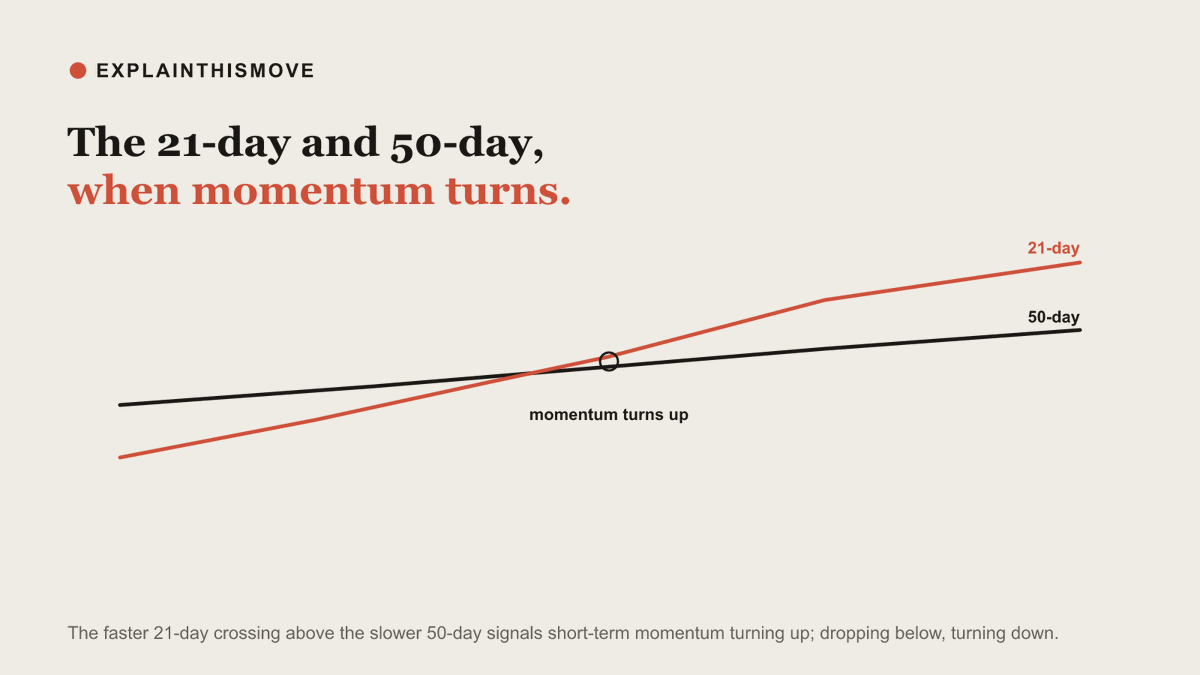
Two moving averages active traders watch: the 21 day and the 50 day
The 21 day reacts faster. When it crosses ABOVE the 50 day, short-term momentum is turning up.
When it drops below, momentum is fading.
A simple trend shift signal.
Save this.
$SPY $NVDA $AAPL $SMH $MSFT
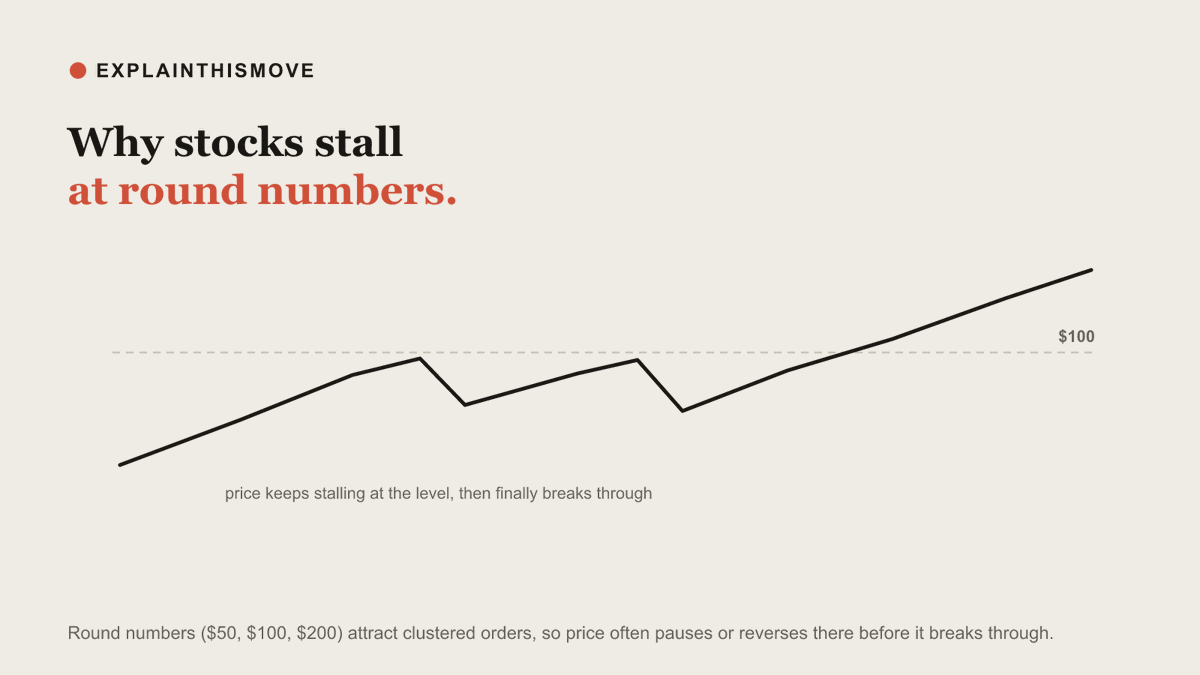
Ever notice a stock stall right at $100, or $50, or $200?
Round numbers act like magnets. Traders cluster their orders there, so price often pauses or reverses at the level before it finally breaks through. Watch the round numbers.
Save this.
$SPY $QQQ $SPX $NDX
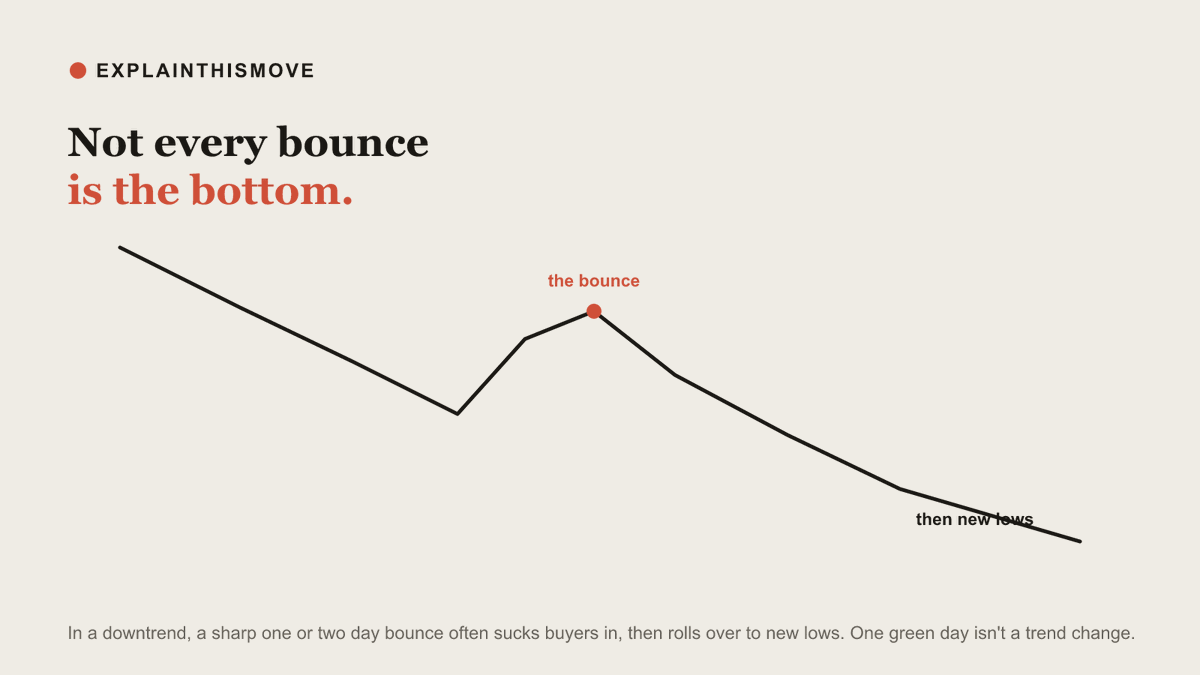
Not every bounce is the bottom.
In a downtrend, stocks often snap back hard for a day or two, enough to suck buyers in, then roll over to new lows. Traders call it a "dead cat bounce."
One green day doesn't end a downtrend.
Save this. $SPY $QQQ $BABA $JD $BA
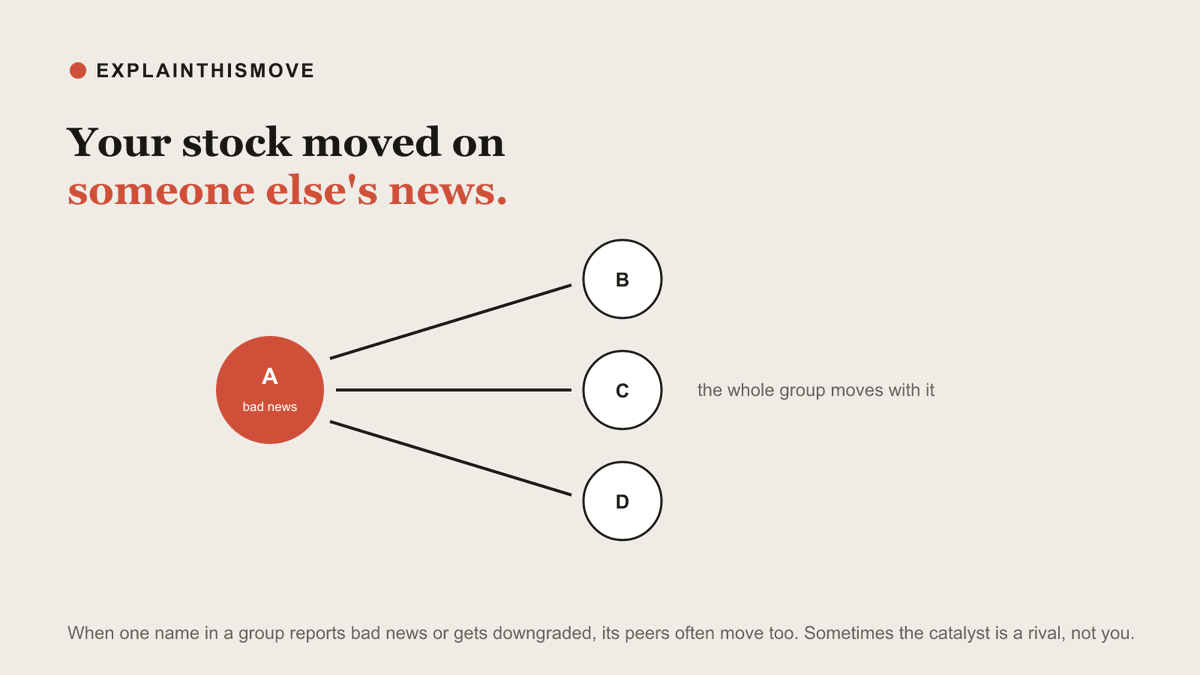
Your stock dropped and the company did nothing.
Check its competitors. When one name in a group reports bad news or gets downgraded, the whole group often moves with it.
Sometimes the catalyst isn't your stock. It's a rival.
Save this.
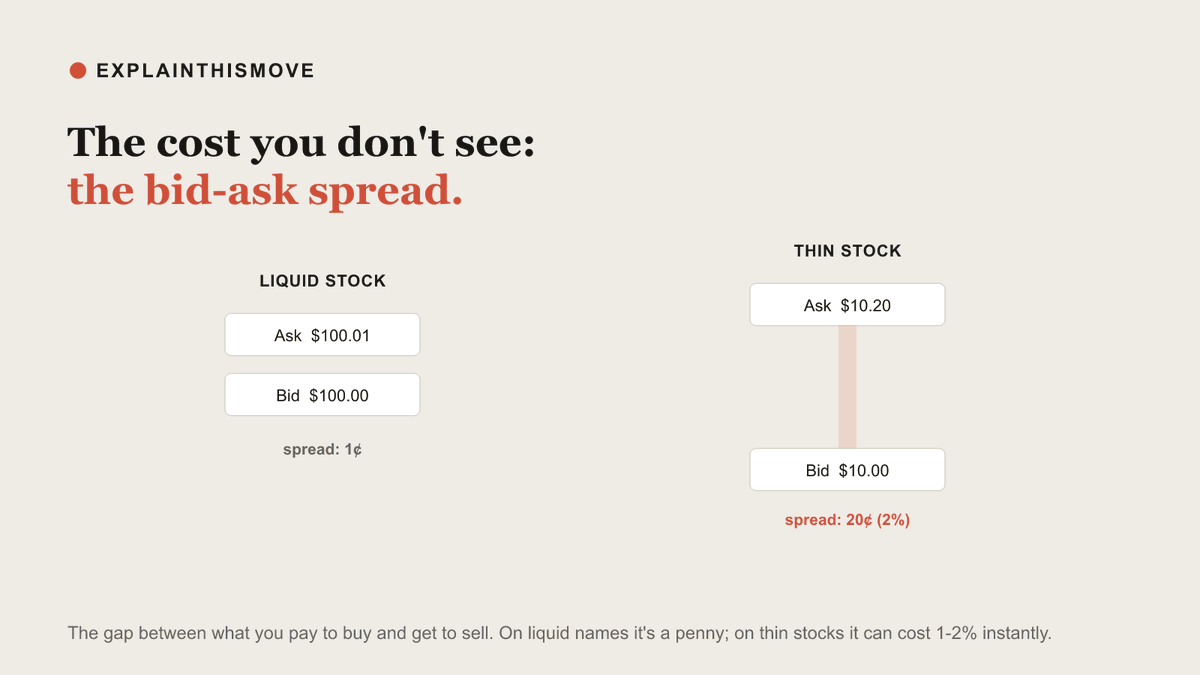
A cost most people never notice: the bid-ask spread.
It's the gap between what you pay to buy and what you get to sell, instantly.
On big liquid names it's a penny. On thin, low-volume stocks it can cost you 1-2% the moment you trade.
Save this.
$AAPL $NVDA $SMH $SPY $QQQ
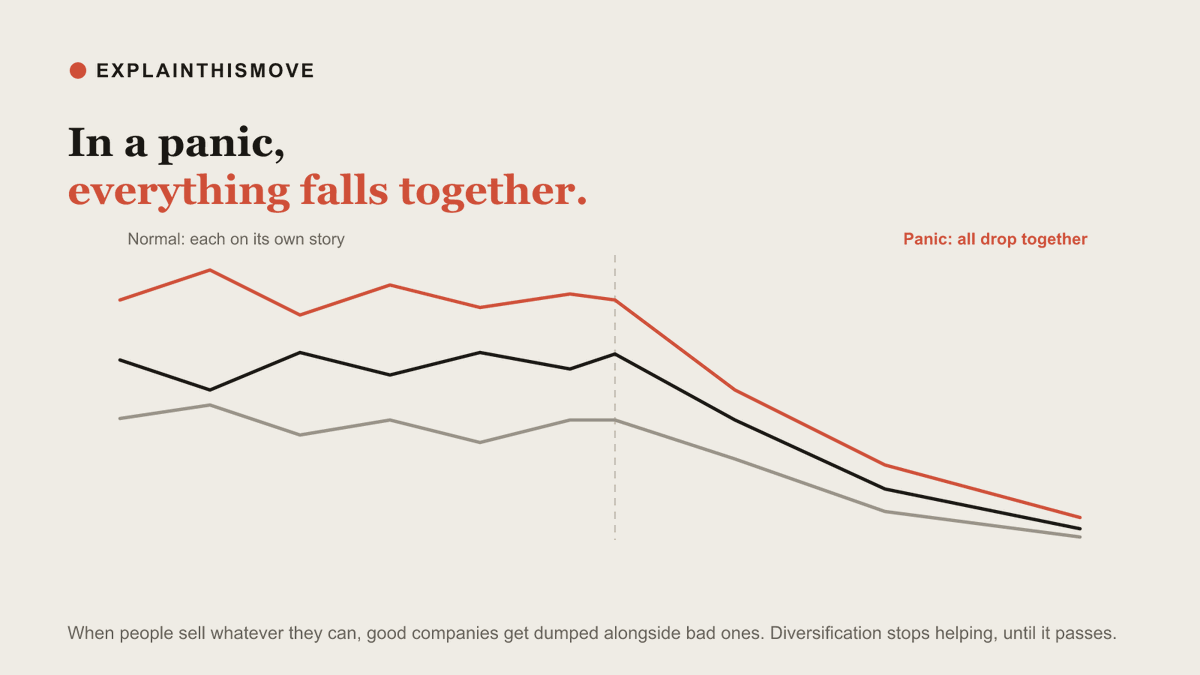
In a normal market, your stocks move on their own stories.
In a panic, they don't.
Everything correlates to 1, good companies get sold next to bad ones as people dump whatever they can. It's why diversification feels useless in a crash.
Save this. $SPY $QQQ
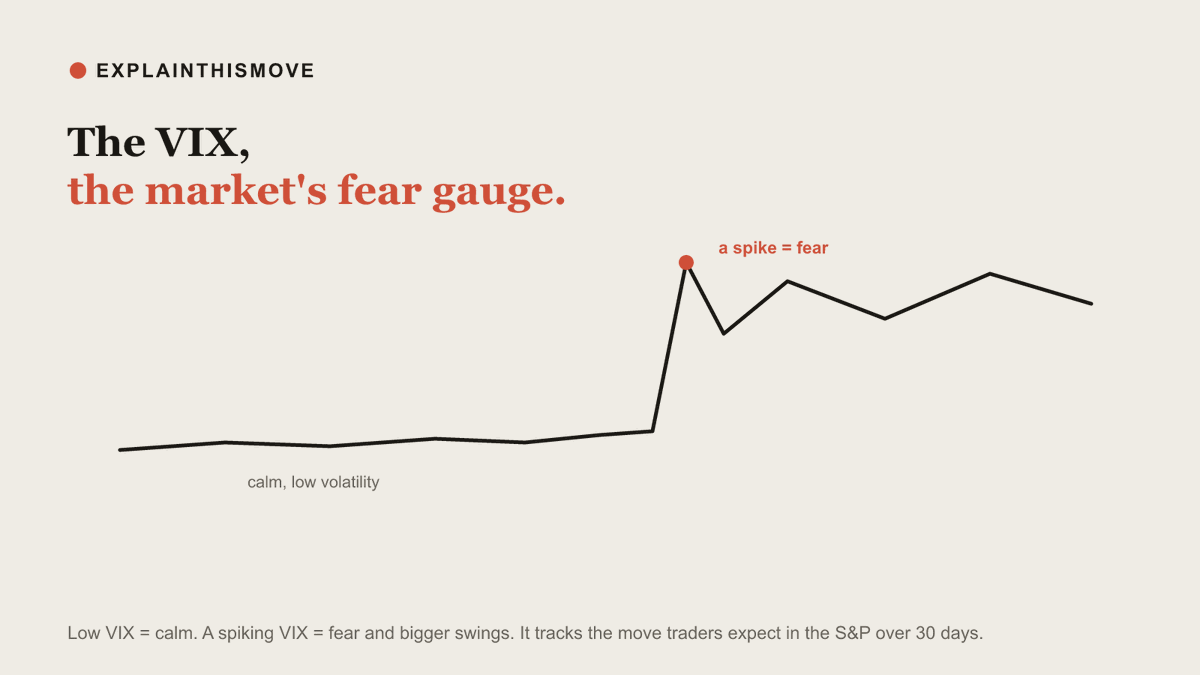
The VIX is the market's fear gauge.
It tracks how big a move traders expect in the $SPX over the next 30 days.
Low VIX = calm
A spiking VIX = fear, bigger swings coming
Next time you hear "volatility spiked," that's the VIX.
Save this.
$SPY $VIXY
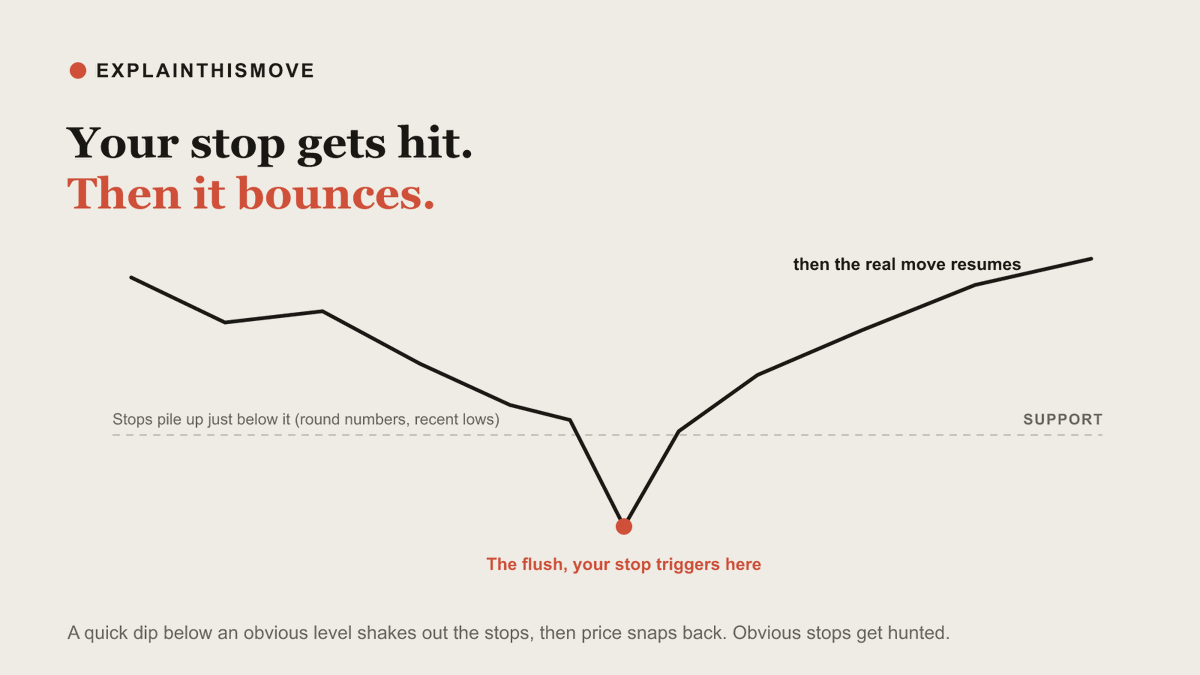
Ever set a stop-loss, watch it get hit, then see the stock reverse minutes later? You're not imagining it.
Stops pile up at obvious levels, round numbers and recent lows, and a quick flush can trigger them before the real move resumes.
Obvious stops get hunted. $SPY $QQQ $SMH
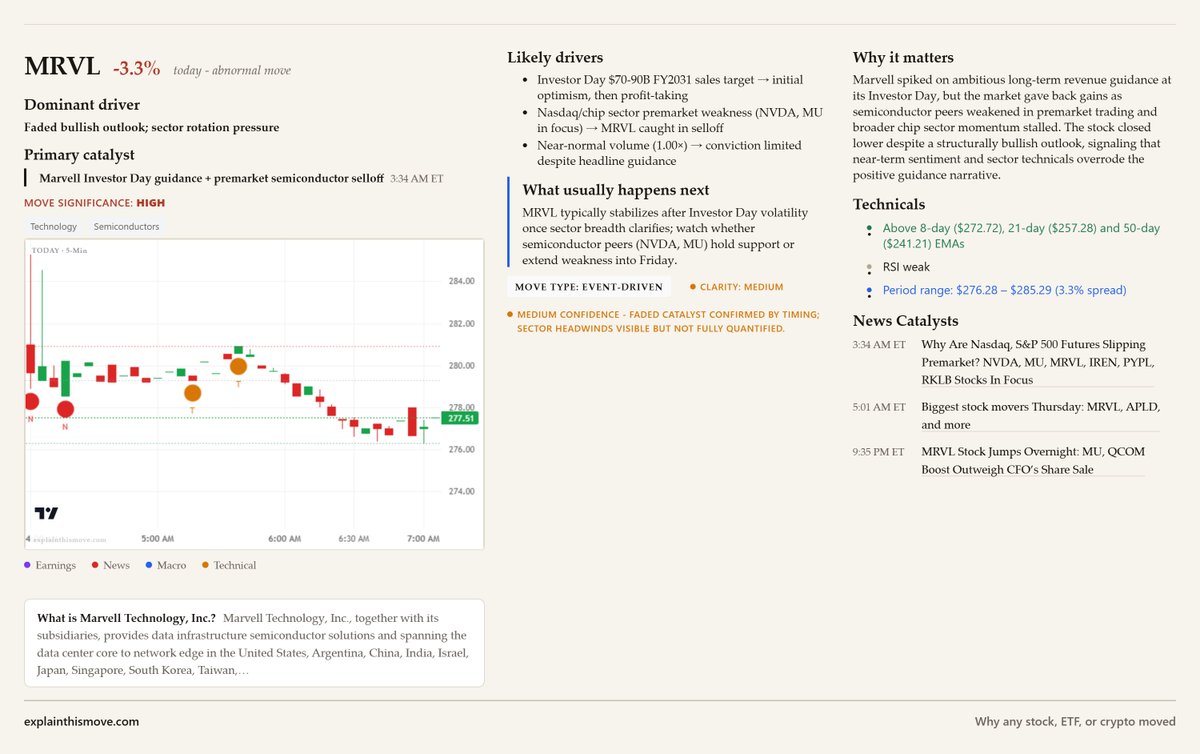
$MRVL raised its AI revenue outlook to $20 BILLION at its investor day yesterday.
The stock was down.
Make it make sense? We did, in seconds 👇
The real reason any stock moved, in plain English. https://t.co/lYXEsuq3pG
$NVDA $MU $AMD $SMH
Nasdaq green, and Dow red on the same day? They're not measuring the same thing...
The Dow is 30 old-economy names. The Nasdaq is tech heavy.
When money rotates INTO tech, the Nasdaq rips while industrials and financials lag. Which index is up tells you what kind of day it is.
A move means more when volume backs it.
Stock rips 5% on light volume? Often a head-fake that fades.
Rips 5% on heavy volume? Real conviction, more likely to hold.
Price tells you what happened. Volume tells you whether to believe it.
Ever wonder why a stock drops 6% on a day the market's only down 2%? It's beta, how much a stock amplifies the market.
High beta names (tech, growth) swing far more than the index, up/down. In a selloff your "high flyer" falls hardest. That's not bad luck. It's beta.
Save this
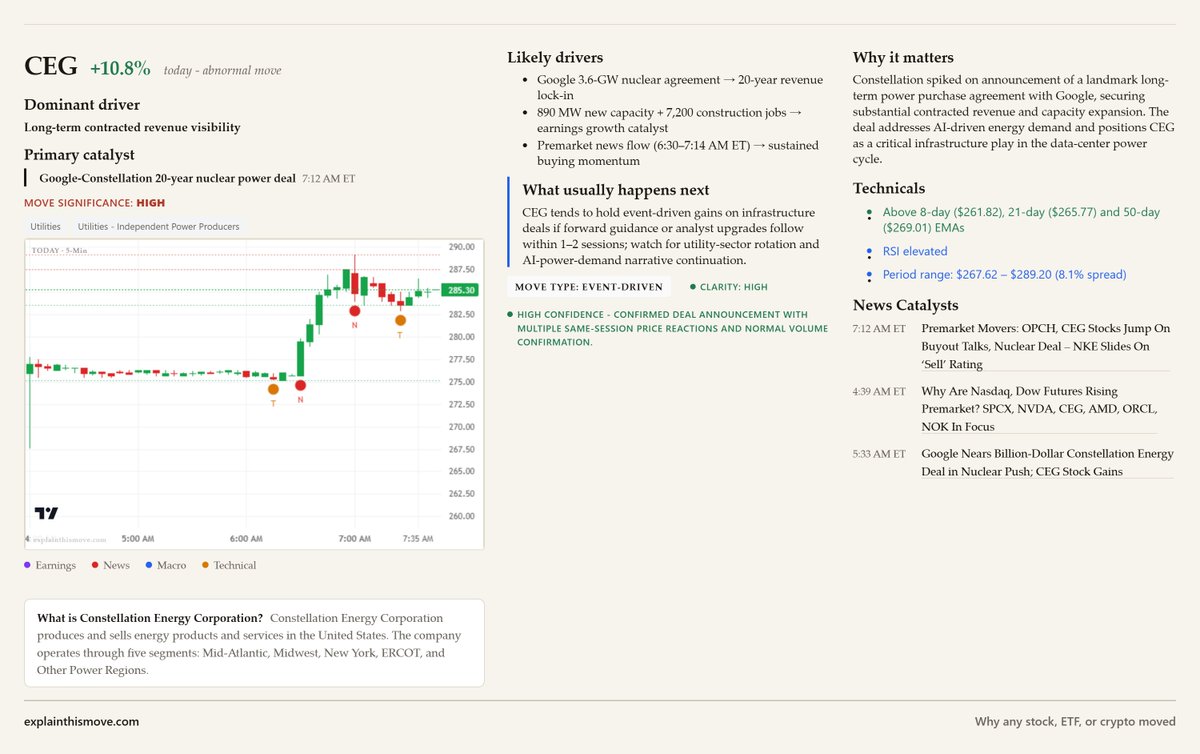
Constellation ($CEG) is climbing today on a deal most will scroll past: $GOOGL is buying its nuclear power, 890 MW worth.
The AI story nobody talks about: the bottleneck isn't chips anymore, it's electricity. Big Tech is going straight to nuclear to lock it up.
If you own a Brazilian stock, today is pretty wild:
$XP +34%
$STNE +24%
$PAGS +22%
$BBD +19%
$ITUB +16%
$NU +13%
One catalyst did it all: a Brazilian election surprise sent the whole market ($EWZ +13%) flying. The banks & fintechs, tied to the economy, ripped hardest 📈