Non praesumat aliquis Deum se habere propitium qui benedictam Matrem offensam habuerit
“No presuma obtener la misericordia de Dios aquel que ofende a su Santísima Madre”
"Do not presume to obtain God's mercy, he who offends His Most Holy Mother."
Today we celebrate the Feast of Saint, Virgin, Mystic
Gertrude the Great (Gertrude of Helfta)
*6 Jan 1256 - †~17 Nov 1302
Catholic, Episcopal.
Gertrude the Great or Gertrude of Helfta (January 6, 1256 – November 17, 1302) was a German Benedictine nun and mystic who was a member of the Monastery of Helfta. While herself a Benedictine, she had strong ties to the Cistercian Order; her monastery in Helfta is currently run by Cistercian nuns. == Life == Little is known of the early life of Gertrude, who was born on the Feast of the Epiphany, January 6, 1256, allegedly in Thuringia (within the Holy Roman Empire). At age five, she entered the monastery school at St. Mary at Helfta (variously described both as Benedictine and as Cistercian), under the direction of its abbess, Gertrude of Hackeborn.
Saint Gertrude The Great, pray for us 🙏🏼
It is official - IBC = I become Catholic.
After 3 years of inquiry, bible reading, prayer, studies, reading about church fathers, talks with some of you 🫵, but also through hard times, suffering & coming together with changing life plans.
I'm finally 100% committed & will look to start as soon as my situation allows.
I can't thank you enough for all the support - The questions answered and for your friendship, fellowship or in whatever way we are related.
I wanna thank the Saints, Mary & everyone who took part in this journey & I'll hope anyone on earth as it is in heaven, that wants to be there with me on my further road, will continue to guide me to my hopeful destination - Heaven.
Last, I wanna thank my Lord & Savior - Jesus Christ, for all you did for a filthy sinner like me.
Ave Christus Rex - Deus Vult !
Buen post Mar. Aunque no vi que mencionaras a los Ángeles de la Guarda. Cada persona tiene uno, y ese Ángel es creado cuando el alma es infusa en la concepción, solo con una misión, cuidarnos y ayudarnos a salvar nuestra alma. Si acepta, bien, si no, es un demonio más. Eso hace parte de la teología angélica, la cual escuché al Padre Ripperger explicar en una de sus charlas, replicando lo que dice el Doctor Angélico, Santo Tomás de Aquino, sobre los Ángeles de la Guarda.
‼️El Papa aprueba el decreto por el que serán beatificados 80 mártires de la Guerra Civil española.
67 eran sacerdotes, 3 religiosos carmelitas, 3 seminaristas y 7 laicos asesinados, por odio a la fe del Frente Popular, en el año 1936, durante la Guerra Civil.
The Coptics came in for the assist:
According to them, Pope Leo said: “Blessing would not be granted to homosexuals.”
Scoreboard
James Martin: 0
Coptic Tawadoros: 1
🚨 🇪🇸 Pope Leo XIV has approved the beatification of 80 Catholics who were BRUTALLY martyred by Communists during the Spanish Civil War
It comes ahead of the pope's visit to Spain in June
Era atea y por lo tanto, me dejaba consumir por la soberbia que la caracteriza. Y en esa soberbia, busqué contradecir los dogmas de la iglesia. Entonces, tenía que empezar comprendiendo los fundamentos del "monstruo": Santo Tomás de Aquino. Y me di a la labor de acudir religiosamente a la biblioteca de un monasterío católico que tenía cerca, cuando vivía en Innsbruck, Austria. Mi afán fue tanto que acudía religiosamente por largas horas incluso a leer los textos que no permitían al público sacarlos.
Primero los leía buscando inconsistencias... que nunca encontré. Y luego, me tuve que rendir ante la portentosa evidencia. Fue incluso hasta doloroso, porque abandonar a la ideología que se prende con uñas y dientes del intelecto puede ser hasta lacerante. Pero, cuando uno lee a un genio como Santo Tomás con absoluta humildad ("someto mi intelecto a la verdad y a comprender lo que debo y NO lo que quiero"), realiza el segundo movimiento (porque el primero siempre es de Dios) de decir "sí" poniendo orden donde había caos.
Por eso, no dudo que, con honestidad intelectual, Santo Tomás es el doctor de la Iglesia, que el hombre alejado de Dios, necesita.
🚨 Pope Leo XIV's brother's home was searched by police after he received BOMB threats yesterday
It follows an increasingly hysterical week of anti Catholicism from Donald Trump and JD Vance, with Vance even saying that the pope 'should be careful when talking about theology'
Obedience to the Catholic Church is not for the faint of heart or weak-minded.
It demands everything and can be difficult. That’s why, with deep sadness, I’ve seen many weak Catholics abandon and slander the Vicar of Christ the moment it challenges their views on politics.
"¡Tarde te amé, hermosura tan antigua y tan nueva, tarde te amé! Y ves que tú estabas dentro de mí y yo fuera, y por fuera te buscaba...
Estabas conmigo y yo no estaba contigo".
(Confesiones, X, 27)
Biblia Sacra Vulgata
Joannes 6:25-59
25. Et cum invenissent eum trans mare, dixerunt ei: Rabbi, quando huc venisti? 26. Respondit eis Iesus, et dixit: Amen, amen dico vobis: quæritis me non quia vidistis signa, sed quia manducastis ex panibus, et saturati estis. 27. Operamini non cibum, qui perit, sed qui permanet in vitam æternam, quem Filius hominis dabit vobis. Hunc enim Pater signavit Deus. 28. Dixerunt ergo ad eum: Quid faciemus ut operemur opera Dei? 29. Respondit Iesus, et dixit eis: Hoc est opus Dei, ut credatis in eum quem misit ille. 30. Dixerunt ergo ei: Quod ergo tu facis signum ut videamus, et credamus tibi? quid operaris? 31. Patres nostri manducaverunt manna in deserto, sicut scriptum est: Panem de cælo dedit eis manducare. 32. Dixit ergo eis Iesus: Amen, amen dico vobis: Non Moyses dedit vobis panem de cælo, sed Pater meus dat vobis panem de cælo verum. 33. Panis enim Dei est, qui de cælo descendit, et dat vitam mundo. 34. Dixerunt ergo ad eum: Domine, semper da nobis panem hunc. 35. Dixit autem eis Iesus: Ego sum panis vitæ: qui venit ad me, non esuriet: et qui credit in me, non sitiet umquam. 36. Sed dixi vobis quia et vidistis me, et non creditis. 37. Omne quod dat mihi Pater, ad me veniet: et eum, qui venit ad me, non eiiciam foras: 38. quia descendi de cælo, non ut faciam voluntatem meam, sed voluntatem eius, qui misit me. 39. Hæc est autem voluntas eius, qui misit me, Patris: ut omne, quod dedit mihi, non perdam ex eo, sed resuscitem illud in novissimo die. 40. Hæc est autem voluntas Patris mei, qui misit me: ut omnis, qui videt Filium, et credit in eum, habeat vitam æternam, et ego resuscitabo eum in novissimo die. 41. Murmurabant ergo Iudæi de illo, quia dixisset: Ego sum panis vivus, qui de cælo descendi, 42. et dicebant: Nonne hic est Iesus filius Ioseph, cuius nos novimus patrem, et matrem? Quomodo ergo dicit hic: Quia de cælo descendi? 43. Respondit ergo Iesus, et dixit eis: Nolite murmurare in invicem: 44. nemo potest venire ad me, nisi Pater, qui misit me, traxerit eum: et ego resuscitabo eum in novissimo die. 45. Est scriptum in Prophetis: Et erunt omnes docibiles Dei. Omnis, qui audivit a Patre, et didicit, venit ad me. 46. Non quia Patrem vidit quisquam, nisi is, qui est a Deo, hic vidit Patrem. 47. Amen, amen dico vobis: Qui credit in me, habet vitam æternam. 48. Ego sum panis vitæ. 49. Patres vestri manducaverunt manna in deserto, et mortui sunt. 50. Hic est panis de cælo descendens: ut si quis ex ipso manducaverit, non moriatur. 51. Ego sum panis vivus, qui de cælo descendi. 52. Si quis manducaverit ex hoc pane, vivet in æternum: et panis, quem ego dabo, caro mea est pro mundi vita. 53. Litigabant ergo Iudæi ad invicem, dicentes: Quomodo potest hic nobis carnem suam dare ad manducandum? 54. Dixit ergo eis Iesus: Amen, amen dico vobis: Nisi manducaveritis carnem Filii hominis, et biberitis eius sanguinem, non habebitis vitam in vobis. 55. Qui manducat meam carnem, et bibit meum sanguinem, habet vitam æternam: et ego resuscitabo eum in novissimo die. 56. Caro enim mea, vere est cibus: et sanguis meus, vere est potus. 57. qui manducat meam carnem, et bibit meum sanguinem, in me manet, et ego in illo. 58. Sicut misit me vivens Pater, et ego vivo propter Patrem: et qui manducat me, et ipse vivet propter me. 59. Hic est panis, qui de cælo descendit. Non sicut manducaverunt patres vestri manna, et mortui sunt. Qui manducat hunc panem, vivet in æternum.
For the first time in human history, scientists witnessed the precise instant human development initiates. What they observed wasn't biological randomness, it was orchestrated precision.
At fertilization's exact moment, a coordinated biochemical wave erupts across the egg's surface. This isn't gradual activation. It's an instantaneous "on switch", a cascading molecular signal that transforms a dormant cell into the blueprint for an entire human being.
Time zero. Life's starting gun.
What stunned MIT researchers wasn't just that this happens, but how it happens. The activation wave moves in rhythmic, structured patterns following mathematical proportions found throughout nature, the same ratios governing spiral galaxies, nautilus shells, sunflower seed arrangements, and hurricane formations.
The Golden Ratio. Fibonacci sequences. Universal mathematical constants appearing at life's very first moment.
This suggests something profound: organization precedes consciousness. Order exists before brain, before nervous system, before any structure capable of creating order. The instructions for building complexity are embedded at the origin point itself.
We've always known fertilization starts development. But seeing it reveals life doesn't "stumble" into existence through chemical accidents gradually organizing. It ignites with purpose, structured signals executing a predetermined biological program with geometric precision.
This challenges purely mechanistic views of life's origins. Random molecular collisions don't produce mathematical elegance. Yet here it is, visible under microscopes, following patterns woven into the universe's fabric.
Life's first instant looks less like chance and more like code executing.
Time zero isn't chaos becoming order. It's order beginning.
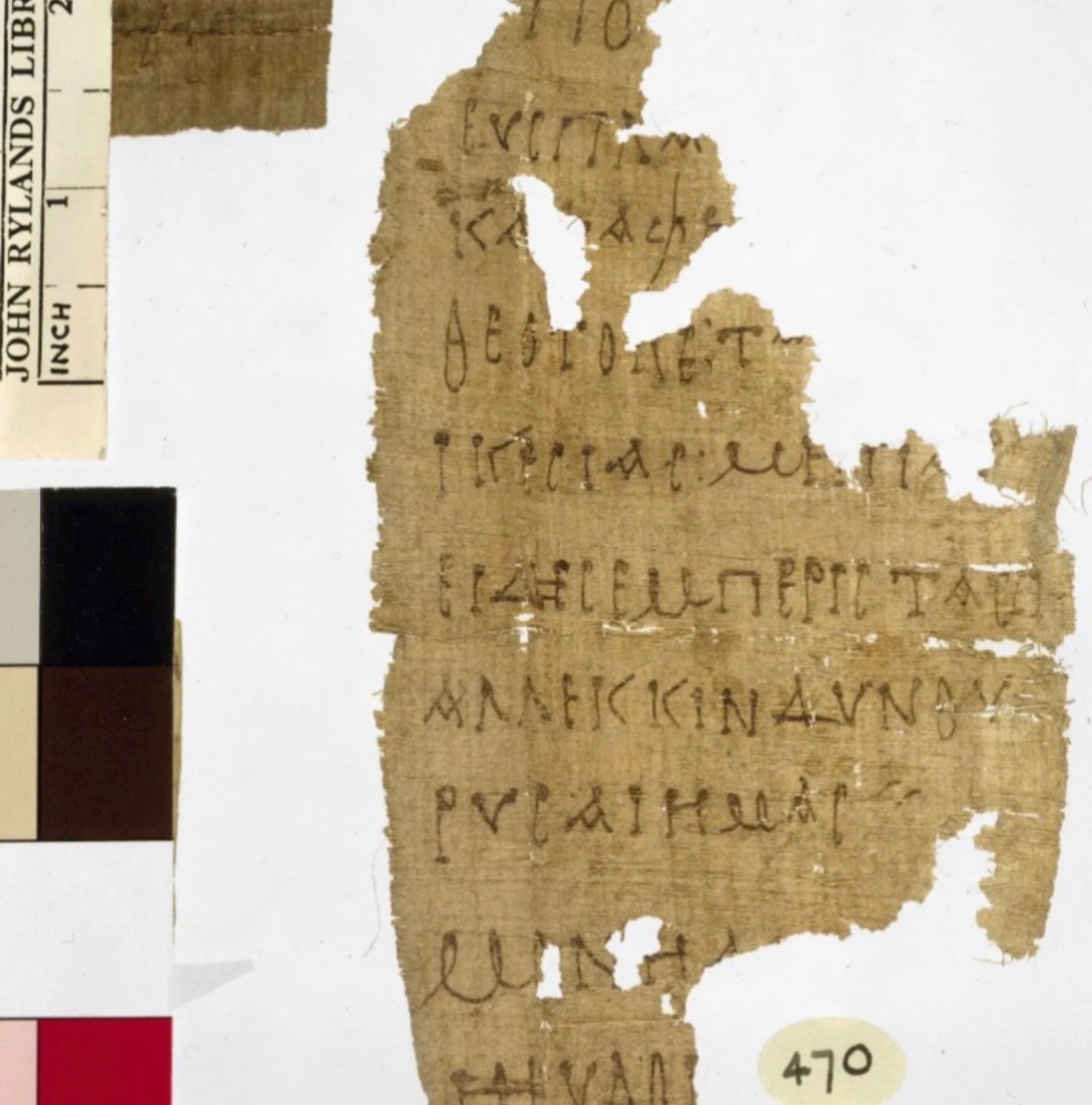
@prayandfast2 Sub tuum praesidium confugimus, Sancta Dei Genitrix.
Nostras deprecationes ne despicias in necessitatibus nostris, sed a periculis cunctis libera nos semper, Virgo gloriosa et benedicta.
Amen
Yes, early Christians prayed for intercession of the Virgin Mary. Preserved on a papyrus, dating to AD 250, includes the following:
"Mother of God, hear my supplications: do not allow us to remain in adversity, but deliver us from danger."