Audits shouldn’t be “PDF delivered, good luck.”
We work closely with your team through remediation and share resources so you ship stronger. 🤝
✅DM us or request an audit: https://t.co/ehWlS6Xv2F
Rust won’t let you be vague and that’s exactly why it belongs in blockchain.
Rust Fundamentals for Blockchain Devs is now fully live and free on Extropy Academy (all 5 modules):
Intro • Ownership/References • Types/Traits • Functional Rust + Errors • Solidity → Rust
https://t.co/yzN1qyTWRC
2026 isn’t waiting for anyone.
Reminder: our Web3 Dev General Security Checklist is out built from the same failure modes that keep showing up in exploits.
If your architecture is “mostly fine,” this is for you. 👇
On-chain code doesn’t forgive messy control flow.
https://t.co/9QYPSKMu5S
Mutable loops and ignored errors don’t just slow you down, they make state harder to reason about.
This session focuses on Rust’s data-flow model:
iterators, closures, collections, and explicit error handling.
2026 started with exploits already stacking up.
Don’t let vague architecture or weak access control be your downfall.
We just dropped our Web3 Dev General Security Checklist: defensive invariants, circuit breakers, granular roles, replay protection + more.
Derived from real 2025 findings. 👇
Most bugs aren’t logic errors. They’re missing types.
If your data model is vague, your code will lie at runtime.
Structs. Enums. Traits. Compile-time truth, not runtime hope.
Module 3 of our free Rust course 🦀Types & Traits, is live: https://t.co/IsedWCnUbw
In the first days of January we’ve already seen the full spectrum of Web3 failure modes: zombie contracts printing money, governance turning into civil war, unverified forks bleeding out in slow motion, supply-chain leaks putting users at physical risk, phishing that weaponizes “just a signature,” and malware that goes after your dev environment, not your wallet.
Attackers don’t take holidays. Neither does risk.
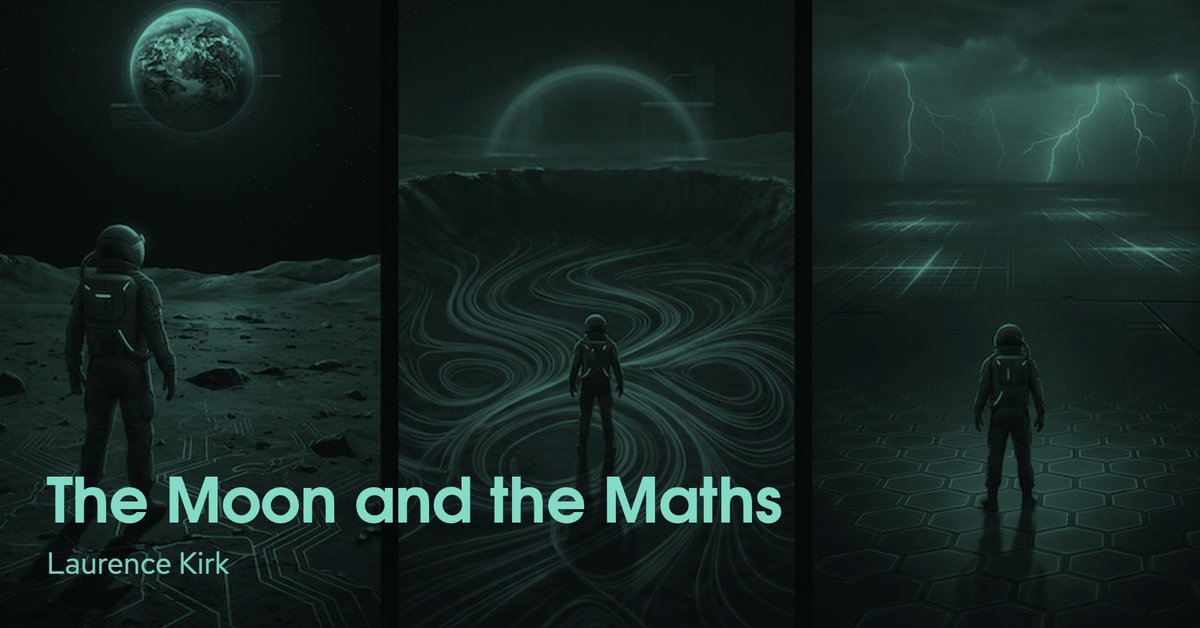
Moon Maths is live on Giveth.
https://t.co/rPniIHanGN
If you’ve ever wanted ZK explained like a map (not a wall of symbols), this is the project: open-source, free, narrative-driven.
If it’s useful to you, consider funding the next chapters: Finite Fields → Groth16.
Our Rust Session 2 is live: Ownership & Memory Safety.
🦀: https://t.co/9QYPSKMu5S
This is the Rust “click” moment, the rules that give you memory safety without a GC:
- ownership
- borrowing
- slices
If Rust has ever felt weird, this is probably why (and how it becomes powerful).
We’re leaving the Bay of Rainbows.
The Golden Handle fades.
Real numbers are too heavy for machines.
So we’re sailing into the Ocean of Storms, where going west doesn’t mean infinity, it means returning.
Chapter 3: Finite Fields.
A world where math works in every direction.
Chapter 2 is live: Polynomials in the Bay of Rainbows.
🌈 https://t.co/zFanM4hepY
We made it to Sinus Iridum.
A glowing curve on the lunar horizon.
A simple object hiding a lot of power.
A verifier who refuses to be told what to trust.
#zeroknowledge
Wolf Moon this weekend.
If you take a moment to really look, you can spot the landmarks from Chapter 1 of our Moon Math journey, the Sea of Tranquility, Sea of Serenity, and the path up toward the Bay of Rainbows.
Chapter 2 is next.
$3B lost in 2025 and a lot of it came from the same few failure modes. We wrote up what we keep seeing in audits (Move/Solidity/ZK systems) and what teams should harden first in 2026.
https://t.co/3kIfavyIg5
We’re starting the Moon Math journey around ZKPs.
Chapter 1: Sea of Tranquility, privacy vs verification problem, plus the core rules of ZK.
🌚https://t.co/7HoR0z4sm4
Rust Fundamentals is live on Extropy Academy.
Module 1 is out now. More modules coming soon — including the Rust brain-shift: ownership & borrowing.
https://t.co/IsedWCnUbw