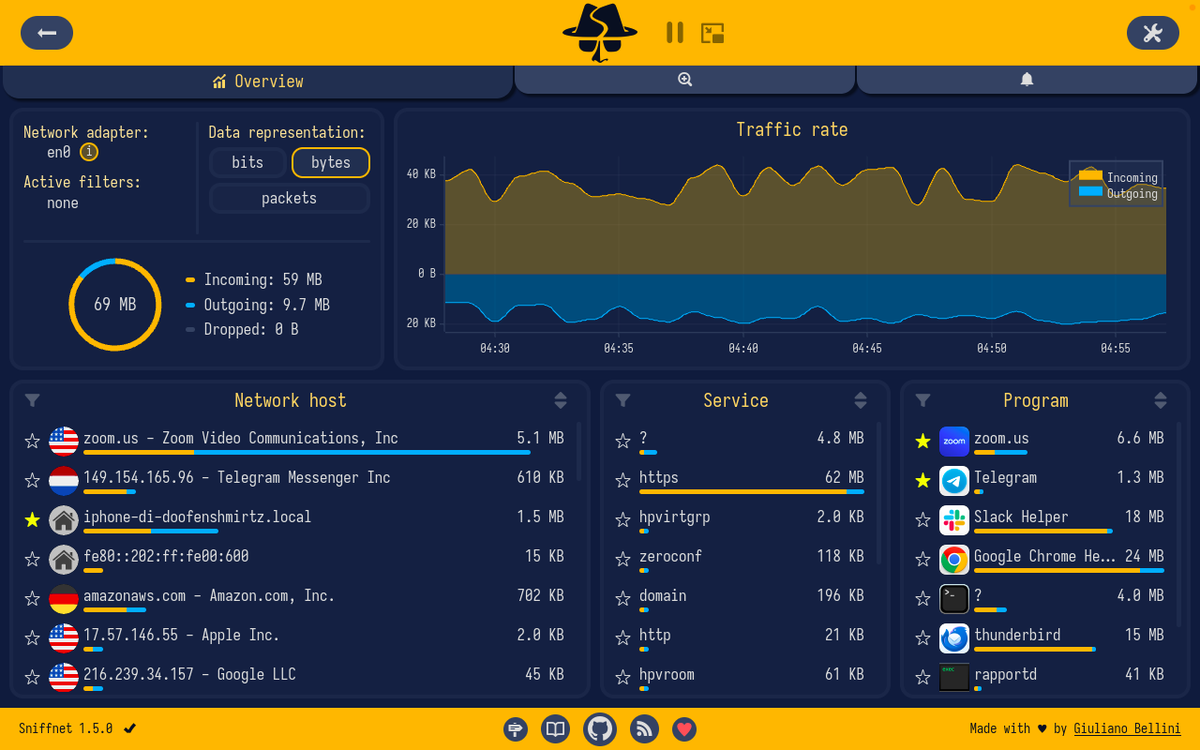
Vous avez du trafic réseau bizarre et pas envie de vous battre avec Wireshark ? Sniffnet est une GUI cross-platform en Rust, avec géolocalisation et détection de trafic suspect, accessible sans expertise particulière.
https://t.co/hVEySKZCq2
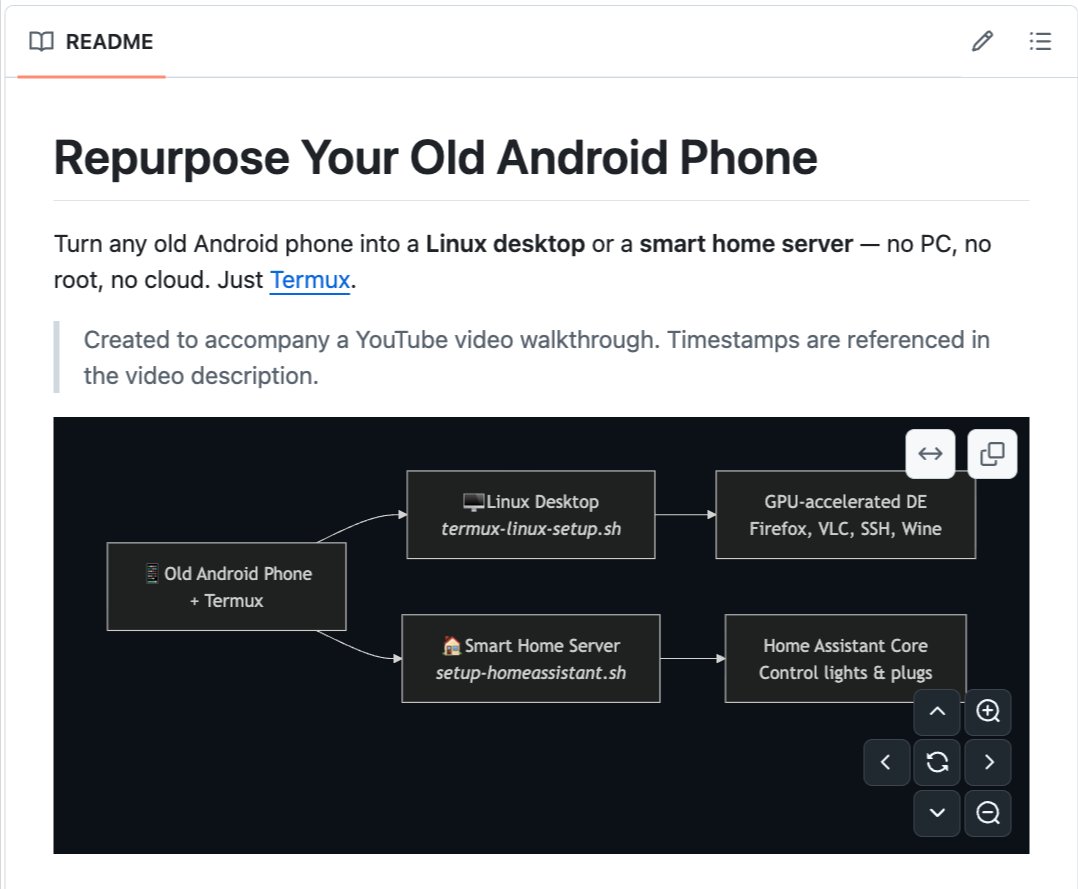
You have an old Android phone in a drawer right now. Collecting dust. Worth nothing.
Someone built a script that turns it into a full Linux desktop. Or a smart home server. Or a development machine. For free.
It's called linux-android.
One script. No root required. No flashing. No risk of bricking your device. Run it in Termux and your old phone becomes a Linux computer.
Here's what it installs:
→ Full Linux desktop. XFCE4, LXQt, or MATE. Real windowed desktop on your phone. Connect a monitor and keyboard via USB and it looks like a PC.
→ Smart home server. Home Assistant runs on your phone. Control your WiFi lights, plugs, and smart devices from any browser on your network. No cloud needed.
→ GPU acceleration. Snapdragon phones get near-native GPU performance through Turnip Vulkan drivers. Mali GPUs use software fallback.
→ SSH server. Access your phone from any computer on your WiFi. Full terminal. Transfer files. Write code. All from your laptop keyboard.
→ Wine support. Run basic Windows applications on your Android phone through Box64 translation.
→ Audio support. PulseAudio configured automatically.
→ Works on any Android phone with Termux support.
Here's the wildest part:
A Raspberry Pi 4 costs $35 to $75. A used mini PC costs $100+. A VPS costs $5/month forever.
That old phone in your drawer? It has a faster processor, more RAM, a built-in battery backup, WiFi, and a touchscreen. All for $0. You already own it.
A Snapdragon 855 from a 2019 phone still outperforms most entry-level server chips. You're throwing away a computer every time you upgrade your phone.
Not anymore.
One command. One old phone. A full Linux machine.
100% Open Source. MIT License.
🚀 Just finished building WSPR dashboard designed specifically for antenna testing!Unlike standard maps, it calculates Normalized SNR ($SNR - Power$), allowing for fair comparisons between different power levels.
https://t.co/SocSXrDTl2
#hamradio#WSPR#Nextjs#AntennaTesting #SWL #RadioAmateur
🌍 Un dashboard open source agrège en temps réel toutes les données militaires et civiles publiques de la planète.
Il s’appelle ShadowBroker.
Ce que tu peux voir :
→ Vols militaires et commerciaux en direct
→ Navires et porte-avions (positions estimées)
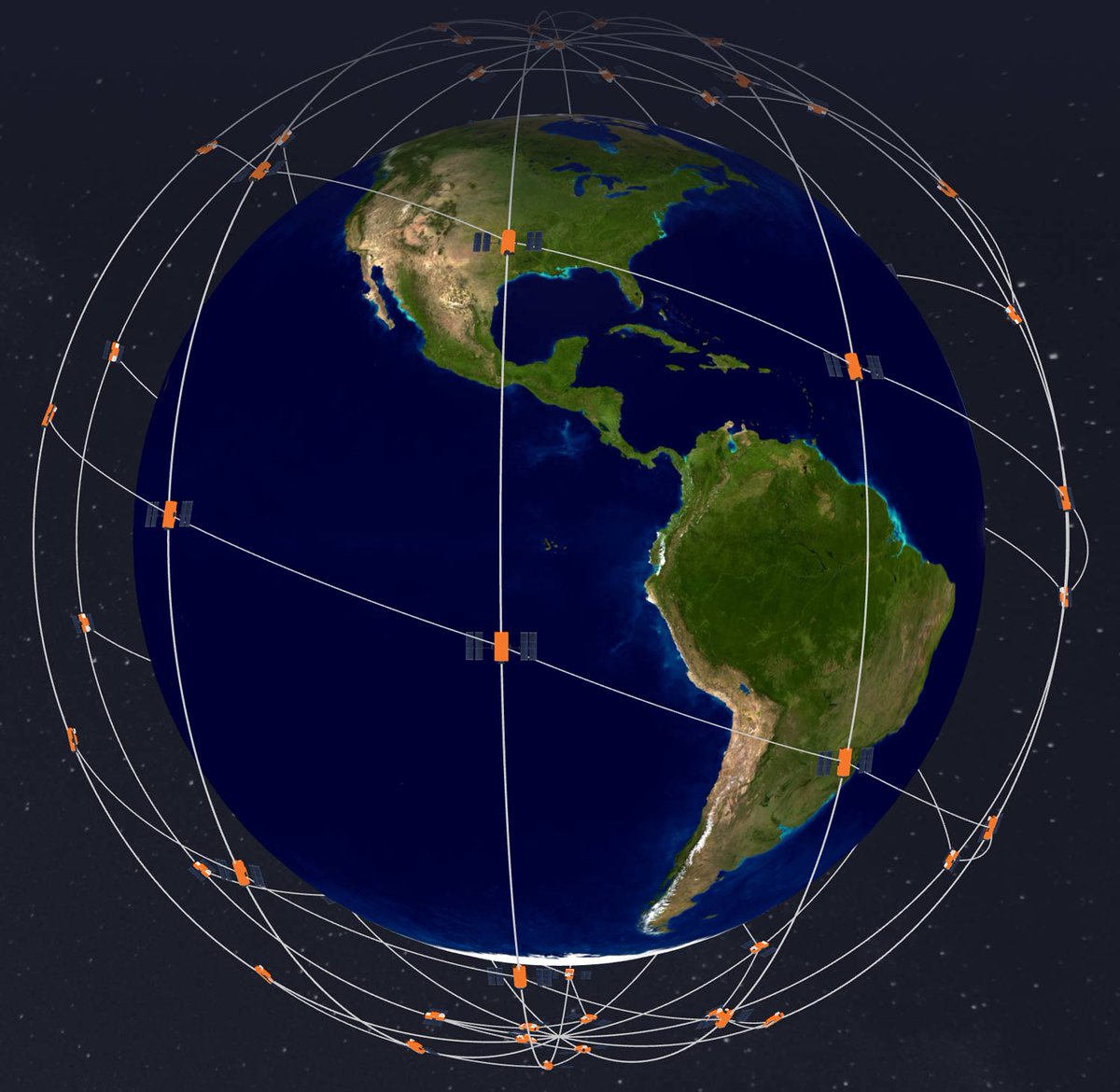
→ Satellites en orbite classés par type de mission
→ Zones de brouillage GPS en temps réel
→ Zones de conflit et événements géopolitiques
Tout ça à partir de données 100% publiques — OpenSky, AIS, N2YO — agrégées en un seul endroit.
Ce n’est pas de l’espionnage. C’est de l’OSINT.
Et c’est disponible sur GitHub gratuitement.
https://t.co/8bBSlEy37P
Le Premier ministre a arrêté le 16 mars 2026 des modifications au tableau national de répartition des bandes de fréquences (TNRBF), proposées par une délibération du conseil d’administration de l’ANFR le 26 juin 2025.
Pour en savoir plus 👉 https://t.co/o49OdCFQxm
TM74A 🔥
Cet après-midi, montage de la station haut-savoyarde pour la coupe du REF !
Objectif : antennes en place avant la nuit 🌄
Et que tout soit opérationnel avant d’aller dormir 💪
I just released tetra-rtlsdr. A single C binary that replaces GNU Radio for TETRA decoding with an RTL-SDR. Multichannel, scanner mode, web waterfall, and rtl_tcp support. Pairs with SQ5BPF’s telive2 stack. @rtlsdrblog 🫡
https://t.co/m4E3cXxnOL
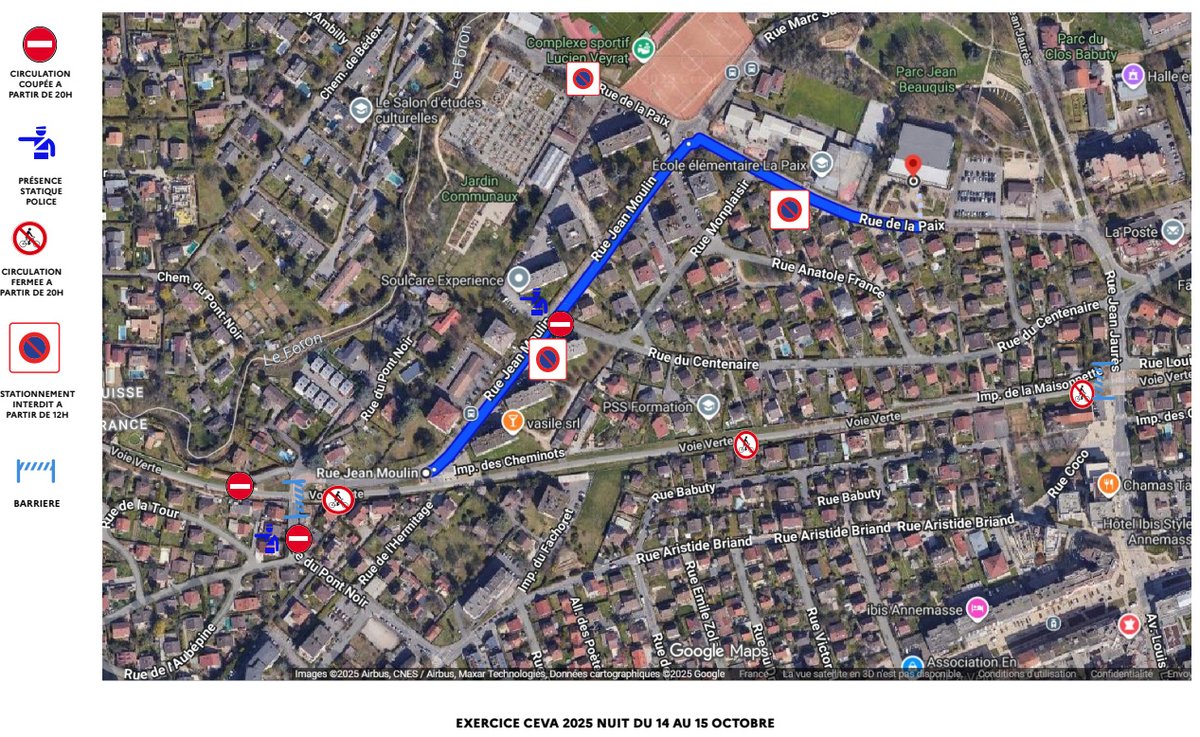
🚨En raison de l'exercice #CEVA, la circulation sera interrompue dès 20h sur #Ambilly, rues Jean Moulin & du Pont Noir (sauf riverains).
🚲voie verte fermée .
🚗stationnement interdit dès 12h rue de la Paix & & Jean Moulin.
+ d'infos : https://t.co/pUw1EqnJCm
⤵️