agents can now trade on MultiversX without anyone writing a bot.
OneDex just shipped an MCP server on mainnet. one endpoint, no API key, no extra fee, 6 tools.
the design is the part I'd copy:
- OneDex finds the route and builds the transaction
- your agent or your wallet signs locally, they never see a key
- minOut is enforced on-chain, so a bad quote fails instead of filling
two ways to use it:
1. in Claude, ChatGPT, Cursor or Claude Code: add it as a remote MCP connector, no sign-in. ask for a swap with your erd1 address. it simulates and gives you a signing link. you check receiver and amount in your wallet and sign. keep "needs approval" on.
2. fully autonomous: a dedicated agent wallet with a small budget, the key in your server env, and rules in code: max per trade, allowed tokens, max slippage, daily budget. the agent runs quote → build → simulate → sign → send → confirm.
my takes:
- the rules in code matter more than the model. the model proposes, the limits decide.
- give the agent a wallet you can afford to lose. never your treasury, never your 24 words in a chat.
- simulate before every signature. it costs nothing.
- next step I'd want: those limits enforced on the account itself, not only in the agent's code. [ROBERT: confirm you want to point at Guardians / multisig here, or cut]
this is what "agents on MultiversX" looks like when it's real: a tool any agent can call, and a chain that checks the result.
what would you let an agent do first with it?
@Zoo0l3 Kkkkkkkkk cara vc é fera, não deveria da ouvidos aos idiotas, vc parou 100% das quedas do 2 do ranking, as cotovelada entrou sim, mas essas “maldades” do jogo vc ainda vai evoluir mais pra perceber essas coisa antes que elas aconteçam!
SÓ SIGA EM FRETE!
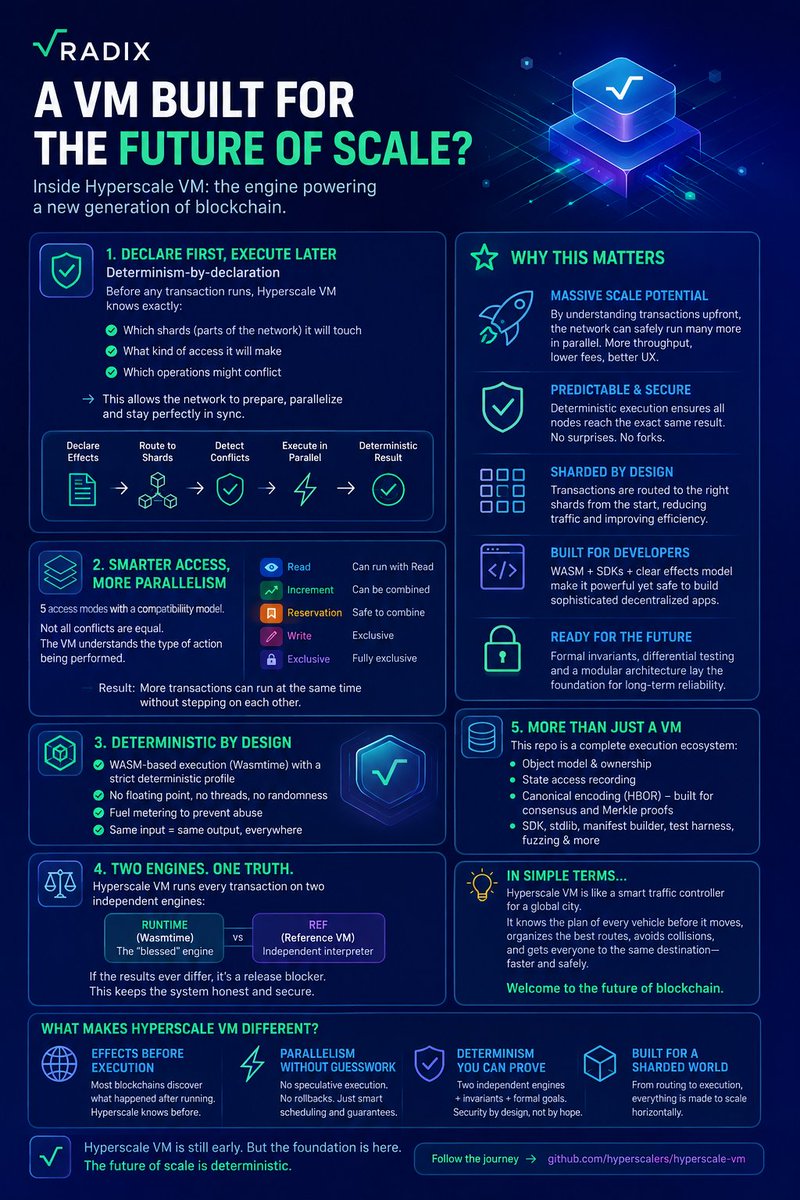
What if blockchain scalability starts before execution?
Hyperscale VM can analyze transaction effects upfront, route them to the right shards, identify conflicts and execute compatible operations in parallel — while keeping execution deterministic.
#Radix#Hyperscale
xStelea published a Radix skill for AI coding agents: 38 guides covering transaction manifests, Scrypto, Gateway, ROLA, subintents, pools, royalties, fees.
It makes the agent clone the Radix source locally and check every claim against it before writing code.
Public since 21 June. This morning was the first most people heard of it.
https://t.co/NwvjMuMLZz
Five staking services on this wiki were filed as dormant or closed. Every one of them is running.
XSEED is rank 13 of 188 validators with 100,243,057 XRD staked and 100% uptime over the past month. Its own website's stats panel reports "0 M+" staked and 1% uptime. The panel is broken.
Radstakes is rank 14, 99,875,871 XRD, 100% uptime. We had it down as closed because https://t.co/jQz2X3H4Z1 stopped resolving.
Slightlyiffy, RadUp and Leaf Node sit at 35, 36 and 38, none under 99.8% uptime. The site Slightlyiffy advertises on-ledger returns a 500.
313 million XRD staked with nodes the wiki had written off, all five corrected today. Registration, stake and uptime sit on-ledger at epoch 332682 for anyone to check.
Imagine logging into every dApp without creating an account or remembering another password.
That's what Radix Personas enable. Your wallet authenticates you cryptographically, and you stay in control of your identity and the personal data you choose to share.
What can your crypto wallet do besides sending tokens?
I'm looking for features that solve real-world or Web2 problems, not the usual staking or DeFi.
Join the discussion 👇
#Crypto#Web3#Blockchain
https://t.co/YkJ9QRXF97
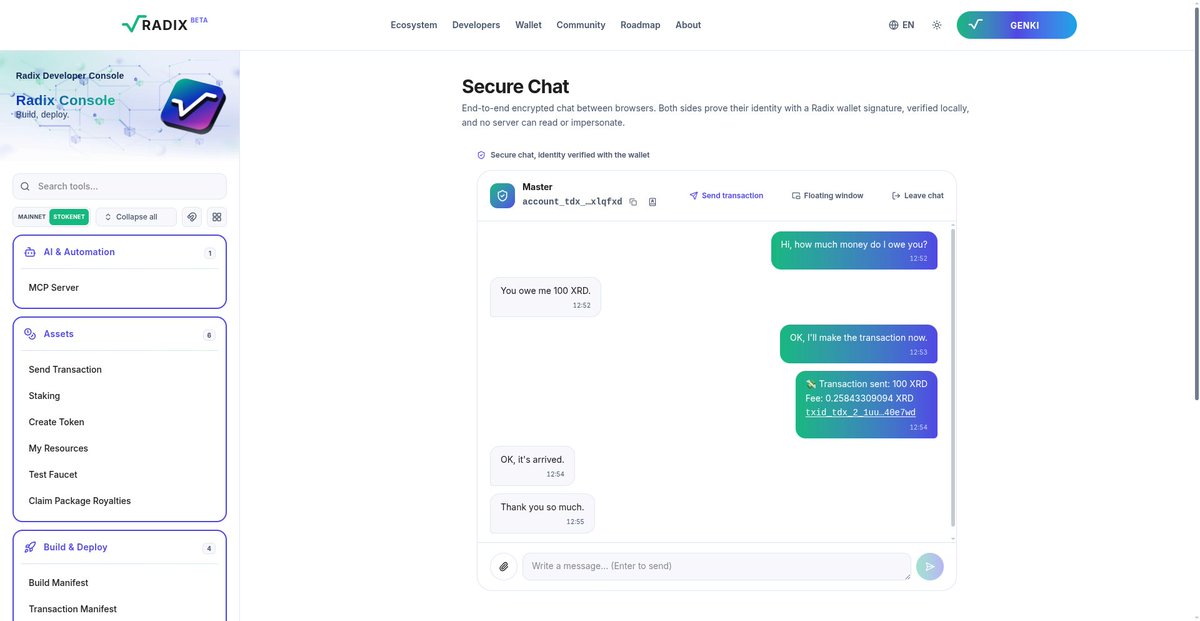
💬 With #Radix Seal Chat, you don't just get secure messaging and wallet-based identity verification.
💸 You can also send Radix transactions directly from the chat, making conversations and payments part of the same experience.
🔗 https://t.co/GDCmvrVbwA
#Radix#Blockchain