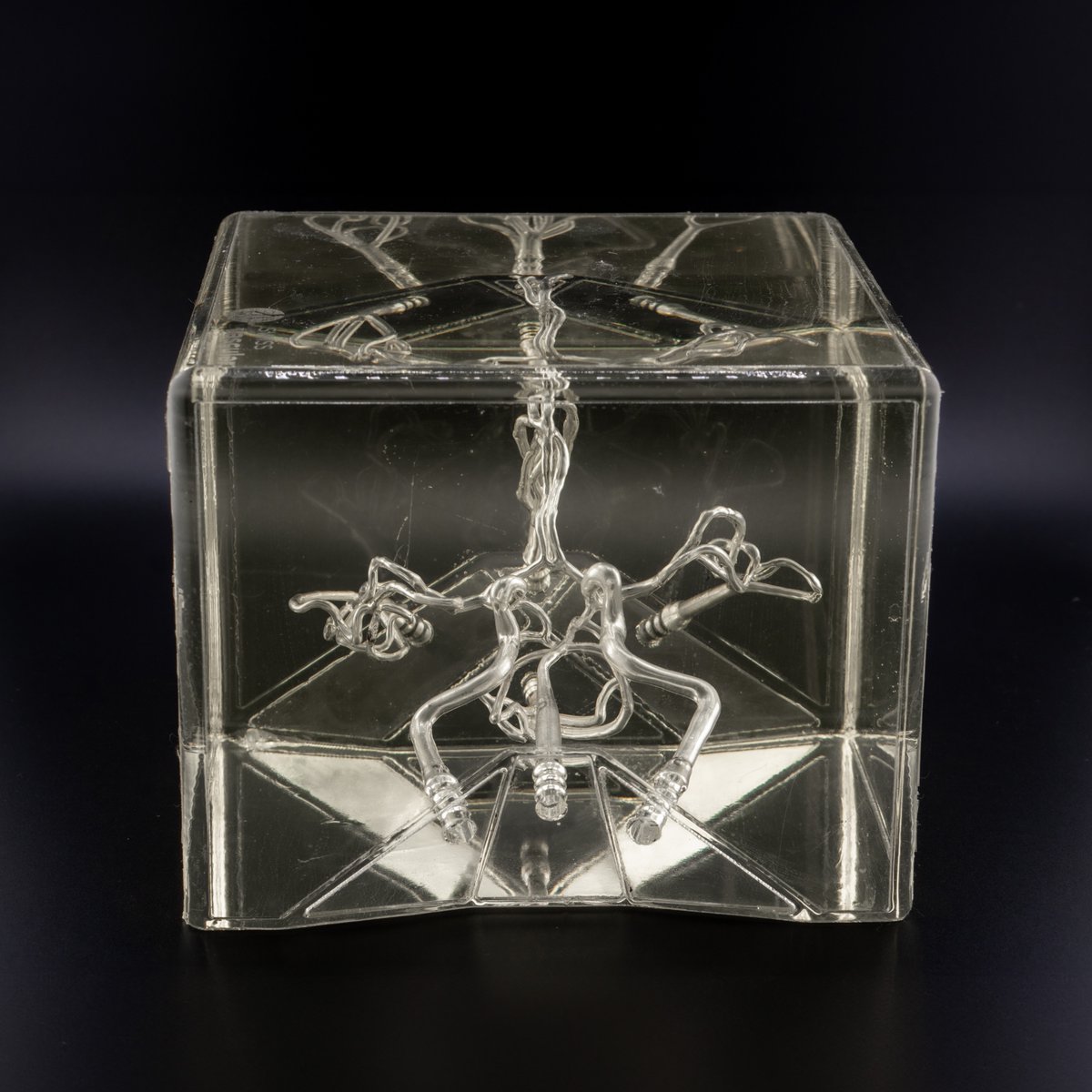
Our PNT/NSI team in collaboration with ETH Zurich just navigated an untethered micro robot with nano robotic components through a phantom model external carotid circulation to the middle meningeal artery. The micro robot was in Zürich and was navigated successfully by our team from Phoenix (5700 miles). The future of Neurovascular Surgery will include untethered, micro, and nano robots to deliver therapies.
@MayoClinicCV@cvsection@mayoclinicneuro@mayoclinic
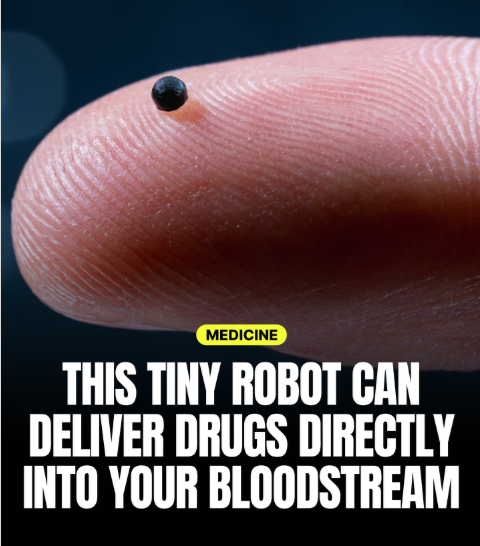
Forget pills – this microrobot delivers drugs directly inside the brain.
Scientists at ETH Zurich have created a minuscule, steerable microrobot that could revolutionize stroke treatment by delivering drugs directly inside the brain’s blood vessels.
Barely wider than a millimeter, the robot is a soft, biodegradable gel capsule filled with medication and laced with magnetic nanoparticles. Doctors can guide it remotely through arteries using powerful external magnets, navigating even the narrowest, fastest-flowing vessels in the brain.
When the capsule reaches the precise spot—such as a clot causing a stroke—a targeted high-frequency magnetic field gently warms it, melting the gel and releasing the drug exactly where it’s needed, with almost no spillover into the rest of the body.
The system has been successfully tested in realistic models of human blood vessels and in live pigs and sheep. To make the robot visible under medical imaging, the team added safe heavy-metal contrast agents.
Current stroke treatments often require flooding the entire body with potent clot-busting drugs, which can cause dangerous bleeding elsewhere. This precision approach could dramatically lower those risks while improving outcomes.
Navigating the bloodstream is extraordinarily difficult—the heart’s forceful pumping creates turbulent, high-pressure conditions—but the Swiss team solved this with an advanced hybrid magnetic control system that keeps the robot stably on course.
Still in the preclinical stage and not yet tested in humans, the technology nevertheless marks a major step toward minimally invasive, highly targeted therapies for strokes, brain tumors, aneurysms, and other conditions that are currently almost impossible to treat precisely from inside the body.
Researchers at ETH Zurich have developed a microrobot capable of transporting drugs to specific locations within the body, with the potential for use in hospitals in the near future.
Check out the full article here: https://t.co/KVCQYP7Ido
Image/video credits: @ETH#robotics #microrobots #technology #engineering #healthcare #MedicalDevices #robots #innovation
ANGIE: The Future of Targeted Drug Delivery Using Magnetic Microrobots
https://t.co/ofvZ0X6sOz
Prof. Dr. Bradley Nelson and Prof. Dr. Salvador Pané introduce the ANGIE project, a significant advancement in targeted drug delivery. #StrokeResearch#StrokeInnovation#nanomedicine
أول ابتكار في "حلول دبي للمستقبل" هو هذا. كبسولة مغناطيسية تتحرك بالمغنطة بداخل أوردة الدماغ، ثم تطلق محتوياتها باستخدام ذبذبات، فيصل الدواء للمكان الصحيح تماما.
I am excited to share that we’ve been awarded the BRIDGE Programme Proof of Concept grant! 🎉
For more updates, follow Swiss Vascular here on LinkedIn and visit our website at https://t.co/H3WHjU4wbh
#EndoluminalInterventions#VascularModels#BRIDGEPoC
🏆New Proof of Concept projects set to go! Each of these 10 young researchers receive up to CHF 130,000 in funding to implement their project.
Projects (https://t.co/IvgxYOChJj)
BRIDGE: a joint programme by @Innosuisse and @snf_ch. #BridgePoC
The final winner of the #BRAINConference 2023 abstract awards is @FabianCLanders, congratulations!🎉
His abstract was on electromagnetic navigation systems for enhanced endoluminal device control
We're excited to announce that abstracts will be returning to BRAIN Conference 2024, more information to follow!
In the meantime, you can register for this year's BRAIN Conference here: https://t.co/cRG2QdUSzk
#Neuroradiology #Neurology
In the @HorizonEU@ANGIE_h2020 project the research team developed 3D re-constructions of their patient’s brain vessels based on MRI scans. The models are now available for education, improving access to stroke treatment training. More👉https://t.co/IML6CWDEGr #BrainAwarenessWeek
Switzerland-based startup firm Nanoflex #Robotics has announced that it recently installed its first remote-ready robotics system for #Neurovascular procedures at the @JacobsInstitute
https://t.co/VR4BO6ow6b
The @HorizonEU@angie_h2020 project aim to develop nano-robots to assist delivery of targeted drugs and unblock blood vessels to fight stroke from within. Fabian Landers tells us how their 3D models could provide access to earlier and more extensive training. #BrainAwarenessWeek
A podcast series within a project? Issues on Targeted Drug Delivery discussed with world renowned experts! Check it out!
🔴YouTube channel: https://t.co/GMwFZD6CLQ
🌐https://t.co/5JZDqvBTwd
@EUeic@HorizonEU@EU_Commission
Here, PVA-based magnetic hydrogel microrobots were developed by @PaneSalvador and co-workers.
These microrobots' high mobility, tunable stability, and biocompatibility make them a great platform for targeted drug and cell delivery.
Find it #OpenAccess: https://t.co/F1IPJ1jtUb