@mjnblack@nytimes Genuinely thought this post was satire, but it's an interesting point of view.
I wouldn't call it generational reporting no matter what your views are on Jensen
ETH really needs concerted marketing as machinic SOV . . . just go all-in on that, market the asset itself. . .
ETH is our best "sanctuary tech"
esp. + Railgun + Kohaku + Ambire + Aztec
yet leaders promote every other "sanctuary tech" instead, I don't get it. . .
ETH literally is the product and needs to be marketed directly and explicitly--yes, "shilled"
verifiable compute is super interesting but doesn't make ETH super investable. . .
...who in 2026 is interested in investing into a bleeding-tech notary service? . . .
. . . very useful but doesn't excite anyone, especially investors. . .
& if ETH doesn't take off I doubt Ethereum's use for verifiable compute will dominate either as the ultimate security for that is ETH's value . . .
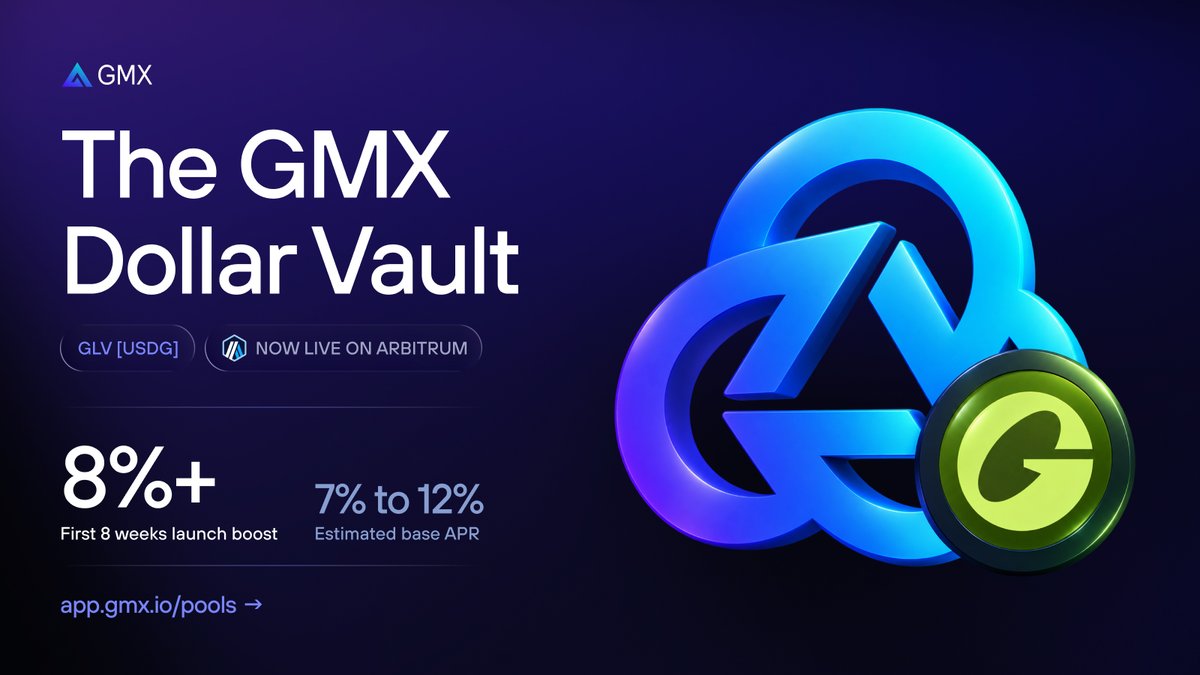
The GMX Dollar Vault is now live.
Deposit dollars. Earn dollars. Withdraw whenever you want.
Offering an estimated 7% to 12% base APR, plus an 8% or higher launch boost for the first 8 weeks.
Start LPing today: https://t.co/abLC6oi6Ka
1/
“Who’s a good boy?!”
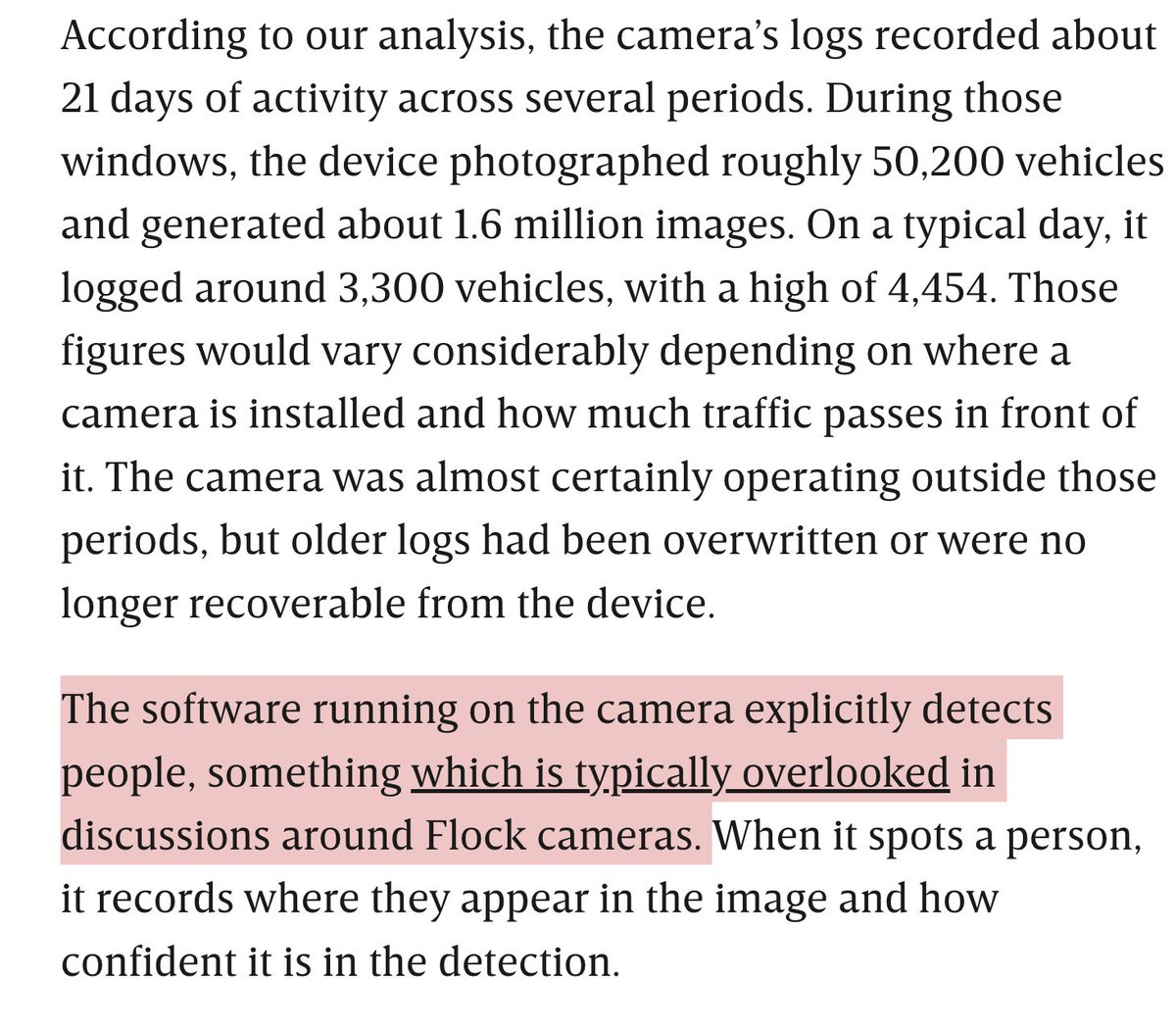
Hackers just dumped the contents of a Flock camera.
They found:
🔴Software explicitly detecting people, not just plates
🔴1.6 million images logged in 21 days
🔴Key to decrypt files stored on the device itself.
Finds directly contradict Flock, which claims someone with physical access can't access images.
Making it worse,@GainSec warned about the physical access issue more than a year ago & Flock downplayed it.
And yeah, the Flock camera logged “Who’s a good boy?!” about every 2 minutes, all while plagued with errors, crashes & reboots.
By @dmehro & @josephfcox
https://t.co/5a91FwVrPf
@phtevenstrong Thanks for saying it, I’ve been feeling the same way watching all this trader fame dialogue. Even the current sports betting surge I think will be looked back on like cigarette advertising
One thing before I start: everything in this post is public information from my own docket. None of it is new, and I'm not revealing anything you can't already find in the court filings yourself.
The retrial just got pushed to April 26, 2027. The order came down today (Dkt. 300). My acquittal motion is still sitting there, undecided. I honestly don't know when this ends.
Prosecutors are supposed to protect American interests and go after people who broke the law. A jury deadlocked on the two most serious counts against me. And still SDNY won't stop, because this case was never just about me. It's about setting an example.
Don't take my word for it. Tara La Morte, the chief of SDNY's Illicit Finance and Money Laundering Unit, said it herself at a New York City Bar Association event (Law360, Feb. 23, 2024; filed on my docket as Doc. 25-2):
"We want the industry to take notice."
"What we're trying to do is sort of bring the industry into compliance, and I think Tornado Cash is an example of that."
An example. Out of a developer who wrote code.
At that same event, her deputy praised the government's blockchain-tracing partner, Chainalysis.
Here is what they didn't tell the audience. All of it is from the public docket in my case.
According to the trial transcripts, Chainalysis was running its OWN Tornado Cash relayer, and earning fees on the transactions flowing through it.
- Chainalysis's own lawyers admitted to "a relayer node that Chainalysis operated"; my subpoena sought documents on Tornado Cash relayer(s) "used from March to August 2022." (Dkt. 211)
- In open court, the prosecutor said it plainly: "I think the parties agree as to that part of the testimony, that the Chainalysis relayer earned fees." Same hearing: "there's zero evidence that the defendant was in any way aware that Chainalysis was running a relayer." (Dkt. 259, July 25, 2025)
So the company that helped trace my "criminal" transactions was itself profiting from Tornado Cash transactions, while I was prosecuted over software I helped create.
And when my lawyers subpoenaed them to testify?
- Chainalysis moved to quash. (Dkt. 211)
- The government backed them: "Your Honor, we agree with the position outlined in the motion." (Dkt. 255)
- The night before, prosecutors called Chainalysis's counsel. The judge asked point-blank: "Did you let them know that they were potentially subject to investigation or prosecution?" The answer: "We have discussed at a high level some of the issues surrounding the relayer with Chainalysis." (Dkt. 259)
- The Chainalysis witness took the Fifth. My lawyers learned about that call only afterward, from Chainalysis's own lawyer. (Dkt. 263)
The jury never heard any of it.
This spring, at the Bitcoin 2026 conference in Las Vegas, something happened that I still can't quite believe. The Acting Attorney General, Todd Blanche, and the FBI Director, Kash Patel, sat on a panel called "Code is Free Speech."
Think about that. The two top law enforcement officials in the country. Blanche told thousands of developers: if you're a coder and you're not the one committing the crime, "you are not going to be investigated and not going to be charged." He said the last administration's crypto cases were "outrageous attacks on the industry." Patel praised "the Chainalysises of the world" as FBI partners.
And when the moderator pointed at the elephant in the room, my case, Tornado Cash, Roman Storm, the Acting Attorney General called it a "lingering case" they are "continuing to deal with."
So here is my hypothetical question. If code is free speech, why am I still being prosecuted for writing it? And if the Chainalysises of the world are the partners, the same Chainalysis that ran its own Tornado Cash relayer and earned fees from Tornado Cash users, while I never did, why is it off the hook?
They made an example out of a developer for writing code. Their own vendor ran the same infrastructure, pocketed the fees, and got a phone call instead of a prosecution.
Sources 👇👇👇