something i find worth looking at with @RebateLaunch is the relationship between launchpad revenue and the $REBATE buybacks,
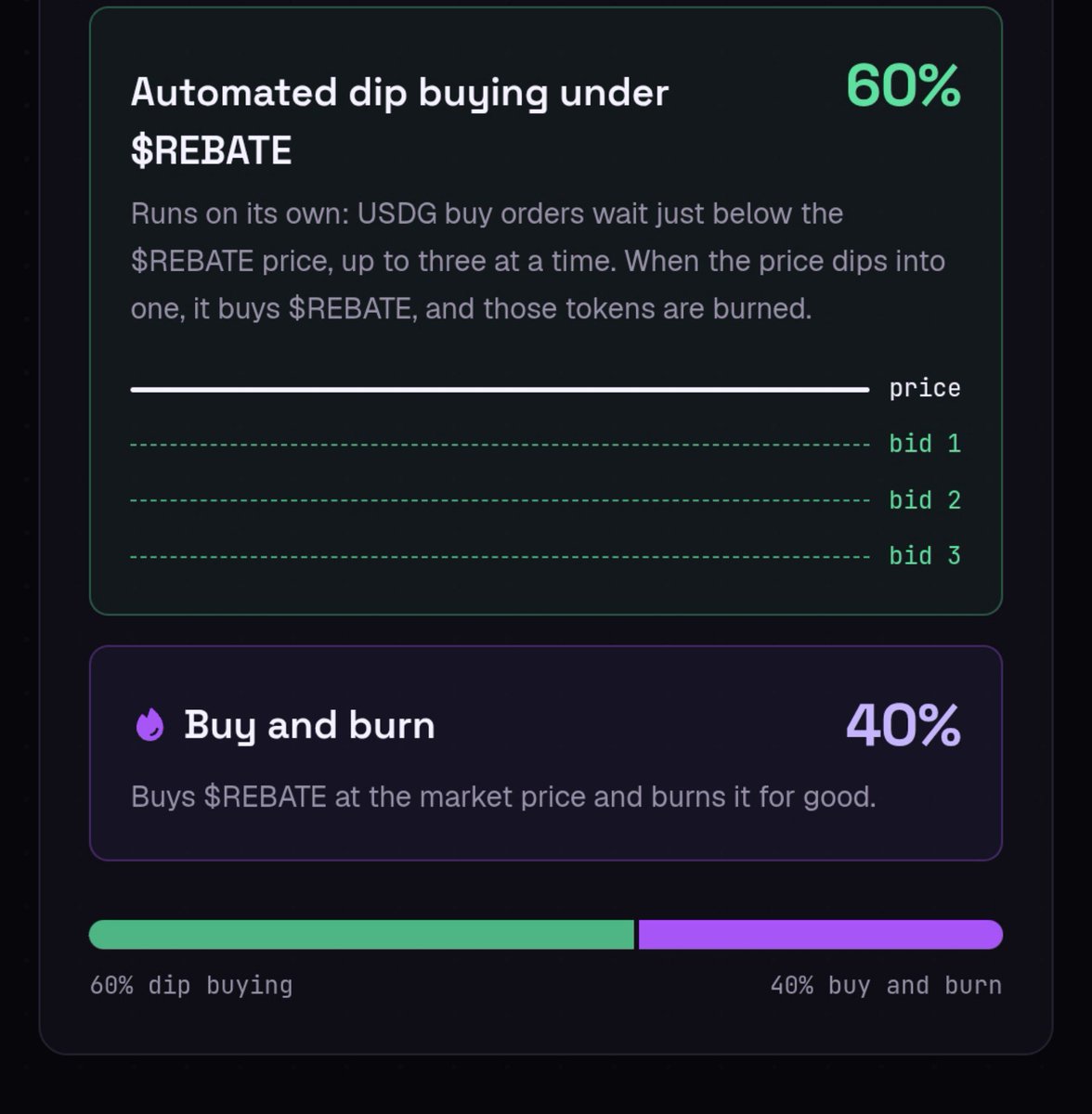
the project says fees generated from launches will be used to buy back and burn the token, so the amount of launch activity matters here,
if launches bring in more fees, there could be more funds available for buybacks, but low activity could mean less buying pressure from that mechanism,
i'd want to see the actual fees collected and tokens burned over time before judging how much impact it has.
good morning,
i think the interesting question with @RebateLaunch is whether the launchpad can create value beyond the rewards it offers,
the 3% buy bonus gives people a reason to look twice, and the planned buybacks connect launchpad fees to $REBATE,
but incentives can bring people in without giving them a reason to stay,
i'd be more interested in seeing repeat launches, returning buyers and steady platform activity than judging growth by the number of people attracted to a bonus.
i think one thing people should check with any rewards system is whether the numbers are easy to verify,
@RebateLaunch says holders receive USDG directly in their wallets several times a day, which means the payouts should be something people can track over time,
if the distribution records show the amount paid, the time, and how many holders shared the rewards, it becomes much easier to judge the model for yourself,
i'd rather have transparent numbers i can compare than big reward claims with no context.
one thing that can easily get overlooked with launchpads is what happens after a token launches,
@RebateLaunch has a buy bonus to attract buyers, and the project says fees from launches will go toward buying back and burning $REBATE,
but i'd be interested in seeing whether projects launched on the platform continue to attract trading activity after the initial hype fades,
because a successful launch isn't just about getting people in on day one, it's also about what happens when the excitement settles.
i wonder how the rewards on @RebateLaunch will look once more people start holding $REBATE,
if the USDG payouts come from platform activity, then the amount generated and the number of holders sharing it both matter,
more activity could mean more rewards, but more holders could also mean each person receives a smaller share,
that’s why i'd rather see actual payout figures alongside the number of eligible holders than judge the system from one big reward alone.
fixed supply always sounds good in crypto, but i think the bigger question is what creates demand for the token,
@RebateLaunch says $REBATE has a fixed supply, with no new tokens being minted, and plans to use launch fees for buybacks and burns,
that gives the token a supply-side mechanism, but the impact still depends on how much activity the launchpad attracts and how much gets spent on those buybacks,
scarcity can be part of the story, but people still need a reason to keep buying and holding.
something i’d pay attention to with @RebateLaunch is how the 3% buy bonus works when the market gets volatile,
the bonus gives buyers extra tokens, but if the token price drops after the purchase, the value of those extra tokens can drop too,
so a 3% bonus at the time of buying doesn't automatically mean you're 3% ahead financially,
i think it's a useful incentive, but people still need to look at the entry price and the risk they're taking.