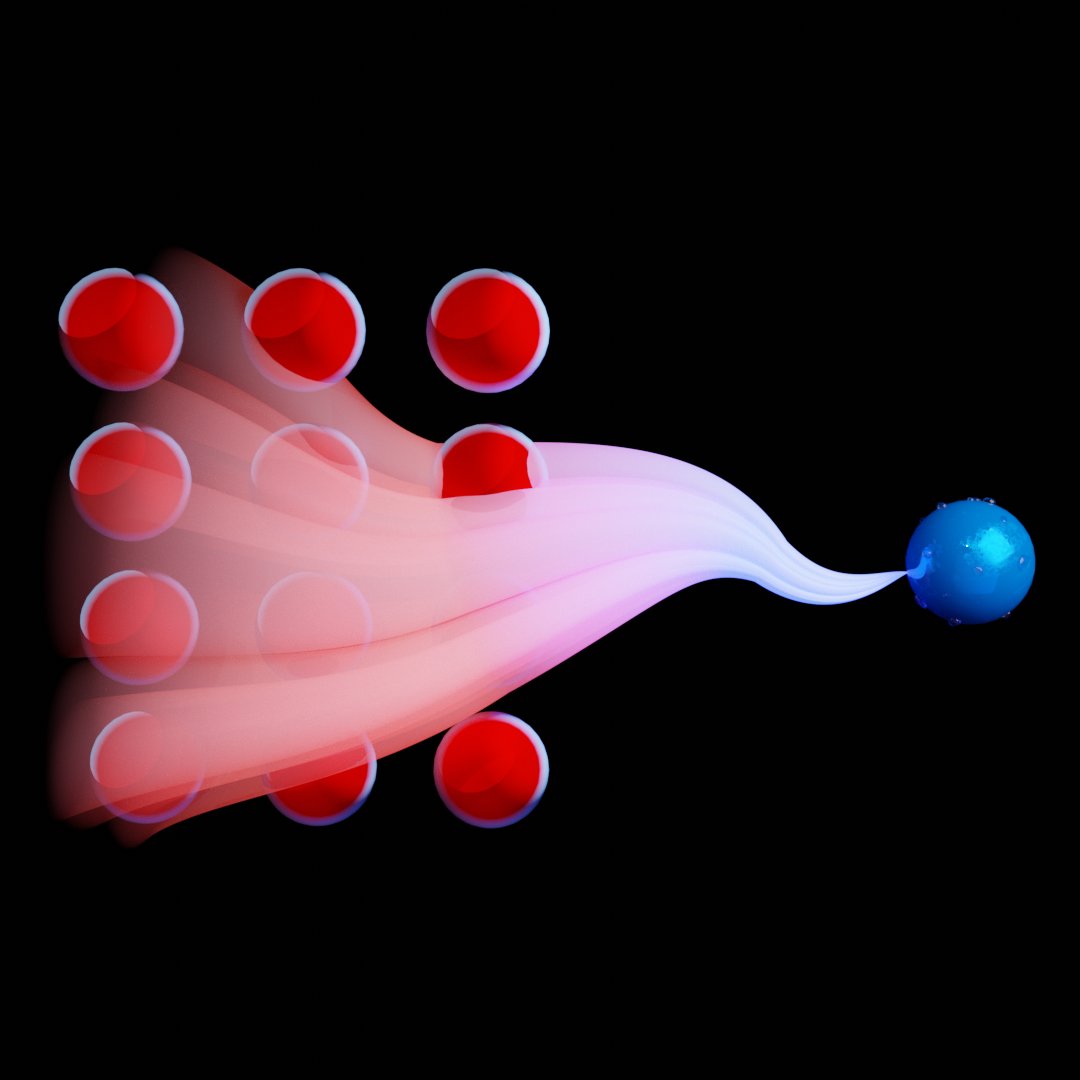
One of our PhD students @LudwigNuetzel @UniFAU is developing QuantenSchafkopf - a Bavarian game combined with the rules of quantum mechanics. Make sure to follow the account https://t.co/EG0HpqC0ar
New preprint on quantum cooling for fermionic systems: https://t.co/ZcKWufvis3
We present a cooling algorithm to find ground and thermal states of fermionic Hamiltonians.
Many thanks to Lucas Marti and @hartmannquantum!
@FauQuantum@MunichQuantum
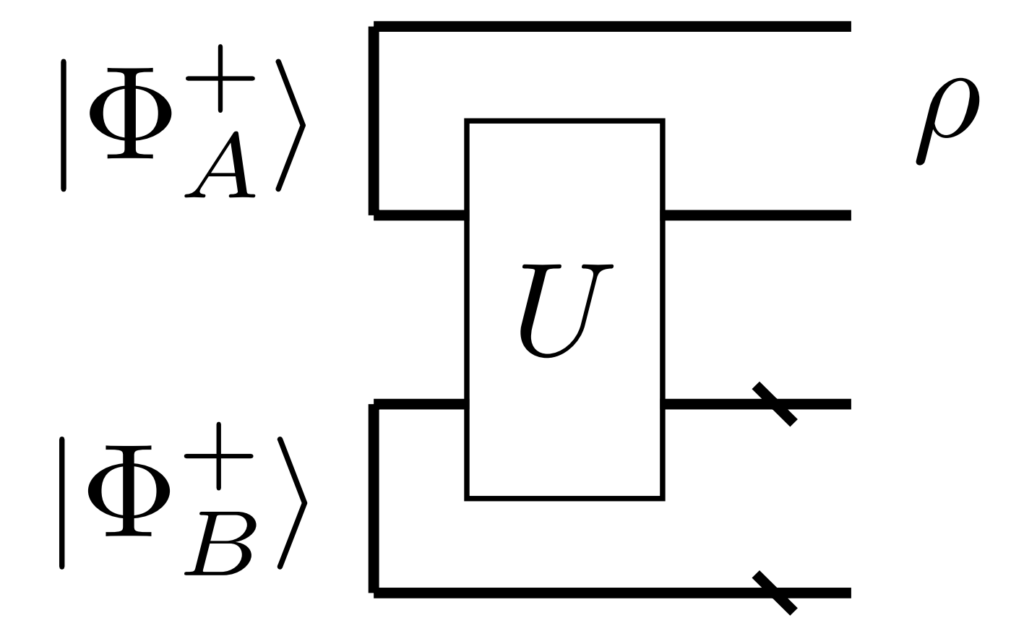
Check out our new pre-print on Tensor Product Decompositions of Quantum Circuits! We study how to split off 🪓 effective actions on small subsystems.
https://t.co/R939R3TOuO
Thanks for this nice collaboration
𝐀𝐫𝐬𝐚𝐥𝐚𝐧 𝐀𝐝𝐢𝐥, @qZoeHolmes@sornborg, @hartmannquantum !
How do you solve chemistry with a quantum computer? The first step is understanding the Fermi-Hubbard model.
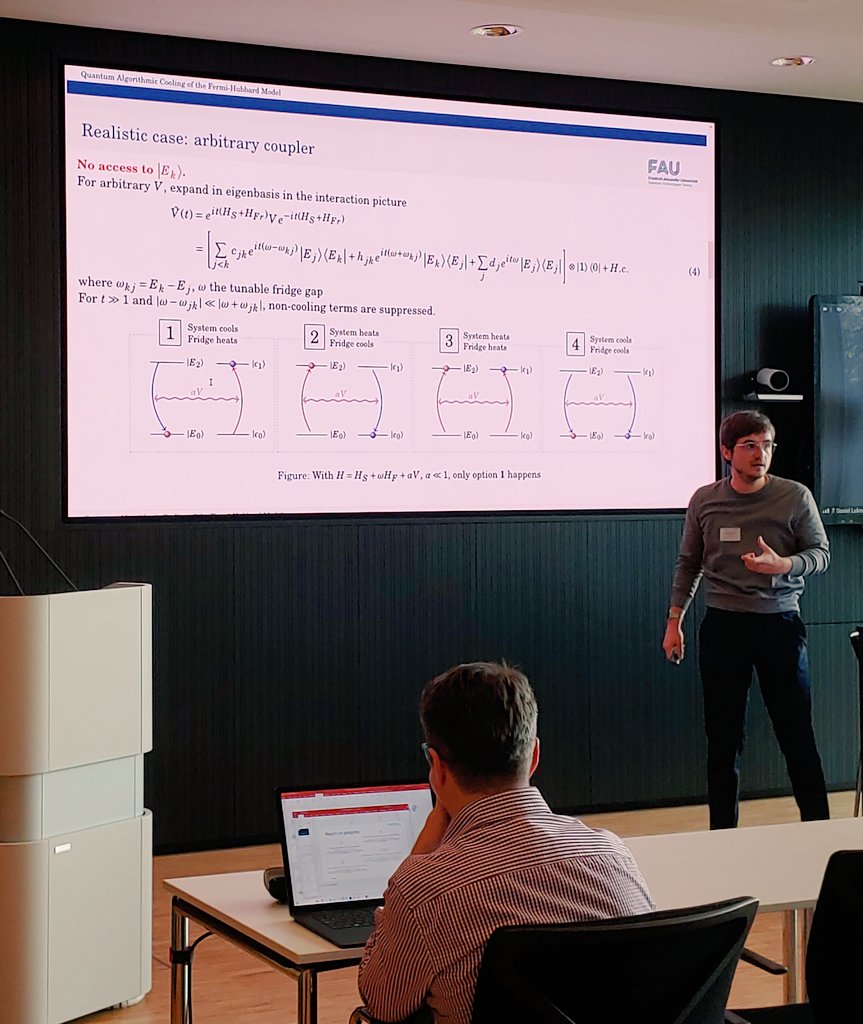
𝐋𝐮𝐜𝐚𝐬 𝐌𝐚𝐫𝐭𝐢 on Quantum Algorithmic Cooling at MPQ Garching.
#Quantum@hartmannquantum@MPI_Quantum
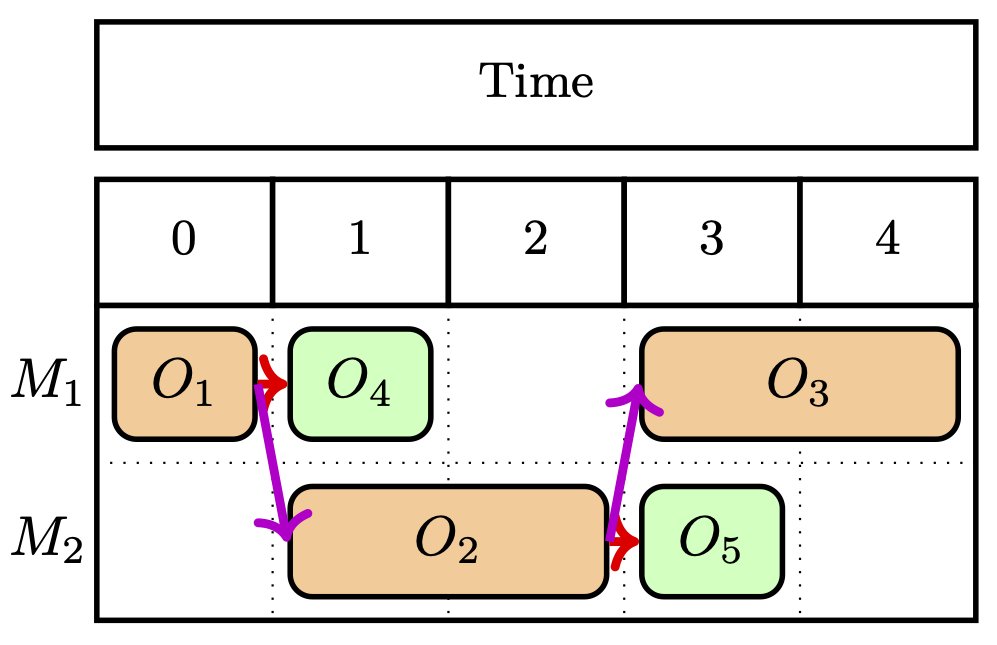
New preprint on efficient encodings of job shop scheduling problems that can be used on quantum computers https://t.co/M0F7eQRnAC. Thanks to @Siemens and @MunichQuantum for support. @FauQuantum@UniFAU
🚨We're hiring!🚨
The Theory of Quantum Technology Group at FAU Erlangen-Nürnberg invites applications for a postdoc position in quantum algorithms and quantum simulation.
For more information, see https://t.co/8fm6lu2hhJ
#QuantumComputing@hartmannquantum
Our paper on classical optimization of Trotter sequences for quantum simulation has been published!
Thanks to @MansRefiQ, Felix Fischer and @hartmannquantum for their work!
@MunichQuantum@UniFAU
New paper out on short gate sequences for time evolution:
Phys. Rev. Research 5, 043035 (2023) - Problem-specific classical optimization of Hamiltonian simulation https://t.co/Vfc3eTCWdK
@MansRefiQ@FauQuantum@MunichQuantum@UniFAU
New paper out on short gate sequences for time evolution:
Phys. Rev. Research 5, 043035 (2023) - Problem-specific classical optimization of Hamiltonian simulation https://t.co/Vfc3eTCWdK
@MansRefiQ@FauQuantum@MunichQuantum@UniFAU
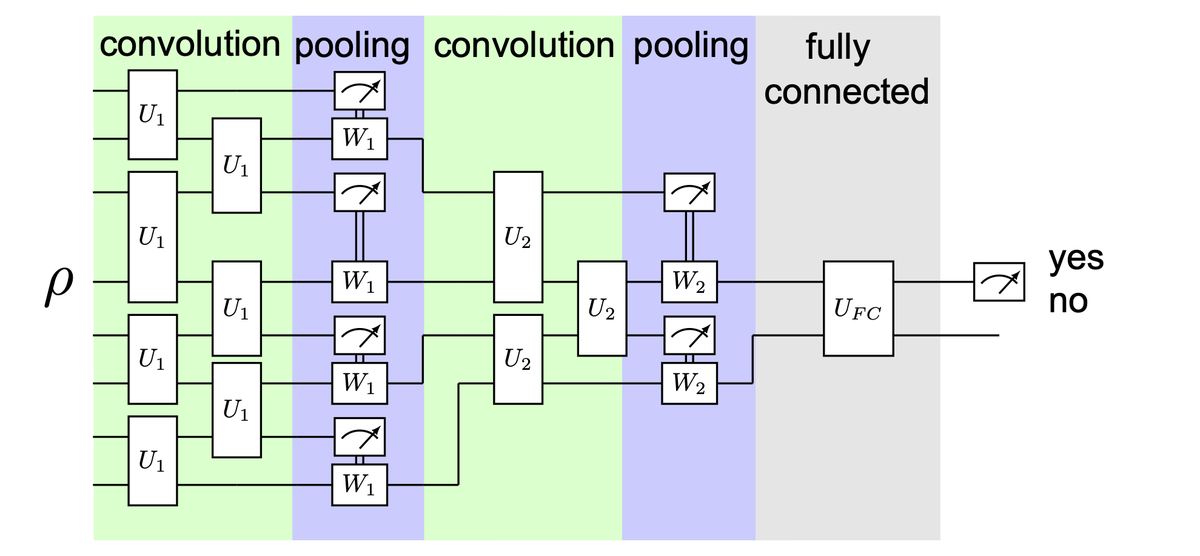
Quantum Convolutional Neural Networks are a new tool for exploring condensed matter physics on Quantum Computers. In our new preprint, we show how to make them NISQ friendly, that is error tolerant and shallow depth. https://t.co/fM9TGgzBfK @FauQuantum@MunichQuantum@UniFAU
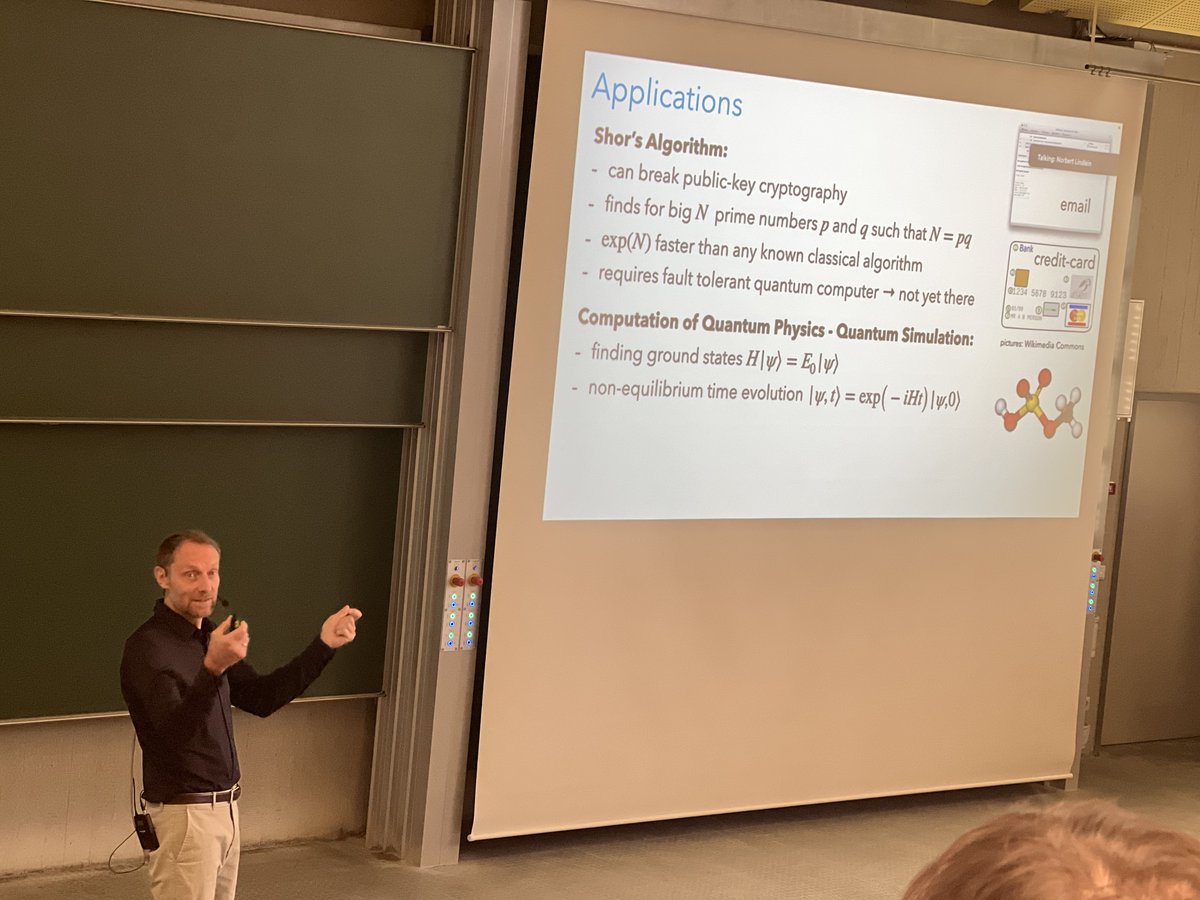
I finally delivered my inaugural lecture @UniFAU. I'm glad we waited until Covid had safely passed and we could enjoy this without restrictions. Thanks to everyone who was there. It was big fun for me. @FauQuantum
Decoupling neighboring superconducting qubits is essential for operating large processors with high precision. In https://t.co/nR7ZvEDpnL we show how to achieve this for strongly localized computational basis states and propose a coupler design. @eichler__chris@FauQuantum
Be it Barren plateaus or sample problems, quantum optimization seems more and more out of sight for NISQ computers. In our latest pre-print, we pull the optimization of Hamiltonian simulation into classical pre-processing.
Check out this 🧵
https://t.co/VCjQ05EPQu
@FauQuantum
Can one find more efficient gate sequences than Trotter for digital quantum simulation?
In our new preprint with @MansRefiQ we show that this is always the case, via a problem specific, classically computable cost function for optimizing gate sequences, https://t.co/Ud2V0rySKg
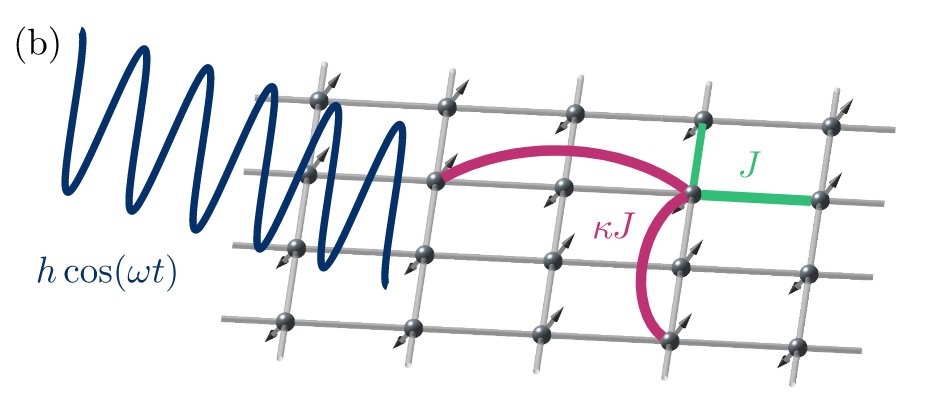
Check out our new work on simulating periodically driven (Floquet) systems! We managed a high fidelity simulation on a 20 qubit trapped ion device + provide an in depth error analysis of our quantum algorithm.
https://t.co/9EMyLsWT6H
This 🧵 sums it up.
Check out their talks:
- Timo Eckstein: A64 at 10.48 am
- Verena Feulner: K64 at 5.00 pm
- Samuel Wilkinson: K73 at 5.48 pm
- Petr Zapletal: Y70 at 10.36 am