@injective And the FAQ also says promoting a functional crypto system’s current utility and capabilities would likely not,by itself,create an investment contract.
giving builders and ecosystems clearer boundaries around talking about what their networks actually do.
@injective And the FAQ says that once a crypto system is functional, activities that secure, maintain, improve or enhance the network generally would not be treated as essential managerial efforts.
That gives projects more room to keep building after functionality is established
@injective@Injective already uses ecosystem revenue for its Community BuyBack, with INJ committed in each round being permanently burned.
So clearer treatment around buybacks gives Injective a more defined regulatory framework around one of its existing token mechanisms.
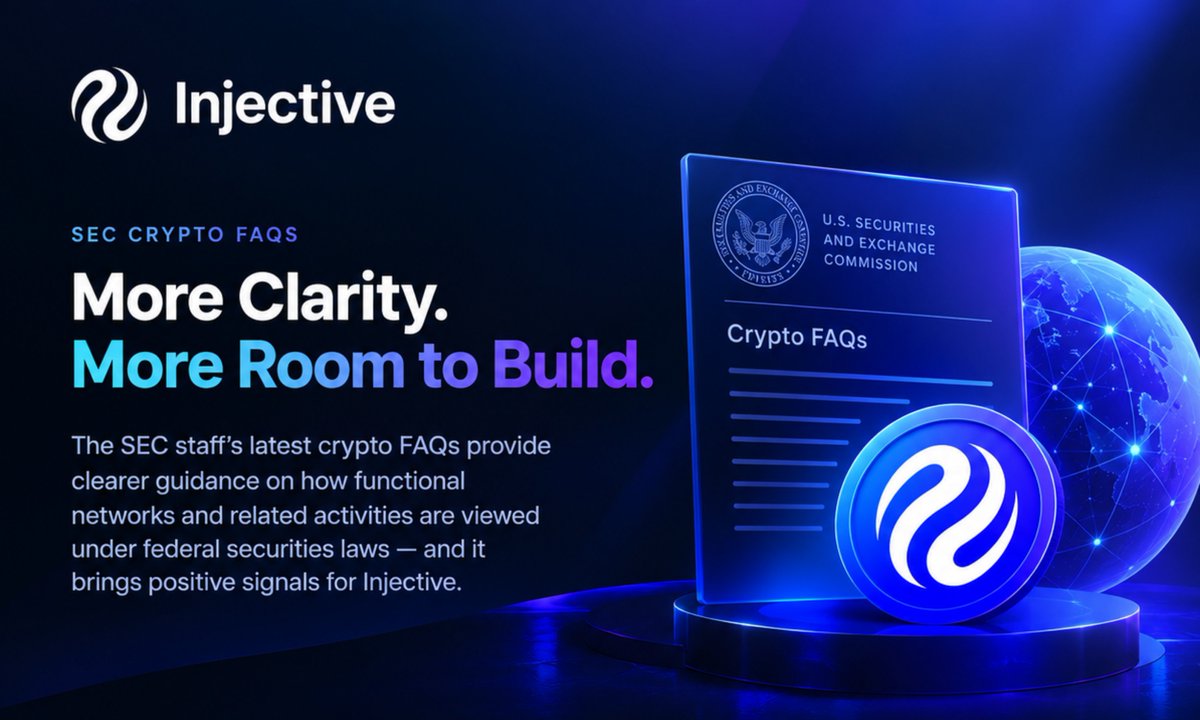
The SEC staff’s new crypto FAQs give more clarity around how functional crypto networks are viewed under the federal securities laws..
and that is relevant to @injective as a live network with real utility, staking and onchain applications. 🧵
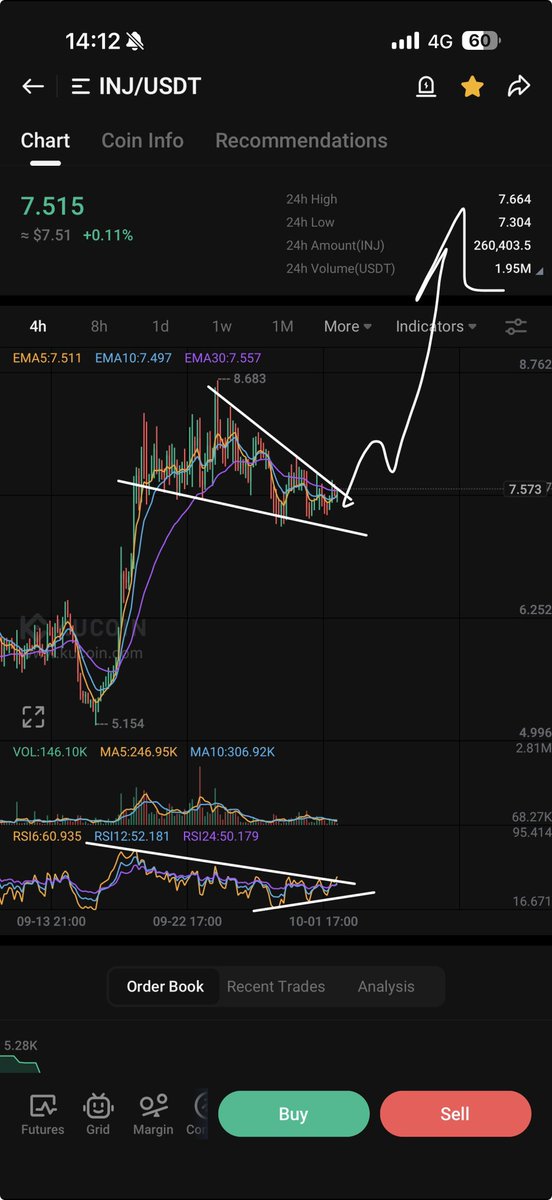
$INJ [Short Term Update]
The previous orange outlook is now the main outlook.
I'm expecting ~ $7.15 to complete the correction then have a race back up.
Of all the #Altcoins I can rationalize the nested 1-2's here better than any other coin.
Good Luck Degen.
I think we could see more rotations here, because $ETH going up usually means risk on mode for Alts
and people who missed the recent runs will be looking for the next trade / beta plays
so i think we could see $HYPE, $NEAR and $LIT chilling for a bit, so I’m watching coins with fresh catalysts that fit the narratives already catching a bid like
- $AAVE for a DeFi rotation, with V4 crossing $1B in deposits and $310M in active loans, so there’s actual borrowing behind the story
- $ZRO with Zero and ATLAS coming, bringing planned staking incentives and trading-fee buybacks beyond the bridge-token label
- $INJ if the privacy and confidential DEFI bid broadens, with its upcoming CypherOS platform adding confidential transactions to the thesis
- $ZAMA for the same narrative, but with encrypted balances and transfers already available to apps on Ethereum
- And $CRV if stablecoins and DeFi catch more attention, since swaps and crvUSD borrowing already generate protocol fees
More coins to keep watch on $KITE $CHIP for Ai agents and computing
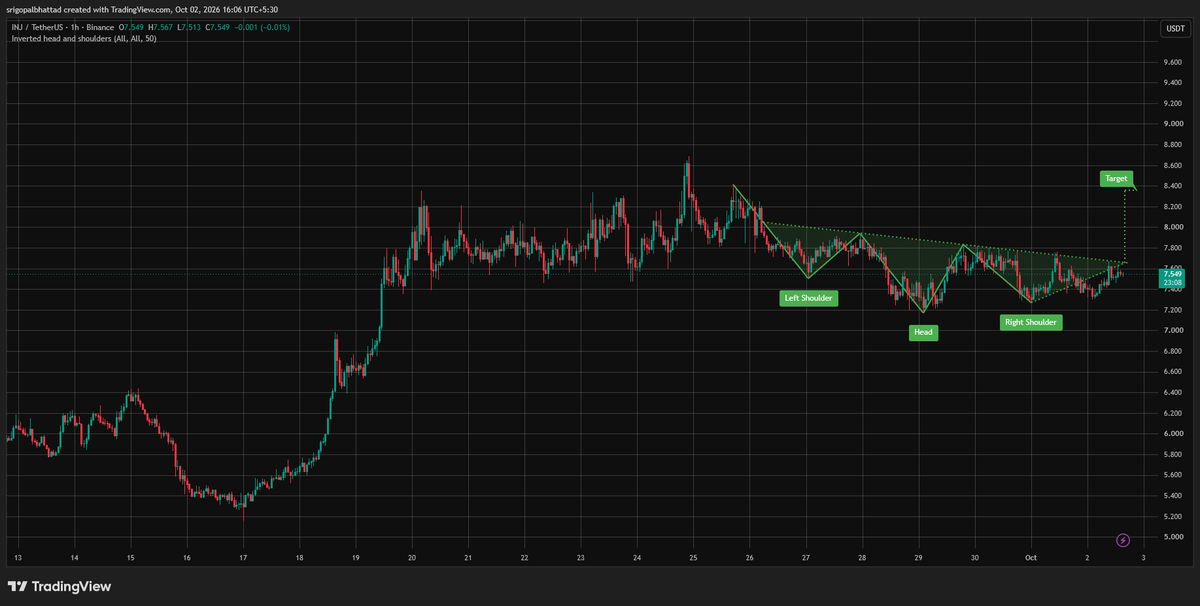
$INJ is forming a clear Inverse Head & Shoulders on the 1H chart 👀📐
Price is around $7.55, with the neckline near $7.75–$7.80. The right shoulder is holding above the head low, suggesting buyers are defending the structure.
A clean breakout above the neckline could activate the chart’s projected target near $8.40 🔥📈
Market sentiment: bullish breakout watch 👀⚡
#INJ #Injective #Crypto #Altcoins #Trading
Intents got people interested in $NEAR again and we saw the price action that followed.. now $NIGHT is catching a privacy bid too
so clearly there is interest for Conidential transfer and transactions..
And so $INJ has my attention here
As with Injective now previewing confidential transfers, trading and tokenization through CypherOS, I can see it getting pulled into that privacy narrative next
And at around $730M cap with its vesting unlocks behind it, I think it’s worth keeping on the list here..
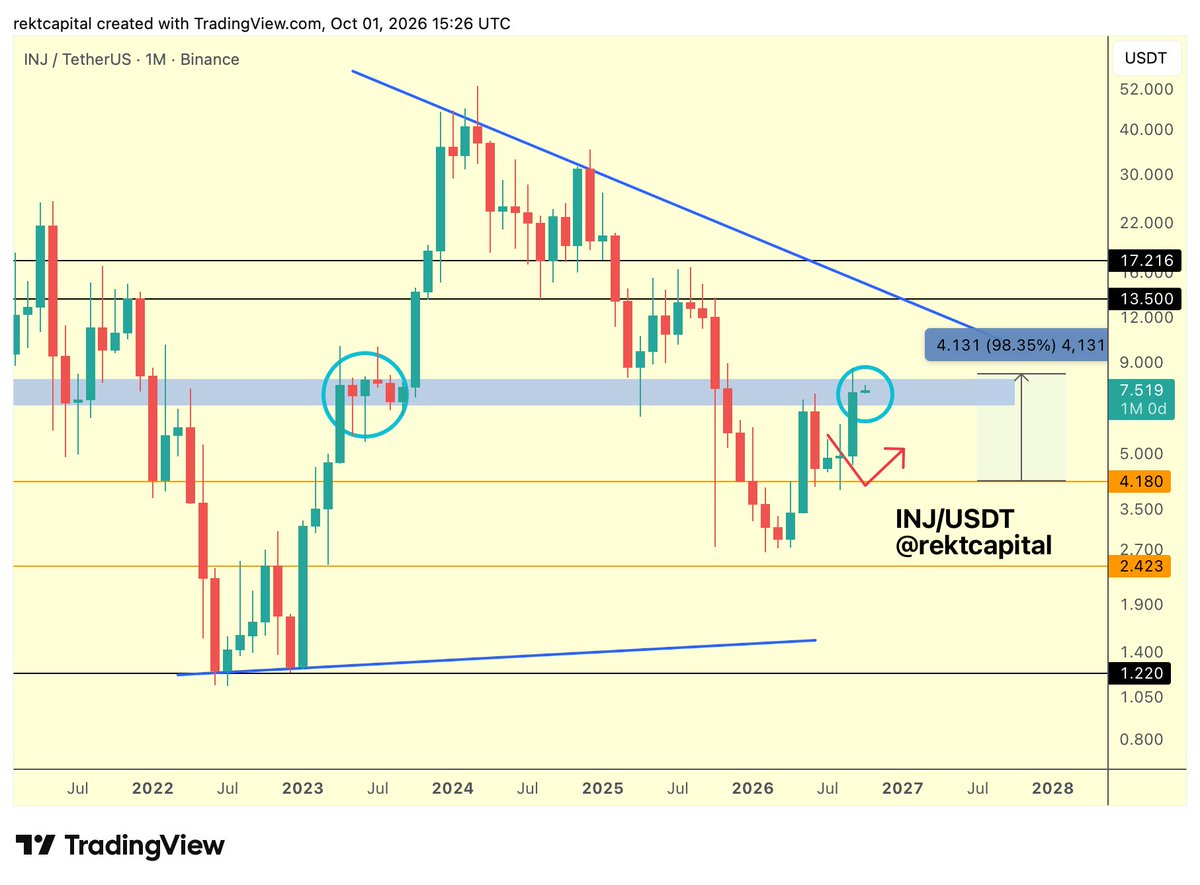
$INJ - Injective
There's the Monthly Close inside the blue area of historical resistance
Injective is now positioned for a rebuild of yet another re-accumulation range, on the cusp of repeating history in that regard
Building out a re-accumulation range here would likely set up future trend continuation
And any downside wicking into the early 2026 highs would be a part of that process
#BTC #INJ #Injective
@injective@coinbase@smbcnikko_jp@FourPillarsFP And with institutions, exchanges, infrastructure providers and policy voices now meeting around these topics, more conversations can turn into actual products and partnerships.
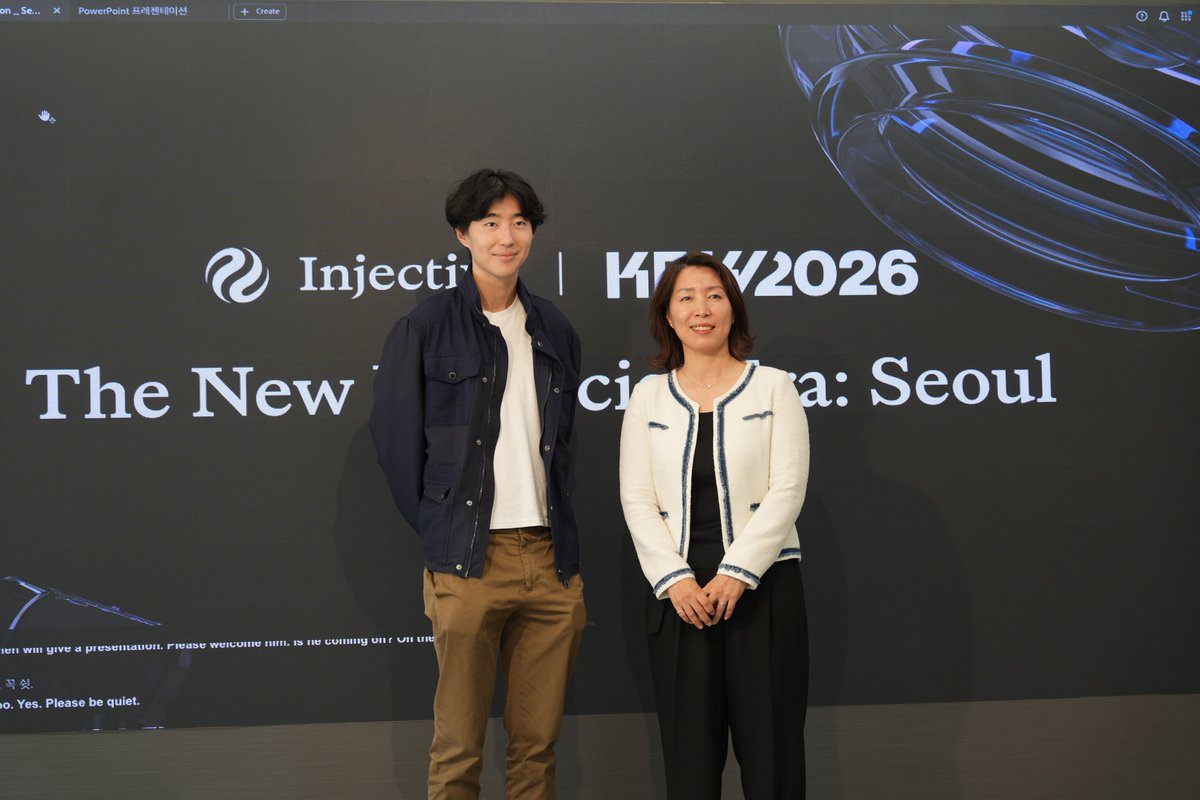
The Seoul event is over, but more institutional work around $INJ is still taking shape.
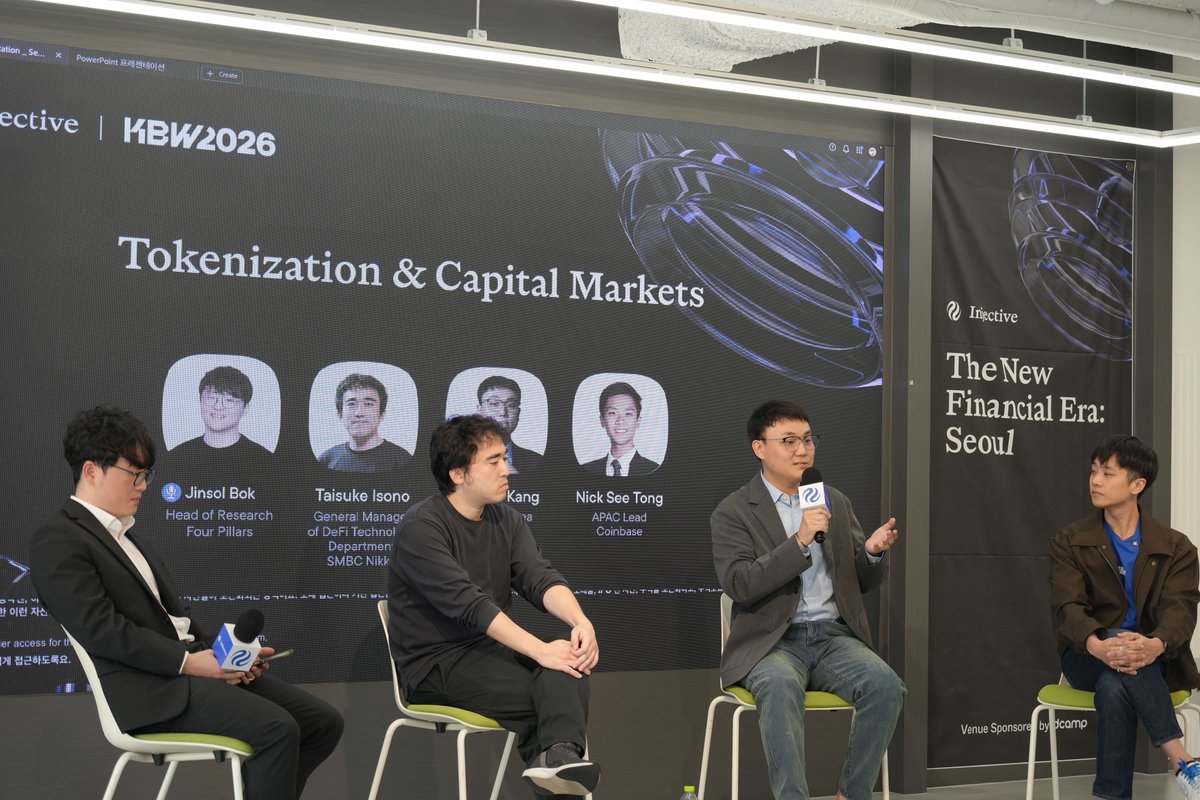
The KBW event in Seoul has wrapped up, with @injective bringing LG CNS, @coinbase, @smbcnikko_jp, BitGo, BDACS, @FourPillarsFP, the Blockchain Association and the Federal Reserve System into one room.
The focus was on the next phase of digital finance. 🧵
@injective@coinbase@smbcnikko_jp@FourPillarsFP LG CNS already has a live example with POSCO International, using Injective for a trade receivables tokenization pilot.
So the Seoul event was not just talks. There are already real financial assets being tested on the infrastructure.
🚨 Last days to enter the $5,000 Reward 🔥🔥
@MineBitOfficial Sprint is LIVE!
✅ 200 Winners
✅ Social Quests Only
✅ FREE to Enter
Complete the quests and claim your share of the $5,000 prize pool.
Ready to climb the leaderboard? 👇
https://t.co/c9hpxeLm35
We always hear teams DUMPING tokens
But few realize there's a small handful where teams are BUYING back tokens
The purpose of these buybacks range from
• Token burns
• Lock & stake
• Ecosystem Funds
Let's look at a few
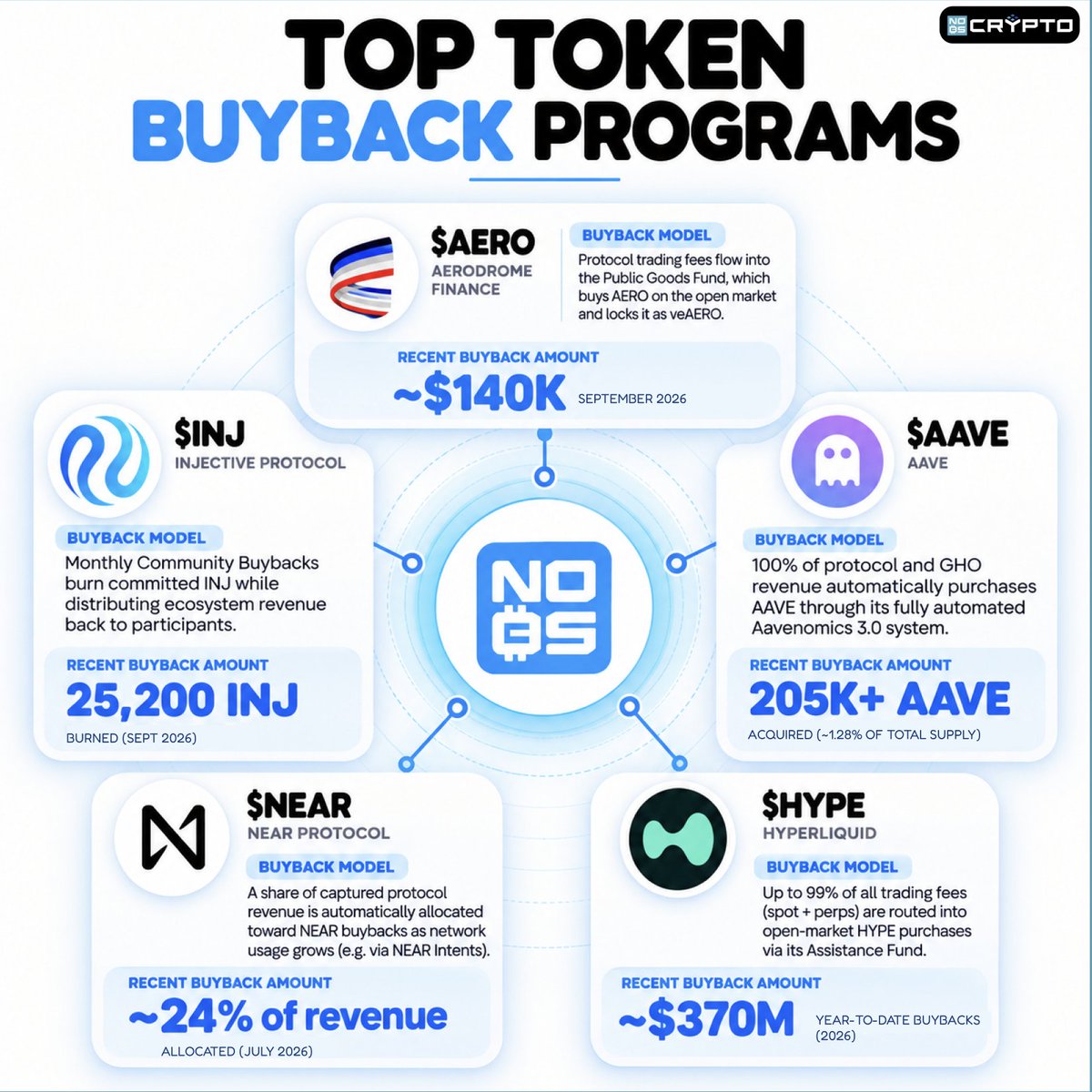
• $AERO
• $AAVE
• $HYPE
• $INJ
• $NEAR
And these projects aren't just buying back their tokens for number to go up
Most times these buybacks directly reflect ecosystem incentives and overall network growth.
Let's look into each of these 5 key examples
AERODROME FINANCE–––
Aerodrome's model is one of the more direct pipelines in DeFi:
A share of protocol trading fees flows straight into its Public Goods Fund and Flight School program
They use that revenue to buy AERO on the open market.
But the AERO doesn't just get burned and forgotten, it gets locked as veAERO.
That's the actual point of the mechanism: converting protocol revenue into long-term governance power
It's less about shrinking supply and more about concentrating influence with the protocol itself.
Most recently, the Public Goods Fund executed a buyback worth roughly $140K on Sept 3, 2026.
AAVE–––
Aave's buyback program is structured as a continuous, revenue-funded operation rather than a one off event.
It launched around April 2025, initially run by the Aave Finance Committee and TokenLogic
They execute open market AAVE purchases on a recurring basis using real protocol revenue.
Then on June 25, 2026, Aave shipped Aavenomics 3.0, automating the program entirely, funded by 100% of protocol + GHO revenue.
Now it runs continously unless governance halts it.
More Aave use = More AAVE bought back automatically
It reduces reliance on emissions-based incentives, using real lending/borrowing revenue to create sustained demand instead.
As automation went live in June 2026...
The program's acquired over 205,000 AAVE (~1.28% total supply) since inception.
HYPERLIQUID––––
Hyperliquid takes the most aggressive approach of the five projects listed here.
Its Assistance Fund routes up to 99% of all trading fees, spot and perps combined, directly into HYPE buybacks.
The utility angle is scale: as Hyperliquid expands into new markets...
Fee revenue grows, and the buyback flow grows proportionally with it.
As of Aug 31, 2026, Hyperliquid's buybacks totaled roughly $370M year-to-date for 2026.
INJECTIVE PROTOCOL––––
Injective's approach is participatory rather than purely mechanical.
This is thru its monthly Community Buy-Back
Here's how it works:
Users voluntarily commit their own INJ into a pool in exchange for a pro-rata share of ecosystem revenue (paid out in USDT and other tokens).
Once committed, that INJ is permanently burned for good
The purpose is twofold:
Itt gives holders a direct yield-like incentive tied to real ecosystem revenue
Simultaneously making burns a community-driven event than just protocol execution behind the scenes
Most recently, September 2026's Community Buyback round burned 25,200 INJ, continuing the monthly cadence.
That's on top of the former Burn Auction model, which had already burned 6.78M INJ (~7% of supply)
NEAR PROTOCOL––––
NEAR's buyback isn't structured around a fixed dollar budget like Aave's or Hyperliquid's,
Rather it's a direct % of captured protocol revenue
Meaning buyback size scales directly with network usage rather than a governance-set allocation.
This matters because it ties buybacks to real efficiency gains, specifically from NEAR Intents,
Which has been improving revenue capture per unit of transaction volume.
From July 2026, roughly 24% of NEAR's captured revenue over the 30 days was feeding the buyback flow
In other words, as NEAR's underlying tech gets more efficient at capturing value, the buyback mechanism gets stronger.
––––
Five different mechanisms. Same underlying signal.
Teams with real revenue are choosing to buy their own tokens back instead of just emitting more.
This shows a protocol that's putting it's money where the utility is🔑







![nology3000's tweet photo. $INJ [Short Term Update]
The previous orange outlook is now the main outlook.
I'm expecting ~ $7.15 to complete the correction then have a race back up.
Of all the #Altcoins I can rationalize the nested 1-2's here better than any other coin.
Good Luck Degen. https://t.co/0maAeC16Cl](https://pbs.twimg.com/media/HTmRZMzbgAAcR9w.png)