#REV@Rev_plc could be one of the biggest movers from now to end of year as it goes through the license granting process for 2 of the largest uranium projects in Italy. Already spent €250-300m on the projects. And the value is just £4m market cap so you can see the upside here it’s just too good to miss out on 👍
Italy seeks nuclear comeback nearly 40 years after Chernobyl, testing a ... https://t.co/9xK82TFKiK via @YouTube
🚨𝐒𝐓𝐎𝐑𝐔𝐌𝐀𝐍: 𝐀 𝐌𝐀𝐉𝐎𝐑 𝐑𝐄-𝐑𝐀𝐓𝐈𝐍𝐆 𝐂𝐀𝐓𝐀𝐋𝐘𝐒𝐓 #TYM
1️⃣𝐀 𝐃𝐞𝐜𝐚𝐝𝐞 𝐨𝐟 𝐏𝐚𝐫𝐚𝐥𝐲𝐬𝐢����
Located in Västerbotten County in northern Sweden, Tertiary Minerals' Storuman Fluorspar Project stands at the precipice of a transformation that few could have anticipated just two months ago.
For ten long years, this 27.7Mt fluorspar deposit has been in a permitting paralysis → caught between the competing claims of industrial development and indigenous land rights.
Notably, the project's history reads like a bureaucratic tragedy, a cycle of grants granted, then revoked, then reinstated on appeal, only to be refused once more.
The Mining Inspectorate of Sweden (Bergsstaten) initially granted an exploitation permit for the project in 2016, offering a glimmer of hope that appeared to vindicate years of patient development work. However, that hope proved short lived.
Between 2019 and 2023, the Inspectorate executed a dramatic reversal, overturning its own grant, only to have that refusal annulled by the Swedish Government on appeal, with instructions to re-examine the case.
The saga continued its tortuous path in September 2024 when the Mining Inspectorate refused the permit once again, this time with the County Administrative Board of Västerbotten adding its voice to the chorus of opposition.
At the heart of these repeated rejections lies a fundamental conflict with Sámi reindeer herding, an activity recognised as a national interest in the region.
The County Administrative Board made its position unequivocally clear, stating that the proposed mine would collide with reindeer herding operations, with particular concerns raised about plans for a large ‘sand storage’ facility that would disrupt traditional migration routes and grazing patterns.
2️⃣𝐓𝐡𝐞 𝐖𝐫𝐢𝐭𝐢𝐧𝐠 𝐨𝐧 𝐭𝐡𝐞 𝐖𝐚𝐥𝐥
As the legendary investor Howard Marks once observed, "The most important thing about investing is understanding the difference between what is going to happen and what the market has already priced in."
For those paying attention to the Swedish political landscape, the writing has been on the wall for some time, and the signs pointing towards a fundamental recalibration of the nation's mining policy have been impossible to ignore for the perceptive observer.
𝐓𝐡𝐞 𝐒𝐲𝐬𝐭𝐞𝐦𝐚𝐭𝐢𝐜 𝐃𝐢𝐬𝐦𝐚𝐧𝐭𝐥𝐢𝐧𝐠 𝐨𝐟 𝐭𝐡𝐞 𝐇𝐢𝐬𝐭𝐨𝐫𝐢𝐜𝐚𝐥 𝐏𝐨𝐥𝐢𝐜𝐲 𝐀𝐫𝐜𝐡𝐢𝐭𝐞𝐜𝐭𝐮𝐫𝐞:
What has transpired throughout 2026 represents nothing less than a legislative earthquake, a coordinated assault on the very policy framework that had, for so long, strangled northern Sweden's mining potential.
The transformation has been breathtaking in both its scope and its speed:
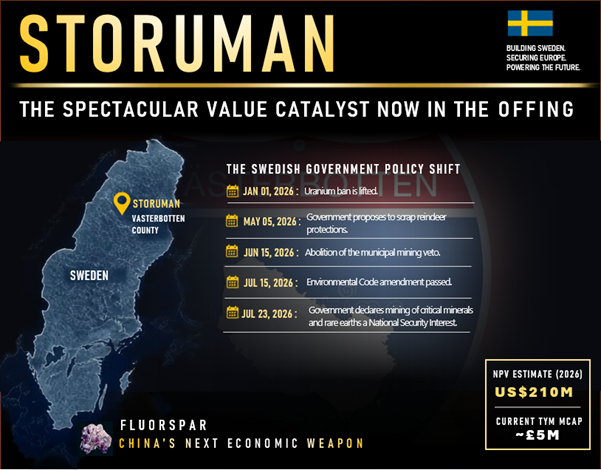
𝐉𝐚𝐧𝐮𝐚𝐫𝐲 𝟏, 𝟐𝟎𝟐𝟔: This marked the first tremor when the Riksdag voted decisively to lift the ban on uranium extraction that had been in place since 2018; removing a significant barrier to comprehensive mineral development across the country.
𝐌𝐚𝐲 𝟎𝟓, 𝟐𝟎𝟐𝟔:The Swedish Government unveiled its most controversial proposal yet; a plan to scrap reindeer protections in a move explicitly aimed at opening up the country's north to mining and nuclear power. This multi-pronged initiative included three transformative components:
First, the removal of reindeer herding's 'national interest' status, scrapping the designation that had required planning authorities to prioritise the impact on reindeer grazing and migration when making land use decisions.
Second, a radical proposal to reduce herd sizes, with the government arguing that this represented the most effective way of mitigating conflicts between herding and other industries like mining, forestry, and energy.
Third, a fundamental restructuring of land governance that would see the state regain responsibility for mountain lands, allowing it to weigh reindeer herding against other interests such as jobs and infrastructure development.
𝐉𝐮𝐧𝐞 𝟏𝟓, 𝟐𝟎𝟐𝟔: Another hammer-blow to the old order was delivered when the Riksdag voted to abolish the municipal veto on mining, stripping local governments of their power to block projects that had previously been held hostage to parochial interests.
𝐉𝐮𝐥𝐲 𝟏𝟓, 𝟐𝟎𝟐𝟔: The Riksdag approved the government's proposal to amend the Environmental Code, paving the way for the dramatic opening of the country's north to mining and nuclear power development.
𝐓𝐡𝐞 𝐍𝐚𝐭𝐢𝐨𝐧𝐚𝐥 𝐒𝐞𝐜𝐮𝐫𝐢𝐭𝐲 𝐃𝐞𝐜𝐥𝐚𝐫𝐚𝐭𝐢𝐨𝐧:
𝐉𝐮𝐥𝐲 𝟐𝟑, 𝟐𝟎𝟐𝟔: This will be remembered as the watershed moment in this extraordinary legislative cascade. The Swedish Government announced that mining critical metals and rare earth minerals now constitutes a National Security Interest.
This was far more than a rhetorical flourish; it represented a strategic and legal masterstroke designed to adopt the aforementioned amendments into Swedish law in a manner that would, in effect, strip the Mining Inspectorate of its constitutional powers to veto the Swedish Government, and by extension the European Union.
Under this new framework, the Government will possess the final say on mining permits, enabling faster planning and permitting through streamlined authorisation procedures.
Land in northern Sweden will be assigned for mining purposes, and crucially, the indigenous Sámi community will receive adequate compensation through a new 'Local Value Sharing' directive that fundamentally reshapes the relationship between extractive industries and traditional land users.
3️⃣𝐓𝐡𝐞 𝐄𝐔 𝐃𝐢𝐦𝐞𝐧𝐬𝐢𝐨𝐧
The July 23, 2026 declaration carries significance that extends far beyond Sweden's borders.
It is explicitly framed as the implementation of the European Union's broader strategy to reduce reliance on critical mineral imports from China, a strategic imperative that has gained urgency with each passing year.
The Per Geijer deposit near Kiruna has already been designated an EU flagship project under the Critical Raw Materials Act, creating a policy cascade where EU level strategic designation feeds into national level prioritisation, which in turn feeds into accelerated permitting at the local level.
Deputy Prime Minister Ebba Busch offered a remarkably candid assessment during the announcement of the declaration, acknowledging that the government had previously lacked the concrete tools to wisely contribute to accelerating and attracting investments in crucial strategic projects.
The new legislation now provides precisely those tools, giving the Swedish Government, and by extension the European Union, the capacity to accelerate and attract investments in projects deemed strategically vital.
4️⃣𝐓𝐡𝐞 𝐒𝐭𝐨𝐫𝐮𝐦𝐚𝐧 𝐓𝐫𝐚𝐧𝐬𝐟𝐨𝐫𝐦𝐚𝐭𝐢𝐨𝐧
The combined effect of the European Union's growing frustration with Sweden's historical risk-averse approach to mining in the north, and the subsequent move to secure full implementation of the EU Critical Raw Materials Act, represents a substantial structural shift rather than a marginal improvement.
This is not merely a change in policy; it is a fundamental reshaping of the operating environment for mining projects like Storuman.
Of particular importance in the new Critical Minerals Strategy is the introduction of the 'Local Value Sharing' initiative, which directly addresses the underlying tension that has long defined the Storuman project.
By introducing benefit sharing mechanisms, the government creates a framework where Sámi communities are no longer positioned solely as obstacles to be overridden, but as stakeholders with a tangible interest in project development.
A compensation framework that delivers meaningful economic benefits changes the calculus from “what do we lose?” to “what do we gain?”.
Research has long identified a regulatory gap where Sámi communities have limited ability to influence the permitting of a mining concession and where compensation is negotiated without full knowledge of the impacts on Sami rights.
The Local Value Sharing initiative is explicitly designed to close this gap by creating a structured, transparent framework for benefit distribution.
Chiefly, the initiative moves towards a model that some experts describe as co-produced, involving locals in the production process, and even co-owned, shared ownership and control of projects.
This represents a significant step-change from the current model where Sámi villages only receive administration compensation for work plans.
5️⃣𝐀 𝐅𝐮𝐧𝐝𝐚𝐦𝐞𝐧𝐭𝐚𝐥𝐥𝐲 𝐍𝐞𝐰 𝐎𝐩𝐞𝐫𝐚𝐭𝐢𝐧𝐠 𝐄𝐧𝐯𝐢𝐫𝐨𝐧𝐦𝐞𝐧𝐭
The Storuman Fluorspar project is no longer dependent on the goodwill or efficiency of a Mining Inspectorate that repeatedly reversed its own decisions.
It now sits at the intersection of EU strategic autonomy policy and Swedish national security imperatives; a position that fundamentally changes its dynamics from a decade of paralysis to a potentially accelerated development trajectory.
𝐅𝐨𝐫 𝐚 𝐩𝐫𝐨𝐣𝐞𝐜𝐭 𝐭𝐡𝐚𝐭 𝐡𝐚𝐬 𝐛𝐞𝐞𝐧 𝐢𝐧 𝐥𝐢𝐦𝐛𝐨 𝐟𝐨𝐫 𝐚 𝐝𝐞𝐜𝐚𝐝𝐞, 𝐭𝐡𝐞 𝐝𝐢𝐫𝐞𝐜𝐭𝐢𝐨𝐧 𝐨𝐟 𝐭𝐫𝐚𝐯𝐞𝐥 𝐢𝐬 𝐧𝐨𝐰 𝐮𝐧𝐦𝐢𝐬𝐭𝐚𝐤𝐚𝐛𝐥𝐞; 𝐭𝐡𝐞 𝐩𝐨𝐥𝐢𝐜𝐲 𝐚𝐫𝐜𝐡𝐢𝐭𝐞𝐜𝐭𝐮𝐫𝐞 𝐭𝐡𝐚𝐭 𝐬𝐭𝐫𝐚𝐧𝐠𝐥𝐞𝐝 𝐭𝐡𝐞 𝐩𝐫𝐨𝐣𝐞𝐜𝐭 𝐟𝐨𝐫 𝐭𝐞𝐧 𝐲𝐞𝐚𝐫𝐬 𝐢𝐬 𝐛𝐞𝐢𝐧𝐠 𝐬𝐲𝐬𝐭𝐞𝐦𝐚𝐭𝐢𝐜𝐚𝐥𝐥𝐲 𝐝𝐢𝐬𝐦𝐚𝐧𝐭𝐥𝐞𝐝 𝐛𝐲 𝐭𝐡𝐞 𝐒𝐰𝐞𝐝𝐢𝐬𝐡 𝐆𝐨𝐯𝐞𝐫𝐧𝐦𝐞𝐧𝐭, 𝐮𝐧𝐝𝐞𝐫 𝐩𝐫𝐞𝐬𝐬𝐮𝐫𝐞 𝐟𝐫𝐨𝐦 𝐭𝐡𝐞 𝐄𝐮𝐫𝐨𝐩𝐞𝐚𝐧 𝐔𝐧𝐢𝐨𝐧, 𝐚𝐧𝐝 𝐛𝐞𝐢𝐧𝐠 𝐫𝐞𝐛𝐮𝐢𝐥𝐭 𝐚𝐫𝐨𝐮𝐧𝐝 𝐩𝐫𝐢𝐧𝐜𝐢𝐩𝐥𝐞𝐬 𝐨𝐟 𝐬𝐩𝐞𝐞𝐝, 𝐧𝐚𝐭𝐢𝐨𝐧𝐚𝐥 𝐩𝐫𝐢𝐨𝐫𝐢𝐭𝐲, 𝐬𝐭𝐫𝐚𝐭𝐞𝐠𝐢𝐜 𝐧𝐞𝐜𝐞𝐬𝐬𝐢𝐭𝐲, 𝐚𝐧𝐝 𝐢𝐧𝐜𝐞𝐧𝐭𝐢𝐯𝐞𝐬 𝐟𝐨𝐫 𝐚𝐥𝐥 𝐩𝐚𝐫𝐭𝐢𝐜𝐢𝐩𝐚𝐧𝐭𝐬 𝐢𝐧 𝐭𝐡𝐞 𝐝𝐞𝐯𝐞𝐥𝐨𝐩𝐦𝐞𝐧𝐭 𝐩𝐫𝐨𝐜𝐞𝐬𝐬.
Thus, for the first time since 2014, Storuman has a fighting chance of succeeding.
6️⃣𝐓𝐡𝐞 𝐈𝐧𝐯𝐞𝐬𝐭𝐦𝐞𝐧𝐭 𝐂𝐚𝐬𝐞
For investors in Tertiary Minerals (TYM), the wholly owned Storuman Fluorspar Project represents free optionality with tremendous upside potential.
The project's current NPV is estimated at US$210 million, a figure that stands in stark contrast to the company’s current market capitalisation of ~£5 million.
This dramatic valuation gap reflects the market's historical scepticism about the project's permitting prospects, a scepticism that the events of 2026 have systematically undermined.
Thus, the structural shift in Sweden's policy framework creates a fundamentally different risk-reward profile for Storuman.
Notably, fluorspar represents a more profound strategic vulnerability for the West than rare earths. Why? China mines ~69% of the world's fluorspar, and more critically, controls the entire downstream chain.
European car makers, tech firms producing and utilising semiconductors, steel makers, defence firms, and companies involved in nuclear fuel processing all require the critical mineral to function.
𝐓𝐡𝐢𝐬 𝐦𝐚𝐤𝐞𝐬 𝐅𝐥𝐮𝐨𝐫𝐬𝐩𝐚𝐫 𝐧𝐨𝐭 𝐣𝐮𝐬𝐭 𝐚𝐧𝐨𝐭𝐡𝐞𝐫 𝐜𝐫𝐢𝐭𝐢𝐜𝐚𝐥 𝐦𝐢𝐧𝐞𝐫𝐚𝐥, ��𝐮𝐭 𝐭𝐡𝐞 𝐧𝐞𝐱𝐭, 𝐩𝐨𝐭𝐞𝐧𝐭𝐢𝐚𝐥𝐥𝐲 𝐦𝐨𝐫𝐞 𝐝𝐚𝐧𝐠𝐞𝐫𝐨𝐮𝐬, 𝐜𝐡𝐨𝐤𝐞𝐩𝐨𝐢𝐧𝐭 𝐢𝐧 𝐭𝐡𝐞 𝐠𝐥𝐨𝐛𝐚𝐥 𝐞𝐧𝐞𝐫𝐠𝐲-𝐬𝐞𝐜𝐮𝐫𝐢𝐭𝐲 𝐫𝐚𝐜𝐞.
Both the European Union and the Swedish Government are aware of this.
And with the 27.7Mt, high-grade, Storuman Fluorspar Project being one of the largest undeveloped deposits in Europe, it would be utter folly for the project to remain paralysed in the current geopolitical climate.
Thus, investors who recognise the writing on the wall and position themselves ahead of the value catalyst materialising stand to benefit from what could be one of the most significant re-ratings in the junior mining sector.
𝐍𝐨𝐰, 𝐣𝐮𝐬𝐭 𝐭𝐨 𝐛𝐞 𝐜𝐥𝐞𝐚𝐫, 𝐭��𝐞 𝐜𝐮𝐫𝐫𝐞𝐧𝐭 𝐠𝐞𝐨𝐩𝐨𝐥𝐢𝐭𝐢𝐜𝐚𝐥 𝐜𝐥𝐢𝐦𝐚𝐭𝐞 𝐚𝐧𝐝 𝐭𝐡𝐞 𝐧𝐞𝐰 𝐒𝐰𝐞𝐝𝐢𝐬𝐡 (𝐄𝐮𝐫𝐨𝐩𝐞𝐚𝐧 𝐔𝐧𝐢𝐨𝐧) 𝐩𝐨𝐥𝐢𝐜𝐲 𝐟𝐫𝐚𝐦𝐞𝐰𝐨𝐫𝐤 𝐝𝐨𝐞𝐬 𝐧𝐨𝐭 𝐠𝐮𝐚𝐫𝐚𝐧𝐭𝐞𝐞 𝐬𝐮𝐜𝐜𝐞𝐬𝐬. 𝐁𝐮𝐭 𝐭𝐨𝐠𝐞𝐭𝐡𝐞𝐫, 𝐭𝐡𝐞𝐲 𝐭𝐫𝐚𝐧𝐬𝐟𝐨𝐫𝐦 𝐭𝐡𝐞 𝐩𝐫𝐨𝐛𝐚𝐛𝐢𝐥𝐢𝐭𝐲 𝐨𝐟 𝐬𝐮𝐜𝐜𝐞𝐬𝐬 𝐟𝐫𝐨𝐦 𝐚 𝐫𝐞𝐦𝐨𝐭𝐞 𝐩𝐨𝐬𝐬𝐢𝐛𝐢𝐥𝐢𝐭𝐲 𝐭𝐨 𝐚 𝐫𝐞𝐚𝐥𝐢𝐬𝐭𝐢𝐜 𝐩𝐫𝐨𝐬𝐩𝐞𝐜𝐭.
Derrick Dao, CEO of Union Power Metals (CSE:UPPR), recently commented on Sweden’s July 23rd declaration and how that impacts TYM’s Storuman Fluorspar project:
“𝐅𝐥𝐮𝐨𝐫𝐬𝐩𝐚𝐫 𝐢𝐬 𝐞𝐱𝐚𝐜𝐭𝐥𝐲 𝐭��𝐞 𝐦𝐢𝐧𝐞𝐫𝐚𝐥 𝐭𝐡𝐢𝐬 𝐩𝐨𝐥𝐢𝐜𝐲 𝐰𝐚𝐬 𝐝𝐞𝐬𝐢𝐠𝐧𝐞𝐝 𝐟𝐨𝐫 — 𝐂𝐡𝐢𝐧𝐚 𝐜𝐨𝐧𝐭𝐫𝐨𝐥𝐬~𝟔𝟎% 𝐨𝐟 𝐠𝐥𝐨𝐛𝐚𝐥 𝐨𝐮𝐭𝐩𝐮𝐭, 𝐚𝐧𝐝 𝐢𝐭'𝐬 𝐜𝐫𝐢𝐭𝐢𝐜𝐚𝐥 𝐟𝐨𝐫 𝐄𝐕 𝐛𝐚𝐭𝐭𝐞𝐫𝐲 𝐞𝐥𝐞𝐜𝐭𝐫𝐨𝐥𝐲𝐭𝐞𝐬, 𝐬𝐭𝐞𝐞𝐥 𝐟𝐥𝐮𝐱, 𝐚𝐧𝐝 𝐬𝐞𝐦𝐢𝐜𝐨𝐧𝐝𝐮𝐜𝐭𝐨𝐫𝐬. 𝐒𝐰𝐞𝐝𝐞𝐧'𝐬 𝐝𝐞𝐬𝐢𝐠𝐧𝐚𝐭𝐢𝐨𝐧 𝐩𝐮𝐭𝐬 𝐒𝐭𝐨𝐫𝐮𝐦𝐚𝐧'𝐬 𝟐𝟕.𝟕 𝐌𝐭 𝐢𝐧𝐬𝐢𝐝𝐞 𝐭𝐡𝐞 𝐄𝐔 𝐩𝐞𝐫𝐦𝐢𝐭𝐭𝐢𝐧𝐠 𝐟𝐚𝐬𝐭-𝐭𝐫𝐚𝐜𝐤.”
By way of background, Dao has built multiple high-growth companies and held CEO roles across the uranium and manganese sectors. He knows critical minerals. He knows the EU. And he just told us exactly how Storuman plays out.
And currently, Dao is actively building a European critical minerals platform in Slovakia. So he understands exactly what the July 23rd declaration unlocks.
𝐓𝐡𝐮𝐬, 𝐰𝐡𝐞𝐧 𝐚𝐧 𝐢𝐧𝐬𝐢𝐝𝐞𝐫, 𝐰𝐢𝐭𝐡 𝐡𝐢𝐬 𝐫𝐞𝐬𝐮𝐦𝐞, 𝐭𝐞𝐥𝐥𝐬 𝐲𝐨𝐮 𝐒𝐭𝐨𝐫𝐮𝐦𝐚𝐧 𝐧𝐨𝐰 𝐦𝐞𝐞𝐭𝐬 𝐭𝐡𝐞 𝐄𝐔'𝐬 𝐟𝐚𝐬𝐭-𝐭𝐫𝐚𝐜𝐤 𝐩𝐞𝐫𝐦𝐢𝐭𝐭𝐢𝐧𝐠 𝐬𝐭𝐚𝐭𝐮𝐬, 𝐲𝐨𝐮 𝐩𝐚𝐲 𝐚𝐭𝐭𝐞𝐧𝐭𝐢𝐨𝐧.
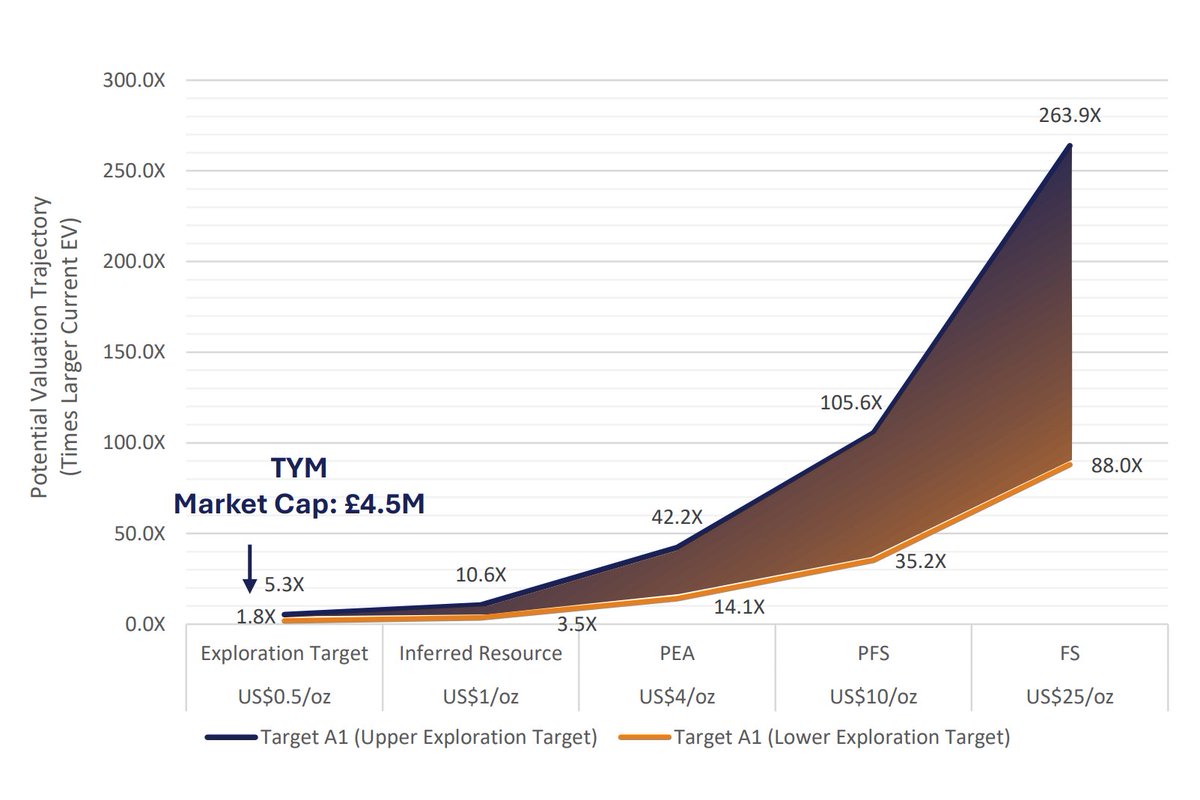
Current market cap ~ £4.5 M
Exploration Target alone (at US$0.5/oz AgEq) implies EV should be 1.8–5.3× higher.
Project remains open NW, SW & at depth + multiple nearby targets.
Undervalued with clear re-rating catalysts.
#Mining#Zambia
#SFOR in focus for a potential breakout. Results brought forward from 11 August to 5 August — hoping for some positive news early next week.
Targets discussed in podcast below.
🚨𝐂𝐡𝐢𝐧𝐚'𝐬 𝐍𝐞𝐱𝐭 𝐄𝐜𝐨𝐧𝐨𝐦𝐢𝐜 𝐖𝐞𝐚𝐩𝐨𝐧 #TYM
For those unaware, just weeks ago, 𝐌𝐨𝐝𝐞𝐥 𝐃𝐢𝐩𝐥𝐨𝐦𝐚𝐭, a specialist research platform for global affairs, published an incredible but frank analysis on fluorspar, and that has since become essential reading for anyone tracking the critical minerals space.
https://t.co/mmif4wPIhm
The article’s opening line is powerful:
“𝐓𝐡𝐞 𝐦𝐢𝐧𝐞𝐫𝐚𝐥 𝐭𝐡𝐚𝐭 𝐁𝐞𝐢𝐣𝐢𝐧𝐠 𝐡𝐚𝐬 𝐧𝐨𝐭 𝐲𝐞𝐭 𝐰𝐞𝐚𝐩𝐨𝐧𝐢𝐬𝐞𝐝 𝐢𝐬 𝐟𝐥𝐮𝐨𝐫𝐬𝐩𝐚𝐫 — 𝐚𝐧𝐝 𝐭𝐡𝐚𝐭 𝐢𝐬 𝐩𝐫𝐞𝐜𝐢𝐬𝐞𝐥𝐲 𝐰𝐡𝐲 𝐢𝐭 𝐦𝐚𝐭𝐭𝐞𝐫𝐬."
By way of background, China produced 6 million metric tons of calcium fluoride ore in 2024, roughly 69% of global mine output, and dominates every downstream process that anchors semiconductors, EV batteries, nuclear fuel processing and F-35 coatings.
The article then goes on to state, unequivocally, that:
“𝐅𝐥𝐮𝐨𝐫𝐬𝐩𝐚𝐫 𝐢𝐬 𝐧𝐨𝐭 𝐣𝐮𝐬𝐭 𝐚𝐧𝐨𝐭𝐡𝐞𝐫 𝐜𝐫𝐢𝐭𝐢𝐜𝐚𝐥 𝐦𝐢𝐧𝐞𝐫𝐚𝐥, 𝐛𝐮𝐭 𝐭𝐡𝐞 𝐧𝐞𝐱𝐭, 𝐩𝐨𝐭𝐞𝐧𝐭𝐢𝐚𝐥𝐥𝐲 𝐦𝐨��𝐞 𝐝𝐚𝐧𝐠𝐞𝐫𝐨𝐮𝐬, 𝐜𝐡𝐨𝐤𝐞𝐩𝐨𝐢𝐧𝐭 𝐢𝐧 𝐭𝐡𝐞 𝐠𝐥𝐨𝐛𝐚𝐥 𝐞𝐧𝐞𝐫𝐠𝐲-𝐬𝐞𝐜𝐮𝐫𝐢𝐭𝐲 𝐫𝐚𝐜𝐞.”
1️⃣ 𝐃𝐞𝐜𝐨𝐧𝐬𝐭𝐫𝐮𝐜𝐭𝐢𝐧𝐠 𝐭𝐡𝐞 𝐀𝐫𝐭𝐢𝐜𝐥𝐞'𝐬 𝐓𝐡𝐞𝐬𝐢𝐬
The article's core argument is that fluorspar represents a more profound strategic vulnerability for the West than rare earths. It builds this case on several key pillars:
✅ Extreme Supply Concentration: China mines roughly 69% of the world's fluorspar, and more critically, controls the entire downstream chain.
✅ A Worse Problem than Rare Earths: The article argues that, while the West lost the processing know-how for rare earths, the fluorine problem is much more serious because China holds the entire value chain. This makes it harder and more expensive to build an alternative supply chain from scratch.
✅ A Loaded but Unused Weapon: The article frames fluorspar as a "not yet weaponised" resource, making it the "largest remaining critical mineral where China holds both the mine and the molecule". It is a strategic lever Beijing has kept in reserve; an unused round in the chamber.
✅ Vulnerability of Key Industries: The article explicitly connects this dependency to the European car makers dependent on Chinese LiPF₆, tech firms producing and utilising semiconductors, steel makers, defence firms, and companies involved in nuclear fuel processing.
𝐈𝐧 𝐞𝐬𝐬𝐞𝐧𝐜𝐞, 𝐭𝐡𝐞 𝐚𝐫𝐭𝐢𝐜𝐥𝐞 𝐰𝐚𝐫𝐧𝐬 𝐭𝐡𝐚𝐭 𝐄𝐮𝐫𝐨𝐩𝐞 𝐢𝐬 𝐧𝐨𝐭 𝐣𝐮𝐬𝐭 𝐫𝐞𝐥𝐢𝐚𝐧𝐭 𝐨𝐧 𝐂𝐡𝐢𝐧𝐚 𝐟𝐨𝐫 𝐚 𝐦𝐢𝐧𝐞𝐫𝐚𝐥, 𝐛𝐮𝐭 𝐟𝐨𝐫 𝐚 𝐟𝐨𝐮𝐧𝐝𝐚𝐭𝐢𝐨𝐧𝐚𝐥 𝐜𝐡𝐞𝐦𝐢𝐜𝐚𝐥 𝐛𝐮𝐢𝐥𝐝𝐢���𝐠 𝐛𝐥𝐨𝐜𝐤 𝐨𝐟 𝐢𝐭𝐬 𝐦𝐨𝐬𝐭 𝐚𝐝𝐯𝐚𝐧𝐜𝐞𝐝 𝐚𝐧𝐝 𝐜𝐫𝐢𝐭𝐢𝐜𝐚𝐥 𝐢𝐧𝐝𝐮𝐬𝐭𝐫𝐢𝐞𝐬.
2️⃣ 𝐋𝐢𝐧𝐤𝐢𝐧𝐠 𝐭𝐡𝐞 𝐓𝐡𝐞𝐬𝐢𝐬 𝐭𝐨 𝐒𝐭𝐨𝐫𝐮𝐦𝐚𝐧
The article's thesis arrives at a moment of maximum policy alignment with Sweden and the EU's strategic agenda. Here’s how it changes the game for Storuman.
✅ The National Security Imperative: The article's warning that fluorspar is a "chokepoint in the energy-security race" is now official Swedish policy.
On July 23, 2026, Sweden declared the mining of critical minerals a matter of national security interest thereby overhauling its critical mineral strategy. Energy Minister Ebba Busch explicitly linked this to "NATO's defence capabilities" and called Europe's dependence on China a "systemic risk".
Fluorspar, as a mineral essential for defence and high-tech industries, is now firmly within this security framework. The project is no longer just a commercial venture but a STRATEGIC ASSET.
✅ The EU's Regulatory Hammer: The article's scenario of a weaponised fluorspar supply chain is precisely what the EU's Critical Raw Materials Act (CRMA) was designed to prevent.
3️⃣ 𝐓𝐡𝐞 𝐁𝐨𝐭𝐭𝐨𝐦 𝐋𝐢𝐧𝐞
The article's central thesis, that fluorspar is a critical and dangerous chokepoint controlled by China, is not just an abstract warning. It is the strategic rationale that is now driving concrete policy actions in both Sweden and the EU.
Crucially, the combination of Storuman's status as a "deposit of National Interest", the 27.7Mt high-grade resource, the EU's regulatory deadlines under the CRMA, and the Swedish government's new willingness to use state power to permit strategic projects, creates an unprecedented alignment of factors.
𝐅𝐨𝐫 𝐚 𝐩𝐫𝐨𝐣𝐞𝐜𝐭 𝐭𝐡𝐚𝐭 𝐡𝐚𝐬 𝐛𝐞𝐞𝐧 𝐢𝐧 𝐩𝐞𝐫𝐦𝐢𝐭𝐭𝐢𝐧𝐠 𝐥𝐢𝐦𝐛𝐨 𝐟𝐨𝐫 𝐨𝐯𝐞𝐫 𝐚 𝐝𝐞𝐜𝐚𝐝𝐞, 𝐭𝐡𝐞 𝐬𝐭𝐫𝐚𝐭𝐞𝐠𝐢𝐜 𝐫𝐚𝐭𝐢𝐨𝐧𝐚𝐥𝐞 𝐡𝐚𝐬 𝐬𝐡𝐢𝐟𝐭𝐞𝐝 𝐟𝐫𝐨𝐦 𝐞𝐜𝐨𝐧𝐨𝐦𝐢𝐜 𝐯𝐢𝐚𝐛𝐢𝐥𝐢𝐭𝐲 𝐭𝐨 𝐧𝐚𝐭𝐢𝐨𝐧𝐚𝐥 𝐚𝐧𝐝 𝐄𝐮𝐫𝐨𝐩𝐞𝐚𝐧 𝐬𝐞𝐜𝐮𝐫𝐢𝐭𝐲 𝐧𝐞𝐜𝐞𝐬𝐬𝐢𝐭𝐲.
Note, Storuman is one of the largest, undeveloped fluorspar deposits in Europe.
🚨𝐓𝐄𝐑𝐓𝐈𝐀𝐑𝐘 𝐌𝐈𝐍𝐄𝐑𝐀𝐋𝐒 #TYM
Excellent post from Dao, CEO of CSE-listed Union Power Metals (UPPR)!
He’s nailed the exact thesis that too many are still missing.
Fluorspar is the quiet linchpin of so many critical supply chains, and the strategic imperative could not be more urgent.
🚨𝐄𝐔𝐑𝐎𝐏𝐄𝐀𝐍 𝐌𝐄𝐃𝐈𝐀 𝐂𝐎𝐕𝐄𝐑𝐀𝐆𝐄: #TYM
For those unaware, a fascinating piece landed on Mining SEE 𝐟𝐨𝐮𝐫 𝐝𝐚𝐲𝐬 𝐩𝐫𝐢𝐨𝐫 to the Swedish Government Declaration on Thursday 23 July 2026:
https://t.co/kiCeGz9cnQ
By way of background, Mining SEE is a highly respected industry publication covering the mining and energy sectors across Southeast Europe and beyond.
Thus, when they shine a spotlight on a project, it carries weight.
𝐓𝐡𝐞 𝐚𝐫𝐭𝐢𝐜𝐥𝐞 𝐟𝐫𝐚𝐦𝐞𝐬 𝐒𝐭𝐨𝐫𝐮𝐦𝐚𝐧 𝐚𝐬 𝐚 "𝐩𝐨𝐭𝐞𝐧𝐭𝐢𝐚𝐥𝐥𝐲 ���𝐦𝐩𝐨𝐫𝐭𝐚𝐧𝐭 𝐝𝐞𝐯𝐞𝐥𝐨𝐩𝐦𝐞𝐧𝐭" 𝐭𝐡𝐚𝐭 𝐝𝐞𝐬𝐞𝐫𝐯𝐞𝐬 𝐟𝐚𝐫 𝐦𝐨𝐫𝐞 𝐚𝐭𝐭𝐞𝐧𝐭𝐢𝐨𝐧 𝐭𝐡𝐚𝐧 𝐢𝐭 𝐜𝐮𝐫𝐫𝐞𝐧𝐭𝐥𝐲 𝐫𝐞𝐜𝐞𝐢𝐯𝐞𝐬.
One Word: Multibagger!
🚨 𝐓𝐄𝐑𝐓𝐈𝐀𝐑𝐘 𝐌𝐈𝐍𝐄𝐑𝐀𝐋𝐒: 𝐋𝐄𝐓'𝐒 𝐆𝐎! #TYM#SILVER
Let's begin with the arithmetic that should stop any resource investor in their tracks.
On 16th December 2025, Tertiary Minerals (TYM) announced its intention to produce a JORC Exploration Target for Target A1.
By February 2026, the drill results were in, and they were spectacular:
✅ 𝟗𝟕 𝐦𝐞𝐭𝐫𝐞𝐬 𝐚𝐭 𝟖𝟓 𝐠/𝐭 𝐬𝐢𝐥𝐯𝐞𝐫 𝐞𝐪𝐮𝐢𝐯𝐚𝐥𝐞𝐧𝐭 (𝟏.𝟒𝟐% 𝐜𝐨𝐩𝐩𝐞𝐫 𝐞𝐪𝐮𝐢𝐯𝐚𝐥𝐞𝐧𝐭) 𝐟𝐫𝐨𝐦 𝐣𝐮𝐬𝐭 𝟔 𝐦𝐞𝐭𝐫𝐞𝐬 𝐝𝐞𝐩𝐭𝐡.
✅ 𝟒𝟐 𝐦𝐞𝐭��𝐞𝐬 𝐚𝐭 𝟖𝟏 𝐠/𝐭 𝐬𝐢𝐥𝐯𝐞𝐫 𝐚𝐧𝐝 𝟎.𝟕𝟎% 𝐜𝐨𝐩𝐩𝐞𝐫.
✅ 𝟏𝟑 𝐦𝐞𝐭𝐫𝐞𝐬 𝐚𝐭 𝟕𝟕 𝐠/𝐭 𝐬𝐢𝐥𝐯𝐞𝐫 𝐚𝐧𝐝 𝟏.𝟒𝟔% 𝐜𝐨𝐩𝐩𝐞𝐫, 𝐰𝐢𝐭𝐡 𝐢𝐧𝐝𝐢𝐯𝐢𝐝𝐮𝐚𝐥 𝐬𝐚𝐦𝐩𝐥𝐞𝐬 𝐫𝐞𝐚𝐜𝐡𝐢𝐧𝐠 𝟑.𝟏𝟕% 𝐜𝐨𝐩𝐩𝐞𝐫.
The managing director called it the "best intersection of silver-copper mineralisation" on the project.
On 30th March 2026, TYM published a JORC-compliant Exploration Target for its flagship Target A1 silver oxide discovery in Zambia:
𝐁𝐞𝐭𝐰𝐞𝐞𝐧 𝟏𝟓 𝐦𝐢𝐥𝐥𝐢𝐨𝐧 𝐚𝐧𝐝 𝟑𝟎 𝐦𝐢𝐥𝐥𝐢𝐨𝐧 𝐭𝐨𝐧𝐧𝐞𝐬 𝐚𝐭 𝐚𝐧 𝐚𝐯𝐞𝐫𝐚𝐠𝐞 𝐠𝐫𝐚𝐝𝐞 𝐨𝐟 𝟒𝟎-𝟔𝟎 𝐠𝐫𝐚𝐦𝐬 𝐩𝐞𝐫 𝐭𝐨𝐧𝐧𝐞 𝐬𝐢𝐥𝐯𝐞𝐫 𝐞𝐪𝐮𝐢𝐯𝐚𝐥𝐞𝐧𝐭!
At the upper end of that range, the target implies up to 58 million ounces of silver equivalent → a figure that, at current silver prices above US$30 per ounce, represents an in-situ resource value north of 𝐔𝐒$𝟏.𝟕 𝐛𝐢𝐥𝐥𝐢𝐨𝐧 (£𝟏.𝟐𝟔 𝐛𝐢𝐥𝐥𝐢𝐨𝐧).
Now compare that with the company's current market cap of ~£4.8 million.
𝐎𝐟 𝐜𝐨𝐮𝐫𝐬𝐞, 𝐞𝐱𝐩𝐥𝐨𝐫𝐚𝐭𝐢𝐨𝐧 𝐭𝐚𝐫𝐠𝐞𝐭𝐬 𝐚𝐫𝐞 𝐧𝐨𝐭 𝐫𝐞𝐬𝐞𝐫𝐯𝐞𝐬.
The company's own managing director, Richard Belcher, is refreshingly transparent about that.
The current drilling campaign is precisely intended to convert that target into a maiden Mineral Resource Estimate by Q4 2026, with drilling, metallurgical testwork and infill programmes all funded by the recent raise.
𝐈𝐧 𝐭𝐡𝐞 𝐥𝐚𝐧𝐠𝐮𝐚𝐠𝐞 𝐨𝐟 𝐣𝐮𝐧𝐢𝐨𝐫 𝐦𝐢𝐧𝐢𝐧𝐠, 𝐓𝐘𝐌 𝐡𝐨𝐥𝐝𝐬 𝐚 𝐡𝐢𝐠𝐡𝐥𝐲 𝐥𝐞𝐯𝐞𝐫𝐚𝐠𝐞𝐝 𝐜��𝐥𝐥 𝐨𝐩𝐭𝐢𝐨𝐧 𝐨𝐧 𝐨𝐧𝐞 𝐨𝐟 𝐭𝐡𝐞 𝐦𝐨𝐬𝐭 𝐬𝐢𝐠𝐧𝐢𝐟𝐢𝐜𝐚𝐧𝐭 𝐬𝐢𝐥𝐯𝐞𝐫 𝐨𝐱𝐢𝐝𝐞 𝐝𝐢𝐬𝐜𝐨𝐯𝐞𝐫𝐢𝐞𝐬 𝐛𝐫𝐨𝐮𝐠𝐡𝐭 𝐭𝐨 𝐦𝐚𝐫𝐤𝐞𝐭 𝐢𝐧 𝐲𝐞𝐚𝐫𝐬.
The premium on that option is today's ludicrous share price of 0.0675p.
1️⃣ 𝐓𝐡𝐞 𝐏𝐫𝐢𝐳𝐞: 𝐀 𝐏𝐨𝐥𝐲𝐦𝐞𝐭𝐚𝐥𝐥𝐢𝐜 𝐃𝐢𝐬𝐜𝐨𝐯𝐞𝐫𝐲 𝐰𝐢𝐭𝐡 𝐔𝐧𝐜𝐨𝐦𝐦𝐨𝐧 𝐖𝐢𝐝𝐭𝐡
What makes Target A1 genuinely interesting is not just the headline numbers but the geology beneath them.
The prospect sits within the 𝐌𝐮𝐬𝐡𝐢𝐦𝐚 𝐍𝐨𝐫𝐭𝐡 𝐏𝐫𝐨𝐣𝐞𝐜𝐭, in the prospective Iron-Oxide-Copper-Gold region of Zambia.
Drilling to date, some 3,083 metres, has already confirmed copper, silver and zinc mineralisation over an area approximately 450 metres by 400 metres, extending to a vertical depth of 84 metres.
Crucially, the mineralisation remains open to the north, south and at depth.
The intercepts that have the geologists excited are genuinely impressive;
✅ 58 metres at 49 g/t silver.
✅ 0.26% copper and 0.16% zinc from just 8 metres downhole; equivalent to 72 g/t silver equivalent or 0.94% copper equivalent.
✅ 124 g/t silver, 0.73% copper and 0.25% zinc, representing 185 g/t silver equivalent or 2.40% copper equivalent.
Those are not the numbers of a fringe prospect.
𝐓𝐡𝐨𝐬𝐞 𝐚𝐫𝐞 𝐭𝐡𝐞 𝐧𝐮𝐦𝐛𝐞𝐫𝐬 𝐨𝐟 𝐚 𝐩𝐨𝐭𝐞𝐧𝐭𝐢𝐚𝐥𝐥𝐲 𝐬𝐢𝐠𝐧𝐢𝐟𝐢𝐜𝐚𝐧𝐭 𝐩𝐨𝐥𝐲𝐦𝐞𝐭𝐚𝐥𝐥𝐢𝐜 𝐬𝐲𝐬𝐭𝐞𝐦, 𝐦𝐚𝐝𝐞 𝐚𝐥𝐥 𝐭𝐡𝐞 𝐦𝐨𝐫𝐞 𝐜𝐨𝐦𝐩𝐞𝐥𝐥𝐢𝐧𝐠 𝐛𝐲 𝐭𝐡𝐞 𝐩𝐫𝐞𝐬𝐞𝐧𝐜𝐞 𝐨𝐟 𝐞𝐥𝐞𝐯𝐚𝐭𝐞𝐝 𝐛𝐢𝐬𝐦𝐮𝐭𝐡(𝐮𝐩 𝐭𝐨 𝟗𝟗𝟏 𝐠/𝐭), 𝐚𝐧𝐭𝐢𝐦𝐨𝐧𝐲(𝐮𝐩 𝐭𝐨 𝟎.𝟐𝟏%) 𝐚𝐧𝐝 𝐠𝐚𝐥𝐥𝐢𝐮𝐦(𝐮𝐩 𝐭𝐨 𝟒𝟎 𝐠/𝐭).
The mineralisation is near-surface, predominantly oxide in character (malachite, chrysocolla, cuprite), with native silver and native copper also observed.
That oxide nature is significant for two reasons: it suggests potentially lower capital costs for any future development, and it makes the metallurgical testwork now underway all the more critical.
2️⃣ 𝐓𝐡𝐞 𝐖𝐢𝐝𝐞𝐫 𝐏𝐨𝐫𝐭𝐟𝐨𝐥𝐢𝐨: 𝐎𝐩𝐭𝐢𝐨𝐧𝐬 𝐰𝐢𝐭𝐡𝐢𝐧 𝐎𝐩𝐭𝐢𝐨𝐧𝐬
While Target A1 is the headline act, TYM’s portfolio contains several other levers that investors should note. Here are the most valuable assets:
𝐓𝐡𝐞 𝐊𝐨𝐧𝐤𝐨𝐥𝐚 𝐖𝐞𝐬𝐭 𝐏𝐫𝐨𝐣𝐞𝐜𝐭(𝐙𝐚𝐦𝐛𝐢𝐚) → under joint venture with KoBold Metals; the Bill Gates-backed AI-driven exploration company which has completed two drill holes totalling 2,000 metres and elected to advance to Stage 2.
KoBold now has a 51% interest in the project, with TYM retaining 39%. The transfer is ongoing.
𝐓𝐡𝐞 𝐌𝐮𝐤𝐚𝐢 𝐂𝐨𝐩𝐩𝐞𝐫 𝐏𝐫𝐨𝐣𝐞𝐜𝐭(𝐙𝐚𝐦𝐛𝐢𝐚) → under a due diligence agreement with First Quantum Minerals, which has extended its evaluation period by 12 months to August 2027.
The original agreement required First Quantum to spend a minimum of US$1.5 million in exploration expenditure over 24 months, with the first year commitment of US$500,000 already met.
𝐈𝐧 𝐍𝐞𝐯𝐚𝐝𝐚(𝐔𝐒𝐀), the company holds four drill-ready projects: Brunton Pass Copper-Gold, Paymaster Base & Precious Metals, Mt Tobin Silver-Gold, and Lucky Copper. These are earlier stage than the Zambian assets but provide additional optionality and geographic diversification.
𝐓𝐡𝐞 𝐒𝐭𝐨𝐫𝐮𝐦𝐚𝐧 𝐅𝐥𝐮𝐨𝐫𝐬𝐩𝐚𝐫 𝐏𝐫𝐨𝐣𝐞𝐜𝐭(𝐒𝐰𝐞𝐝𝐞𝐧) → a legacy asset that could become increasingly valuable given the European Union's designation of fluorspar as a critical raw material.
For the investor focused on Target A1, the aforementioned assets represent free optionality → potential catalysts that could emerge without requiring additional capital outlay from the company's existing shareholders.
3️⃣ 𝐅𝐚𝐢𝐫 𝐕𝐚𝐥𝐮𝐞: 𝐖𝐡𝐚𝐭’𝐬 𝐓𝐘𝐌 𝐖𝐨𝐫𝐭𝐡?
Valuing a pre-resource exploration company is necessarily an exercise in scenario analysis rather than precise calculation. But the numbers are sufficiently striking to demand attention.
As of 16 July 2026, TYM had 7,124,355,727 ordinary shares in issue, with none held in treasury. At the current share price of 0.0675p, this gives a market capitalisation of ~£4.8 million.
𝐒𝐜𝐞𝐧𝐚𝐫𝐢𝐨 𝟏: 𝐑𝐞𝐬𝐨𝐮𝐫𝐜𝐞 𝐂𝐨𝐧𝐟𝐢𝐫𝐦𝐚𝐭𝐢𝐨𝐧(𝐁𝐚𝐬𝐞 𝐂𝐚𝐬𝐞)
If the maiden resource confirms even the lower end of the target range (15Mt @ 40g/t Ag Eq), the in-situ value remains substantial at ~US$570 million.
Even applying a 90% discount for development costs, jurisdiction risk, and dilution, the project value would be ~£43 million. This implies a fair value per share of approximately 𝟎.𝟔𝐩(𝟗𝐱 𝐜𝐮𝐫𝐫𝐞𝐧𝐭 𝐩𝐫𝐢𝐜𝐞).
𝐒𝐜𝐞𝐧𝐚𝐫𝐢𝐨 𝟐: 𝐔𝐩𝐩𝐞𝐫 𝐄𝐧𝐝 𝐂𝐨𝐧𝐟𝐢𝐫𝐦𝐚𝐭𝐢𝐨𝐧(𝐁𝐮𝐥𝐥 𝐂𝐚𝐬𝐞)
If the upper end is confirmed (30Mt @ 60g/t Ag Eq), the in-situ value of ~US$1.7 billion becomes the reference point.
Applying a 90% discount yields a project value of ~£126 million. This implies a fair value per share of approximately 𝟏.𝟕𝟕𝐩 (𝟐𝟔𝐱 𝐜𝐮𝐫𝐫𝐞𝐧𝐭 𝐩𝐫𝐢𝐜𝐞).
𝐓𝐡𝐞 𝐏𝐚𝐫𝐭𝐧𝐞𝐫𝐬𝐡𝐢𝐩 𝐎𝐩𝐭𝐢𝐨𝐧𝐚𝐥𝐢𝐭𝐲
The company's assets at Konkola West and Mukai represent free embedded options not captured in the Target A1 valuation. In a trade sale scenario, these partnership interests would attract additional premium.
Thus, the current share price of 0.0675p implies that the market is ascribing essentially ZERO value to the company's considerable exploration success.
Even the most conservative scenario-based valuation suggests material upside exists if the maiden resource confirms the exploration target.
4️⃣ 𝐑𝐢𝐬𝐤𝐬: 𝐓𝐡𝐞 𝐎𝐭𝐡𝐞𝐫 𝐒𝐢𝐝𝐞 𝐨𝐟 𝐭𝐡𝐞 𝐂𝐨𝐢𝐧.
No analysis of TYM would be complete without a clear-eyed assessment of the risks.
𝐉𝐮𝐫𝐢𝐬𝐝𝐢𝐜𝐭𝐢𝐨𝐧𝐚𝐥 𝐫𝐢𝐬𝐤: Zambia is stable by African standards and mining-friendly, but no developing country is without political risk. Changes in mining codes, tax regimes or royalty structures could materially impact project economics.
𝐋𝐢𝐪𝐮𝐢𝐝𝐢𝐭𝐲 𝐫𝐢𝐬𝐤: As an AIM-listed junior with a market cap under £4 million, the shares are illiquid. Large positions cannot be built or exited without moving the price. The average daily volume in the three months to May 2026 was 75 million shares
𝐓𝐡𝐞 𝐁𝐨𝐭𝐭𝐨𝐦 𝐋𝐢𝐧𝐞
TYM represents one of the most compelling risk-reward profiles on the AIM market.
The company has assembled a portfolio of high-quality Zambian copper-silver assets, partnered with industry giants (KoBold Metals, First Quantum Minerals), and is now drilling some of the most impressive intercepts seen in the region.
𝐓𝐡𝐞 𝐩𝐚𝐫𝐭𝐧𝐞𝐫𝐬 𝐚𝐫𝐞 𝐦𝐨𝐭𝐢𝐯𝐚𝐭𝐞𝐝, 𝐜𝐚𝐬𝐡𝐞𝐝 𝐮𝐩, 𝐚𝐧𝐝 𝐢𝐧𝐜𝐞𝐧𝐭𝐢𝐯𝐢𝐬𝐞𝐝 𝐭𝐨 𝐬𝐮𝐜𝐜𝐞𝐞𝐝.
KoBold has already invested heavily in the Konkola West project, and First Quantum is strongly motivated to find additional ore feed for its Sentinel processing plant.
𝐓𝐡𝐞 𝐜𝐨𝐦𝐩𝐚𝐧𝐲'𝐬 𝐞𝐱𝐩𝐨𝐬𝐮𝐫𝐞 𝐭𝐨 𝐭𝐡𝐞𝐬𝐞 𝐩𝐫𝐨𝐣𝐞𝐜𝐭𝐬 𝐢𝐬 𝐞𝐟𝐟𝐞𝐜𝐭𝐢𝐯𝐞𝐥𝐲 𝐟𝐫𝐞𝐞 𝐨𝐩𝐭𝐢𝐨𝐧𝐚𝐥𝐢𝐭𝐲.
For investors with the appetite for risk, and the patience to see the story unfold, the arithmetic is seductive.
The results from the current drilling campaign, when they arrive, will likely validate what the previous campaigns have indicated → that TYM has discovered something significant.
𝐓𝐡𝐮𝐬, 𝐭𝐡𝐞 𝐪𝐮𝐞𝐬𝐭𝐢𝐨𝐧 𝐢𝐬 𝐧𝐨𝐭 𝐰𝐡𝐞𝐭𝐡𝐞𝐫 𝐭𝐡𝐞 𝐚𝐬𝐬𝐞𝐭 𝐡𝐚𝐬 𝐯𝐚𝐥𝐮𝐞, 𝐢𝐭 𝐜𝐥𝐞𝐚𝐫𝐥𝐲 𝐝𝐨𝐞𝐬.
𝐓𝐡𝐞 𝐪𝐮𝐞𝐬𝐭𝐢𝐨𝐧 𝐢𝐬 𝐰𝐡𝐞𝐭𝐡𝐞𝐫 𝐭𝐡𝐞 𝐦𝐚𝐫𝐤𝐞𝐭 𝐡𝐚𝐬 𝐩𝐫𝐢𝐜𝐞𝐝 𝐢𝐧 𝐭𝐡𝐚𝐭 𝐯𝐚𝐥𝐮𝐞. 𝐂𝐮𝐫𝐫𝐞𝐧𝐭 𝐞𝐯𝐢𝐝𝐞𝐧𝐜𝐞 𝐬𝐮𝐠𝐠𝐞𝐬𝐭𝐬 𝐢𝐭 𝐡𝐚𝐬 𝐧𝐨𝐭.
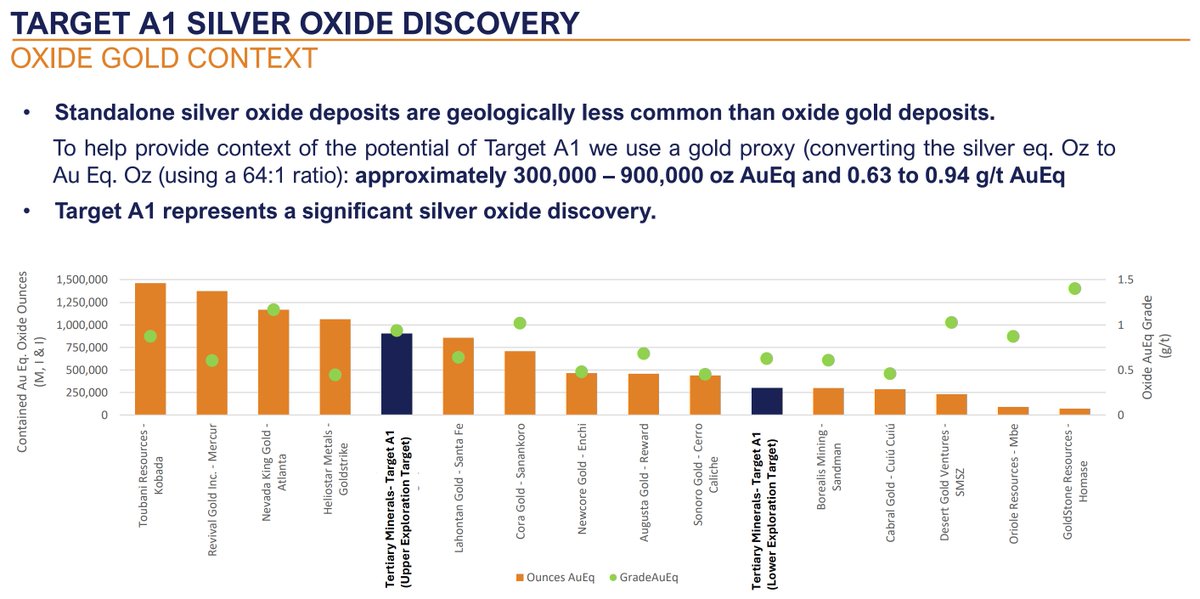
Putting Target A1 in context:
Using a 64:1 Ag:Au ratio → ~300,000 – 900,000 oz AuEq at 0.63–0.94 g/t AuEq
Standalone silver oxide deposits are far less common than oxide gold.
This is a significant discovery.
#gold#silver
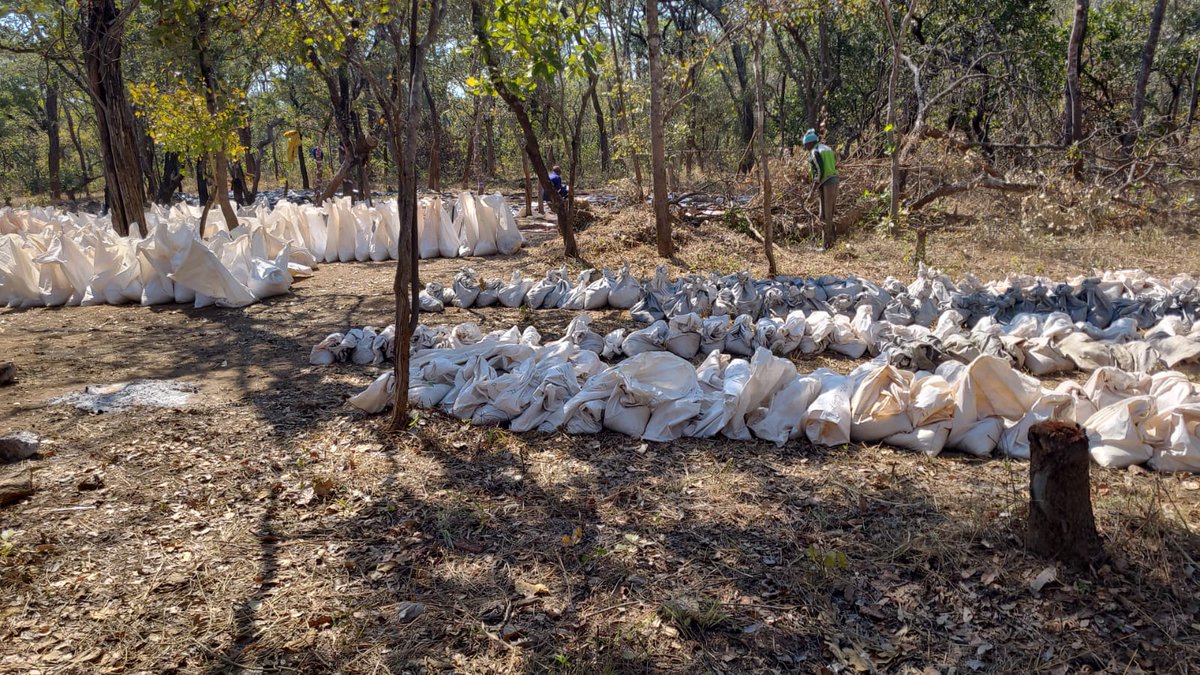
Our Mushima North Project by night.
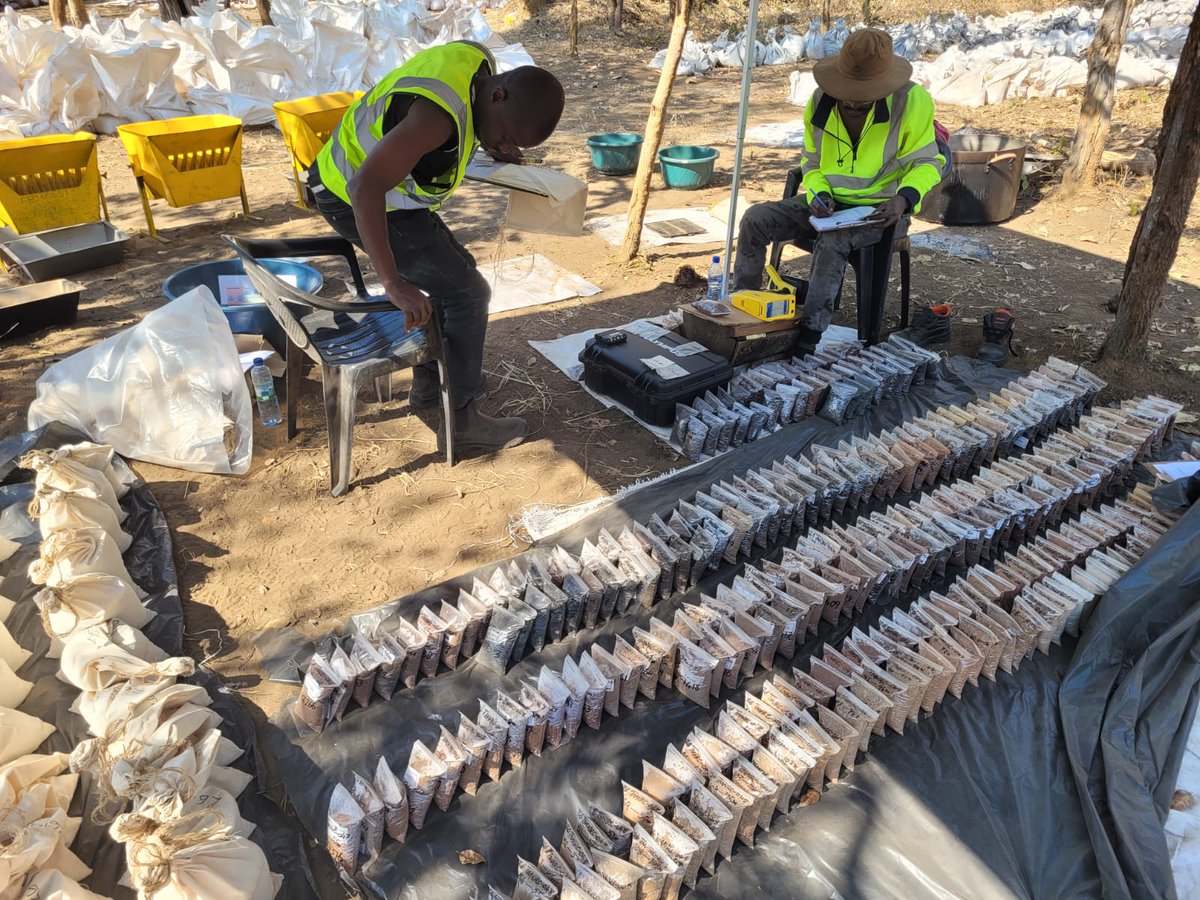
We are currently undertaking 4,000m of RC drilling at the Target A1 silver oxide discovery, this infill drilling will form the basis for our maiden Mineral Resource Estimate.
#exploration#mining#Zambia
A 4000m silver-copper drilling in Mushima, Zambia gains momentum as Richard Belcher, MD of @Tertiaryplc moves to site.
The company projects a target of 58Moz of silver oxide equivalent.
#Igun#silver#Zambia#Africa#mining
Source: Energy Capital Power, African Mining Market
A site visit video from James McFarlane, the Competent Person with Bara Consulting, who produced the Exploration Target for the Target A1 Silver Oxide Discovery at the Mushima North Project, Zambia.
A quick update from our MD, Richard Belcher who is on his way to the the Target A1 silver oxide discovery, at the Mushima North Project, Zambia.
4,000m of Reverse Circulation drilling is underway
More updates from his trip to follow.
#mining#exploration#zambia#silver
Catenai-backed Alludium has been named the founding technology partner for AgenticInvestor, which is developing workflows for Venture Capital teams #CTAI
https://t.co/cKQx08J2N6