I’m for common sense. I’m for anyone who’s willing to work hard and develop their God given talents to succeed. No DMs unless of the same opinion. No porn
Although Hugh Williamson is best known as a signer of the U.S. Constitution, he just so happened to be passing through Boston on December 16, 1773 when a certain Tea Party erupted.
While en route to England on a fundraising trip for a Delaware academy, he witnessed the Sons of Liberty disguised as Mohawk Indians board three ships and dump 342 chests of tea into Boston Harbor in protest of British taxes. He watched the whole event unfold from a nearby spot with a clear view.
The very next day, he sailed for London aboard one of John Hancock’s ships and became one of the first to brief the British Privy Council on what happened, warning them that continued taxation without representation would spark full rebellion.
A true accidental eyewitness to history who later helped build the nation.
History will change once again. Just days into the sessions in Philadelphia in 1774, Paul Revere rode hard from Massachusetts carrying a document known as the Suffolk Resolves.
Drafted in response to the Intolerable Acts, these resolves were a fierce declaration of defiance. They denounced British tyranny, called for an immediate boycott of British trade, urged the colonies to arm and train their own militias, and essentially told the royal government that Massachusetts would govern itself until the oppressive laws were repealed.
The delegates, representing twelve colonies united against a common threat did not shy away. They unanimously endorsed the Suffolk Resolves as their very first official act. This move shifted the entire Congress toward stronger resistance and laid the groundwork for the Continental Association, the massive economic boycott that followed.
What started as a meeting to air grievances quickly became a coordinated stand by free men who refused to live under arbitrary rule. These early patriots showed the British Empire that the colonies were ready to defend their liberties with both words and steel if necessary. The spirit of independence was already burning bright.
Part 5: The Birth of a Nation
With the guns largely silent after the huge victory at Yorktown, American diplomats stood tall in Paris and faced the might of the British Empire one final time. After months of tense negotiations, they signed the Treaty of Paris on September 3rd, 1783
In that historic document, Britain, the mightiest empire on earth formally recognized the United States of America as a free, sovereign and independent nation with vast boundaries stretching triumphantly to the Mississippi River.
What began as scattered protests against unjust taxes had exploded into a world-changing revolution. Thirteen defiant colonies had united, fought, bled, and outlasted the greatest military power of the age. Through frozen rivers crossed in darkness, winters that tested the soul at Valley Forge, and battles where hope itself seemed lost, the American people and their leaders had forged something eternal. The Declaration of Independence was no longer mere words on parchment, it was a living flame
This was more than the end of a war. It was the triumphant birth of a new nation, founded on the radical, shining idea that governments derive their just powers from the consent of the governed. Though the road ahead would demand courage Americans had seized their destiny and lit a beacon.
From the tea filled waters of Boston Harbor through fiery debates in Philadelphia, the ice filled Delaware crossing the unyielding endurance at Valley Forge and the final world changing victory at Yorktown every sacrifice, every act of defiance, every bold decision culminated in this moment. Fireworks paint the heavens, flags wave proudly and voices rise to honor the courage that forged a republic.
Men like George Washington pledged their lives, fortunes, and sacred honor so we could inherit this Republic called America.
On this 4th we honor their sacrifice and stand unyielding for the heritage they built.
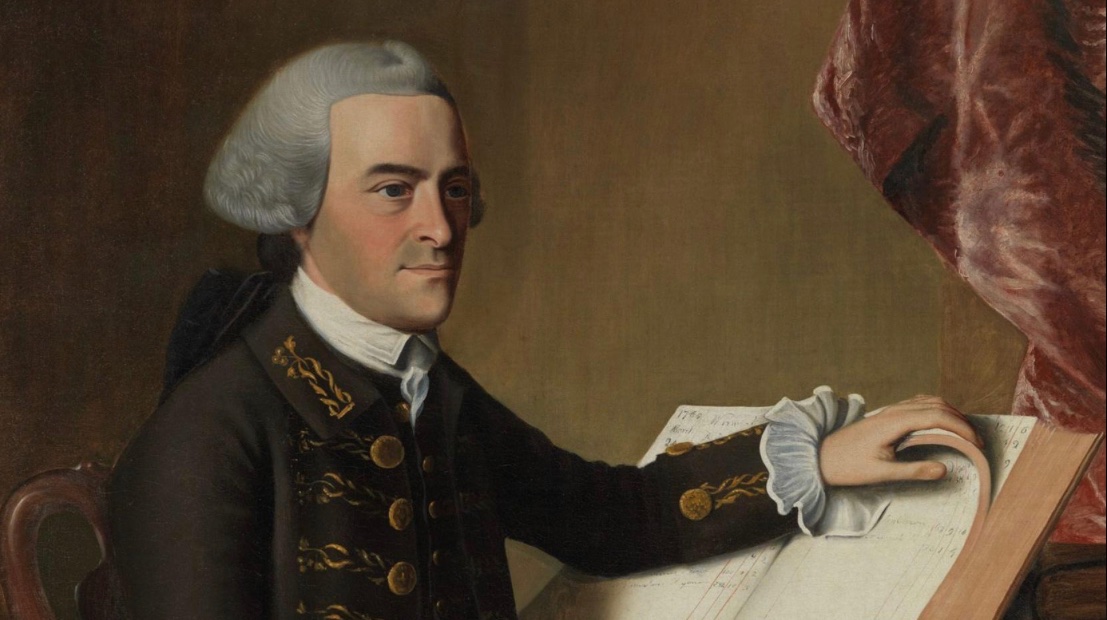
As president of the Continental Congress in 1776, John Hancock put everything on the line when he became the first to sign the Declaration of Independence.
He wrote his name in large, bold script so that King George III could read it clearly without needing spectacles. According to one account, Hancock declared that the British ministry could now read his name without glasses and might even double the reward on his head. He knew he was signing his own potential death warrant, yet he did it with flair and zero hesitation.
The British had already marked him as a high value target. British forces marching toward Lexington and Concord were under orders that included capturing Hancock and Samuel Adams. Thanks to Paul Revere’s urgent warning the two men escaped just in time. Hancock had even prepared to fight alongside the militia as a colonel, but cooler heads prevailed, reminding him that his role in guiding the revolution was far more critical than one skirmish.
This wealthy merchant turned revolutionary leader used his fortune, influence and courage to help fund and unify the Patriot cause. John Hancock was the kind of man who did not just talk about liberty; he signed his name to it in a way the world would never forget. He was truly built different
Today in 1775, General George Washington formally took command of the Continental Army at Cambridge, Massachusetts.
Just weeks after the battles of Lexington and Concord had ignited the fight for independence, Washington rode out before a ragtag assembly of colonial militiamen on Cambridge Common. Dressed in his distinguished blue uniform with buff facings, the tall and commanding Virginian drew his sword beneath a great elm tree and officially assumed leadership of the newly formed Continental Army.
At that moment he faced a disorganized force of farmers, tradesmen and volunteers who lacked proper training, supplies and unity. Yet Washington immediately set to work forging them into a professional fighting force. He enforced discipline, organized supply lines and built the foundations of an army that would eventually stand against the might of the British Empire. He even refused any salary for his service beyond reimbursement for his expenses, showing his total commitment to the cause.
That single act under the Cambridge elm marked the birth of the United States Army and the beginning of Washington's legendary leadership that would carry America to victory.
A true founding father.
Bullets flew everywhere, yet a certain young man walked through the fire untouched.
During the French and Indian War in 1755, a young George Washington served as an aide to British General Edward Braddock at the Battle of the Monongahela. In the fierce ambush that followed, the British forces were badly defeated. Washington had two horses shot out from under him during the fighting, and four bullets tore straight through his coat. Yet despite the heavy fire and the many men falling all around him, Washington himself walked away completely unharmed.
The very next day, he sat down and wrote a letter to his brother describing what had happened. In his own words, he declared: "By the all-powerful dispensations of Providence, I have been protected beyond all human probability or expectation; for I had four bullets through my coat, and two horses shot under me, yet escaped unhurt, although death was leveling my companions on every side of me."
This remarkable survival was seen by Washington and many others, including myself as clear evidence of God’s guiding hand. It helped preserve the man who would later lead the Continental Army to victory in the Revolution and become the Father of Our Country. Old George knew the hand of Providence was upon the American cause from the very beginning.
One of the earliest known photo of the Daughters of the American Revolution’s First Continental Congress.
Caroline Scott Harrison, the first President General of the DAR and wife of President Benjamin Harrison is seated in the center of the front row.
182 years ago today, President John Tyler who was 54 years old secretly married 24 year old Julia Gardiner in New York City at the Church of the Ascension.
It was the first time a sitting US president ever tied the knot while in office and they kept the wedding quiet at first. Tyler had courted the “Rose of Long Island” for years but Julia initially turned him down. Tragedy brought them together. Both were aboard the USS Princeton in February 1844 when a massive gun explosion killed her father and several others. Tyler comforted her in the aftermath and she finally accepted his proposal.
The couple kept the wedding under wraps before announcing it and holding a public reception in the White House Blue Room. Julia became the youngest First Lady in history at the time. She served the final eight months of Tyler’s presidency and later embraced a very public role defending Southern causes.
A romantic and quite scandalous for the era chapter in presidential history with a 30 year age gap secret vows and all.
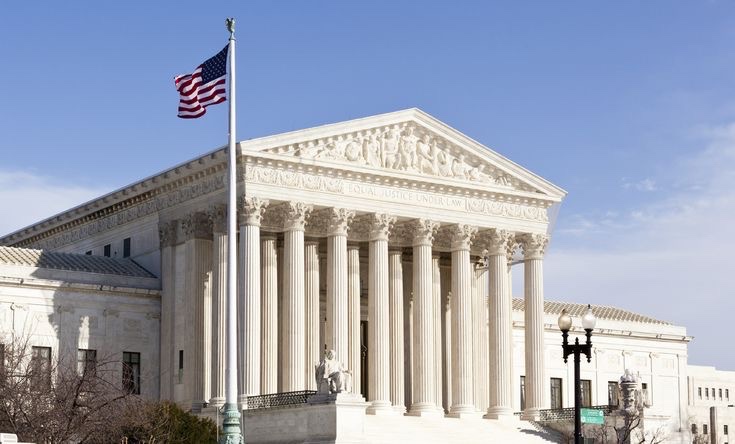
Its good news that the Supreme Court ruled we can actually have a country and deport people with TPS who no longer qualify.
Although, it’s wild that we even need 9 justices in robes to affirm something this basic. Sovereignty shouldn’t be this fragile.