The Reverse Robin Hood Principle in Sales Compensation
Most incentive plans reward performance proportionally.
The problem? They often pay too little to top performers and too much to average performers.
The Reverse Robin Hood Principle does the opposite:
✅ Accelerates rewards for high achievement
✅ Creates stronger differentiation between performers
✅ Increases motivation to exceed quota
✅ Focuses investment where it generates the highest return
If your best performers create disproportionate value, should they receive only proportional rewards?
Sometimes the most effective incentive plans don’t distribute rewards equally—they distribute them strategically.
#SalesCompensation #IncentiveDesign #SalesPerformance #CompensationStrategy #SalesLeadership #RevenueGrowth #TotalRewards
In his book Drive, Daniel Pink defends that economic incentives (commissions) can harm performance in cognitive tasks. But according to Chad Albrecht and the real meta-studies:
The combination wins.
Extrinsic incentives + autonomy, mastery and purpose = maximum performance in sales.
The best sellers are ambitious and want to make money without limit. Removing variable incentive plans is a mistake.
The evidence in favor of Extrinsic Rewards is much greater than that of Intrinsic Rewards.
En su libro Drive, Daniel Pink defiende que los incentivos económicos (comisiones) pueden dañar el rendimiento en tareas cognitivas. Pero según Chad Albrecht y los meta-estudios reales:
La combinación gana.
Incentivos extrínsecos + autonomía, maestría y propósito = máximo rendimiento en ventas.
Los mejores vendedores son ambiciosos y quieren ganar dinero sin límite. Eliminar los planes de incentivo variable es un error.
La evidencia a favor de las Recompensas Extrínsecas es bastante mayor a las de las Recompensas Intrínsecas.
Jeff Bezos: "If I do my job right, the value to society and civilization from my for-profit companies will be much, much larger than the good that I do with my charitable giving."
Almost 3 years ago, I released my book and thank God it immediately hit #1 New Release in Education Statistics on Amazon!
“Diversity, Equity, and Inclusion based on evidence: Applied statistical guides for all”
A practical, data-driven guide with statistical tests, selection maps, and an Excel sheet to measure DEI concepts properly — no extra software needed.
Available at Amazon 👇
• Kindle (ebook): https://t.co/xxaA8X6dhy
• Paperback ): https://t.co/tjHpCWi2xI
In inflationary or hyperinflationary environments, one of the worst compensation strategies is often getting aggressively ahead of the market and then remaining frozen for months.
A more sustainable approach is the Catch-Up strategy:
adjusting compensation several times throughout the year, repeatedly touching the market without surpassing it.
Why does it work?
• Costs are controlled throughout the year.
• Reduces the risk of compensation misalignment.
• Aligns compensation policy with market reality.
• Maintains external competitiveness more consistently while keeping pace with inflation.
The key is not to run ahead of the market.
The key is to stay consistently close to it.
#Compensation #Salaries #Inflation #HumanResources #HRStrategy #CompensationStrategy #CatchUp #Venezuela
En inflación o hiperinflación, la peor estrategia salarial suele ser adelantarse agresivamente al mercado y luego pasar meses congelado.
Una política más sostenible es el enfoque Catch-Up:
ajustar remuneraciones varias veces al año, tocando el mercado repetidamente sin pasarlo.
¿Por qué funciona?
• Se controlan los costos a lo largo del año.
• Reduce el riesgo de desajustes.
• Alinea la política salarial con la realidad del mercado.
• Mantiene competitividad externa de forma más estable mientras se acompaña la inflación.
La clave no es correr delante del mercado.
La clave es mantener cercanía permanente con él.
#Compensación #Salarios #Inflación #RecursosHumanos #Compensation #HRStrategy #CatchUp #Venezuela
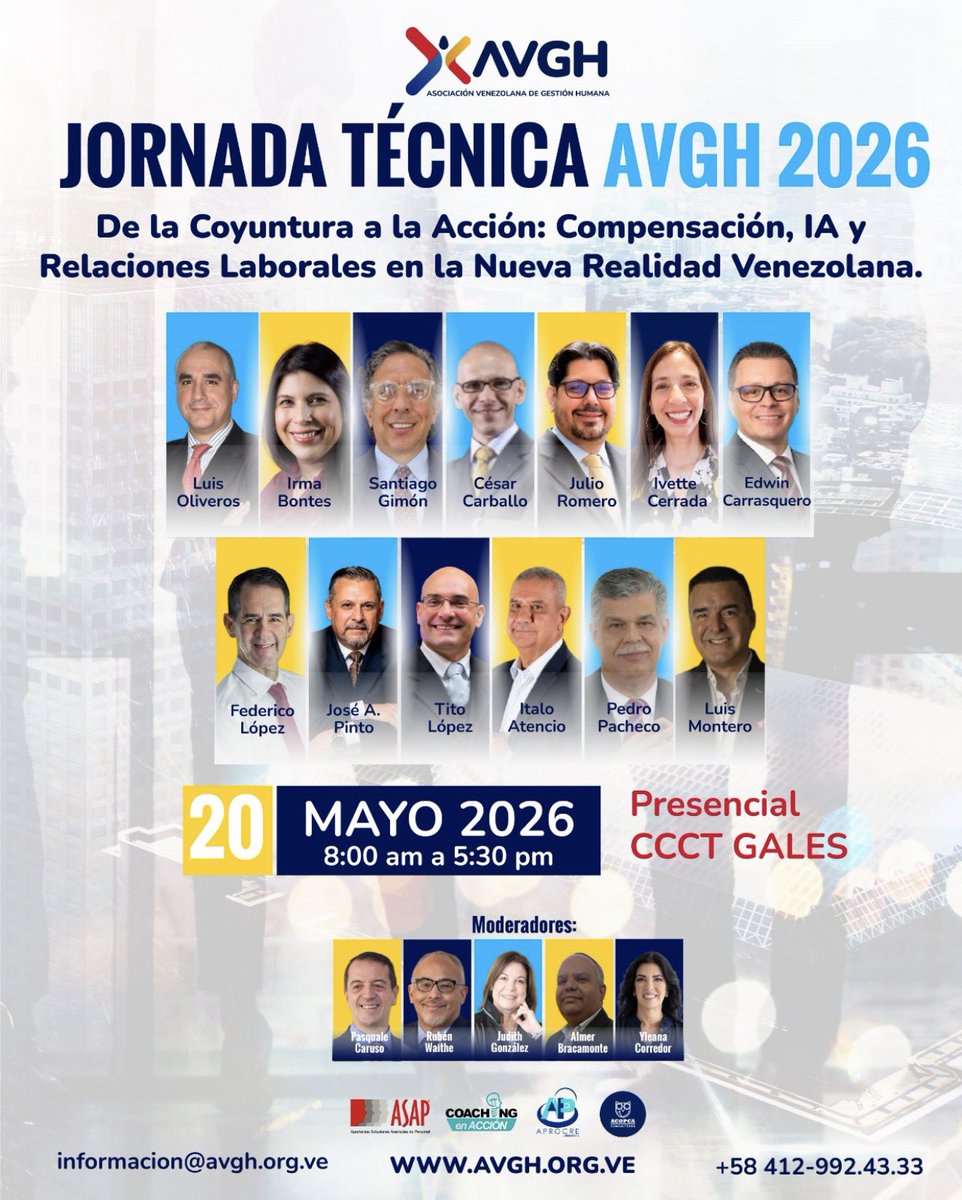
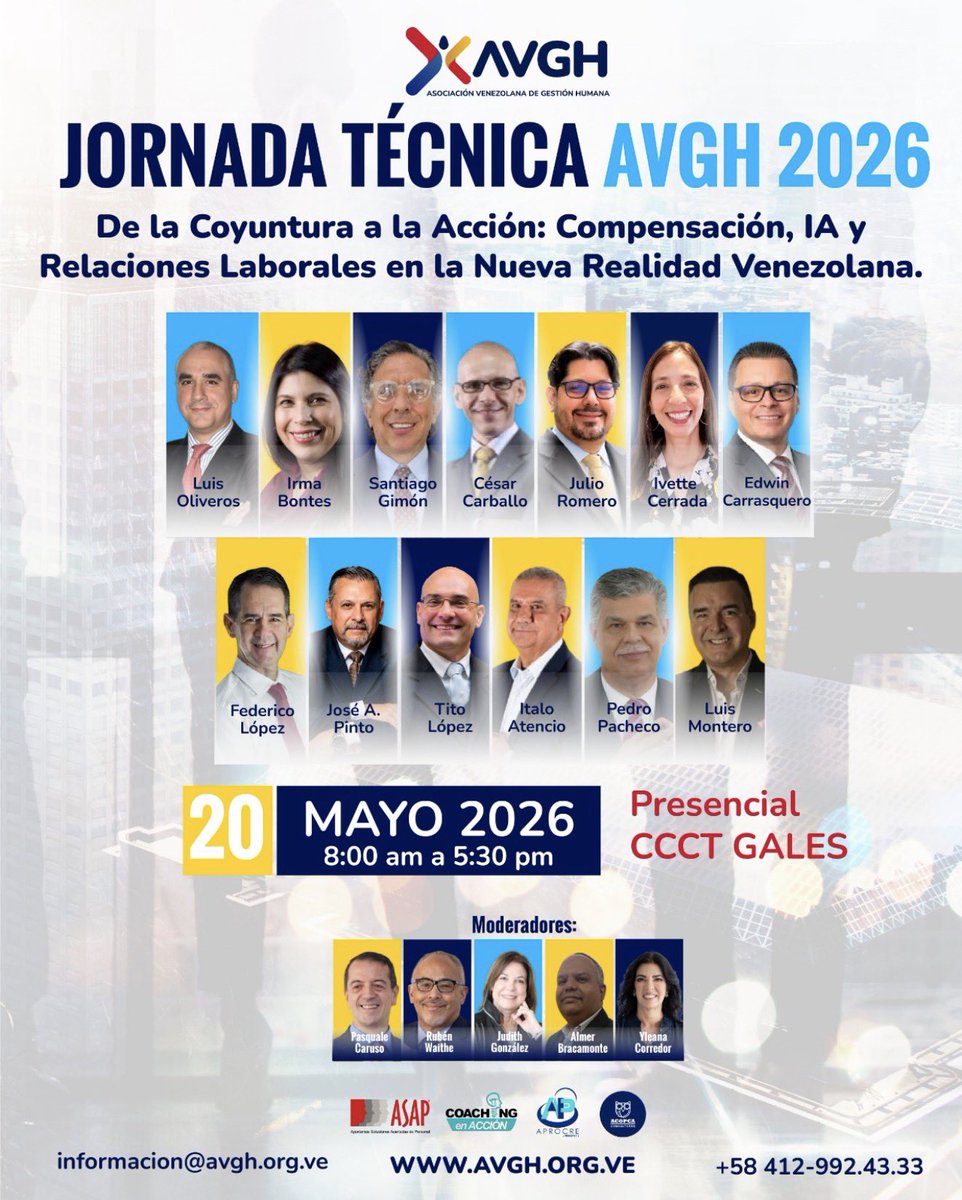
El próximo 20 de mayo estaré participando en las Jornadas Técnicas de @AVGH_RRHH para conversar sobre estrategias de Compensación para este 2026.
Lugar: Centro Ciudad Comercial Tamanaco (CCCT)
Fecha: 20 de mayo de 2026
Será una excelente oportunidad para:
conversar sobre cómo evolucionar nuestros modelos hacia una mayor alineación con el negocio.
Será un gusto saludarles.
Nos vemos allí.
"Be humble. Be teachable. The universe is bigger than your view of the universe. There's always room for a new idea. Humility is necessary for growth."
The Role of Incentives in Superior Organizational Performance
In a recent conversation, Elon Musk shared a key insight regarding the design of incentive plans:
“If you punish people too severely for failure, they will respond accordingly, and the innovation you get will be very incremental. No one will attempt anything bold for fear of being fired or punished in some way. Therefore, the balance between risk and reward must be carefully calibrated.”
Additionally, regarding that video, he posted: “Incentives drive outcomes.”
Musk emphasizes two fundamental principles:
1. Well-designed incentive plans drive behavior. It is not merely about “compensation,” but about aligning people's behavior with the organization's strategic objectives, thereby generating superior results.
2. The balance between risk and reward is critical. A design that excessively penalizes errors discourages innovation and bold decision-making. A good plan must empower employees to dare to seek high-impact solutions without a disproportionate fear of failure.
Despite the existence of extensive and consistent evidence spanning over 25 years—demonstrating that correctly structured incentive plans yield distinctive results—there are still those who question their effectiveness. Musk’s experience at the helm of organizations that have transformed entire industries serves as a clear benchmark: when designed with rigor—taking into account the fixed-variable mix, performance metrics, the risk-reward balance, and other related elements—incentives do indeed work and make a substantial difference.
The relevant question is not whether incentives work, but rather how to design them correctly and what type of incentives are appropriate for each specific circumstance.
El rol de los incentivos en el desempeño organizacionalsuperior
En una reciente conversación, Elon Musk compartió una reflexión clave sobre el diseño de planes de incentivos:
“Si castigas demasiado a las personas por el fracaso, responderán en consecuencia y la innovación que obtendrás será muy incremental. Nadie intentará nada audaz por miedo a ser despedido o castigado de alguna forma. Por eso, el balance entre riesgo y recompensa debe estar cuidadosamente calibrado.”
Adicionalmente sobre ese video posteó: Los incentivos impulsan los resultados (“Incentives drive outcomes”)
Musk enfatiza dos principios fundamentales:
1. Los planes de incentivos bien diseñados direccionan la conducta. No se trata solo de “compensación”, sino de alinear el comportamiento de las personas con los objetivos estratégicos de la organización, generando resultados superiores.
2.El equilibrio entre riesgo y recompensa es crítico. Un diseño que penalice excesivamente el error desincentiva la innovación y la toma de decisiones audaces. Un buen plan debe permitir que los colaboradores se atrevan a buscar soluciones de alto impacto sin miedo desproporcionado al fracaso.
A pesar de que existe evidencia amplia y consistente de más de 25 años que los planes de incentivos correctamente estructurados producen resultados diferenciadores, aún hay quienes cuestionan su efectividad. La experiencia de Musk al frente de organizaciones que han transformado industrias sirve como referencia clara: cuando se diseñan con rigor —considerando la mezcla fijo-variable, las métricas de desempeño, el balance riesgo-recompensa— y otros elementos relacionados, los incentivos sí funcionan y marcan una diferencia sustancial.
La pregunta relevante no es si los incentivos funcionan, sino cómo diseñarlos correctamente y que tipo de incentivos es adecuado para cada circunstancia.
LO ÚLTIMO:
¡Marca la fecha en tu calendario!
El 24 de septiembre de 2026 la Iglesia Católica celebrará la beatificación del Arzobispo Fulton John Sheen en San Luis, Estados Unidos, en una ceremonia presidida por el Cardenal Luis Antonio G. Tagle. La fecha fue anunciada hoy por el Dicasterio para las Causas de los Santos.
Muy pronto, más detalles en https://t.co/ftCdVLLRoW
Será una excelente oportunidad para:
Conversar sobre cómo evolucionar nuestros modelos hacia una mayor alineación con el negocio.
Será un gusto saludarles.
Nos vemos allí.
El próximo 20 de mayo estaré participando en las Jornadas Técnicas de @AVGH_RRHH para conversar sobre estrategias de Compensación para este 2026.
Lugar: Centro Ciudad Comercial Tamanaco (CCCT)
Fecha: 20 de mayo de 2026