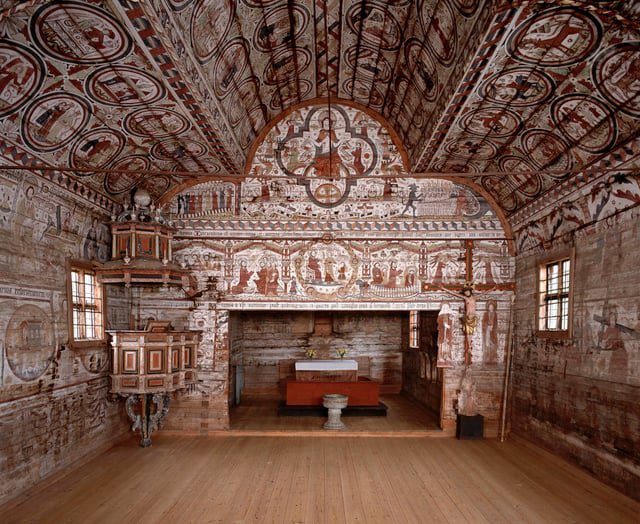
Because decolonization consistently results in the complete destruction of functional infrastructure needed for civilizational continuity.
Hope this helps!
It’s difficult to explain without sounding crazy but this person successfully blocked turning an abandoned parking lot into taxable 21st century infrastructure because she thought the space could be better used as a trampoline park. (No one has offered to build the trampoline park).
She’s homeless and pulls people’s hair out for almost a living.
@allie__voss Also people have got to wear deodorant to church, especially crowded churches. The amount of times I’ve gotten the most unbelievable whiff of stank ass bad enough to knock out an elephant is unreal.
“Cursed be the man that maketh any graven or molten image, an abomination unto the Lord, the work of the hands of the craftsman, and putteth it in a secret place.’ And all the people shall answer and say, ‘Amen.’” Deuteronomy 27:15
According to you, Moses’ instructions to the Israelites in their pronouncements of curses was inspired by demons (hint: it was the exact opposite).
Cursing other gods and deities is a sign of demonic behavior. All spiritual pursuits are good: refining oneself, seeing the universality of all beings, compassion, love, and sustaining each other. We can have issues with some practices, conceptions, and ideas, but the spiritual path of all beings is worthy of some level of respect. I will not curse other deities of worship, because the One reality appears to all in the forms that they desire and seek. This isn't a statement that all paths are equal and lead to the exact same place; rather, it is a statement that all spiritual paths are valid based on each person's karma and guna.
Truthfully, I think you get the reversion that Christianity is significantly more dogmatically rigid on questions of the parameters of judgment and damnation, than is historically true. Granted, the hellfire and damnation preaching of the Protestants probably doesn’t help, but the historical church simply did not take concrete stances on some of these questions because of the precise fact there is no way to know that which is not revealed.
Do you not see how cosmological views derived from empiricism would be problematic given that there were no human observers to the creation of the universe? We merely use derived proxies, very very very many positions removed from the ultimate causation. That seems awfully problematic.
I often say liberals think all religions are basically (protestant) Christianity with different names.
In the liberal mind, Islam is Christianity with Arab names.
Hinduism is Christianity with Indian names.
It's just different names for the same thing: ✨SpiRiTuaLity✨
@kaustubhasutra@raghman36 Wait wait wait lmao
Christians believe God created both observable and unobservable reality, so no, there is not a discrete before and after Christian cosmology. It is continuous
Empirical reality is literally and defintionally “measurable reality.” It is in the name. You cannot measure ontology. You can try and guess at it through approximation, but you cannot get to the “truth” of it through empiricism as ontology is not a problem of measurement or observation.
Free will never meant freedom to defy the constraints of creation? I’m not sure where you got this assumption from?
“The larger point: a person doesn't have enough "free will" to subscribe to a particular path. Reality itself prohibits it. So, how does one ensure.”
I am assuming the direction you are going with this is the same as “an uncontacted tribe in the Amazon unexposed to truth.”
The answer of this is that the Orthodox Christians don’t actually have a dogma that condemns those people to limbo. It is generally accepted that although there is no salvation outside of the church, God is not limited by geography or human ignorance. Christ is the eternal Logos who “enlightens every person coming into the world” and people are judged according to the light they actually received, including the law written on the heart and the witness of conscience Romans 2:14–15.
@kaustubhasutra@raghman36 Yes, but I also agree that choosing to read the bible is an exercise of free will, but also choosing to read the Bible is not equally as easy to everyone, which is why God judged people on an individual basis and we have no way of knowing how God will judge.
No, all individuals objectively have free will, how the individual will be judged for exercising that free will is not known, as judgment is in the hands of God alone.
Why are you acting as if saying you are a part of a denomination is the historical meaning of “Christian,” that is a very modern interpretation and complete break with the continuity of historical teaching. Of course individuals who call themselves “Christian” can still fail to follow the path. Christianity does not award salvation through nomitive attribution.
So you are making the claim that theological questions arising out of the 11th century schism could have been solved by a method is systematized observation, even we said method wouldn’t be created for another 6 centuries? That is extraordinarily ridiculous. Try and answer the problem of the addition of the filioque through empiricism.
Or… is your claim that any internal religious friction is therefore evidence of a break with reality… well I have bad news for about smoke “friction” when it comes to the interpretation of empirical data.
“Bad thing happen therefore God not real”
Yes this is the famous atheist meme.
What do bad things happening to created beings in the fallen world have anything to do with the question of free will? Yes, people who have bad things happen to them still have free will. A variation of this question was also answered in the parable of the talents. Just because you are given little, doesn’t mean it is correct to squander it.