"I'm not pro-russian I'm just concerned about Ukrainians being fed into the meat gr- WHAT?! 700K?! NOOOO THAT CAN'T BE RIGHT! PROPAGANDA! PROPAGANDA! SLOVYANSK WILL FALL!"
First snow in Kyiv, seen from the Northern Bridge. Damaged by Russian attacks, it's now public transport only. With the power cuts, the whole journey feels surreal.
🚨News update on my YT channel
Russian milbloggers say Ukrainian forces crossed the border and took Novyi Put in Kursk region.
Putin has spent years promising a “buffer zone”. Nobody told him it works in both directions.
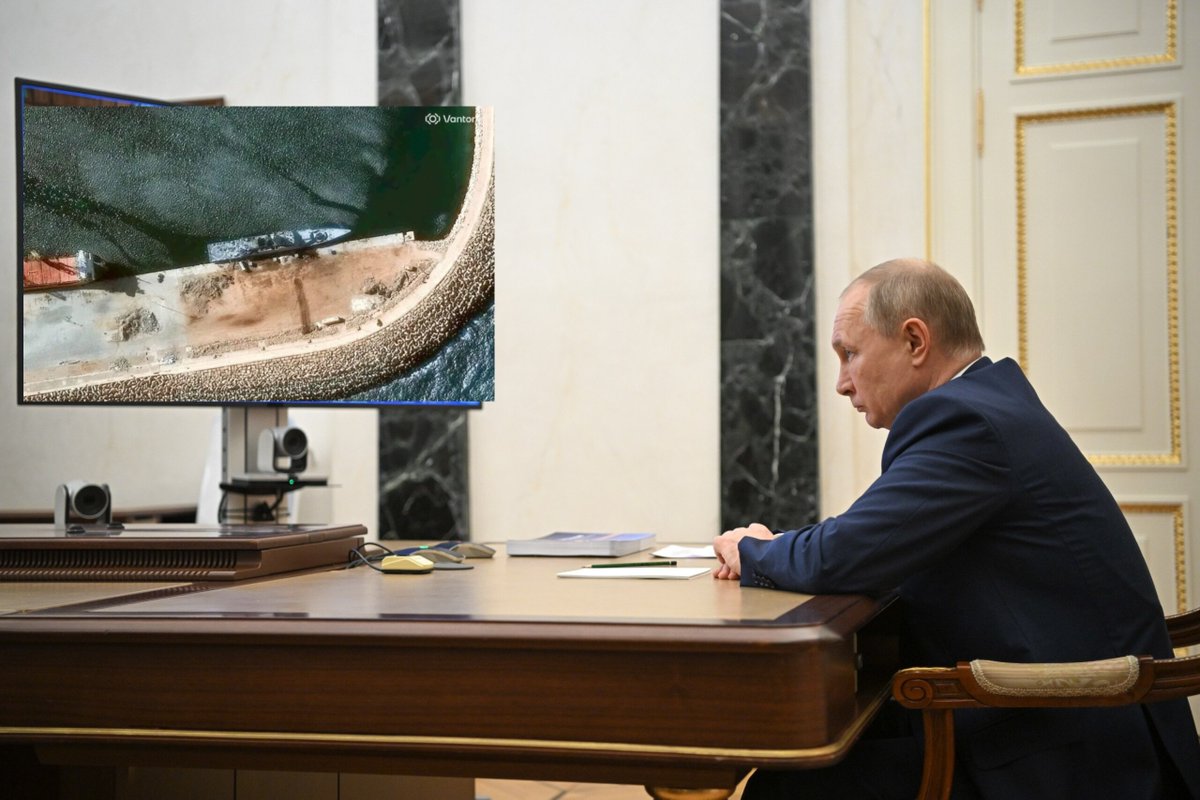
The Russian fleet can no longer feel safe far from Ukraine.
Between 11 and 22 November, five Russian vessels were reportedly hit: two warships and three transport vessels. On 11 November, the missile corvette Naro-Fominsk was struck in the Gulf of Finland. On 21 November, Sparta II was hit, as was the ferry Ambal, according to maritime expert Andriy Klymenko. The following day, Ukraine attacked the corvette Merkuriy and the cargo ship MV Angara off the coast of Libya. The Security Service of Ukraine (SBU) reported that the corvette had been destroyed; the extent of the damage to the other vessels is still being assessed.
Unlike Russia, which targets Ukrainian civilians, Ukraine is using this campaign to strike at Russia’s ability to wage war and transport weapons by sea. Warships protect transport vessels, transport vessels deliver cargo, and ports provide unloading and replenishment facilities. As with oil refineries, the effects accumulate through damage, repairs, and delays. The systematic nature of this approach is also evident in Operation “MoLoCHKa”, targeting Russian maritime logistics in the Black Sea and the Sea of Azov, which became public knowledge over the summer. There are grounds to expect the campaign to continue and expand.
Naro-Fominsk is a Kalibr missile carrier, so taking it out of service for repairs temporarily reduces the number of vessels available for missile strikes. The loss of Merkuriy weakens the protection of maritime shipments: according to the SBU, the corvette regularly escorted military cargo. Sparta II was heading to Kaliningrad at the time of the attack but had previously operated routes associated with military shipments to Syria and Libya. Damage to the vessel reduces the pool of available transport ships across different routes. Losses in the Baltic can therefore also affect Russian logistics in the Mediterranean.
The Russian fleet has already suffered irrecoverable losses. Building replacements for destroyed warships takes years: Merkuriy, for example, took eight years to build, from 2015 to 2023. Faster ways to replenish naval forces include redeploying operational warships from other fleets, completing vessels already under construction, or returning damaged ships to service after repairs.
The consequences for Russia’s presence in Africa will depend on how reliably its supply network continues to function. Some equipment and supplies reach the Sahel through Libya. Russia also uses routes through Conakry and Lomé. Repeated losses of transport vessels and their escorts could make deliveries less frequent, more expensive, and less reliable, complicating troop rotations and the supply of Russian forces.
Weakening Russia’s military presence serves the interests of countries that regard it as a threat. For the Baltic and Northern European states, reducing the Russian fleet’s ability to operate near their shores is particularly important. For European allies more broadly, the priority is to constrain Moscow’s military activity in the Mediterranean. In Libya, reduced Russian military supplies could weaken the forces Moscow supports and facilitate efforts to unify the country’s state institutions.
Reinforcing Russia’s Mediterranean naval presence is complicated by the regime governing the Turkish Straits. Article 19 of the Montreux Convention prohibits the passage of warships belonging to belligerent states when Turkey itself is not a party to the war, while providing an exception for vessels returning to their bases. As long as this regime remains in place, Moscow will not be able to freely use its Black Sea Fleet to replace losses in the Mediterranean.
In the Baltic, Russia will most likely retain the ability to defend its coastline, launch missile strikes from surviving platforms, and conduct maritime transport operations. The proximity of naval bases and repair facilities will help restore damaged warships to service. However, Russia will have to devote more resources to protecting its own maritime shipments, making it more difficult to deploy warships to the Mediterranean.
If effective Ukrainian strikes continue, and new losses and prolonged repairs outpace the arrival of replacements, Russia could be forced to substantially reduce its permanent surface naval presence in the Mediterranean over the next six to twelve months, by spring–autumn 2027. The distance from its main naval bases would amplify the consequences: longer intervals between shipments, escorts available for only some convoys, and delays in delivering heavy cargo to Russian forces in Africa. Dependence on alternative ports and air transport would increase. Available data do not allow a precise estimate of how many warships will remain operational.
Russia will attempt to adapt by strengthening security, reorganizing convoys, and using alternative shipping operators. It will retain substantial submarine forces in the Northern and Pacific Fleets, as well as long-range strike capabilities. The forecast for the coming year therefore concerns primarily the narrowing of Russia’s freedom of action across the Baltic–Mediterranean maritime space and its ability to sustain military operations far from its own shores.
"You're so enthusiastic about war, why don't you go join an international terrorist group that spent over a decade slaughtering people in Syria and whose language you barely know beyond a few basic sentences and Al Fatiha. I am very smart."
Ukraine has the most battle-hardened army in Europe. Its combat experience is invaluable, and it has spent years adapting to a war unlike anything NATO has ever fought.
Ukraine wouldn’t just benefit from NATO membership. NATO would benefit enormously from Ukraine.
🔥 In the port city of Baltiysk in the Kaliningrad region, where the Baltic Fleet base is located, numerous explosions and the sounds of UAVs were recorded
Several hours ago, Trump said Putin is serious about negotiating a peace deal with Ukraine.
Since then, we have been hit by yet another massive missile and drone attack.
I invite Trump to come to Kyiv and experience Putin's peace overtures in person. Biden did, he should too.
Coward blocked me, but yes, Nika, the war started before 2022. Russia started it in 2014. And you don't get to decide if they're your enemy or not. They do.