A little girl in Boston went home one day and asked her Nigerian mother if she could change her name to Zoe.
Nobody at school could say Uzoamaka.
Her mother was cooking. She didn't even turn around.
"If they can learn to say Tchaikovsky, Michelangelo, and Dostoyevsky, they can learn to say Uzoamaka."
That girl kept her name.
Then she went to Hollywood and won three Emmy Awards.
And now the whole world knows exactly how to say Uzoamaka Aduba.
Your name is not a burden. It's a prophecy.
A little girl in Boston went home one day and asked her Nigerian mother if she could change her name to Zoe.
Nobody at school could say Uzoamaka.
Her mother was cooking. She didn't even turn around.
"If they can learn to say Tchaikovsky, Michelangelo, and Dostoyevsky, they can learn to say Uzoamaka."
That girl kept her name.
Then she went to Hollywood and won three Emmy Awards.
And now the whole world knows exactly how to say Uzoamaka Aduba.
Your name is not a burden. It's a prophecy.
Cuando tengo que decir cosas buenas de esta temporada, las digo sin tapujos. Esta me parece una de las mejores muertes de toda la serie. Alguien que abandona su fé tres veces seguidas por una persona que no vale la pena hacerlo y termina siendo su perdición. Eso se sintió real.
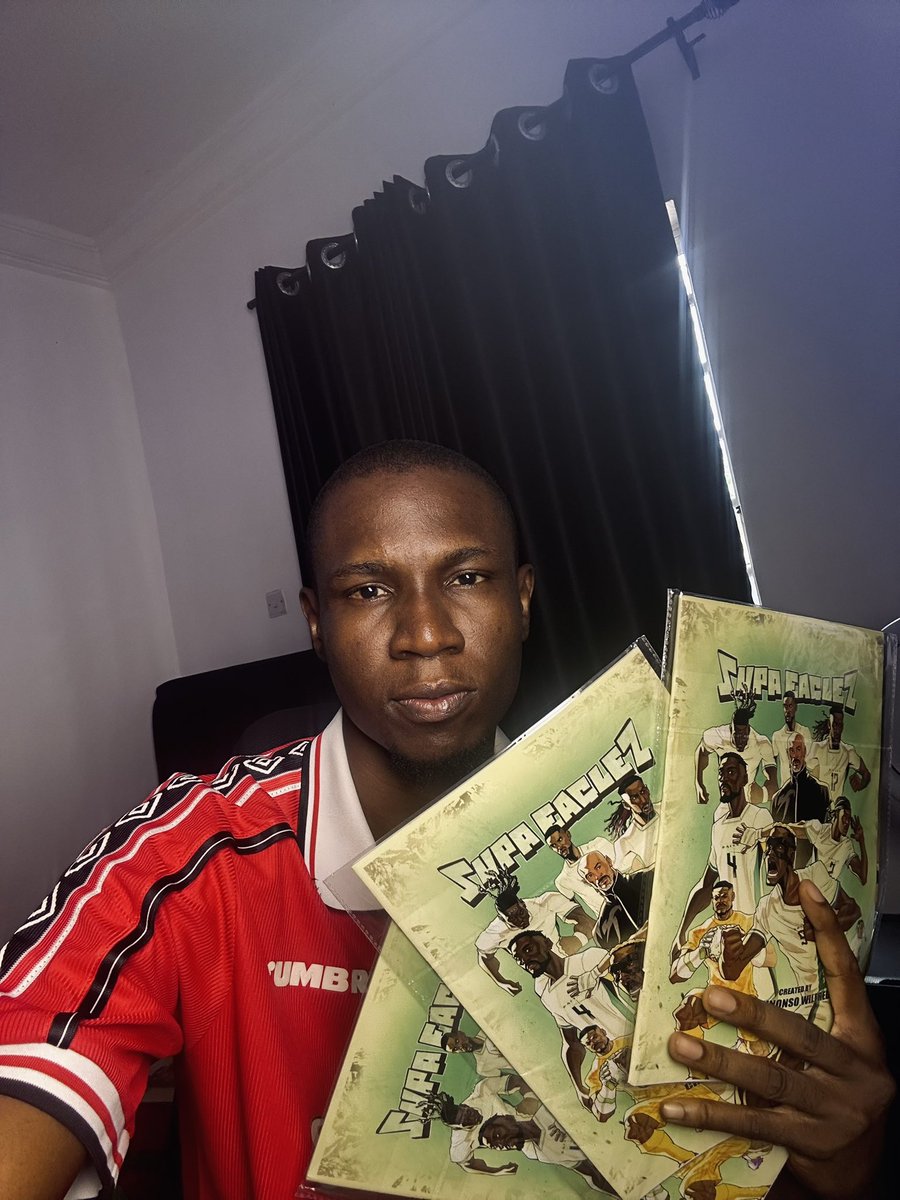
First of all, Thank you Jesus! In chasing perfection, I almost lost sight of what this means for me. It’s my first ever comic book and I’m so proud of myself! I’m grateful to everyone who supported and made this possible. God bless everyone who has ordered so far. Link is in my bio if you’ll like to grab a copy😌
Galatians 4:4 looks like a transition verse.
“But when the fullness of time had come, God sent forth His Son.”
If you read it fast, it sounds like a timestamp. But if read slowly, it is the most staggering sentence in the Bible.
‘Fullness of time’. Paul isn't saying God picked a convenient moment. He is saying God declared a moment complete. “The preparation is finished and everything I have been building across centuries is exactly where I need it to be”. God looked at human history and said: now.
Which forces the question. Why then? Why not a thousand years earlier, when Moses was fresh? Why not a thousand years later? What was so perfect about the first century?
I started looking into it and I have not recovered.
God needed a people with the theology. He spent 2000 years forming Israel; the covenant, the sacrificial system, the prophets, Isaiah 53 written seven centuries before Calvary, the framework of a coming Messiah who would bear the sin of the world. The Jews were shaped by wilderness, exile, and divine discipline, until the theological infrastructure for substitutionary atonement was fully in place.
But theology alone could not travel. God needed a language. Not a tribal dialect, but a universal tongue. So five hundred years before the Gospel, He let the Greek philosophers begin.
Heraclitus sat in Ephesus and concluded the universe was governed by an invisible rational principle. He called it the Logos.
The Stoics built on it. Philo of Alexandria stood at the intersection of Greek thought and Hebrew scripture and said the Logos was the mind of God in creation. For five hundred years, philosophy built a conceptual category it could not fill.
Then God sent a conqueror with no interest in theology. Alexander the Great wanted glory and empire. God let him want it. In satisfying his ego across three continents, Alexander Hellenized the ancient world and forged Koine Greek, the common tongue of the docks, markets, soldiers, and slaves. A language stripped of complexity, simple enough for anyone, universal enough for everyone.
The Hebrew scriptures were translated into it. The Septuagint was born. God used a pagan conqueror’s ambition to translate His own Word.
Then Rome came and paved the road. The Pax Romana. Piracy cleared. Stone highways stretching from Spain to Syria. A framework for movement the ancient world had never seen.
None of them knew they were collaborating.
Heraclitus thought he was doing philosophy. Alexander thought he was building a monument to himself. Rome thought it was building an empire for Rome. Not one of them understood they were stagehands. God was with Heraclitus in his pondering, with Alexander in his conquest, with Roman engineers laying stone, quietly requisitioning their work for a purpose none of them could see.
And then, when the covenant people were in place, the language primed, the roads built, and the category ready, when everything He had been quietly assembling was finally set, God stepped into the room they had unknowingly prepared.
John picked up his pen and wrote: “In the beginning was the Logos.”
Every Greek philosopher in the Mediterranean felt the ground shift. “And the Logos became flesh.” The category they spent five centuries constructing was not a principle. It was a Person.
The ‘fullness of time is not a timestamp’. It is God’s signature on a completed work. And the humbling thing is that this work was not built by saints. It was built by conquerors, philosophers, and emperors who thought they were writing their own story. God let them think that. And used every word. If this is not amazing then I don’t know what is.