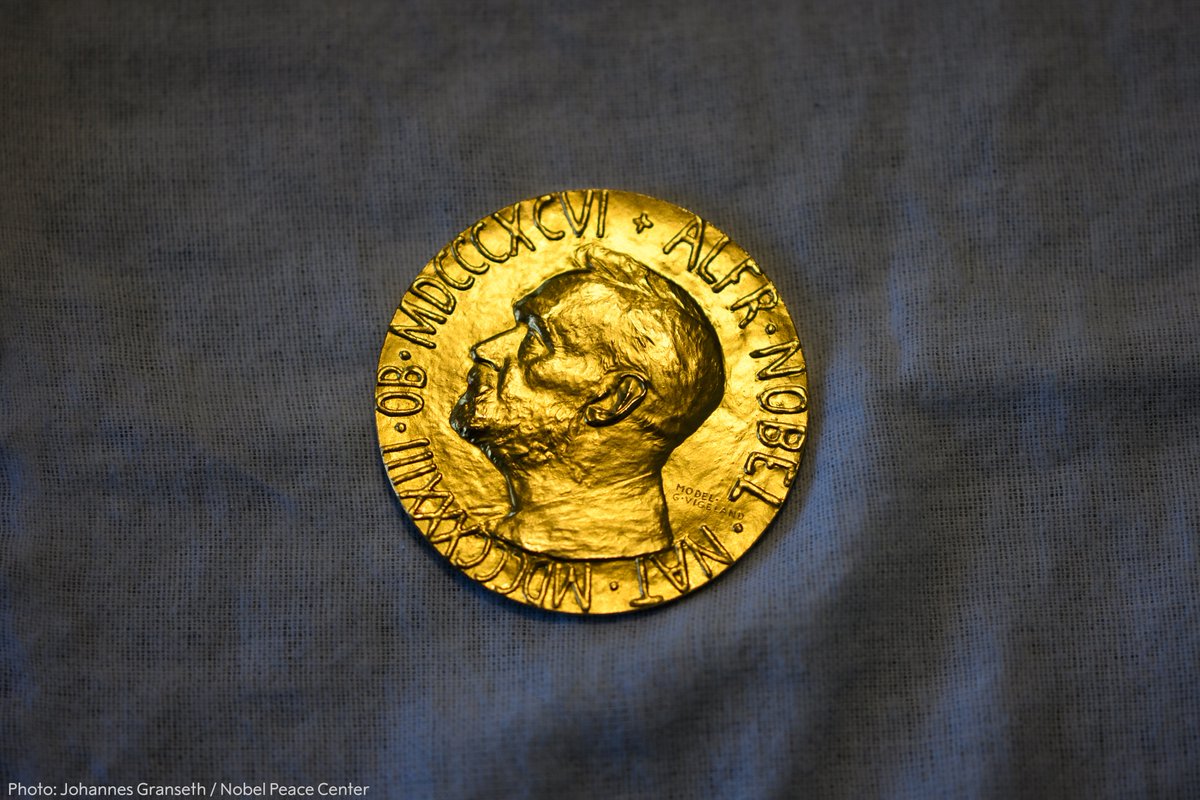
Statement from the Nobel Foundation
One of the core missions of the Nobel Foundation is to safeguard the dignity of the Nobel Prizes and their administration. The Foundation upholds Alfred Nobel’s will and its stipulations. It states that the prizes shall be awarded to those who "have conferred the greatest benefit to humankind," and it specifies who has the right to award each respective prize. A prize can therefore not, even symbolically, be passed on or further distributed.
For additional information, please refer to the Norwegian Nobel Committee: https://t.co/HqL1ZR8Bos
A Russian schoolteacher secretly filmed his own workplace as it was turned into a war propaganda machine. That footage is now part of a documentary shortlisted for an Oscar.
Here’s the story behind ‘Mr Nobody in Russia’:👇
[1/12]
« بعد عقودٍ من الخوف والصمت، بدأ السوريون رح��ةً طويلة نحو الأمل والتجدد.
وسيَبذل الاتحاد الأوروبي كل ما في وسعه لدعم تعافي سوريا وإعادة إعمارها » @vonderleyen 🇪🇺🤝🇸🇾
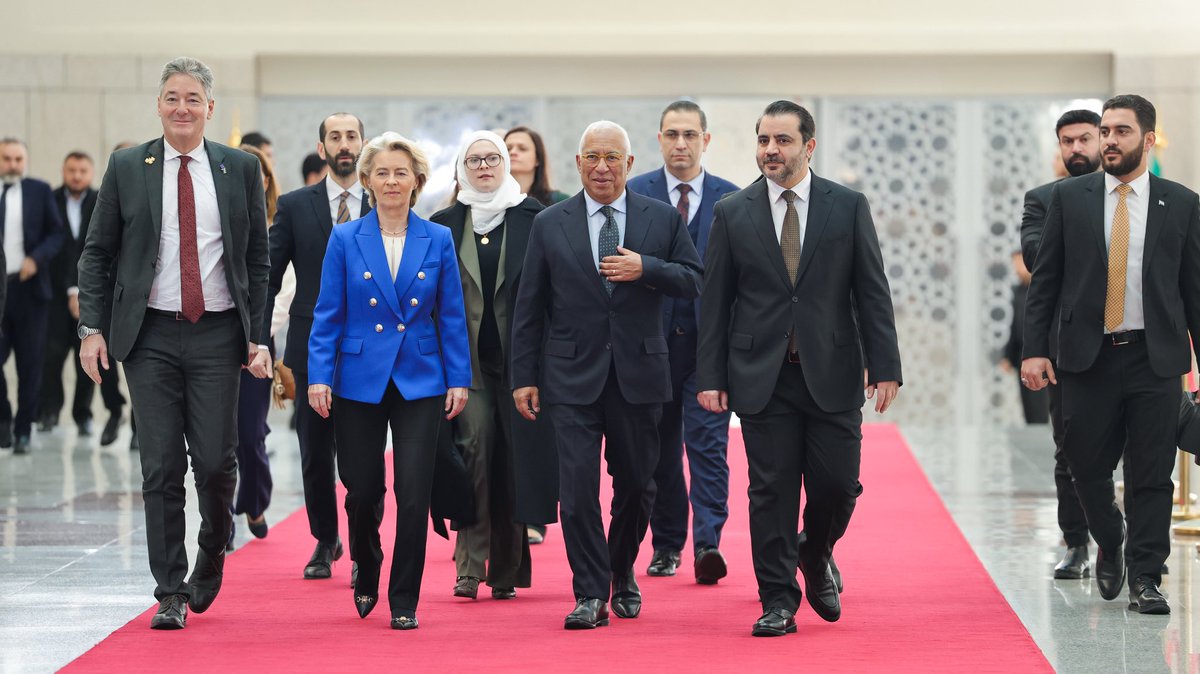
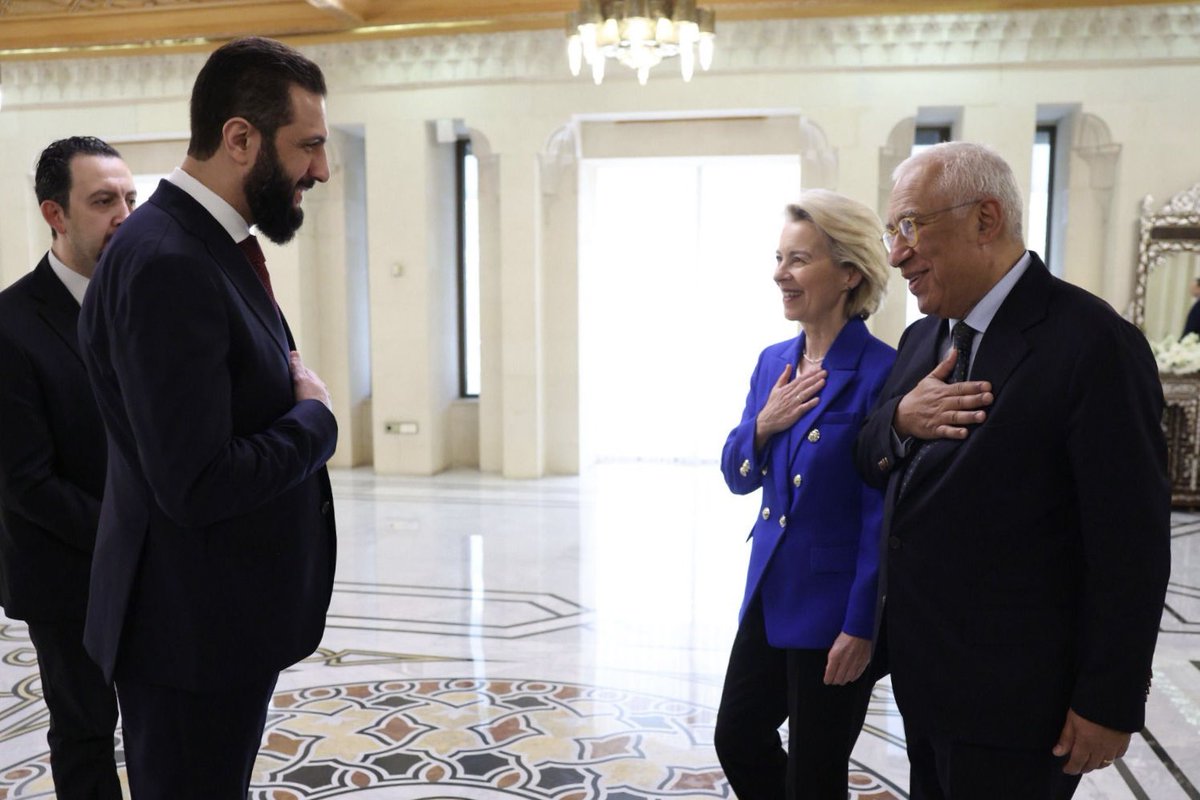
In Damascus today with @eucopresident.
After decades of fear and silence, Syrians began a long journey toward hope and renewal.
Europe will do everything it can to support Syria’s recovery and reconstruction.
BIG financial news for #Syria, as @Mastercard announces an official license for @QNBGroup to begin issuing/receiving digital financial transactions in #Syria.
All facilitated by #Syria's Central Bank & the repeal of the #CaesarAct.
The next 72 hours are critical for the world.
If the United States succeeds in imposing control over Venezuela, and by extension over the world’s largest proven oil reserves, it will mark a major shift in global power.
Such a move would not be about restoring democracy or protecting human rights, but about reasserting strategic dominance over energy, trade routes, and regional alignments.
In that case, Iran would likely move to the forefront of Washington’s strategic priorities.
Securing control over Venezuelan oil would reduce U.S. vulnerability to energy disruptions in the Gulf and provide a buffer against supply shocks in the event of a confrontation with Iran.
With a reliable alternative source of heavy crude under its influence, Washington would be better positioned to absorb or offset the destruction or shutdown of energy infrastructure in the Persian Gulf during a war.
This would lower the economic cost of escalation and make military pressure against Iran more politically and economically manageable.
At the same time, such control would strengthen the United States’ ability to shape global oil flows and pricing, reinforcing the central role of the dollar in energy markets and helping preserve the petrodollar system that underpins U.S. financial power.
Venezuela would thus become more than a regional issue.
It would become a strategic precedent, a demonstration that economic pressure, political engineering, and, if necessary, force can be used to restructure sovereign states and realign the global balance of power.
However, if the United States becomes entangled in Venezuela and faces sustained resistance, the outcome shifts dramatically.
A prolonged crisis would drain political capital, stretch military and economic resources, and weaken Washington’s capacity to project power elsewhere, including in the Middle East.
That would also complicate Israeli strategic planning, which is closely tied to U.S. regional leverage.
What happens in Venezuela will not stay in Latin America.
It will shape the future of energy control, the limits of American power, and the direction of geopolitical confrontation far beyond Caracas.
Not just authentic #Syrian crops, but a historical memory and a deep belonging to this land the land that unites us no matter how far we are apart, the great land of #Syria 🇸🇾
This is the sad low’s that the American political discourse has stooped to by the most influential names on the Conservative right. No decorum exists anymore.
Nick Fuentes reacts to JD Vance telling him to "eat shit”:
"It's honestly so flattering that the vice-president would invite me to join his family in a traditional Indian dinner.”
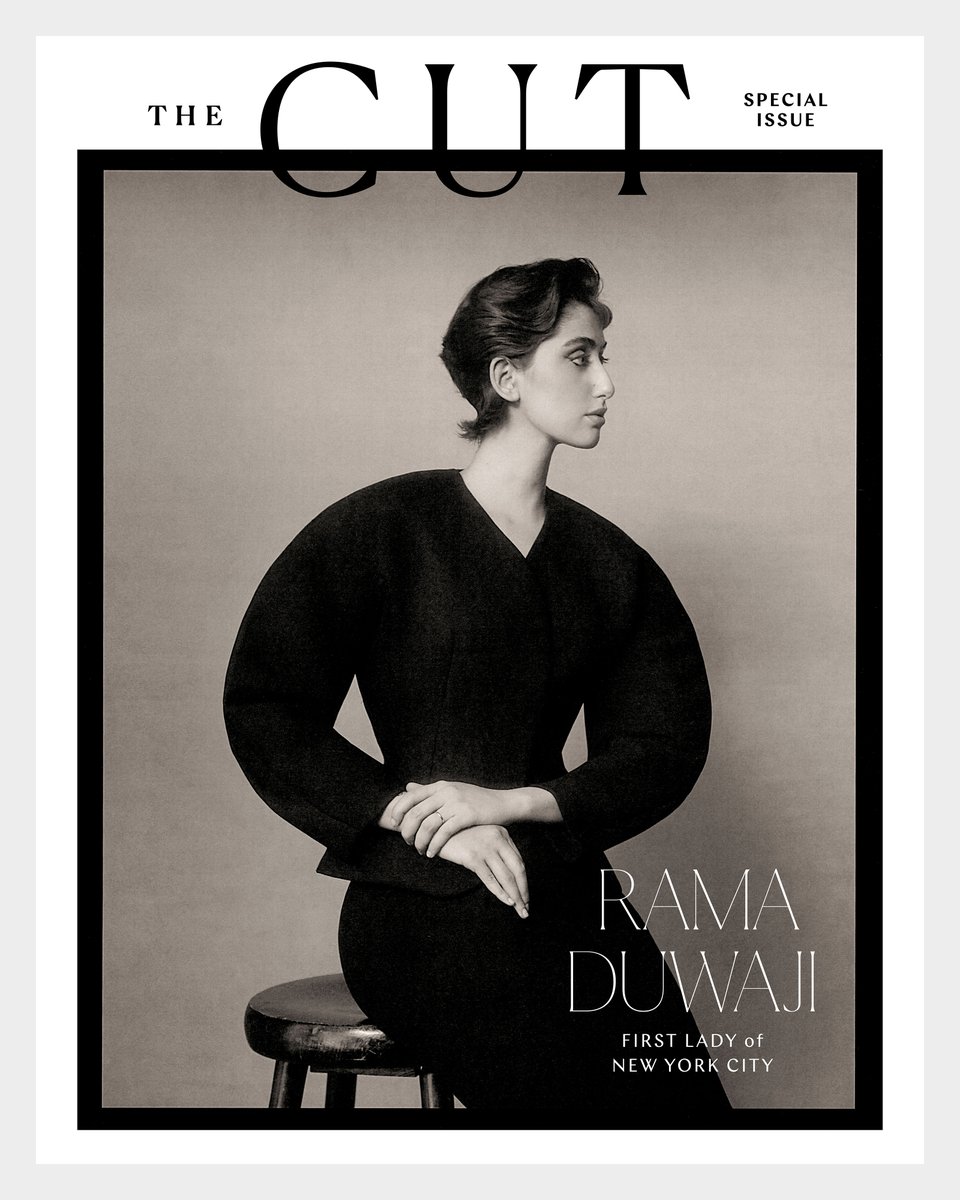
RAMA DUWAJI, New York City’s FIRST LADY, for our SPECIAL ISSUE #CUTCOVER 🌟
In January, the 28-year-old artist will step into a new role as her husband, Zohran Mamdani, takes office. But who is she, really? But who is she, really? In an exclusive interview, the 28-year-old visual artist sits down with The Cut to give a formal introduction. https://t.co/4an3isrAzM
Suddenly, she was the de facto adviser to the most headline-grabbing political candidate of 2025, strategizing over morning chai and shaping the look and feel of the campaign, whether coaching him on his Arabic pronunciations for what would become a viral campaign video
“I felt like I was walking through a fog,” she told me earlier this month on the eve of her move to Gracie Mansion. “My friend came in from D.C. that day, and she got to experience that moment of seeing me — my brain — literally develop. I was like, Okay, I’m locking in.”
Mamdani’s camp hadn’t anticipated the election to be called so early, let alone that night, but when the results were tallied in his favor, everything shifted. Mamdani quickly rewrote the speech he had planned, while an adviser began straight-talking with Duwaji:
An aide for her husband, Zohran Mamdani, looked over at Duwaji and yelled over the cheering at his primary-election watch party at a brewery in Long Island City, “He won!” In shock, Duwaji responded, “What do you mean?!”