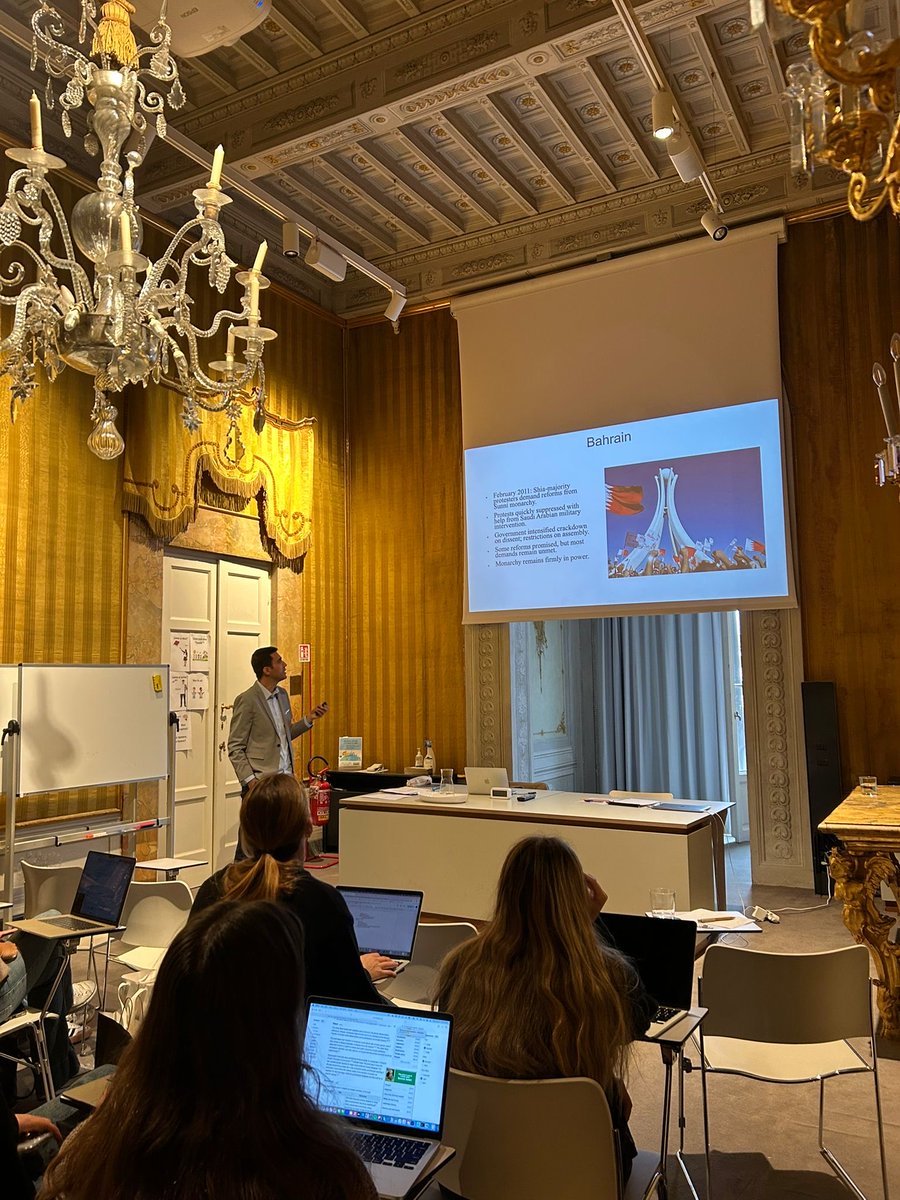
Honored to be invited as a guest lecturer at @Stanford University, #Florence campus🇮🇹, in the course “Crisis Governance and the Migration Debate in Modern Europe.”
I spoke on migration from #MENA to #Europe, thanks for the engaging discussion and warm welcome!
Opinion | Libya’s vast energy wealth gives it clear strategic weight, but oil alone cannot deliver stability. In this contributed piece for LER, @Ferhattpol explore why governance, institutional rebuilding, and political reconciliation will shape whether Libya’s resources support development or deepen fragility.
https://t.co/xiiQiLGmNP
#Libya #Energy #Oil #Governance #Economy #NorthAfrica
One dollar, one price? Libya’s reported plan to scrap the commodity tax and unify the exchange rate could reduce distortions in the formal FX market, but the real test will be whether it restores confidence in official channels.
Read more: https://t.co/vl9FFLxOl5
#Libya #Economy #Forex #CentralBank #NorthAfrica
📊New analysis on Libya’s transition: how engagement between Türkiye and Egypt could shape the country’s political future, security landscape, and regional balance of power. By @Ferhattpol
✍️Read: https://t.co/3EW3RQFX66
#Libya#EasternMediterranean#Geopolitics#NorthAfrica
As bombs fall on Iran with the promise that force will deliver freedom, there is a country where that promise was already made, and broken. A CIA-trained warlord now controls Libya's oil, its migration routes to Europe, and the bases feeding Sudan's war. He holds no elected office. No one will tell you this story. So I wrote it. My @guardian long read.
https://t.co/Kp5Y3pjGwT
A partnership agreement worth $ 2.7 billion between #Libya, #Qatar, and #Italy for the investment, operation, and development of the Misrata Free Zone was signed in Misrata today.
🔵 “AB Menziline “Güney Kıbrıs” Molası mı?”
🔷 AB Dönem Başkanlığı 6 ay için Güney Kıbrıs Rum Yönetimi’ne geçti.
🔷 Ukrayna’daki savaş sonrası AB’nin değişen güvenlik algısı çerçevesinde Türkiye- AB yeni dönem beklentileri @KriterDergi ‘nin yeni sayısı için yazdım:
https://t.co/HFdkGDX4TT
From Tehran to Caracas, Washington mistakes spectacle for strategy. Removing a strongman may look decisive, but history shows hard part begins after the cameras stop rolling. @ialmarashi and I explain — https://t.co/CnG623EO6E
WARNING: LONG 3 POST THREAD:
I was hoping that 2026 was going to be a peaceful year but the trajectory of events in the MENA region says otherwise. From East Africa to the Gulf and the Levant to Persia the pressure cooker is whistling.
I want to layout a possible roadmap of what could happen in the region. Geopolitics is a lot like chess and every good chess player knows that predict what the other player will do is critical.
The best place to begin is with the catalyst - the recognition of Somaliland. Yup little old Somaliland. You thought it was insignificant but, it’s not. It’s the firewood.
Somalia has been a country plagued with poverty, famine, terrorism and separatist movements for years. There’s a fragile balance within the de facto division of the country. That fragile balance has kept it from descending into civil war. Somalia, despite its weak economic state has incredible economic potential. Geographically it sits on a maritime choke point, it’s rich in minerals and most likely has vast undiscovered hydrocarbon reserves off it’s coast. The fragile balance inside the country has now been upended with the recognition of Somaliland. But, this is only the domestic angle of the issue. Unfortunately, this will likely have a cascading impact on the region.
Ethiopia is an important actor in what could happen next. The country is a rising power in Africa. Its Achilles heel is that it’s landlocked. In its pursuit of a seaport, Ethiopia tried to reach a deal with breakaway Somaliland. This obviously didn’t sit well with neighboring Somalia and was viewed as a threat to it’s territorial integrity. Tensions increased between both African nations. But, both were brought to the table for negotiations with Türkiye mediating. After several rounds of talks, a joint declaration was made between both countries to work towards a mutually agreed upon solution. Now with a push to recognize Somaliland, Ethiopia will most likely be emboldened to abandon talks with Somalia and revert to its original strategy of maritime access via Somaliland, hence reviving the tensions with Somalia. Somalia will most likely try to counter these moves with the many ethnic Somalians that live on the Ethiopian side of the border. Ethiopia had experienced unrest in the north with rebels in Tigray, the potential for unrest in the southeast will stretch the capacity of the state’s security services.
While this scenario has already impacted two countries, the contagion would be manageable if it was limited to this. But it’s not.
Enter Egypt. Egypt adds a whole new dimension to the issue because it has a military that could be a game-changer. Egypt already had its own set of issues with Ethiopia stemming from the construction of the Grand Ethiopian Renaissance Dam which has had a direct impact on Egypt’s water supply. The Egyptian have accused the Ethiopians of bad water management which they believe led to flooding in Sudan and lower water levels in Egypt. While water and Egyptian concerns regarding Ethiopian expansion are a major issue, another concern for Cairo is maritime commerce lanes. Being home to the Suez Canal is a great geopolitical advantage for Egypt. It’s the choke point that links the Mediterranean to the Indian Ocean. But even choke points could have choke points which brings the Somalia, more specifically the geography of Somaliland back into the analysis. While rivals Ethiopia will likely return back to their strategy of seeking a seaport on the Gulf of Aden coast, there also seems to be initiatives by Israel as well, which was probably the end game goal of recognizing Somaliland. The potential of having two or more rival countries control a commercial maritime choke point would threaten the economic security of Egypt.
The wreckage of a Tripoli-bound private jet carrying Libya’s Chief of General Staff has been found south of Ankara, Türkiye’s interior minister said. The aircraft sent an emergency landing signal near Haymana before contact was lost.
The Libyan government has confirmed that its army chief and four aides have died.
Report | Sustainable peace in Libya requires more than ceasefires. It demands political consensus, institutional rebuilding, and a shared vision of the state. While foreign interference has deepened divisions, the core challenge remains internal: the absence of unity, legitimacy, and effective governance.
A fragmented security sector remains one of Libya’s greatest challenges. Competing armed groups have replaced the state’s monopoly on force, blocking effective governance.
Libya demonstrates how weak institutions + elite fragmentation can derail post-conflict transitions. State-building cannot succeed without legitimacy, inclusivity, and a shared political framework.
Read more: https://t.co/8N4u6FcHh2
🇹🇷Türkiye in 🇱🇾Libya and the #Mediterranean
📌News from CeSPI Observatory on #Turkiye
🔹 Türkiye’s Strategic Engagement in #Libya@Ferhattpol
🔹 🇮🇹Italy and 🇹🇷Türkiye in 🇱🇾Libya @Mattia88261
👉 Brief 73 https://t.co/2eiaVwGFpL
👉 Brief 74: https://t.co/Y4xsyUEJ9q
OPINION - Beyond arms embargo extensions: Building lasting peace in Libya
✍️ Renewing the arms embargo on Libya may serve to increase pressure on rival factions and their foreign supporters, but by itself, it cannot resolve the core challenges the country faces, namely, the ongoing fragility and deep divisions within its state institutions
🔗 https://t.co/hsq4MFriP6
Sosyal Bilimler Ödülü’nün sahibi Prof. Dr. Şener Aktürk, ödülünü Milli Eğitim Bakanı Yusuf Tekin’in elinden aldı.
Bu buluşma, hem akademik emeğin takdir edildiği hem de sosyal bilimlerin öneminin güçlü şekilde vurgulandığı anlamlı bir andı.
#İlimYaymaÖdülleri2025
Modern Dünyanın Kökenleri başlıklı kitabım yayınlandı:
"Kitapta, Batı Avrupa’daki tüm Müslümanların ve Yahudilerin neden, nasıl, nerelerde ve ne zaman yok edildikleri ilk defa bir bütün olarak ve özgün bir soykırım kuramı çerçevesinde açıklanmaktadır."
https://t.co/eGR72mcv1j
Libya’s oil industry - Africa’s richest - remains trapped in conflict and division.
Researcher Ferhat Polat (@Ferhattpol) explores its path to stability and reform.
https://t.co/9vnxpkppuA
Ortadoğu Etütleri (@ortadoguetutler) dergisinin editörlüğünü üstlendiğim bu özel sayıda “Çok Kutuplu Mücadele Alanı: Kuzey Afrika ve Kızıldeniz Havzası” başlıklı temasal dergi sayısı çıktı. Açık erişimde:
🔗 https://t.co/QT3ovxvLa4
Makale konuları ve yazarlar:
•Abdiwahaab Sheikh Abdisamad (@AbdiwahabSheik7) — “Tanınma Çıkmazı: Somaliland’ın Diplomatik ve Siyasi Açmazı”
•Abebe Yirga Ayenalem & Gashaw Ayferam Endalayehu — “Süveyş Kanalı’ndan Bab el-Mendeb Boğazı’na: Dünyanın En Yoğun Deniz Ticareti Koridorunda Deniz Güvenliğini Yönlendirmek”
•Fatih Dağ (@fatihdag58) — “Afrika Atlantik Gaz Boru Hattı ve Trans-Sahra Gaz Boru Hattı: Kuzey Afrika, Batı Afrika ve Sahel Üçgeninde Jeopolitik Rekabet”
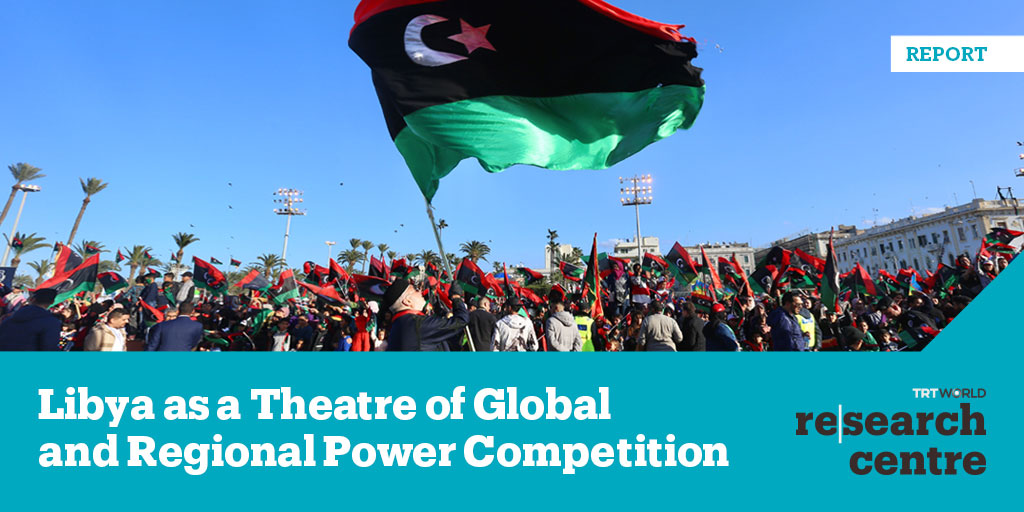
•Ferhat Polat (@Ferhattpol) — “Libya: Küresel ve Bölgesel Güç Rekabetinin Sahnesi”
•Amir Salim — “Sudan Savaşı ve Kızıldeniz’e Yansımaları: Bölgesel İstikrarsızlık mı, Yeni Bir Güç Dengesinin Arayışı mı?”
•Gizachew Asrat (@GizachewAsrat) & Gashaw Ayferam Endalayehu — “Etiyopya’nın Egemen Deniz Erişimi Arayışı: Tarihsel ve Jeopolitik Bağlamlar”
Kitap Bölümleri:
•Serhat Tekin — “Fas-Amerika Siyaseti: İki Buçuk Asırlık Bir Ortaklık”
•Hatice Rumeysa Dursun — “Afrika Kıtasına Yönelen Türkiye: Stratejik Kavşak Noktası”
Türkiye ve Afrika ekseninde, deniz güvenliği, enerji boru hatları, devletleşme ve yönetişim başlıklarına odaklanan bu sayının, ilgili alanlarda çalışan akademisyenler ve politika yapıcılar için değerli bir kaynak olacağını umuyorum.
Proud to share the release of the special issue I edited for Ortadoğu Etütleri (Middle Eastern Studies Journal), titled
“The Multipolar Battleground: North Africa and the Red Sea Basin.”
🔗Now available in open access: https://t.co/QT3ovxwiZC
Articles and Authors:
• Abdiwahaab Sheikh Abdisamad (@AbdiwahabSheik7) — “The Quest for Recognition: Somaliland’s Diplomatic and Political Deadlock”
• Abebe Yirga Ayenalem & Gashaw Ayferam Endalayehu — “From the Suez Canal to the Bab el-Mandeb Strait: Navigating Maritime Security in the World’s Busiest Trade Corridor”
• Fatih Dağ (@fatihdag58) — “The Africa Atlantic Gas Pipeline and the Trans-Saharan Gas Pipeline: Geopolitical Rivalries in the North Africa–West Africa–Sahel Triangle”
• Ferhat Polat (@Ferhattpol) — “Libya: The Stage of Global and Regional Power Competition”
• Amir Salim — “The War in Sudan and Its Red Sea Implications: Regional Instability or the Search for a New Balance of Power?”
• Gizachew Asrat (@GizachewAsrat) & Gashaw Ayferam Endalayehu — “Ethiopia’s Quest for Sovereign Sea Access: Historical and Geopolitical Contexts”
Book Chapters:
• Serhat Tekin — “Morocco–U.S. Relations: A Partnership Spanning Two and a Half Centuries”
• Hatice Rumeysa Dursun — “Türkiye’s Engagement with Africa: A Strategic Crossroads”
This special issue focuses on maritime security, energy corridors, statehood, and governance across the Türkiye–Africa axis, offering fresh insights for scholars and policymakers engaged with the evolving dynamics of North Africa and the Red Sea region.
🔵 KKTC’de Karar Anı 🗳️
🔷Yarın KKTC’de Cumhurbaşkanlığı seçimi var.
🔷 Baş başa geçmesi beklenen seçimi yerinde takip edeceğim.
🔷Seçim öncesi genel atmosferi, beklentileri, gelecek projeksiyonlarını @fikirturu için yazdım.
https://t.co/97aJYUV9h3