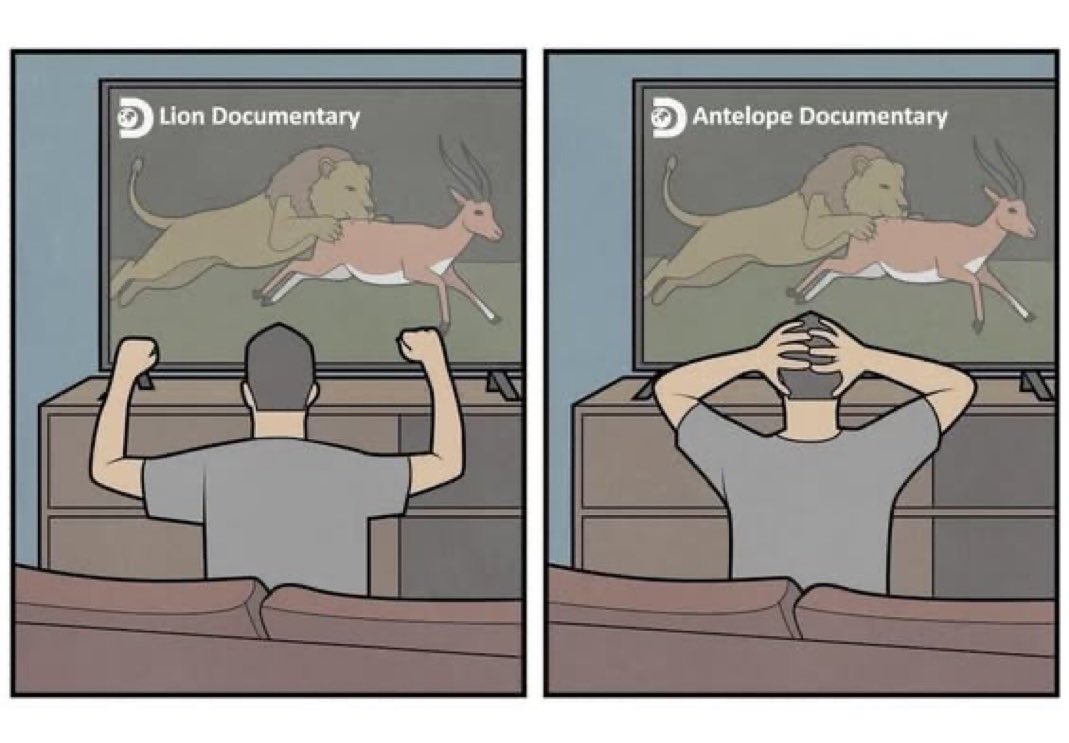
The older I get the more I realize that everything really is that deep. The people you confide in, trust, date, become friends with, the opportunities you take. What you eat and even what you consume. It’s very deep and shouldn’t be taken lightly.
Hi Sandy, I hope you’re well. I have appreciated the recent discussions. I do not agree with your framing.
Regarding piracy, DOOM is a complicated example because shareware was the model. DOOM’s first episode was designed to be freely copied, passed around, uploaded, installed, and played. That enormous unpaid audience was not the same thing as piracy. It was part of how DOOM reached the world.
By the mid-90s, DOOM had something like 20 million shareware installs and more than 2 million paid copies sold. Those 20 million people were not “pirates” by default. A huge number of them were playing the free episode exactly as intended.
That doesn’t excuse people pirating the registered game. However, it’s important not to collapse legal shareware distribution, unpaid reach, and actual piracy into one number.
I also don’t think piracy is what “gutted” id - id is still around and still making games. Piracy may have cost money, but it wasn’t the reason Quake was hard or why people eventually went different ways.
So yes: pay developers. Buy the games you love. Support the people who make them.
But history is messier than “pirates killed the companies.” Sometimes the same free distribution that looked like lost sales was also the thing that made the game impossible to ignore.
A Google DeepMind senior engineer built a pixel-art map of all New York City. The fine-tune cost $12.
He puts it on the open web for free.
It is called https://t.co/weVEmyOApP.
You open the tab and the city appears in classic SimCity 2000 isometric style. Scroll and it keeps going. Zoom into Midtown and you can read the H&M signage in Times Square in red as actual pixel-art letters on the side of a building. The spire of the Bank of America Tower rises above a cluster of skyscrapers. Individual rooftop HVAC units. Green roof gardens. Hotel driveway loops. Nothing is a placeholder. The map requires an estimated 40,000 tiles to complete.
The engineer is Andy Coenen, a senior staff engineer at Google DeepMind. By his own description, a former electronic musician.
Here is the technical process exactly as he documented it.
He pulled New York City's geometry from the Google Maps 3D Tiles API. He fine-tuned Qwen-Image-Edit, an open-source image model, on approximately 40 hand-paired satellite tile to pixel-art tile examples. He spun up 50 parallel GPU instances on rented cloud compute and generated tens of thousands of tiles in a matter of hours. The fine-tuning cost $12.
His stated goal: what is possible now that was impossible before.
No account required. No paywall. No NFT. No email signup. Load the URL and the city is yours.
The post reached 1,325 points on Hacker News and topped the best-of-show list for 2026.
One engineer. $12 in compute. A weekend. An entire city.
What changed is not the ambition. It is the cost of testing it.
@hasantoxr This also raises an important point about reliability. When your storage depends on a messaging platform’s intended use case, the long-term stability becomes an open question.
@alertanoti Estoy seguro que la noticia está mal, porque las fuentes cargadoras dan pulsos de energía, no mata y te da la oportunidad de soltar cualquier descarga, la corriente directa en cambio es la que te puede matar, posiblemente alguna extensión o mala instalación eléctrica lo causó
❗️🇫🇷 Following the French government's ban on Windows and its replacement with Linux, French activists are now saying goodbye to Windows 10 and actively encouraging people to embrace freedom and use Linux instead of paying for an upgrade to Windows 11, citing privacy concerns.
Anthropic pays engineers $750,000+ a year to understand how LLMs work.
Stanford just put a 2 hour lecture that covers 80% of it for FREE.
Bookmark this. Give it 2 hours today.
It might be the highest ROI thing you do this month:
Motorola anuncia una alianza con GrapheneOS de código abierto
Motorola se asocia con la Fundación GrapheneOS de código abierto para mejorar la seguridad móvil y desarrollar futuros dispositivos compatibles con GrapheneOS