3D printers from across the university, including our labs, have been brought together in the CTL to build face shields to help keep frontline NHS staff safe 🧑⚕️ Amazing work by everyone involved 💪
My supervisor, Dr Mills, is presenting our work at #AIChEAnnual on Monday, November 11, 2019 - 3:30pm-5:00pm. If you have any question about "#additivemanufacturing of Food: Formulation and Printability Criteria" please feel free to ask.@ChemEngBham@Ff3Dp
Great day at Women in Chemistry @WomeninScience4 #WICNotts2019 at UoN. Great talks, and really pleased to present the poster of our collaborative work "3D printing of a biocompatible and non-peptidic hydrogel "with RC4@ @Ff3Dp
This is how the #reactiveextrusion#3Dprinting system looks like. It features a customised #LulzbotTAZ#3dprinter with a dosing system. Optimisation is going on as shown on the photo, parameters such as mixer size, extrusion speed, print speed and etc. are all investigated.
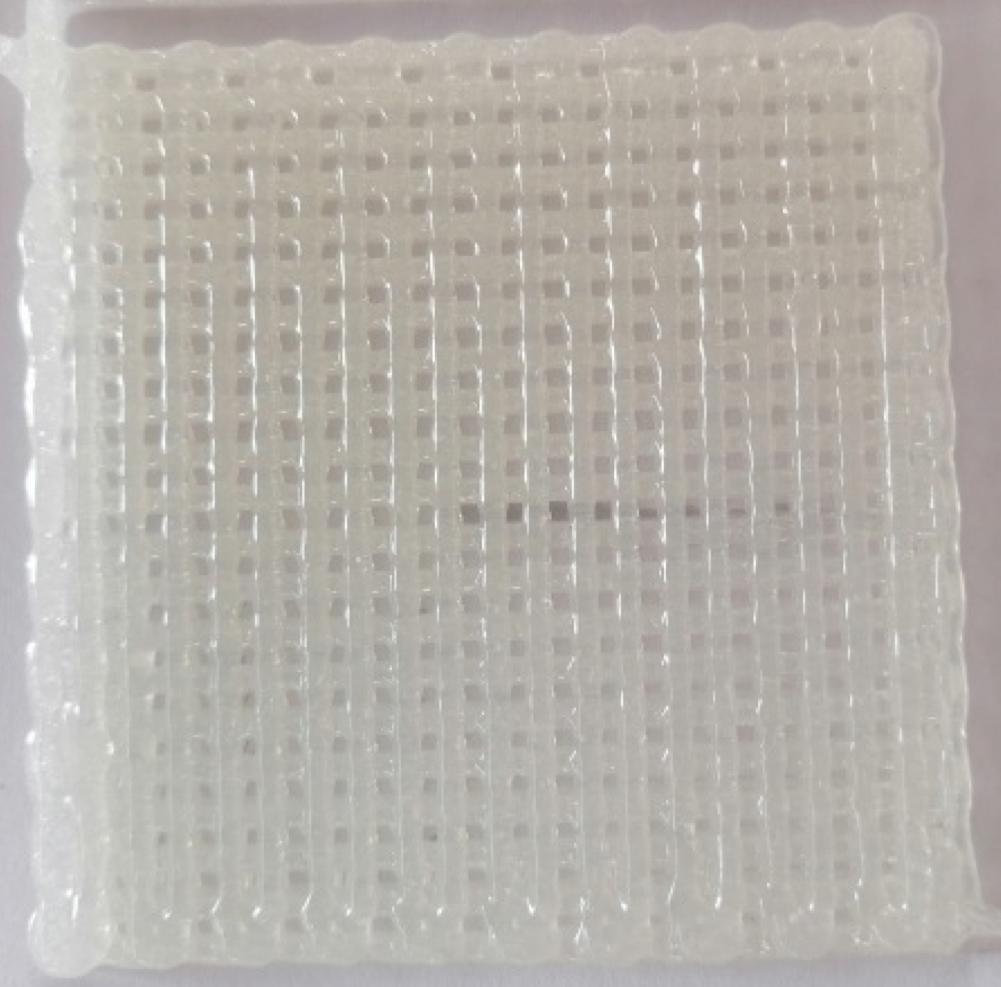
Here are some woodpile structure printed by my colleague: Dr Xuesong Lu. The photos feature both a two layers and four layers 6cm x 6cm structure. It really shows the flexibility of the #formulation of the #reactiveextrusion process.#AdditiveManufacturing#polymers
After balancing the rheological properties with reaction kinetics, we are good to go for #3Dprinting. Some of the #printing photos and videos are coming on the way, stay tubed @UoNEngineering #UON@UoNCfAM
#Reactiveextrusion#3dprint#printability study involves carefully screen the reaction kinetics as discussed yesterday, and also the rheological properties. #Formulation flexibility allows us to tune the rheological properties as demanded.
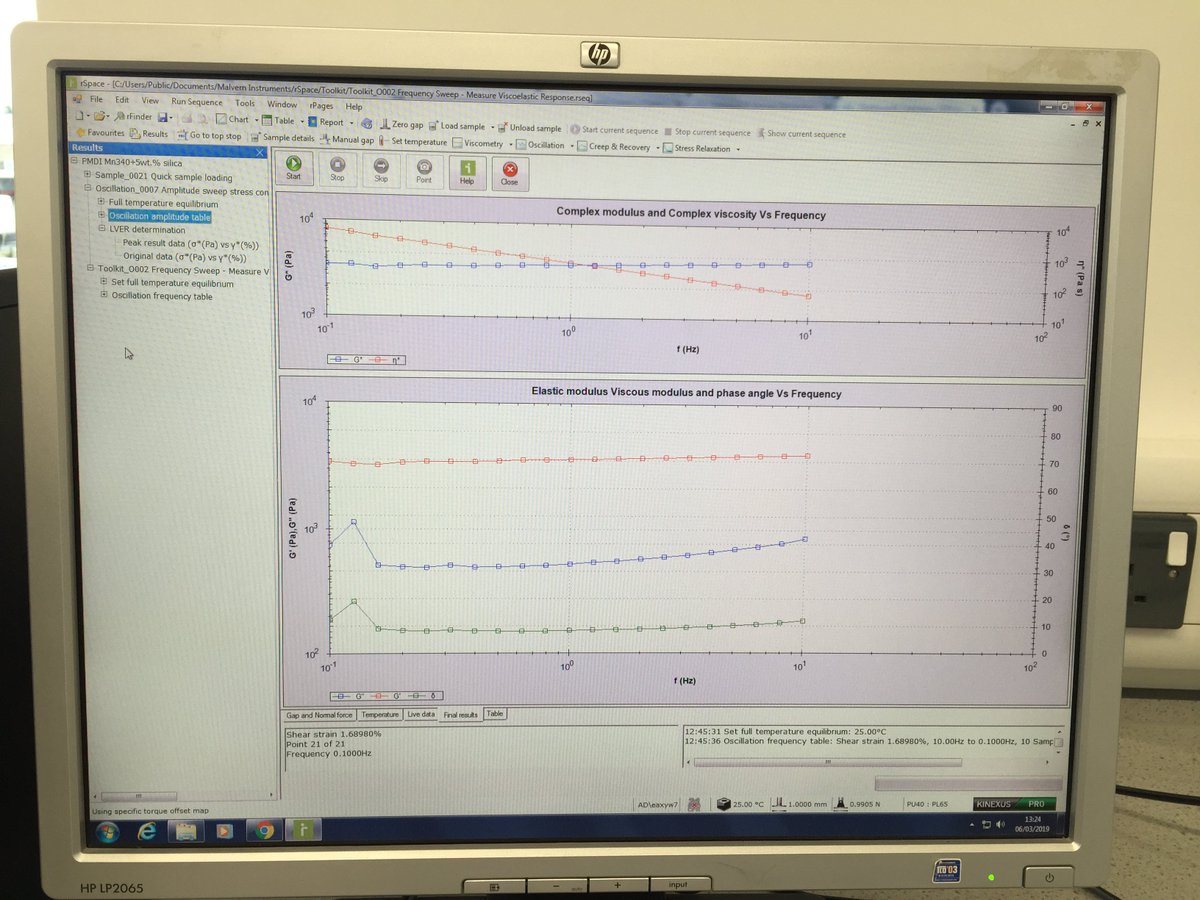
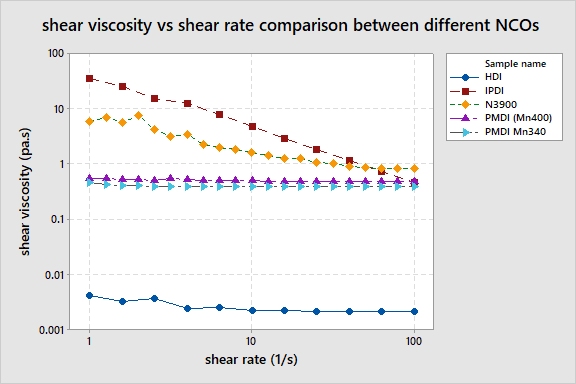
Both the apparent viscosity and complex viscosity of the #materials are characterised, like in the photo which I'm characterising the visco-elastic profile for one #polyurethane formulation and another one shows the viscosity for different #isocyanates at different shear rate.
The reaction kinetics is monitored throughout the timeline. As can be seen, the isocyanate functional group -NCO peak at around 2260cm-1 quickly disappear after one minute, which proves the fast kinetics of this #ambientcuring#polyurethane formulation. 🙌 #UoN@UoNCfAM
Morning,
Following the intro on the ambient reactive extrusion #3dprinting yesterday, has anyone wonder what #materials can be used on this #3dprint process?
The #printability study starts from investigating the reaction kinetics of the formulation, as shown in the photo by FT-IR
I'm Leo who's part of @Ff3Dp research challenge 1 team, and is really happy to share with you the alternative #3dprint process I'm working on. Stay tuned :)
#UoN@EPSRC @UoNEngineering @UoNCfAM@3Dprintingnews
Morning,
A beautiful sunny day to kickstart this week, let's start with a puzzle: Is there any #additivemanufacturing#3Dprinting#technology which requires no external heating, has fast build speed, excellent bonding between layers and also easy scalability?
What about #ambientreactiveextrusion as in the schematic diagram?
with ambient fast curing kinetics of #polyurethane, this process provides print speed order of magnitude faster, better Z-strength and formulation flexibility (with different fillers) #polymer#materials
Award-winning science journalist and author of 'Inferior', @AngelaDSaini will be joining @UoN_Physics on #InternationalWomensDay to discuss 'How Science Got Women Wrong'.
Friday 8 March, 6pm in B1, Physics
https://t.co/TWp8Lta6f2
Scanning electron micrographs of xerogels done at the @UoNnmRC might not always perfectly reflect what is in the gel, but they do give clues,and are beautiful as well!
Some screening of solvents for gelling by a new sustainable gelator made by @GlyssaDizon in the @Ff3Dp project in the @DAmabilino research team with @PuttyKnees