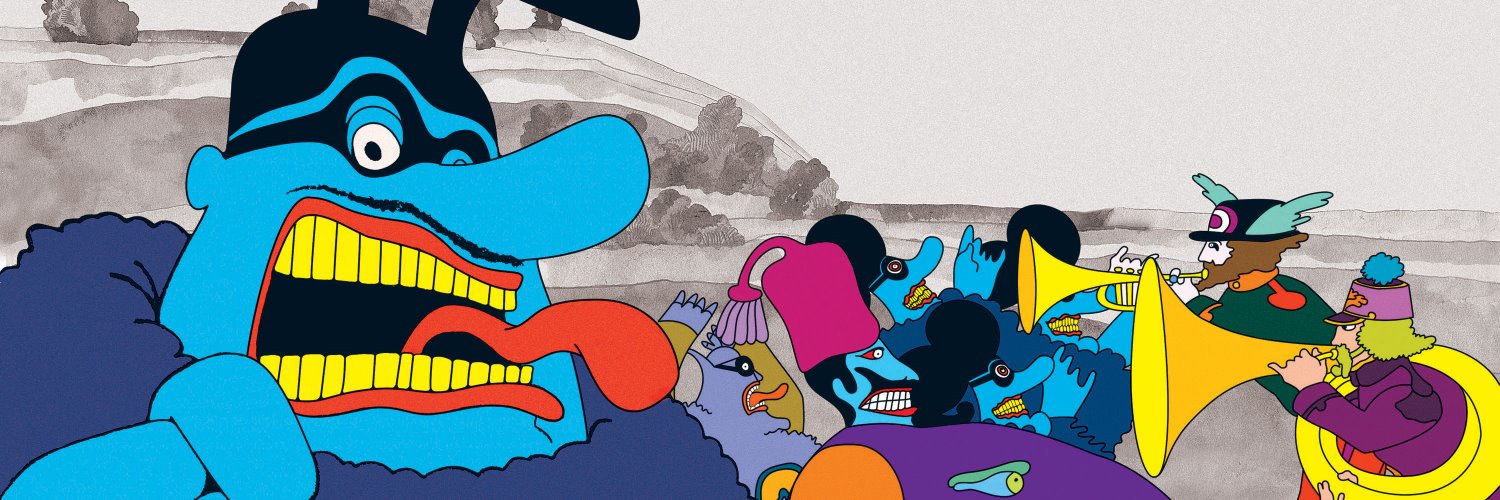
Making music like this takes years, many years. Some would even say 11 YEARS. But boy is it good and original music amirite? @TheHives u can vouch right?
Tecnicamente questi sono degli ignoranti e fascisti. Vannacci deve essere libero di dire le sue fregnacce ovunque. Lo state trasformando in un martire.
Crucio stasera ci farà due ore di zanzara. https://t.co/sZ2fQ7UpyL
Buongiorno, buona festa del lavoro!
Da segnalare: articolo di Boeri e Perotti sulla principale questione di politica economica irrisolta: la crescita dei salari reali.
Negli ultimi cinque anni, a fronte dell’aumento del numero di occupati, i salari reali sono decresciuti in media del 10%.
1/2
Il 15 marzo del 44 a.C. l’assassinio di Giulio Cesare andò in scena in un luogo di cui ancora oggi è possibile scorgere alcune tracce. Ce ne parla Monica Ceci, responsabile archeologa dell’Area Sacra di largo Argentina.
Per info sulla visita all’Area Sacra https://t.co/vHNDwANNCy
Ten months ago, we launched the Vesuvius Challenge to solve the ancient problem of the Herculaneum Papyri, a library of scrolls that were flash-fried by the eruption of Mount Vesuvius in 79 AD.
Today we are overjoyed to announce that our crazy project has succeeded. After 2000 years, we can finally read the scrolls:
This image was produced by @Youssef_M_Nader, @LukeFarritor, and @JuliSchillij, who have now won the Vesuvius Challenge Grand Prize of $700,000. Congratulations!!
These fifteen columns come from the very end of the first scroll we have been able to read and contain new text from the ancient world that has never been seen before. The author – probably Epicurean philosopher Philodemus – writes here about music, food, and how to enjoy life's pleasures. In the closing section, he throws shade at unnamed ideological adversaries – perhaps the stoics? – who "have nothing to say about pleasure, either in general or in particular."
This year, the Vesuvius Challenge continues. The text that we revealed so far represents just 5% of one scroll.
In 2024, our goal is to from reading a few passages of text to entire scrolls, and we're announcing a new $100,000 grand prize for the first team that is able to read at least 90% of all four scrolls that we have scanned.
The scrolls stored in Naples that remain to be read represent more than 16 megabytes of ancient text. But the villa where the scrolls were found was only partially excavated, and scholars tell us that there may be thousands more scrolls underground. Our hope is that the success of the Vesuvius Challenge catalyzes the excavation of the villa, that the main library is discovered, and that whatever we find there rewrites history and inspires all of us.
It's been a great joy to work on this strange and amazing project. Thanks to Brent Seales for laying the foundation for this work over so many years, thanks to the friends and Twitter users whose donations powered our effort, and thanks to the many contestants whose contributions have made the Vesuvius Challenge successful!
Read more in our announcement: https://t.co/rUlrdGXBMs
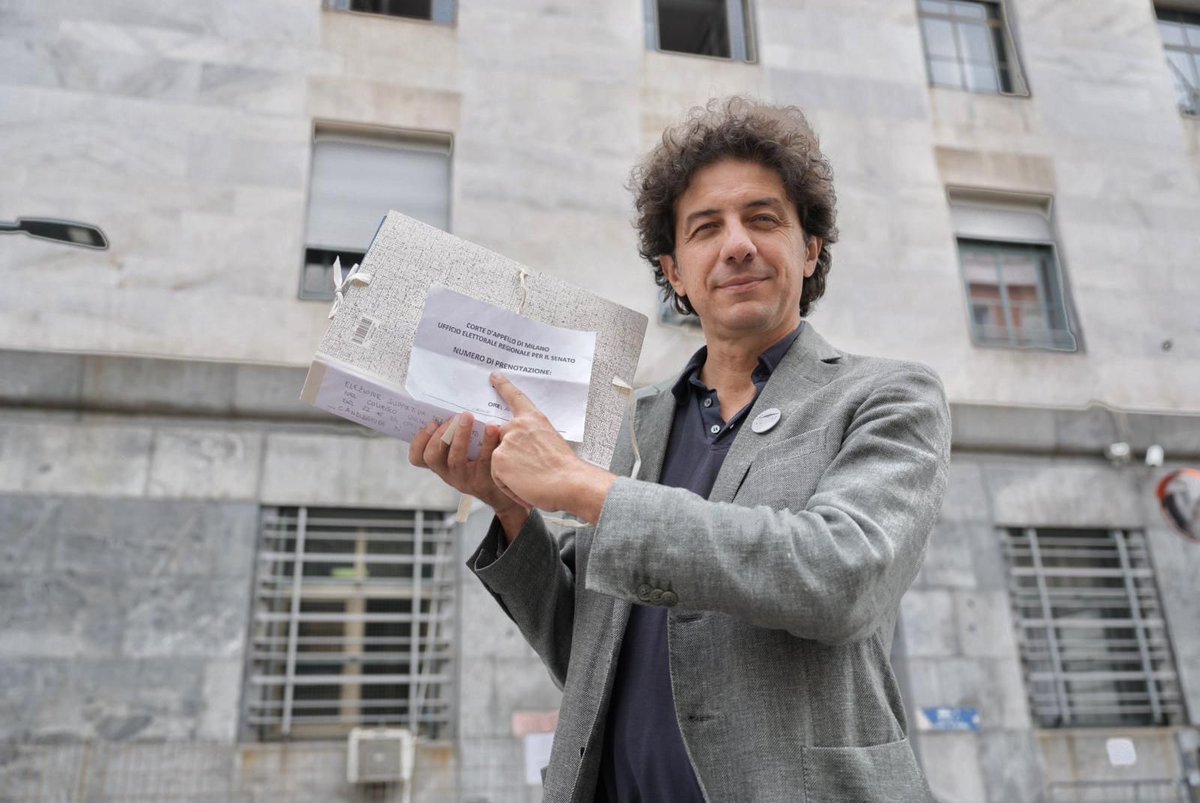
Oggi abbiamo depositato le firme per la candidatura: siamo ufficialmente in campo!
Col @ComitatoCappato, grazie a tutte le persone e organizzazioni che ci sostengono, siamo pronti a una sfida che sta già riservando ottime sorprese. E diventiamo ogni giorno più numerosi. Forza!
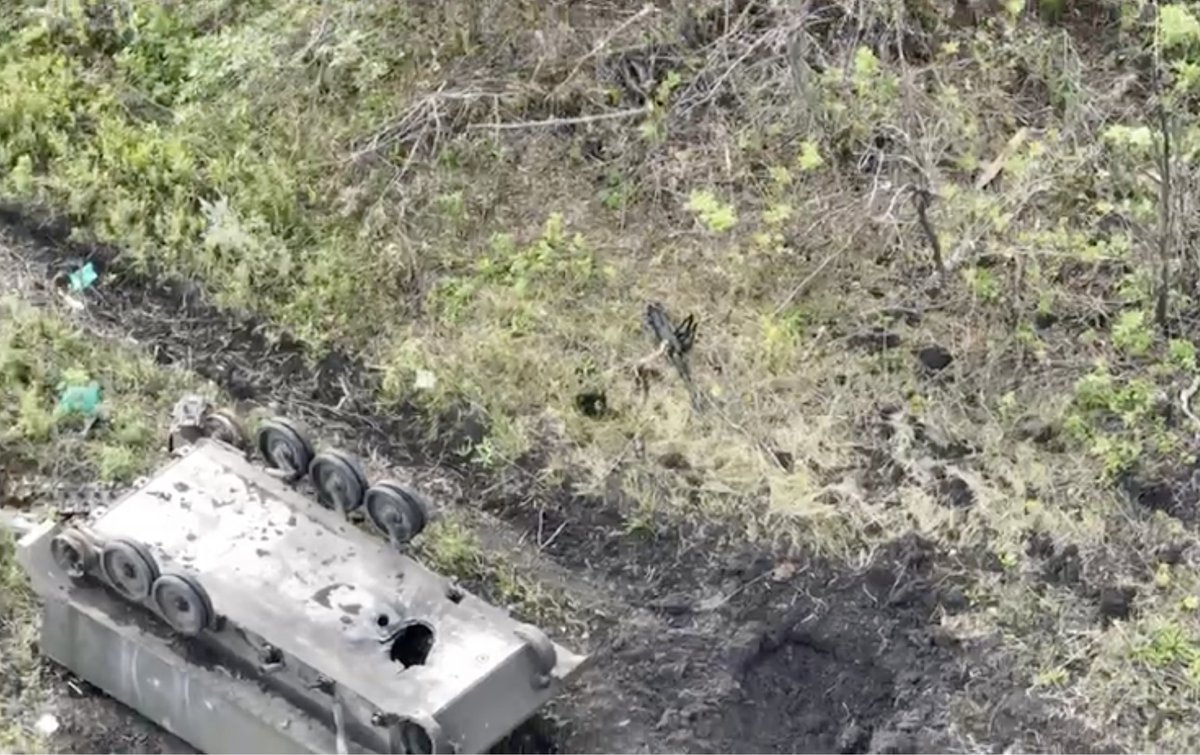
My thoughts regarding the issues reported by the @KyivIndependent article about the evaluation of NATO training and the 32nd Mechanized Brigade.
Please consider this text as a supplementary piece interjected with opinions - my own and those I spoke to in the field.
I got in touch with not only the 32nd but also the 92nd Mechanized Brigade. The 92nd fought alongside the 32nd and can provide unique insight, as they are experienced and saw firsthand the schism between theory and practice.
Our new infantry brigade did a heroic job in the given circumstances: limited time, resources, and ammunition. My conversations with everyone outside of the 32nd were marked with gratitude, as nobody appreciates people willing to do the job of infantry more than infantry.
Don't doom over this text. My effort is to give another small input into making Western training more effective.
Let me also point out that when dealing with losses, emotions run high, and there is an opening for toxicity to seep in. The disconnect between expectations set by the training and the reality of the Ukrainian battlefield can be explained better with a lack of communication at the higher level than with "Western arrogance". It can still get you angry, but you would be a fool to escape into a simple narrative that relies on a lack of intelligence or empathy. You can not expect Western militaries to be perfectly in tune with the requirements of the Ukrainian battlefield at the institutional level when our own institutions run into similar problems with less distance to the front. If you think Ukrainian training is perfect, I have an illegal bridge to sell you.
You can watch the videos of Western instructors saying farewell to Ukrainian recruits anytime. Twitter replies made by armchair generals do not represent them. I think they very much care.
Background:
The 32nd Mechanized Brigade was formed at the beginning of 2023 and partially equipped with Western equipment with the core of its mechanized infantry utilizing the American M113 armored personnel carrier.
Its infantry battalions underwent training in the spring of 2023 in a NATO country. After the return to Ukraine, the brigade received equipment and ammunition and was fully staffed. During the summer, the 32nd brigade was deployed alongside the 92nd brigade, which had been fighting for the past nine months in the Svatove axis in the northeast of Ukraine.
The deployment quickly became problematic and resulted in heavy casualties, eventually forcing the command to reconsider.
The training:
I’ve spoken to one of the sergeants in the brigade with the call sign “Nestor” about the training they received abroad.
Overall, the training included basic infantry, reconnaissance, and assault tactics.
Nestor said the most interesting and useful part was the reconnaissance training. “We learned how to get close to the enemy and build secure observation posts. It was essential.” They also learned how to adjust artillery and navigation. “Navigation was useful; spotting was interesting, but it was not particularly useful on the battlefield so far.”
However, his overall verdict of the training was mixed: “It was like the instructors were in a vacuum. We received training in infantry tactics, while this war is a war of artillery and drones.”.
On one occasion, Nestor’s commander asked if trainers would at least consider the presence of drones on the battlefield. The answer was a damning “No.”.
“You didn’t take your drones with you, and the only drone we have available is DJI Phantom 4, but we can’t even use it for bureaucratic reasons.” he recalls them saying. So they continued the training as is.
Western-provided training fell short of considering current realities on the battlefield. The brigade’s first deployment in Ukraine was to hold the defense in the Svatove direction. However, Nestor commented: “Our battalion received zero defensive combat training. It was all assault oriented.”
On a positive note, the sergeant says that our infantry learned to move and storm buildings and trenches. “If you consider this basic infantry training, it was good.” The infantry companies spend seven days practicing assault combined arms operations, storming different objectives. One day, it was a small town. Another day, it was an enemy trench. “We went through swamps, mud, and cold nights. Once, our instructor said that living through it on the battlefield would be easier if we experienced these conditions now. He was right.”
But the companies received too little training on surviving the battlefield: “There was no camouflage training. The infantry didn’t learn how to conceal positions, build bunkers, and no defensive combat training.”
In the end, Nestor adds that one of the things that they needed was EOD awareness and training. “You must understand the battlefield is littered with booby traps, mines, and explosive ordinance. We knew it before the deployment. Everyone in Ukraine knows it. We asked trainers if we could get any training on the topic.” But for some reason, the trainers refused to even discuss it. It was a taboo. “We regret the lack of EOD training specifically. It could have saved lives.”
The deployment:
After the training in Germany by a NATO country was complete, and after a short period in Ukraine, they were sent to reinforce Svatove direction.
Problems appeared immediately. Nestor’s battalion was deployed shoulder to shoulder with one of the battalions of the 92nd brigade. The 92nd brigade soldier with the call sign “Zero” explains, “It appears that they were trained on another planet. What was obvious to us was a terra incognito for them.” He continues with a story of one of their first encounters with 32nd infantry: “We were driving 15km from the front line, and I noticed a military Ural (truck), with a full platoon clustered around near one of the small local grocery stores. They acted like they didn’t know it was a war zone. We had to stop and tell them that ZALA (russian) drone was reported around. The platoon commander did not know the enemy had such capabilities.”.
A grave mistake in NATO training was that a company commander stayed in the trenches with the company. While it sounds heroic and may work when facing a poorly equipped enemy, russia is well-equipped and has hundreds of drones. This costly mistake was corrected after they lost a couple of positions. “The company commander has to have the eyes in the sky. He has to have his own drone stream and communicate with platoon or group commanders.” - It was a costly lesson for Nazar’s unit; “It cost us lives.”
I asked why a company commander couldn’t stay in the trench. My friend from the 92nd Brigade explained that when the company commander is in the trench, he becomes another link in the chain of command: “Please understand controlling 100 soldiers in combat is a hard task. The higher-level commander watches a drone stream and makes decisions. He gives an order to the company commander over the radio. The company commander has to understand exactly what is going on to make decisions and pass orders to the platoons. For that, you need to observe the battlefield from the top. Try sitting under tank shelling and yelling over the radio while being yelled over the radio yourself. It is much more efficient when the company commander has his own command and control room with drone streams coming in. He can make calm and weighed decisions looking at the battlefield instead of listening to what is happening, and it is no longer a game of telephone.”
“In the current battlefield, even the group or a platoon commander has to have a tablet with our special map application to be effective, and you can not rely on a stupid enemy anymore. They evolved.” summarizes Nestor, “We knew none of that, and no one could share the experience and knowledge with us. Now we are smarter, but the price was terrible.”
Another capability that was undertrained might surprise: driving. It might sound absurd to some, but those familiar with the battlefield know how hazardous and costly even a simple drive toward or away from the front can be. Our drivers must be more experienced in driving at night; driving during the day is too dangerous. Training for night driving operations is critical to avoid casualties and the loss of valuable equipment. It is also emblematic: It may not seem a top priority for NATO training personnel with a shortened schedule. However, its importance must be communicated just like any other discrepancy mentioned here and elsewhere.
Conclusion:
The disconnect of the NATO training leads to a brigade being unprepared on the battlefield. Specifically, the lack of UAV, defensive, mine awareness, and EOD training has led to unnecessary casualties on the battlefield.
To avoid a similar situation in the future, Ukraine needs to treat NATO training as basic infantry training instead of a complete cycle of brigade/battalion-level preparation. We need to perform post-training exercises and adapt the units to the newest technologies and tactics on the battlefield.
Ultimately, the brigade has gained enough experience to be effective, but the cost could have been much smaller.
@c_baccianti It is the standard contract for research fellows, in those universities that pay. I have heard of people with a MSc doing 2 or 3 years for free before getting this kind of contract.
And the funniest thing is that PhD candidates are paid even less!