If you see a well constructed rammed earth building anywhere in Africa, there is a strong chance a Ghanaian architect or engineer had something to do with it. Ghana has long proven how serious she is with this material.
The Falcon Cinema is the latest proof. Berekuso, Ghana. Studio NEiDA. Commissioned by film curator Jacqueline Nsiah. Expected completion 2027.
A purpose built cinema and cultural archive dedicated entirely to African film. Four buildings arranged around a courtyard drawn from Asante compound architecture. Earth materials throughout. Thatched palm leaf roof. A roof assembly that channels rainwater into the central courtyard and allows hot air to escape without mechanical cooling. The main cinema is an outdoor planted amphitheatre. Construction waste will be repurposed into the courtyard seating landscape.
250 and 150 seat screening rooms. A restaurant. An archive. An education hub. An outdoor cinema. Future filmmaker residencies planned.
A cinema of this scale generates consistent employment, attracts filmmakers, scholars, and tourists, and creates a market for local businesses around it. African film reels are currently scattered across institutions around the world, many never seen on the continent they came from. This building brings them home and builds the industry pipeline to train the next generation of African filmmakers on African soil.
Studio NEiDA | The Falcon Cinema | Berekuso, Ghana | Expected 2027
Commissioned by Jacqueline Nsiah
A lot of Ghanaian businesses are doing very well until they meet one big client or try to expand.
Then suddenly they are asked to provide: • Company documents • VAT registration • Tax Clearance Certificate • SSNIT Clearance Certificate • Company profile • Business bank account details • Certifications
And that is when many people realize:
“Ei… I only registered a business name.”
No proper company structure. No directors. No company secretary. No shares.
Some businesses do not even have TIN numbers yet. Meanwhile the business is making money every day. This is one of the biggest mistakes many entrepreneurs make. A business can be popular and profitable but still not properly structured.
So when opportunities come: • Big contracts • Partnerships • Investors • Government work • International clients
The business struggles because legally and corporately, it is not ready. This is where corporate lawyers become very important.
Most people think lawyers are only needed when there is a court case. Good lawyers help you structure your business properly before problems even arise.
They help with things like:
Structuring the company properly For example: • Who owns what shares • Who the directors should be • Whether you need a parent company or subsidiary companies as you grow
Preparing proper company documents This includes: • Company Constitution • Incorporation documents • Statutory forms • Internal corporate documents
Ensuring compliance Lawyers help make sure the company complies with: • Registrar requirements • GRA obligations • SSNIT obligations • Annual filings and statutory requirements.
Acting as Company Secretary Many people do not know every company is expected to maintain certain records and filings.
Lawyers help manage those obligations properly so the company stays compliant.
Handling incorporation and registrations This includes: • Company incorporation • TIN registration • VAT registration guidance • Corporate filings • Post-incorporation compliance support
The truth is simple:
There is a difference between: “I sell things” and “I have a properly structured business.” One attracts small transactions.
The other attracts banks, investors, contracts, partnerships, and long-term growth. Many Ghanaian businesses are hardworking and successful, but they delay proper structuring until an opportunity is already at the door.
By then, they are rushing to fix years of neglected compliance in a few days.
Your business may be growing.
But the real question is: Is it properly structured for the next level?
WHEN AFRICA STOPS EXPLAINING, THE WORLD STARTS WATCHING
@FootballSenegal just unveiled a World Cup-bound squad and somehow turned a team announcement into cinema.
You did not need subtitles. You did not need to understand the language. French, Wolof, poetry, spirit, ancestors whispering through storytelling - it did not matter.
You followed.
Because great African storytelling does not ask permission to be understood. It makes you feel first.
The unveiling carried something many of us grew up around but rarely package boldly enough for the world: oral tradition, performance, symbolism, rhythm, identity. The kind of storytelling where elders did not merely tell stories - they performed them. Where meaning lived in voice, silence, movement, drums, landscape, mystery.
Senegal did not simply announce players.
They unveiled The Lions of Teranga like a nation introducing itself to the world.
And that is the lesson.
In a world drowning in content, creativity wins. Difference wins. Cultural confidence wins.
Too often, African countries market themselves by borrowing somebody else's playbook. Senegal reached into its own cultural cupboard and found gold already sitting there.
Uganda, my #Uganda, take notes.
Not because we should copy Senegal.
No.
Because we should copy the courage to sound like ourselves.
Our folklore. Our humor. Our proverbs. Our Luganda, Luo, Runyankole, Ateso and Lusoga rhythms. Our markets. Our bodas. Our storytelling around charcoal fires. Our beautiful chaos.
The world does not reward Africa when Africa imitates.
The world stops scrolling when Africa performs Africa.
Senegal understood the assignment.
No shouting.
No over-explaining.
Just an #African story story.
And Africa, at its best, has always told stories better than almost anyone else.
cc @wode_maya@wekesa_amos
#FIFAWC2026 #ListeGaindeyi #FIFA #Senegal #LionsOfTeranga #Africa
“The Dip by Seth Godin”
Brilliant, succinct and very useful read. It provides an interesting perspective on how to determine when to quit and when to keep going to be the best in the world.
9 lessons from the book:
Buy your children a book every month and have a date to talk about the book and what they’ve read. Talk about the characters like they’re real. Bond over literature. Debate the lessons and decision making. Over food and drinks. Cultivate readers and build their collection
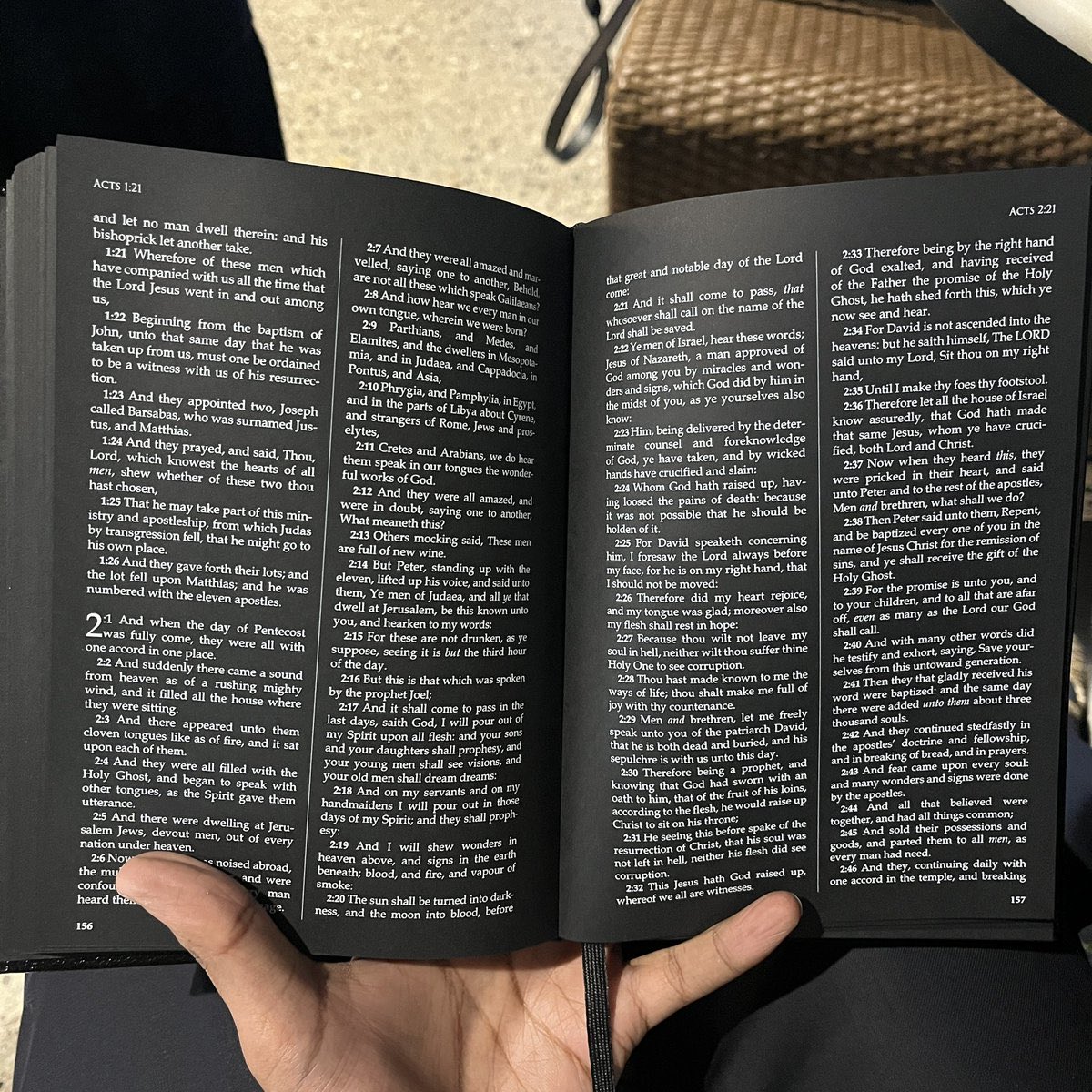
I went back to Luke this morning just to revisit the story of Christmas… and Luke 2:7 hit me like an arrow to the chest:
“She gave birth to her firstborn son. She wrapped him in cloths and laid him in a manger because there was no room for them in the inn.”
We romanticize that line so much that we forget how brutal it actually is. If the gospel narrative is true, then that’s not a cute nativity detail. That is the most explosive statement in human history.
The God who created galaxies entered His own creation… and there was no room for Him.
No royal welcome, no palace, no safety, no honor, not even a bed. He comes into the world He made, and the doors are closed in His face.
This is the single greatest scandal of Christianity: God doesn’t supervise salvation from a throne. He steps into it. He doesn’t arrive in glory. He arrives vulnerable. He doesn’t come intimidating humanity into submission. He comes as a child who can’t even hold His own head up. If you were inventing a religion, this is not the story you’d write.
Luke is quietly showing something staggering about God’s character:
He wins, not by force, but by love.
He saves, not by domination, but by self-giving. He comes close, not as a King demanding space, but as a Savior entering even when there is “no room.”
And that manger isn’t sentimental. It’s confrontational.
It confronts our pride, cos humanity has always had space for power, wealth, celebrity, and status… just never space for God unless He serves our plans.
It confronts our illusions of strength cos God is showing that real power isn’t the ability to crush. Real power is the courage to empty yourself for the sake of others.
It confronts religion, cos God bypassed temples and elites and arrived where animals feed… then announced His coming not to emperors, but to shepherds.
Luke 2:7 tells us who God is.
He is not distant, He is not indifferent, He is not cold sovereignty. He is the God who chooses weakness so He can stand with the weak. He is the God who walks into human pain instead of observing it from afar. He is the God who would rather be rejected with us than reign without us.
If this verse is true, Christianity isn’t just another belief system. It’s a radical claim that the deepest power in the universe is love; not might, not fear, not spectacle.
So yes… this verse broke me today.
Because if this is who God is… then hope isn’t sentimental. Grace isn’t theoretical. And Christmas isn’t “cute.”
It’s God stepping into history quietly…
exposing us gently… and saving us completely. Luke 2:7 isn’t a children’s story. It’s a revolution.
Merry Christmas 🎄❤️
Read books.
Most of the problems people face with money, career, and life are not new. Someone struggled with it, studied it, and wrote the solution down decades ago.
Books compress experience. You get 30 or 40 years of someone else’s lessons in a few hours. That is why reading saves you time, money, and unnecessary mistakes.
If you want better results, borrow better thinking from people who have already been where you are trying to go.
Can you become a billionaire from design?
A few weeks ago, this question started making rounds on X.
A lot of people said no - that it’s not possible to become a billionaire from “just design.”
However, I had a very interesting conversation with The X Effect on this very topic.
As we know, X is one of those unconventional designers who sees possibilities in things most people don’t even look twice at.
So I asked him - what do you think?
He replied affirmatively - You can become a billionaire through design because when you see design as a lifestyle, you can design anything for anyone at any amount. The problem is, most people don’t even understand what design truly is.
And that made me think.
Because when you still see design as something you just do to make ends meet, that’s all it’ll ever be for you.
But when you start to see it as culture, as communication, as something that shapes how people think and even behave - then the possibilities become endless.
It’s not even about doing 1000 projects.
It’s about creating one design project that’s worth a billion - because of the value margin.
I learnt in our conversation that a certain designer was once contracted to brand a whole country.
Just few months ago, someone was appointed as the official designer for The White House.
Another team charged over half a million dollars for a rebrand that most people thought was “just a color change and a dot.”
But that’s the difference between those set of designers and others who think design cannot make you a billionaire.
These understand exactly what their work is worth - and they have the boldness to price it that way.
This is the kind of mindset that separates people who design to survive from people who design to shape the world.
I haven’t hit that mark yet, but I believe it’s possible.
Because design is powerful. It literally shapes how people think - and once you can influence how people think, what can’t you build?
The prayer offered by those who have faith will make the sick person well. The Lord will heal them. If they have sinned, they will be forgiven. - James 5:15
Introducing Ga Maamli - Accra’s own handwriting.
Inspired by the historic handwritten posters found in the vibrant coastal communities of Accra, Ga Maamli is a font that embodies the spirited essence of the Ga people.
Available to download on Google fonts. https://t.co/RSkZufT77Y