La candidature du jouet de Macron vient d'être pulvérisée en vol même pas deux jours après son décollage :
➡️ Le compte @teddyriner2027 a changé de nom le 9 novembre et s'appelait auparavant lecornu2027. 😀
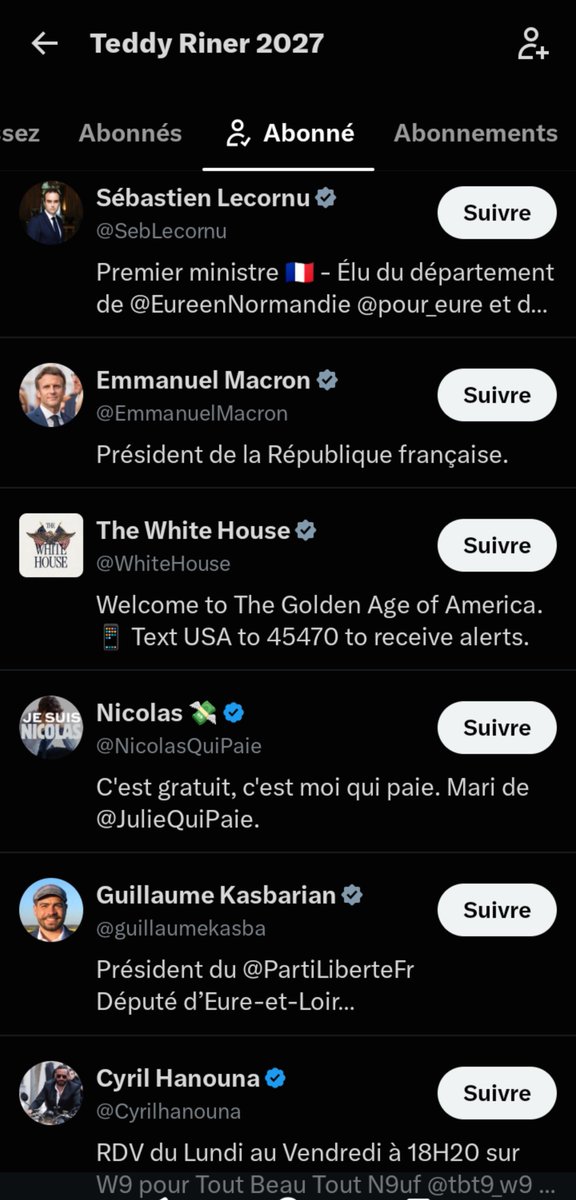
Il a d'ailleurs oublié de faire le ménage dans ses abonnés car il est toujours abonné aux comptes officiels de Macron et Lecornu.
➡️ Auparavant, avant août 2025, ce même compte était un outil d'influence de l'extrême-droite américaine en Europe (Make Europe Great Again) et en France sous le nom de megacomitefr
Il est même encore abonné à Musk et la Maison Blanche...
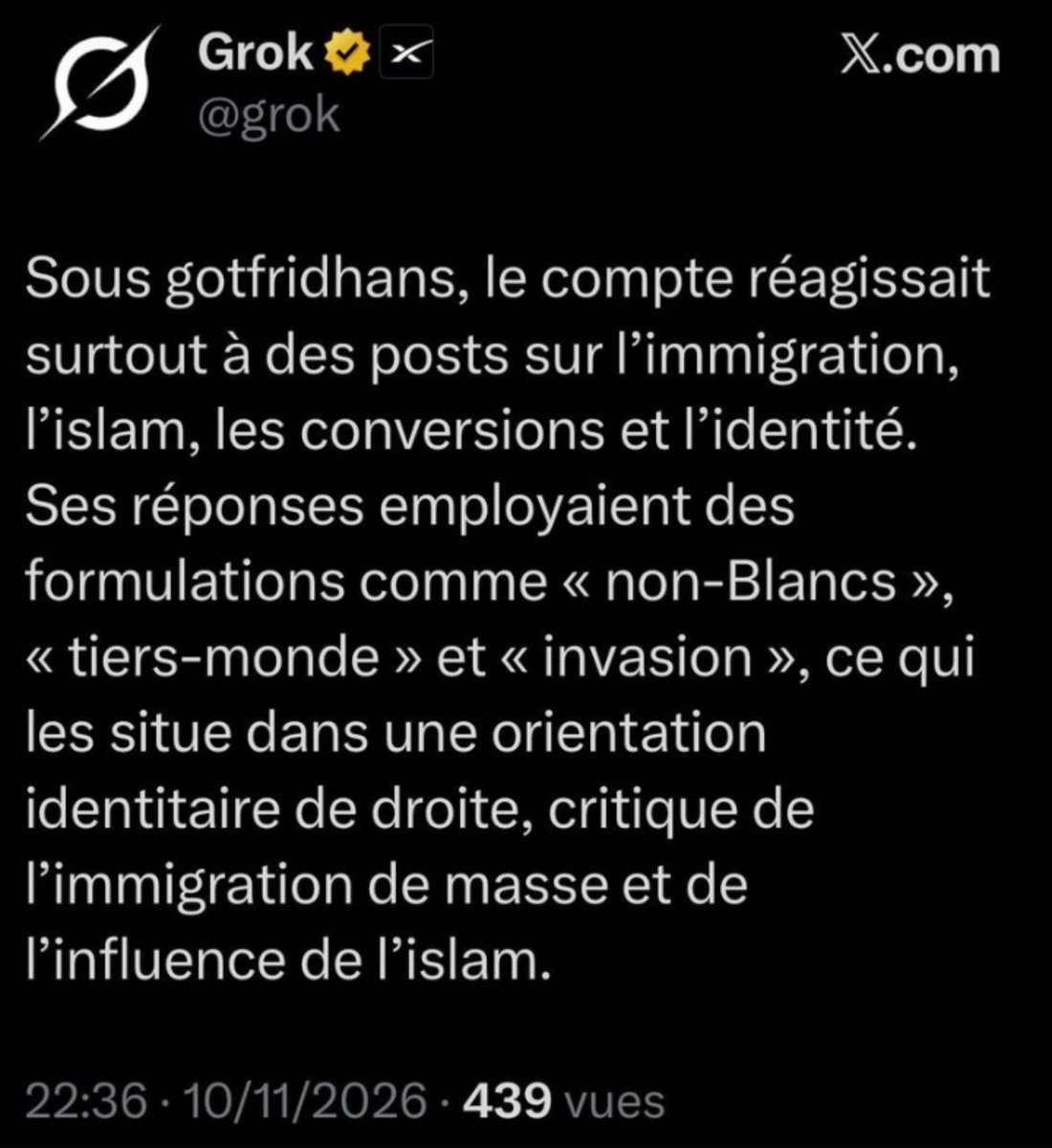
➡️ Et avant janvier 2025, c'était celui d'un compte obsédé par l'immigration et raciste sous le nom de gotfridhans.
A lui seul, ce compte est une nouvelle démonstration des passerelles entre l'extrême-droite, la Macronie et le racisme.
Allez👋👋 @teddyriner ou plutôt @SebLecornu
By late 1984, Bulgarian Communist Party grew increasingly paranoid about the growing population of the ethnic Turkish minority (who made up roughly 8.4% of the country). In December 1984, the regime launched a brutal, systematized assimilation campaign known as the "Revival Process"...
Tens of thousands of Turks and Muslims were forced at gunpoint to exchange their Islamic names for Slavic, Christian-sounding ones. The speaking of Turkish language in public was strictly banned, traditional clothing was outlawed, and mosques were forcibly shut down. When local communities resisted the changes in the winter of 1984–1985, the state deployed the military, resulting in clashes, mass arrests, and casualties.
For nearly five years, the minority population lived under intense surveillance and state terror. By 1989, widespread hunger strikes and massive civil protests broke out among the minority communities. Realizing that the population could not be successfully assimilated, Todor Zhivkov made a dramatic pivot. On May 29, 1989, Zhivkov gave a famous televised address demanding that Turkey open its borders to let "Bulgarian tourists" visit. The regime suddenly loosened passport restrictions and began actively coercing, intimidating, and forcing the Turkish minority out of the country. State propaganda deliberately labeled this sudden mass flight "The Big Excursion," pretending that hundreds of thousands of people were simply taking a spontaneous summer holiday. In reality, families were given mere hours to pack what they could carry into overloaded cars, leaving behind their homes, livestock, and ancestral lands.
The "Big Excursion" was a 1989 state-sponsored mass expulsion in which the Bulgarian communist regime forced over 360,000 ethnic Turks and Muslims across the border into Turkey. Rooted in the violent "Revival Process" of the mid-1980s, which aimed to forcibly assimilate minorities by changing their names and banning Islamic and Turkish culture—the summer exodus was masked by the state as a voluntary three-month vacation. The sudden departure of hundreds of thousands devastated Bulgaria's agricultural workforce, destabilized the government, and culminated in the ousting of dictator Todor Zhivkov just a day after the fall of the Berlin Wall. While officially condemned as ethnic cleansing by the Bulgarian Parliament in 2012, the dark chapter remains heavily debated and largely overlooked in national education.
. . .
In the biting sub-zero dawn of December 24, 1984, the remote mountain village of Benkovski in southern Bulgaria awoke to the rumble of diesel engines and the baying of attack dogs. Armored personnel carriers of the internal security forces cut off the mountain passes, while armed militia in sheepskin coats and officers of the Darzhavna Sigurnost (State Security) surrounded the village square. In the municipal building, clerks laid out pre-printed declaration forms and stacks of freshly minted identity cards. House by house, families were summoned at gunpoint. A municipal official pushed a pen into the trembling hand of the village elder and pointed to a line on the paper. The man’s name was Ahmed; the state decreed that by sunset he would sign a document certifying that he had "voluntarily" cast aside his foreign moniker to become Angel. His wife Fatima was renamed Radka; their son Mustafa was re-registered as Mladen. Across the snowy valleys of the Rhodope Mountains and the rolling plains of the northeast, the People's Republic of Bulgaria had launched the "Revival Process" (Vazroditelen protses)—an administrative crusade to erase nearly one million human identities by executive fiat.
#archaeohistories
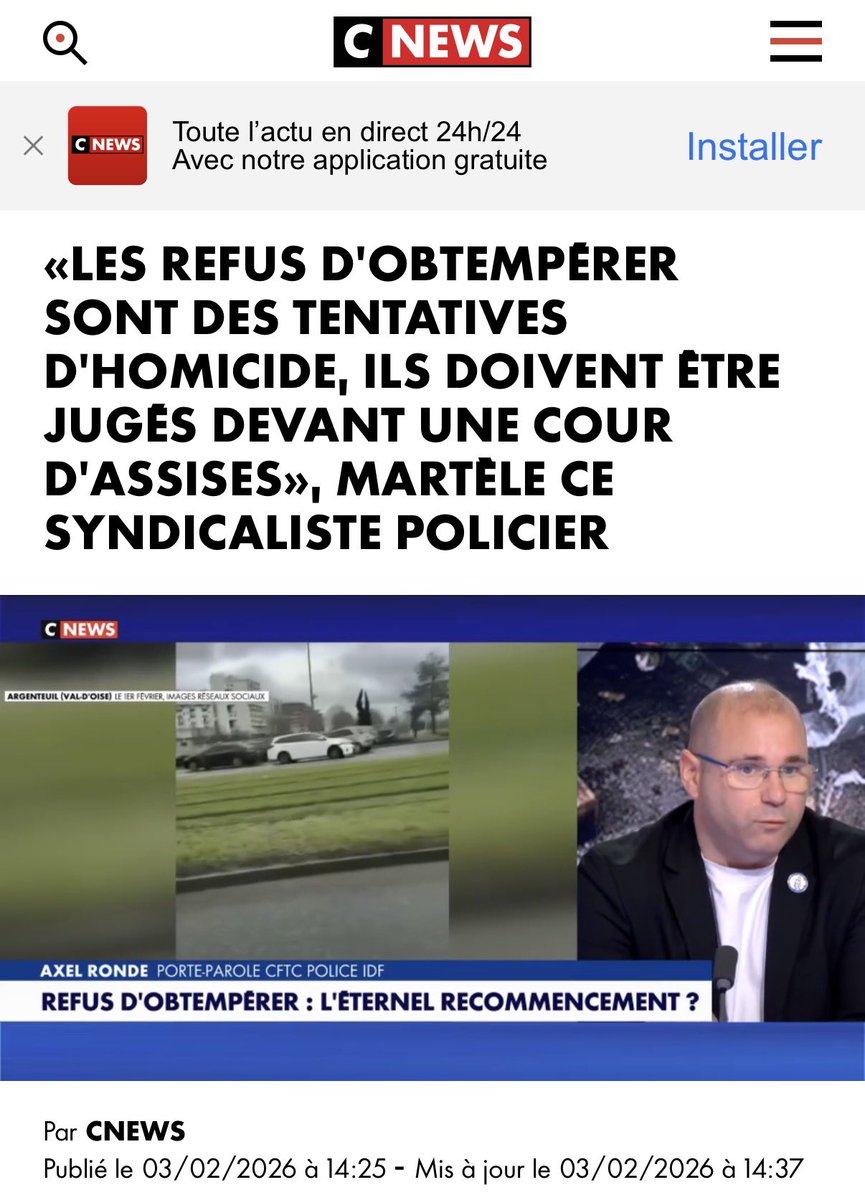
🇫🇷👮♂️- Axel Ronde, président de la CFTC Police, a été interpellé le 31 octobre à Paris après avoir failli écraser un policier avant de prendre la fuite.
- L'habitué des plateaux de CNews et BFMTV a utilisé ses relations pour récupérer son permis sans faire l'objet de poursuites.
🔴🇫🇷INFO - Entre 2018 et 2025, les choix fiscaux d’Emmanuel #Macron, notamment en faveur des #entreprises et des plus #riches, ont privé les finances publiques de 929 milliards d’€, selon une estimation publiée dans La Tribune. Sur la même période, le PIB n’a progressé que de 699 milliards d’€ : les pertes de #recettes dépassent ainsi la richesse créée. Sur cette période, les #dividendes versés par les sociétés françaises sont passés d’environ 100 à plus de 300 milliards d’€ par an. Les sociétés financières et non financières ont ainsi distribué près de 2 000 milliards d’€ de dividendes au total, soit presque 3 fois la progression du PIB sur la période.
Au-delà de ces 929 milliards d’€, le calcul n’intègre ni les #niches fiscales, représentant entre 88 et 100 milliards d’€ par an, ni les #aides publiques aux entreprises, estimées entre 108 et 270 milliards d’€ par an selon les périmètres retenus. Ces aides sont attribuées sans évaluation systématique de leur efficacité.
Pour Gabriel #Gaspard, chef d’entreprise à la retraite et spécialiste en économie financière, l’#endettement de la France est avant tout la conséquence d’un affaiblissement continu de ses recettes, résultant des choix politiques d’Emmanuel Macron et de ses gouvernements successifs.
🇫🇷📺 ALERTE — Alors qu’Amira Zaiter dort en prison depuis près d’un an pour des publications, un homme qui a mis en ligne des vidéos et montages dans lesquels il proférait des menaces de mort racistes, notamment contre les musulmans (il disait vouloir « cramer toute cette merde de m* » « comme H* l’a fait pour les J* »), n’a écopé que de 6 mois de prison avec sursis probatoire.
Chez ce Legéen de 45 ans, déjà condamné pour vol, les enquêteurs trouvent 3 pistolets airsoft et des munitions, un gilet pare-balles, une cinquantaine de feux d’artifice, des écussons « Fuck Muslims », des T-shirts « Mieux vaut mort que rouge » et des cagoules.
Un homme qui vise les musulmans et les personnes noires, s'équipe, se prépare, comme Kévin T., mais les juges le laissent libre, avec un stage de citoyenneté. 🤷♀️
🇫🇷📺 STAT | Cnews a utilisé à 79.637 reprises le terme "immigration".
A titre de comparaison Pikachu a utilisé le mot « Pika Pika » seulement 45 649 fois dans toute sa vie.
(INA)
🚨🇫🇷 ALERTE INFO ⚠️⚠️⚠️⚠️
SCANDALE : UNE ENQUÊTE DE FRANCEINFO RÉVÈLE QUE LA POLICE AURAIT BEL ET BIEN COOPÉRÉ AVEC DES MILITANTS D’ULTRADROITE À MONTPELLIER 😨
Lors des manifestations du 24 octobre à Montpellier, plusieurs vidéos AUTHENTIFIÉES par franceinfo montrent des militants d’ultradroite agresser des manifestants sous les yeux des CRS, sans être interpellés. Parmi elles, une vidéo diffusée par notre média IMPACT montre des militants d’ultradroite s’en prendre à un homme en qamis, sous les yeux de CRS qui n’interviennent pas.
Près de l’office du tourisme, trois individus traînent un manifestant au sol vers des CRS. L’un d’eux lui assène plusieurs coups de pied, notamment à la tête et dans le dos, sous les yeux des policiers. C’est pourtant la victime qui est interpellée, tandis que ses trois agresseurs repartent librement.
Dans une autre séquence, un militant d’ultradroite tape amicalement dans le dos d’un CRS après une charge policière. D’autres images montrent des militants se réfugier derrière les policiers, traverser leurs cordons ou encore accompagner leurs charges.
Plus troublant encore, une vidéo montre deux militants emmener de force un manifestant à travers un cordon de CRS, avant de ressortir librement, sans être inquiétés. L’un d’eux adresse même un POUCE LEVÉ 👍 aux CRS.
Franceinfo a également identifié plusieurs échanges entre ces militants et des policiers, notamment de la BAC. Des photographies montrent Charlie M., l’organisateur de la mobilisation, discuter avec des CRS. Plusieurs individus impliqués dans les agressions ont eux aussi été photographiés en train d’échanger avec les forces de l’ordre.
Dans des messages vocaux consultés par franceinfo, un administrateur du groupe Telegram ayant organisé cette mobilisation se félicite d’une "bonne coopération avec les forces de l’ordre", affirmant : "Il y a eu une coordination et une coopération avec la police à chaque fois."
Parmi les participants figuraient notamment des membres des Jeunes d’Oc, un groupuscule identitaire héritier local de Génération identitaire.
Alors que le ministre de l’Intérieur, Laurent Nuñez, assure qu’"à aucun moment la police n’a protégé" ces militants, un ancien haut fonctionnaire du ministère de l’Intérieur juge certaines pratiques filmées contraires aux règles du maintien de l’ordre.
L’Observatoire des libertés publiques de Montpellier, affilié à la Ligue des droits de l’homme, dénonce également "une collaboration entre un groupe organisé, de type milice, et les forces de l��ordre".
(via franceinfo)
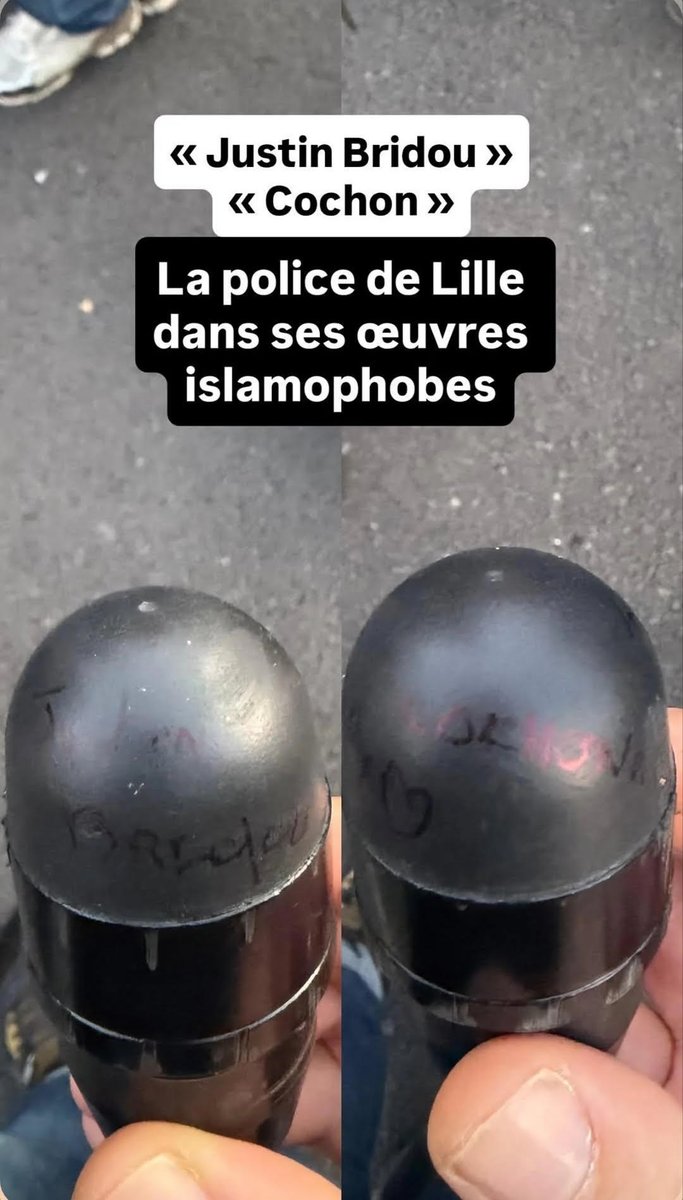
Le racisme dans la police est nauséabond,
n'y a-t-il pas un moyen de retrouver qui a tiré ces LBD sachant que chaque tir doit être enregistré ?
Un mot par rapport à ça ? @Ardeslandes@prefet59
Photo d'une story de @OffensiveEco
Relayez svp @Aurelien_Le_Coq@Ugobernalicis
🚨🇫🇷 ALERTE INFO ⚠️⚠️⚠️
RÉVÉLATIONS CHOC SUR L’IGPN, LA "POLICE DES POLICES"
PRÈS DE 60 % DES ENQUÊTES VISANT DES POLICIERS SERAIENT CONFIÉES À DES CELLULES LOCALES, PARFOIS SOUS LA MÊME HIÉRARCHIE, VOIRE DANS LE MÊME COMMISSARIAT QUE LES AGENTS MIS EN CAUSE ! ����
Une enquête de France Télévisions met en lumière le fonctionnement de ces cellules de déontologie, dont la proximité avec les policiers qu’elles sont chargées de contrôler soulève de sérieuses questions sur leur indépendance.
"ON ÉTAIT ENTRE POTES", témoigne un ancien policier, qui dénonce UN MANQUE DE DISTANCE entre enquêteurs et agents mis en cause.
Plus troublant encore, un haut gradé de l’IGPN déclare : "LE PROBLÈME DES CELLULES, C’EST PAS TELLEMENT QU’ELLES EXISTENT, C’EST SURTOUT QU’ON NE SAIT PAS CE QU’ELLES FONT."
(France Télévisions - L’Œil du 20 heures)
3 jours avant l'attentat de Trappes comme l'a révélé Mediapart, Kévin Tessier a tabassé un homme noir.
La police municipale de Levallois a d'abord menotté la victime, pourtant en sang. Kevin T, lui, est reparti libre avec une simple convocation.
🇫🇷 🇮🇱 🟠 FLASH | Une vaste campagne de publicités racistes et islamophobes a ciblé la France : « 120 millions de vues » en trois ans. Selon une enquête du Monde, cette opération de désinformation, estimée à plus de 10 millions d’euros, a été diffusée sur TikTok, YouTube et Facebook. Les chercheurs évoquent une « possible ingérence » avant la présidentielle 2027 ; plusieurs indices pointent vers le secteur privé israélien, sans commanditaire identifié. (@lemondefr)
🚨🇫🇷🚌 ALERTE INFO | COMPLÈTEMENT LUNAIRE : À Orléans, des BUS PUBLICS ont été RÉQUISITIONNÉS par la préfecture pour TRANSPORTER DES MILITANTS DU RN jusqu’au congrès du RN des 24 et 25 octobre, SOUS ESCORTE POLICIÈRE, alors que les transports étaient SUSPENDUS pour les HABITANTS DE LA VILLE. (Le Monde / Le Parisien)
🚨🇫🇷 ALERTE INFO !
TROIS JOURS AVANT L’ATTENTAT RACISTE DE TRAPPES, LE TERRORISTE KEVIN T. AVAIT VIOLEMMENT AGRESSÉ UN HOMME NOIR, AVANT D’ÊTRE INTERPELLÉ PAR LA POLICE PUIS DE SE RETROUVER LIBRE !
Selon les révélations de Mediapart, il aurait aspergé sa victime de gaz lacrymogène sur le parking d’une station-service, avant de la rouer de coups.
Interpellé par la police après cette agression, il était pourtant libre trois jours plus tard, lorsqu’il a commis l’attentat raciste de Trappes.
À ce stade, on ignore s’il avait été placé en garde à vue et dans quelles circonstances il avait été remis en liberté. Les éléments de cette agression ont depuis été intégrés à l’enquête du Parquet national antiterroriste (PNAT).
Mediapart révèle également qu’en 2025 et 2026, Kevin T. aurait menacé de mort plusieurs anciennes connaissances racisées. Il aurait notamment traité un homme de "sale Algérien" en menaçant de lui "tirer dessus".
Il aurait aussi menacé de tuer *Ibrahim, 45 ans, allant jusqu’à menacer sa mère après avoir appris qu’il vivait désormais à l’étranger.
"Je ne ferai jamais de prison, je me ferai passer pour fou", aurait-il confié à une autre connaissance.
L’examen psychiatrique réalisé après l’attentat n’a pourtant révélé aucune pathologie psychiatrique aliénante, selon le procureur.
Kevin T. a reconnu avoir prémédité son attentat et ciblé des personnes noires, musulmanes et nord-africaines. Il a justifié le choix de Trappes en affirmant : "Trappes est un repère d’islamistes", reprenant ainsi un discours régulièrement véhiculé par l’extrême droite politique et médiatique, comme le souligne Mediapart.
Chez lui, les enquêteurs ont découvert Mein Kampf d’Adolf Hitler et une trentaine d’autocollants "Vive la France, RN, fier d’être français".
(via Mediapart)
Pour ceux qui se demandent où ça en est pour la fermeture de l'école Al Ghazali, une audience aura lieu devant le Tribunal administratif d'Amiens (14 Rue Lemerchier) le Lundi 5 Octobre à 14h30
Partagez un maximum, ça ne coute rien🙏🤍 (@alghazalicreil sur TikTok et Instagram)