Why the Street missed the size:
Swaps let Archegos build economic exposure without owning the shares — so classic ownership disclosure often never fired.
Static bullet margins didn’t keep pace with appreciation.
CS risk systems did flag the client: PE and stress-scenario limit breaches persisted for months; CPOC discussed Archegos in Sep 2020 and again 8 Mar 2021 — yet remediation lagged, and in mid-March CS still paid Archegos $2.4 billion of called excess variation margin (CS report).
Later, the SEC alleged Archegos grew from ~$1.5B value / $10B exposure (Mar 2020) to >$36B value / ~$160B exposure at peak (Mar 2021), and that counterparties were misled on concentration and liquidity (SEC PR 2022-70). The CFTC separately alleged swap counterparties lost over $10 billion.
The blow-up was a risk-management failure and (as alleged) a deception story.
March 2021.
A single family office, Archegos Capital Management, defaulted on its prime brokers.
Within days, banks were dumping the stocks that hedged its swaps.
Credit Suisse alone would book about $5.5 billion in losses (CS Special Committee / Paul, Weiss report).
No public stock filing had shown the full size of the book.
The leverage lived in total return swaps.
Who ate the losses — and who didn’t:
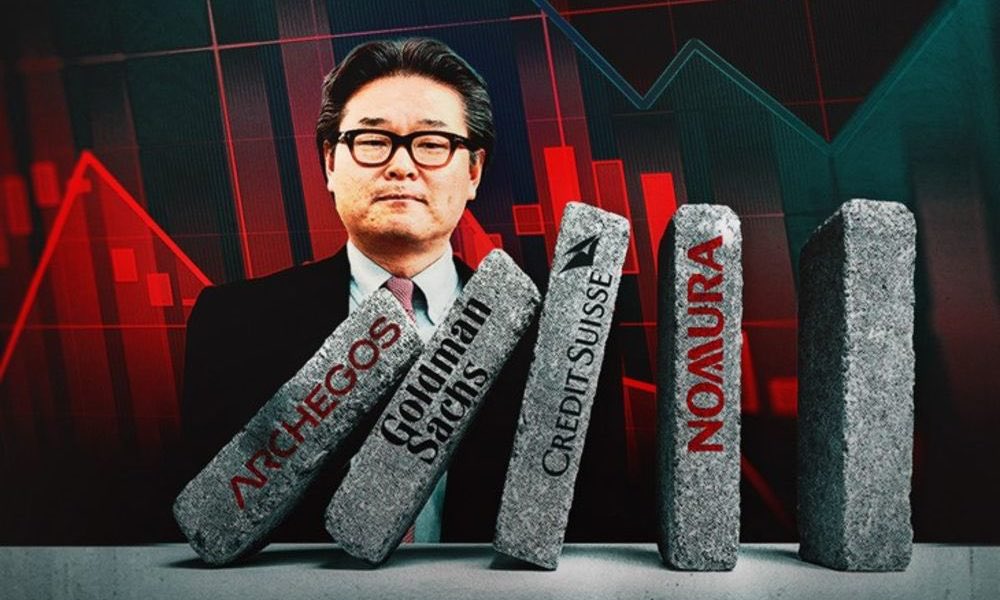
Credit Suisse: ~$5.5 billion after a slower unwind (Paul, Weiss / CS Board Special Committee).
Nomura: on 29 Mar 2021 flagged a possible ~$2 billion claim at a U.S. subsidiary based on 26 Mar prices (Nomura Holdings announcement) — later raised as the book was closed.
Faster exits at other primes (notably Goldman and Morgan Stanley in contemporaneous reporting) limited their damage. The race wasn’t about being “right on the stock.” It was about who liquidated first when the same names were hedged across the Street.
The unwind week:
• 22 Mar 2021 — ViacomCBS, Archegos’s largest CS position, fell 6.7% and kept dropping
• 24 Mar — Tencent Music plunged ~20%; CS prepared a ~$2.7 billion variation-margin call
• 25 Mar — CS issued margin calls totaling over $2.8 billion; Archegos said cash was exhausted
• That evening, on a multi-broker call, Archegos said it had ~$120 billion in gross exposure and only $9–10 billion in remaining equity (CS report)
• Brokers refused a standstill
• 26 Mar — CS delivered an Event of Default and began liquidating
A family office asking for patience while holding eight-figure notional concentration is already too late.
The machine was synthetic leverage.
Archegos favored long-tenor “bullet” total return swaps — often ~24 months, no periodic reset — so static initial margin (set in dollars at inception) eroded as prices rose and effective leverage climbed (CS report).
In 2019, Credit Suisse cut Archegos’s standard swap margin to 7.5% (from a prior ~15–25% average) after Archegos said rivals offered cheaper terms.
By 1 Sep 2020, Archegos’s holdings at CS had ballooned to $9.5 billion — and average swap margin was just ~5.9% (CS report).
Low margin + rising prices + concentration = a one-way risk spiral.
Who was Archegos?
Sung Kook “Bill” Hwang — a Tiger Management alum — ran Tiger Asia, then settled SEC insider-trading charges and pled guilty to wire fraud in 2012. Outside capital was returned. The firm rebranded as Archegos, a family office with roughly $500 million in assets (CS report).
Family offices get lighter disclosure than hedge funds.
That opacity became the product: banks financed concentrated equity exposure without the market seeing a Schedule 13D-style footprint on the swaps.
FinTalk Daily 🤑📈
1/ Bank Runs in the Digital Age: How Silicon Valley Bank Shocked the World
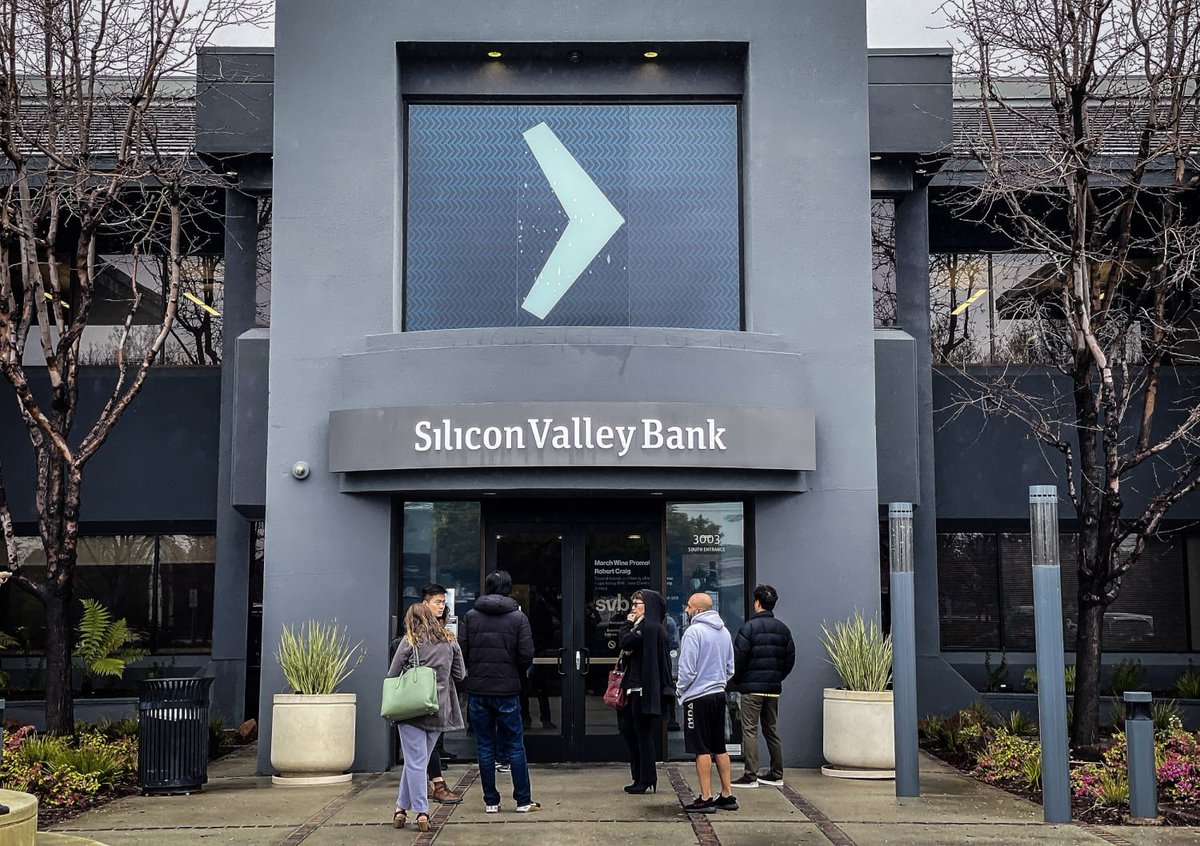
👉 In March 2023, Silicon Valley Bank (SVB) collapsed in just 48 hours. It wasn’t just a bank run—it was a digital stampede.
🔴 Key Lesson: Speed of information in the digital age can destabilize even "safe" institutions.
6/ Why it matters
👉 Even with safeguards, financial systems are fragile. Social media and tech amplify both opportunities and risks.
🔴 Bottom Line: Financial stability requires adaptation to the speed of modern communication and digital finance.
3/ The Spark
👉 March 8: SVB announced they needed to raise $2.25 billion to cover the shortfall.
👉 Word spread fast—startups and VCs got nervous.
👉 Founders' group chats and social media lit up with one message: “Get your money out. Now.”
2/ The Warning Signs
👉 SVB invested heavily in long-term bonds during low-interest times.
👉 But in 2022, the Fed started hiking rates, and those bonds lost value.
👉 By early 2023, SVB needed cash, fast. They sold $21 billion in securities at a $1.8 billion loss.