Avoid these 5 investing mistakes :
1. Lack of Diversification: Avoid putting all your eggs in one basket; spread investments across various asset classes.
2. Ignoring Fees: Be mindful of investment fees and costs, as they can significantly reduce overall returns.
How to be more Lucky?
Increase your luck surface area.
Be more visible.
Put yourself out there.
Don't be afraid to put your work on display.
You never know who's watching.
India's Mutual Fund Industry
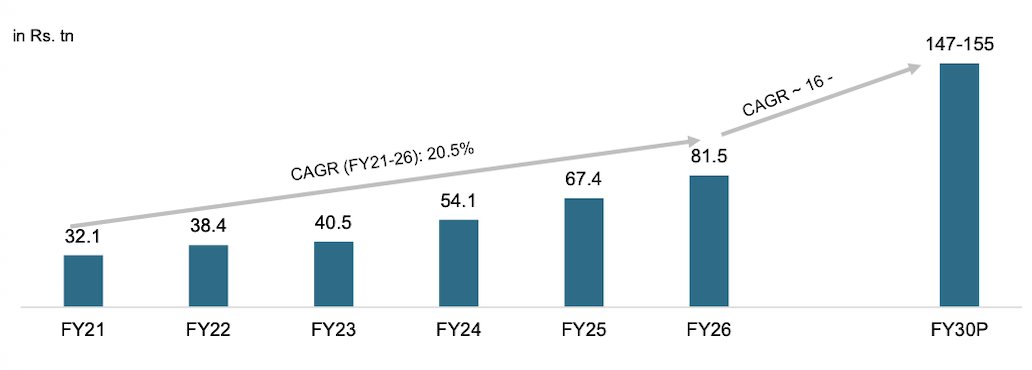
AUM (QAAUM) compounded at 20.5% over FY21-FY26 to reach Rs 81.5 lakh crore, and is projected to grow at 16-18% CAGR to Rs 147-155 lakh crore by FY30.
The penetration still has legs:
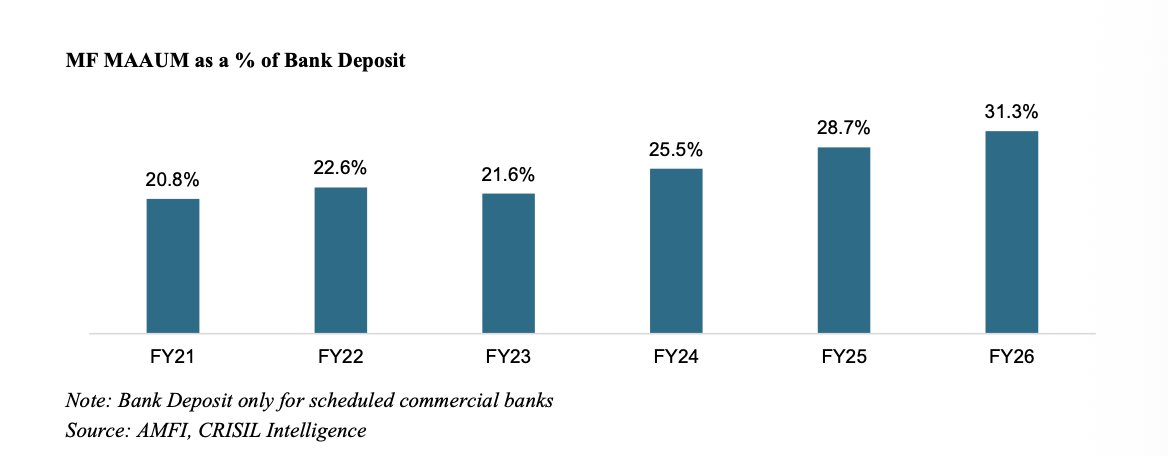
→ vs bank deposits: MF assets are just 31.3% of bank deposits (FY26), up from 20.8% in FY21.
→ vs GDP: MF AUM to GDP rose from 16.2% (Mar-21) to 23.2% (Mar-26). US sits at 126%, Canada 87%, France 85%. India at 18.5% (Q1CY25 basis) ranks near the very bottom.
→ Retail + HNI investors now hold 60.1% of industry AUM (up from 53.9% in FY21), and monthly SIP flows hit Rs 3,495.8 bn in FY26. This is household savings steadily financializing.
Source : SBI Funds RHP
Fluorochemicals Market Overview
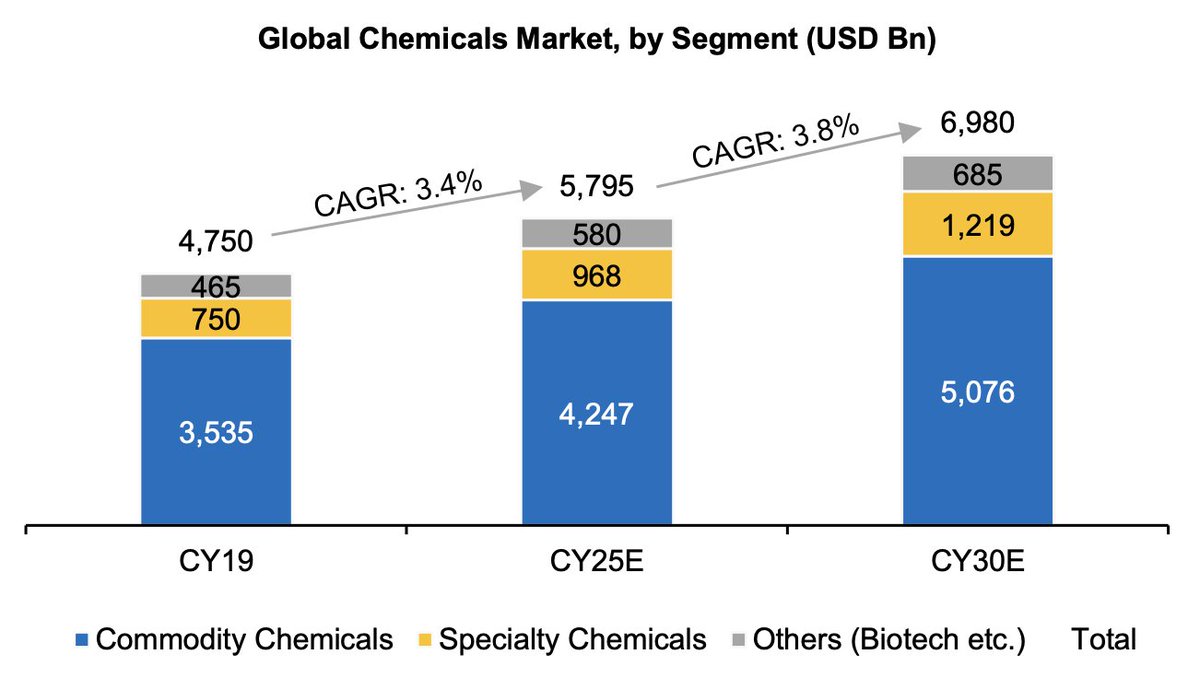
→ Within global chemicals (3.8% CAGR), specialty chemicals grow fastest at 4.7% CAGR to CY30
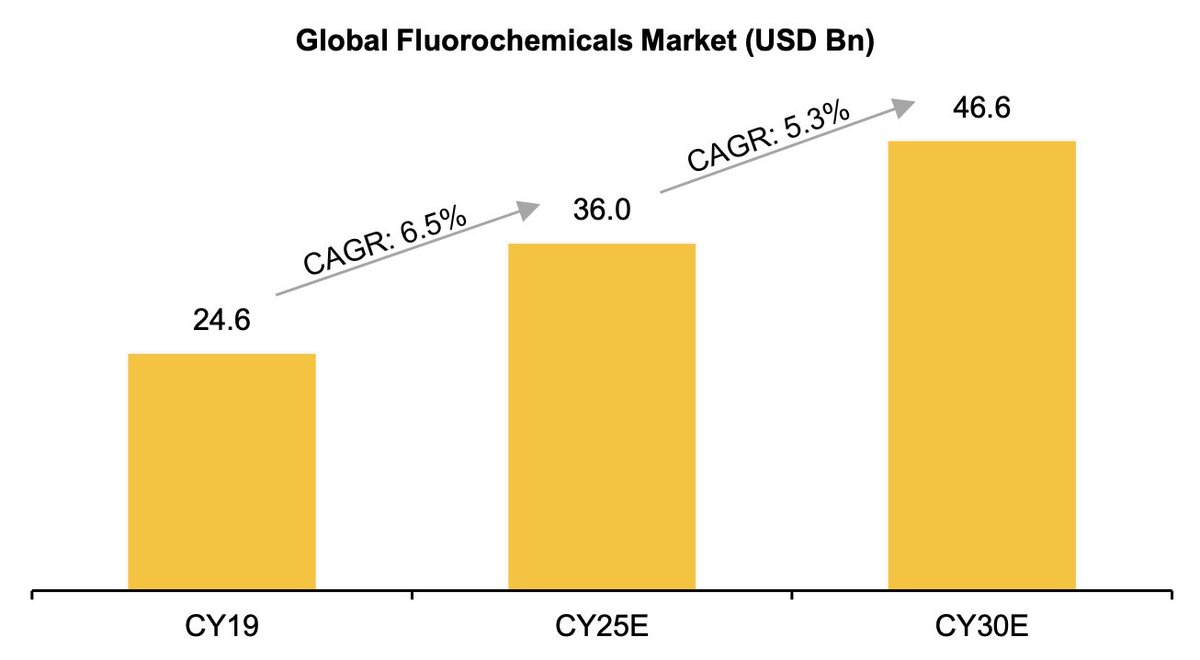
→ Global fluorochemicals grow at 5-6% to reach USD 46.6bn by CY30
India is the standout inside that -
→ India's fluorochemicals market grows at 7-8% CAGR, faster than the world, from USD 1.15bn (FY19) to USD 2.8bn (FY31E)
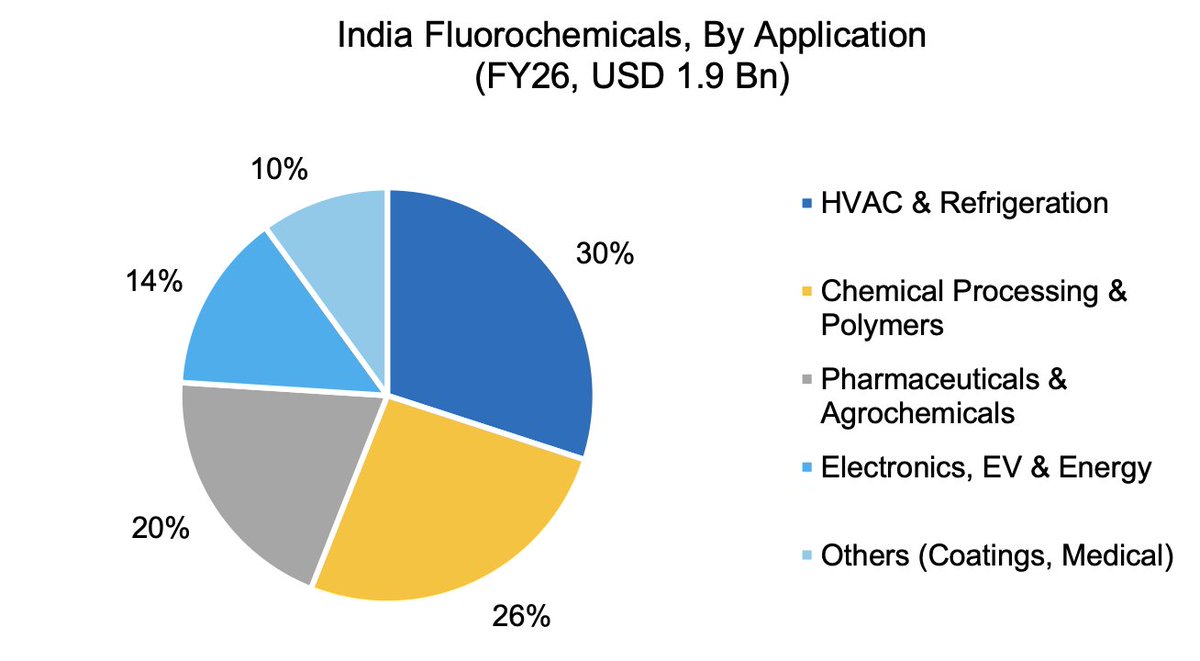
→ The single largest application is HVAC & refrigeration at ~30%
→ Chemical processing & polymers (26%) and pharma & agrochemicals (20%)
Refrigerants remain the largest volume segment in fluorochemicals, but value growth is increasingly coming from fluoropolymers, energy storage fluorides, and specialty intermediates for pharma and agro.
India's fluorochemicals demand is compounding faster than the global market, and cooling (R-32) is the biggest single driver of it.
Source - Choice International
What India actually drinks
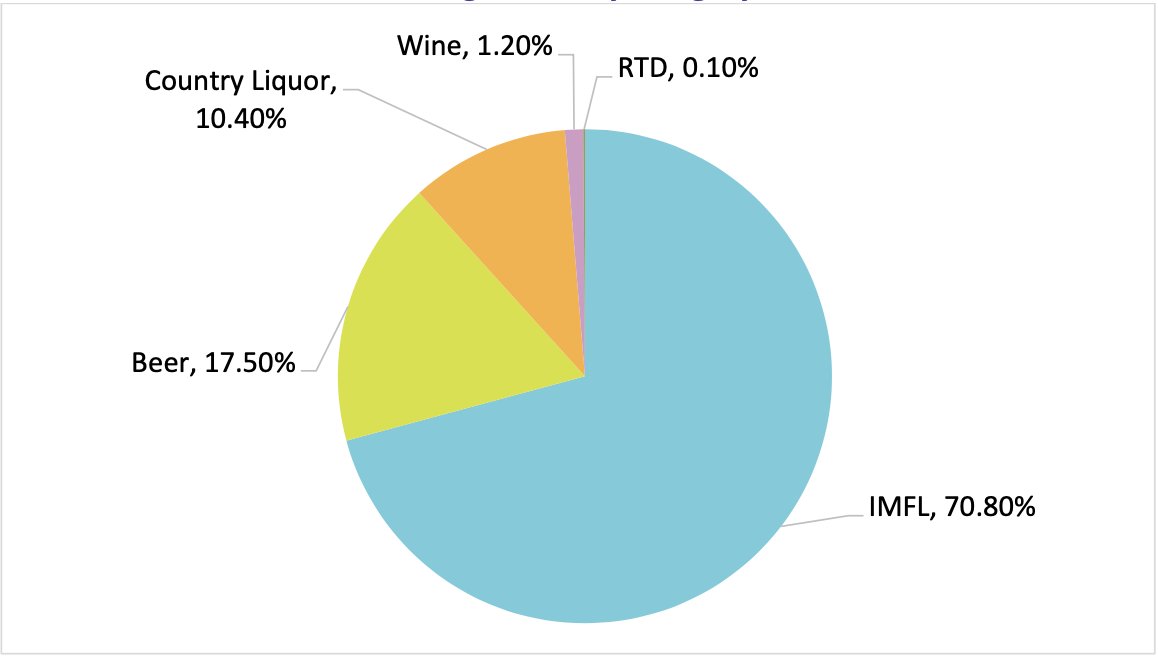
India is structurally a spirits country. Spirits are 83% of alco-bev value (INR 2,664bn in FY24).
IMFL alone owns 70.8% of the market. By volume, spirits are 66% of cases.
The category map (by value):
→ IMFL: 70.8%
→ Beer: 17.5%
→ Country liquor: 10.4%
→ Wine: 1.2%
→ RTD: 0.1%
But the interesting part is what's moving:
→ Trading up. Consumers are shifting from country liquor to mass-market IMFL as incomes and availability rise.
→ Beer and wine gaining slowly. Undistilled share of value climbs from 18% (FY24) to 21% (FY30E).
→ Flavoured spirits catching on. Flavoured vodka, gin, rum and brandy are gaining traction with younger, urban drinkers.
And zooming inside IMFL, India is a whiskey nation: whiskey is 70.1% of IMFL value, with brandy (11.1%), rum (10%) and vodka (7.3%) splitting most of the rest.
Source : Nuvama
India's mutual fund industry isn't just growing, its product mix is reshaping AMC economics.
Two categories have gained ground over five years (share of QAAUM):
→ Equity: 31.4% (FY21) → 43.7% (FY26)
→ Passive: 9.5% (FY21) → 17.8% (FY26)
Debt fell from 34.6% to 15.5%.
Why this matters for AMCs: it's a barbell.
→ Equity is the high fee, actively managed, most profitable category. A rising equity share lifts blended yields.
→ Passive is the opposite, ultra low fee. Its rise pulls yields the other way.
So the industry is simultaneously growing its most profitable and least profitable products, while the mid-margin middle shrinks.
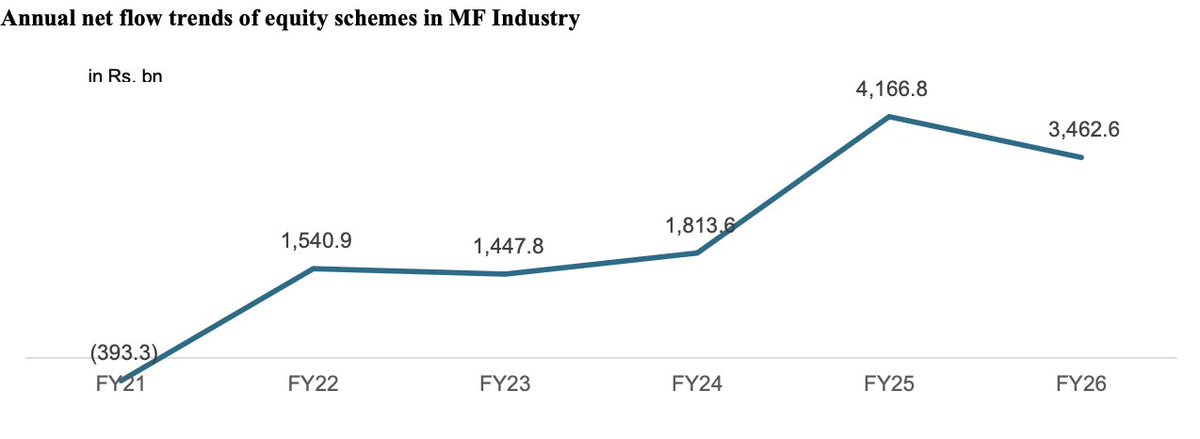
And the shift is demand-led, not just a market rally. Equity net inflows:
→ FY21: -393.3 bn (outflows)
→ FY25: 4,166.8 bn (peak)
→ FY26: 3,462.6 bn
Source : SBI Funds RHP
India's healthcare delivery market
Growth Drivers :
→ Demographics. The 60+ population rises from 10.5% (CY23) to 12.6% (CY30), and 40-59 year-olds from 22.1% to 24.4%. An older population means more chronic and geriatric care, the highest value, most recurring demand there is.
→ Health insurance penetration went from 35% (FY19) to 41% (FY25), heading to 41-45% by FY26. Covered lives rose from 288mn (FY15) to 573mn (FY24). As insured volumes grow, out of pocket expense falls and elective procedures rise. Pricing power shifts toward insurers as hospitals lean on bulk contracts.
→ Rising incomes and awareness. The share of households in the Rs 1.5-2 lakh income bracket rose to 40% by FY24, expanding the base that can afford quality care, alongside a preventive health shift among the young.
→ Medical tourism. India is the cheapest across every major procedure (a US heart bypass costs ~28x the India price). Though tourist inflows dipped to 0.50mn in CY25 on geopolitical headwinds, the structural cost edge is intact.
→ Government Policy. PMJAY expanding coverage, plus ABDM / ABHA digital health IDs building the infrastructure layer.
Challenges :
→ Poor physical infrastructure. India runs just 16 hospital beds per 10,000 people. Roughly half the world average.
→ Shortage of experienced specialists. Capacity is not just beds, it is the trained doctors to staff them.
→ Government price capping on medical equipment and devices, which compresses hospital margins on high value lines.
→ Outstanding receivables. Ironically a by product of the insurance boom, as more insured and scheme-based patients means slower cashflows and stretched working capital.
→ Healthcare financing and affordability gaps for lower income groups.
Source - Manipal Hospitals RHP
"Silver isn’t “cheap” in absolute terms, but relative to gold and considering its tight demand- supply setup, it still looks interesting.
Using a normalised Gold:Silver ratio of 60:1, silver’s fair value sits between $53 and $75 - well above the current price of around $33."
More than your salary. More than the size of your house. More than the prestige of your job. Control over doing what you want, when you want to, with the people you want to, is the broadest lifestyle variable that makes people happy.
– Morgan Housel
It’s good to be optimistic in the general and skeptical in the specific. It’s very dangerous to be pessimistic in the general and optimistic in the specific.
– Naval
It’s good to be optimistic in the general and skeptical in the specific. It’s very dangerous to be pessimistic in the general and optimistic in the specific.
– Naval
5. Focus on Control: Concentrate on what you can influence.
6. Be Patient: Value long-term thinking and wait for the right opportunities.
7. Live with Integrity: Uphold honesty and ethics for lasting success.
1. Think Broadly: Learn from multiple disciplines to make better decisions.
2. Be Rational: Avoid emotional biases; think critically.
3. Avoid Self-Pity: Take responsibility for your actions.
4. Learn from Mistakes: Use errors as lessons for the future.
Doing well with money isn’t necessarily about what you know. It’s about how you behave. And behaviour is hard to teach, even to really smart people.
– Morgan Housel
Conclusion
"100 Baggers" teaches us that finding the ultimate stock is not just about analysis but also about having the right mindset. It's a journey of discovery, patience, and belief in the power of compounding. Ready to start your quest for the next 100 bagger?
What Makes a 100 Bagger?
Christopher Mayer breaks down the quest for stocks that offer astronomical returns into actionable strategies."100 Baggers" isn't just a book; it's a roadmap to understanding how patience, and a bit of luck can lead to unparalleled wealth creation.
Lesson 5 : The Investor's Mindset
Perhaps the most crucial lesson is about the investor's mindset. Embrace volatility,ignore the noise, and focus on the long-term potential.The path to finding a 100 bagger is fraught with ups and downs; resilience and vision are your best allies