Wishing you and your family a #MerryChristmas 🎄🥳🎊
May the warmth of the season wrap you in love & may the coming year unfold with moments of happiness and fulfillment🤗
Here's to a beautiful journey ahead, surrounded by the love of family and God's grace🌟
#HappyHolidays
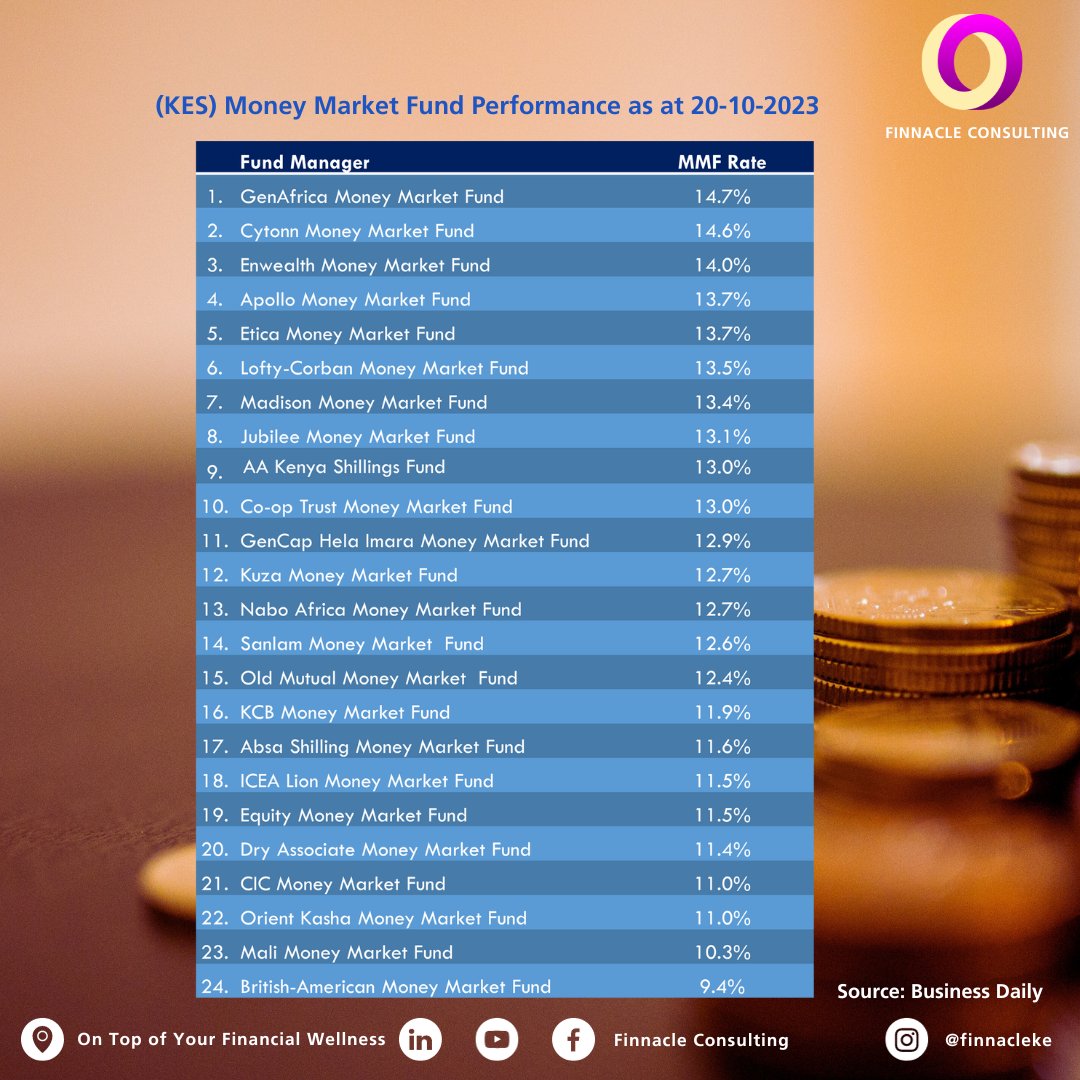
Money Market Fund (MMF) yields are on the rise due to the continued rise in returns from government securities. Currently, the average rate for the published MMFs (on Business Daily) is 12.48%
What return are you getting from your MMF? Does it reflect the published performance?
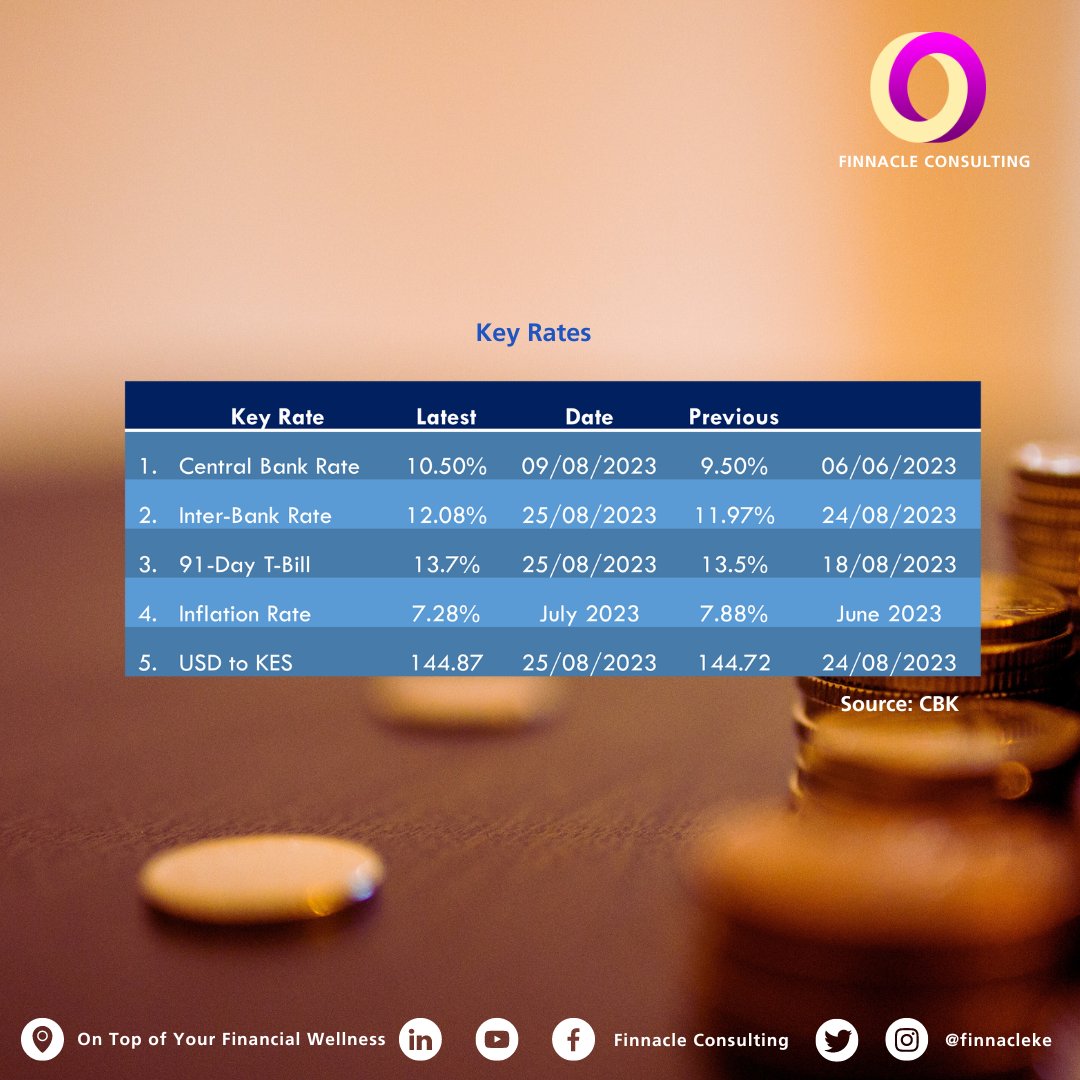
👉Liquidity reduced in the money markets, increasing the interbank rate from 11.97% t0 12.08% at the close of the week
📌Meanwhile, the shilling continues to face pressure from the US Dollar due to the high dollar demand arising from imports and servicing the government debt.
🎯The effects of the high CBK continue to be felt as higher cost of loans for individuals continue to bite. Banks have been raising their loan interest rates to reflect the current CBK rate.
🎯Yields on Treasury Bills have increased to 13.7% for the 91-Day T-Bill, 13.5% for the 182-Day T-Bill, and 14.0% for the 364-Day T-Bill from 13.5%, 13.3%, and 13.7% respectively.
📌Money Market Fund (MMF) yields continue to rise due to the increase in returns from government securities -Treasury Bills & Treasury Bonds- as investors continue to demand better returns given the concerns over debt sustainability.
👉Bad debt, on the other hand, involves borrowing for things that don't offer a lasting financial benefit or could potentially put you in a worse financial position, like borrowing to buy luxury items.
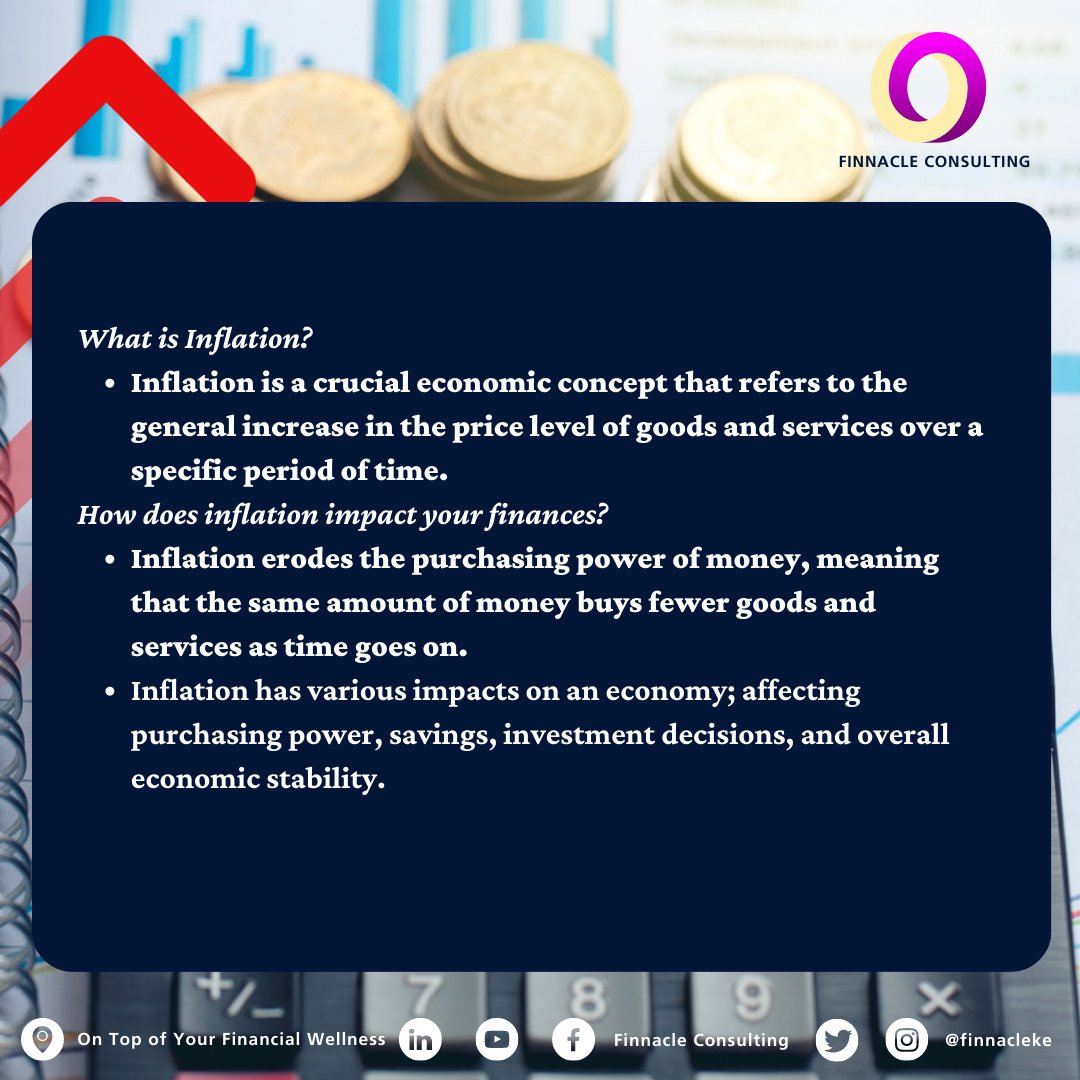
@BhagavanDas10 No, the effects of inflation are not felt instantly by the specific inflation rate percentage. Inflation affects the time value of money, meaning that if you have Kshs. 5,000 today, in a few months or year its real value will be less than Kshs. 5,000. So you will buy fewer items.
Ever felt baffled by all the financial jargon thrown around when talking about saving and investing? We get it!
More than 72% of Kenyans might not understand this financial jargon but let's tackle one big question together: What's the deal with inflation, and why does it matter?
@_themoneysage paid in 2 tranches of Kshs. 5,000 after every 6 months.
The monthly example of interest given earlier is just a division of the interest earned the entire year by 12.
In fixed income investments like bonds, it's not just the interest rate that determines your success.
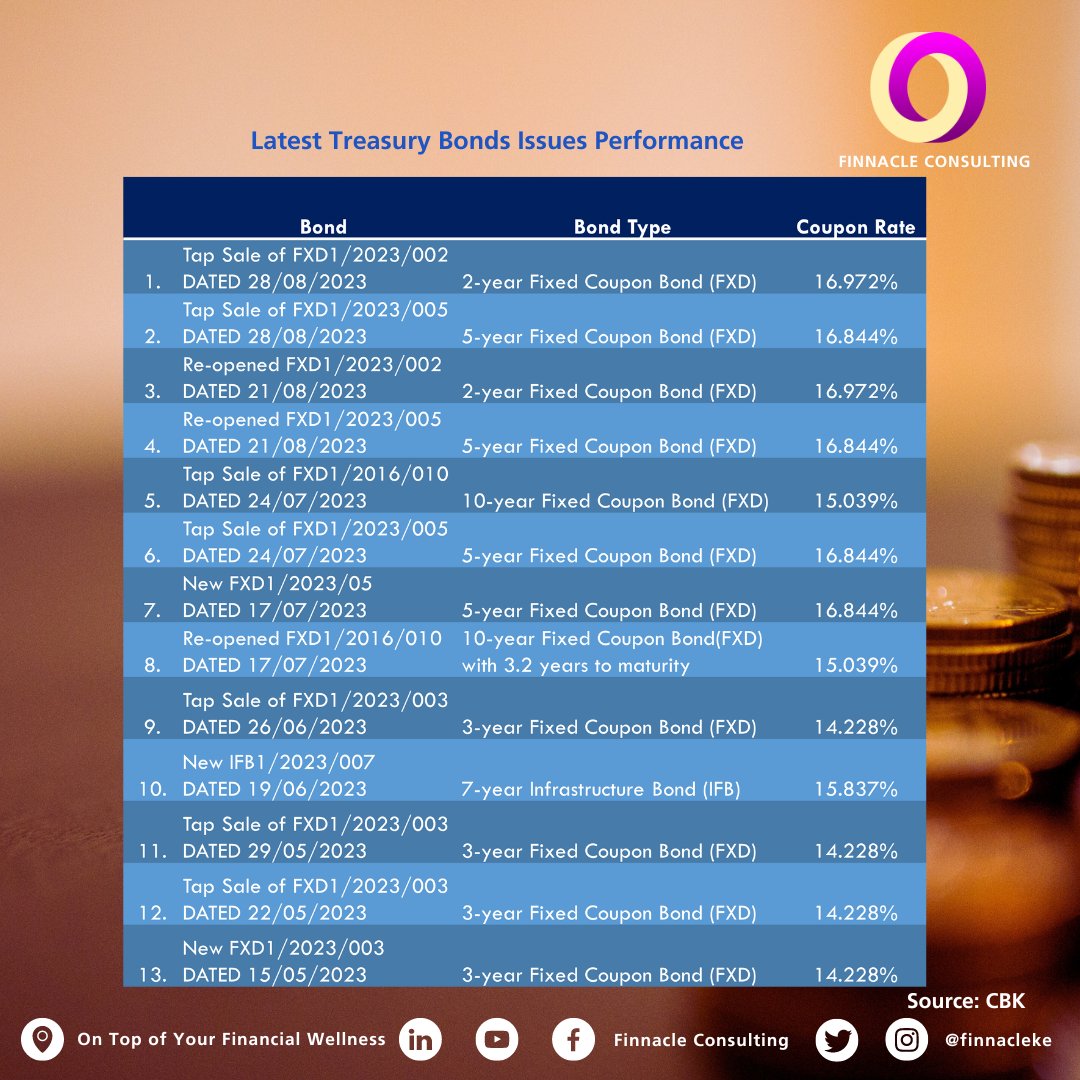
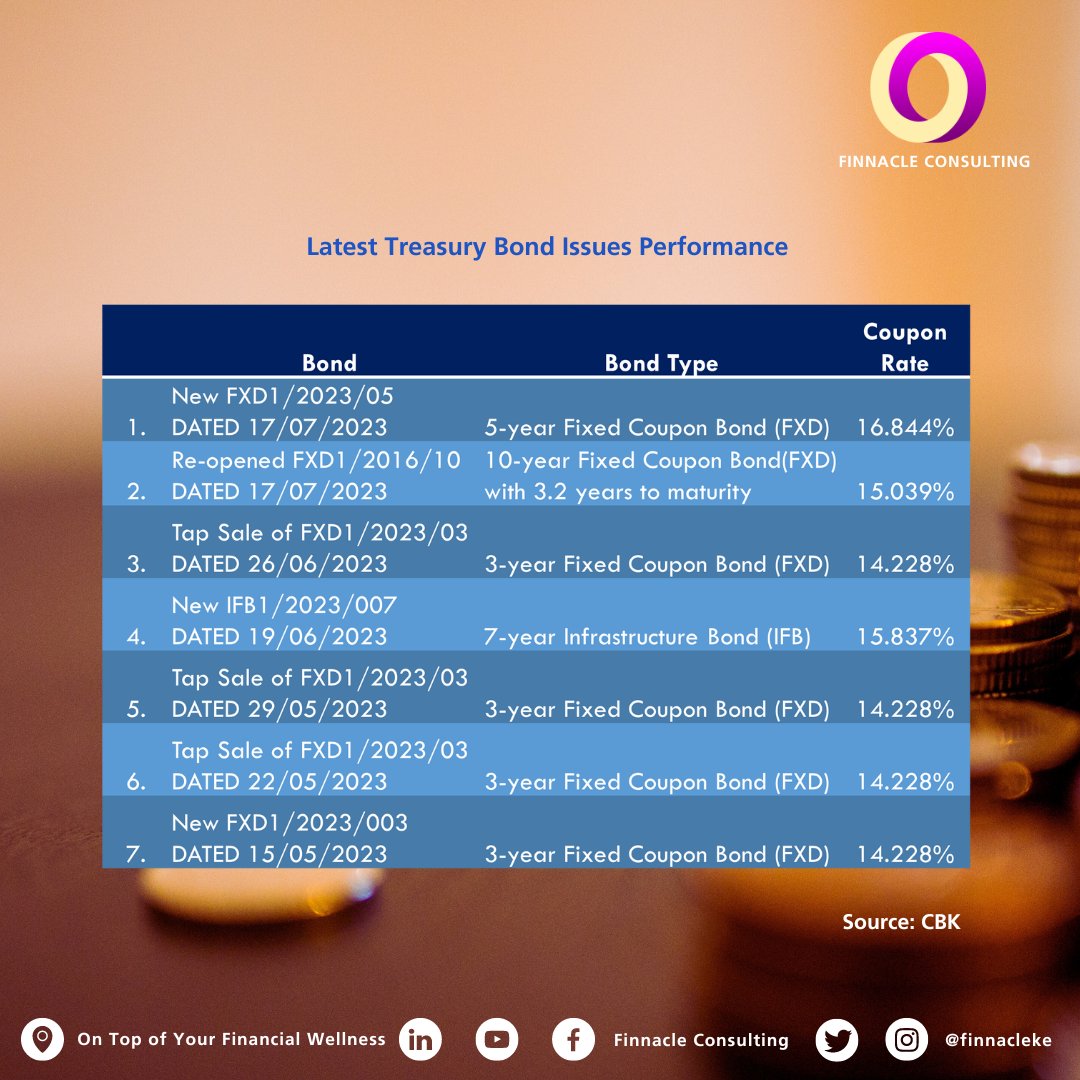
Let's compare two scenarios: a Kshs.1M and a Kshs. 100k investment in the latest 5-yr Fixed Coupon Bond (FXD) with a 16.844% interest rate and subject to a 15% Withholding Tax.
@_themoneysage You earn interest per year/annum but the interest earned is paid semi-annually (every 6 months). For example if you have invested Kshs. 100,000 in an infrastructure bond with a coupon (interest) rate of 10% per annum, this means that you are entitled to Kshs 10,000 as interest
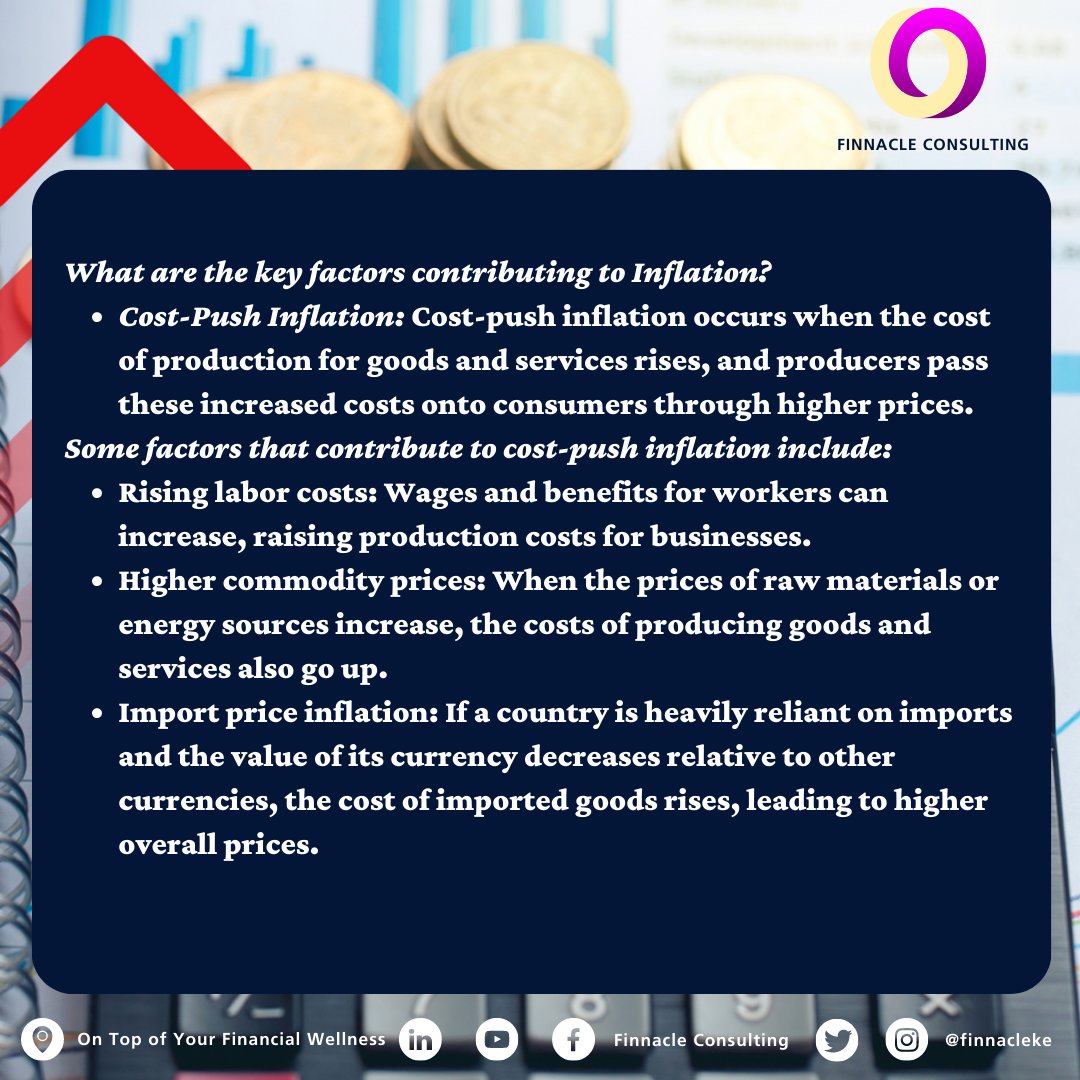
Cost-Push Inflation: Cost-push inflation occurs when the cost of production for goods and services rises, and producers pass these increased costs onto consumers through higher prices.
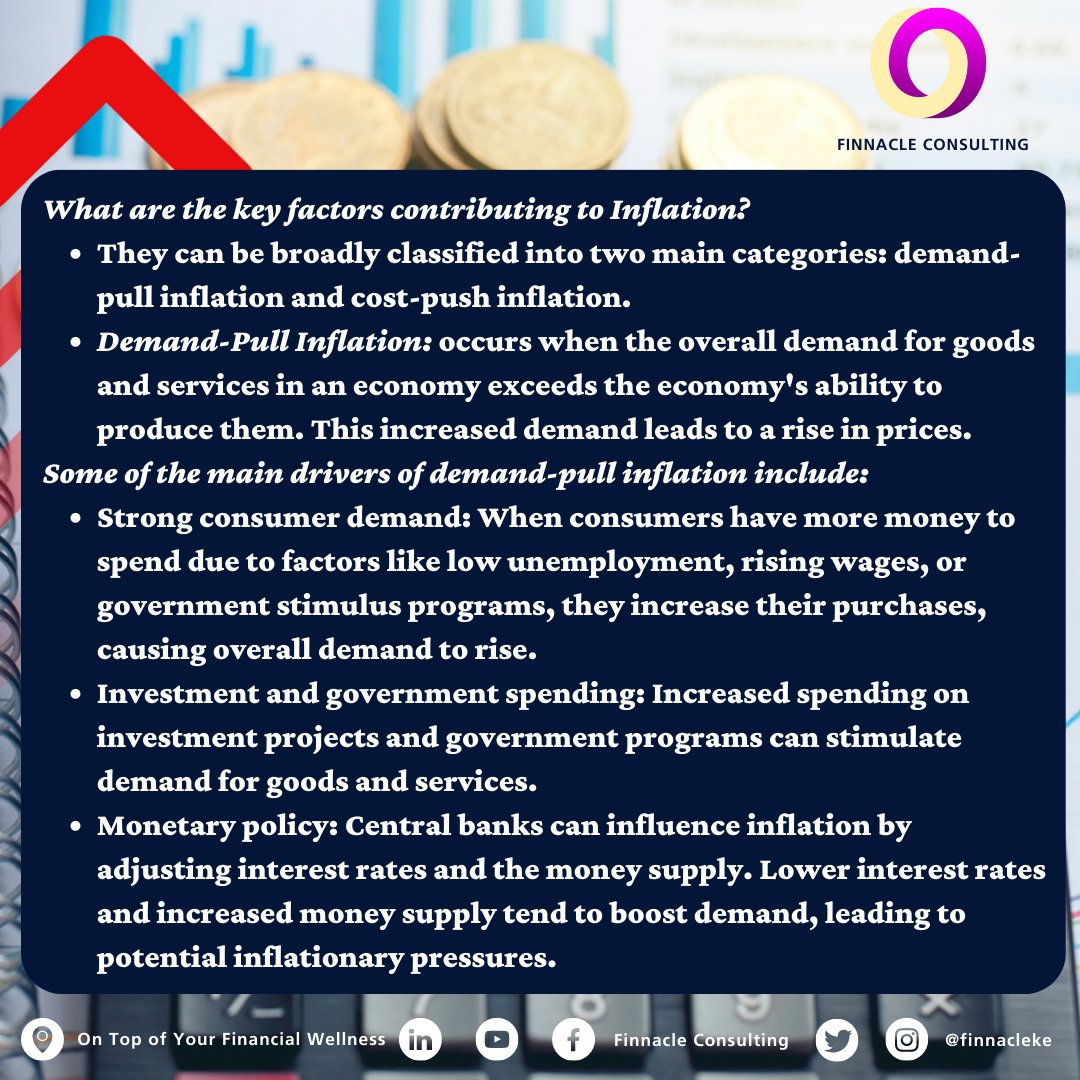
What are the key factors contributing to Inflation?
There are several key factors that contribute to inflation, and they can be broadly classified into two main categories: demand-pull inflation and cost-push inflation.