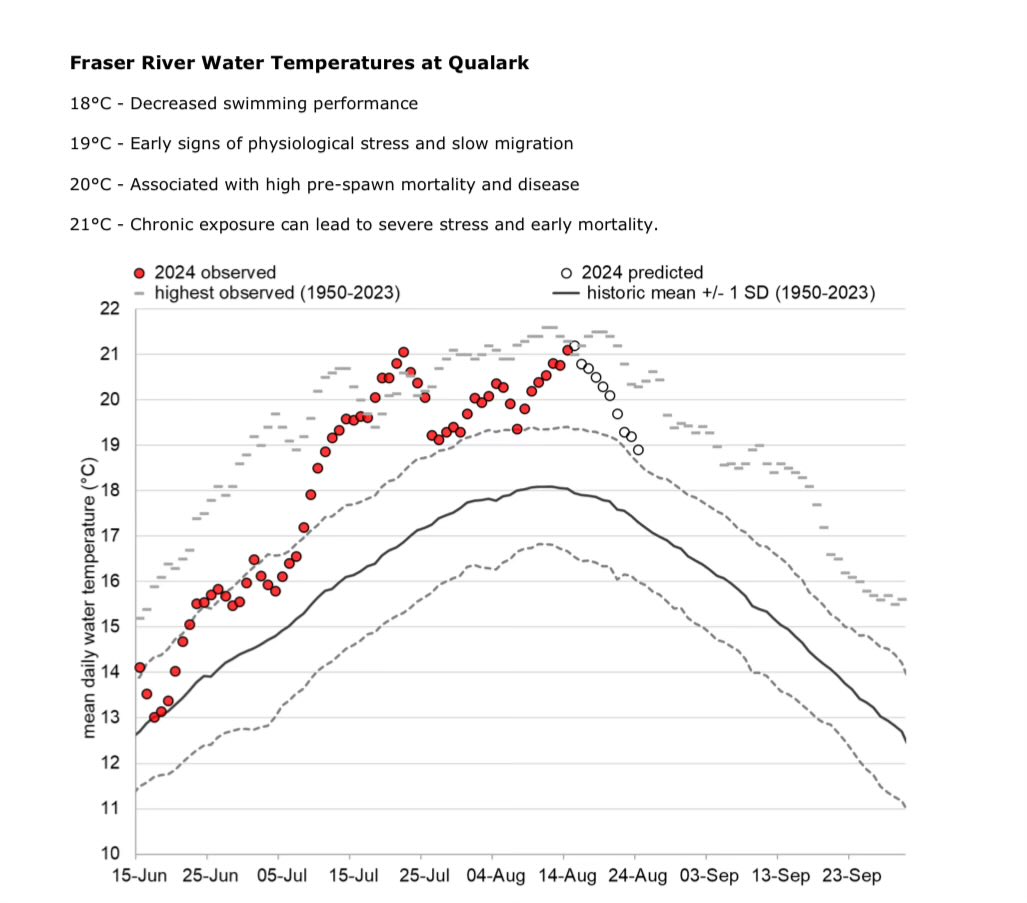
@Brie_Charlebois These are the current water temperatures in the lower Fraser relative to the thresholds. Temperatures in middle and upper Fraser streams are often warmer…
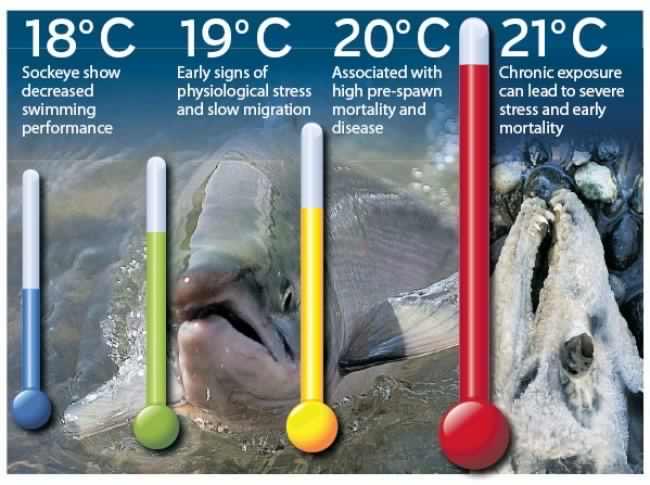
@Brie_Charlebois Good article on water levels and salmon but it is not just water levels that are of concern but water temperatures, and they tend to go hand in hand. Here is an infographic, data from the Hinch Lab at UBC.
@wildecosystems Actually, the recreational Chinook fishery, like most, but not all, commercial salmon fisheries in B.C., has regulations in place, but lacks the independent monitoring to evaluate either compliance, or the effectiveness of the regulations.
A new paper by @UBC researchers & members of @tsleilwaututh has reconstructed the First Nation's ancestral diet, using archeological research, historical records & cultural knowledge. Here's what was on the menu 500 years ago 🐟🦪🦐https://t.co/8Gl9lFG02f
@NBFurey As a non-academic who long admired the creativity, passion, and collaboration you brought to your work; I am sorry to hear this Nathan. Good luck to you.
@IntraFish And herein is why MSC’s credibility is eroding. They are arguing that salmon from a fishery that overfishes depleted populations, fails to collect data, does not monitor or assess its impacts, and undermines indigenous people’s rights is sustainable.
@WatershedWatch_ Greg Taylor gives his 2024 Season Outlook from across BC. He discusses Ocean Wise seal of approval for 14 B.C. chinook & sockeye fisheries, reflects on Alaskan Interception Fisheries, & a deep dive into each region's fisheries forecast.
https://t.co/t9oUujKL3K
Ocean Wise, Canada’s largest sustainable seafood label, has pulled its recommendation for southeast Alaskan salmon fisheries amid ongoing claims they are intercepting millions of B.C.-bound fish before they reach endangered southern resident killer whales
https://t.co/lLLsidYdbw
For immediate release: B.C. conservation organizations welcome Ocean Wise decision to pull its recommendation of sustainability for southeast Alaska salmon fisheries
#SalmonFishery#Salmon@SkeenaWild@WatershedWatch_@Duffling https://t.co/ku0ntRvSef
🐟🏔️ New salmon streams from melting glaciers in Canada and Alaska are at risk due to mining. The Gitanyow nation's observations signal a critical juncture for ecosystem conservation. #SalmonHabitats#ClimateImpact#MiningThreat
https://t.co/CuftkVgxBd
SkeenaWild's Director of Science Dr. Michael Price's latest research with @SFU goes back in time to look at how salmon have been adapting to our changing climate.
Check it out below 👇
@WCELaw You might want to read this report. It tells another version of the same story: climate change disrupting fisheries, including B.C. fisheries. https://t.co/m8k0vLCzQ3
"The lawsuit is a microcosm of how #ClimateChange is raising the stakes of fishing disputes around the world." #Salmon#Fisheries
https://t.co/c4W9tplRni
Record drought, unprecedented wildfire activity, global warming. We spoke with fisheries expert and Watershed Watch advisor Greg Taylor about how the salmon season played out and trends shaping B.C. salmon policy in future. #wildsalmon#SaveOurSalmon
https://t.co/OMltKFSQyA
@StefanLabbe How can anyone be surprised after Ottawa denied listing Thompson and Chilcotin steelhead? It is commerce before conservation in Ottawa, irrespective of their PR.
Retired BC fisheries professionals are asking the province why , with record low returns of Skeena steelhead & significant need for precautionary efforts, have spawner escapement targets been cut by two-thirds?
@nathancullen@BruceRalston@thenarwhalca
https://t.co/oDrxM5mtax
@hakaimagazine@lpynn Having participated in CSAS processes I have found DFO scientists prone to ‘group think’, being inherently conservative and insular as well as having to rely on incomplete data. Technical experts from FNs, industry, and NGOs can expand and deepen science focused deliberations