Senior Lecturer @Penn IR | Nuclear security & alliance politics in S. Asia & the Middle East | PhD in Pol. Sci. | ♥ Poetry & what gets lost in translation.
This UAE's quest for more autonomy from Saudi in foreign and security policy goes back to the 2000s and long predates this current rift and Iran War - it coincides with Qatar's emancipation from Saudi
"Since the Emir Mishal Al-Ahmad Al-Sabah took office at the end of 2023, Kuwait has drifted steadily closer to Abu Dhabi, and the domestic consequences have quickly followed.
Kuwait’s parliament — a rare democratic institution in the Gulf — was suspended indefinitely in 2024. A sweeping campaign of mass denaturalization has since affected an estimated 300,000 individuals, including citizens of Palestinian descent. The fabric of political participation that once gave Kuwait its distinctive Gulf character is being deliberately shredded in tandem with closer military and intelligence cooperation with the UAE."
https://t.co/GKW7dUQZEC
On @Bannons_WarRoom, I argued that on several variables, Trump can get a stronger Iran deal than Obama's.
Particularly if he lifts primary sanctions and opens the Iranian market to American companies. For average Americans, this will matter more than nuclear details.
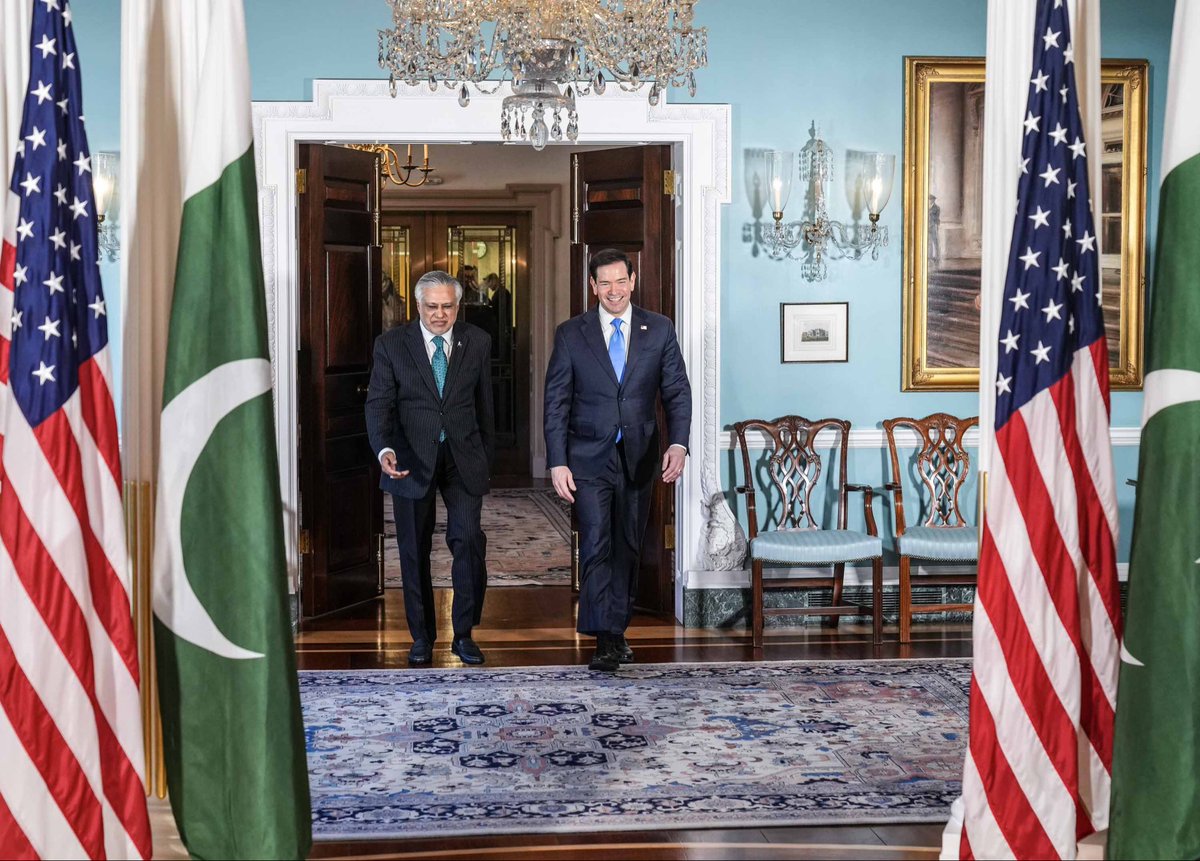
Met with Pakistani Deputy Prime Minister and Foreign Minister @MIshaqDar50 and thanked him for the role Pakistan continues to play in advancing peace in the Middle East. We agreed upon the importance of working together to further strengthen a meaningful partnership for better security and more prosperity for our two nations.
For the the idea of a regional non-aggression pact based on Helsinki model to be workable there must be a U.S.-Iran non-aggression pact, which Tehran has been open to. Without it non-aggression pact gives Arab states security but not Iran. Second, a successful pact needs real economic engagement which was part of Helsinki and was a promise of Iran-Saudi normalization. This needs U.S. sanctions relief.
Arab states right can offer Iran neither security nor economic engagement on a non-aggression pact.
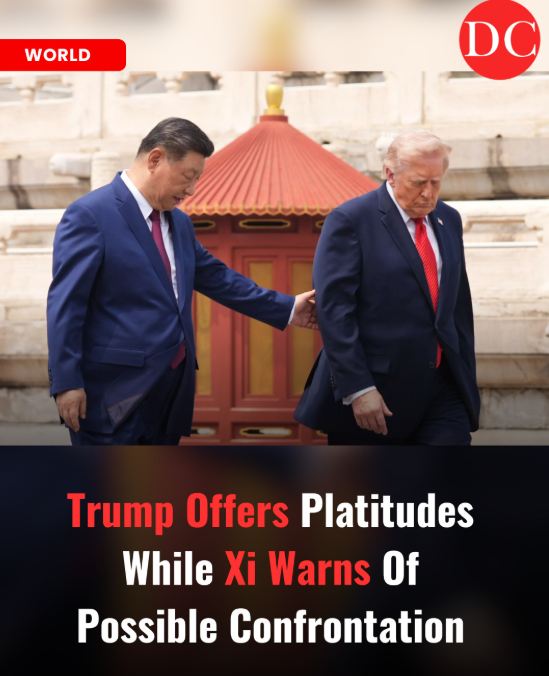
The Beijing summit ended with one brutal reality:
Taiwan is more vulnerable now than before the summit began -- and more than in decades
America’s power is declining since the Iran war — and world leaders are adjusting fast
-- Iran humiliated Trump’s envoys
-- Merz openly spoke of U.S. weakness
-- Now Xi pressing harder on Taiwan
US alliances are fragmenting and rivals are taking full advantage
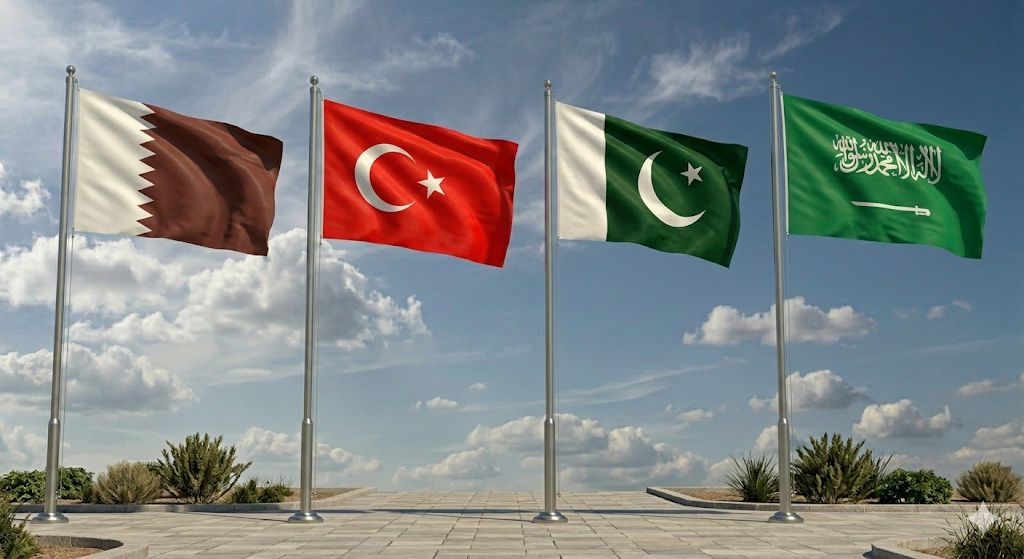
🚨 A New Dawn is About to Break in the Region | Expansion of the Mutual Defense Treaty to Include the "Golden Square" 🇸🇦🇵🇰🇹🇷🇶🇦
In rapid historical steps, talks are underway regarding the development of the Mutual Defense Agreement between the Kingdom of Saudi Arabia 🇸🇦 and Pakistan 🇵🇰 to strategically expand and include Turkey 🇹🇷 and Qatar 🇶🇦, establishing an integrated strategic alliance that redraws the map of international balances. 🌐
God willing, this quartet alliance will serve as a shield and a fortress, a striking regional force capable of confronting the most complex challenges with a unified decision. It will not merely be military coordination, but a comprehensive integration project for exchanging expertise and building a secure and stable future, proving to the world that the region's security is forged by its own sons, and it will remain open to both East and West in a manner that serves the alliance's interests and goals.
Xi is laying down the law to Trump in Beijing:
-- Taiwan is the military red line
-- Don’t stumble into a Thucydides Trap
The Iran war weakened America’s deterrent position faster than Washington realizes.
Beijing now sees a distracted, overstretched superpower — and is taking full advantage
The costs of Trump's strategic failure in Iran are mounting
Saudi Arabia has come to view Israel and its actions as a threat to regional security and sees the UAE’s alignment with Israel in a poor light.
Read @NeilQuilliam1's latest analysis for Chatham House⤵️
https://t.co/1BbrnzUO7v
EXCLUSIVE: Trump's abrupt U-turn on a plan to reopen the Strait of Hormuz came after Saudi Arabia suspended U.S. access to its bases and airspace. https://t.co/ugxw2ilzpD
To say that Trump underestimated Iran is an understatement. The Israelis sold him - and he ended up believing - a narrative that portrayed Iran as so weak that the war would be won within 4 days.
60 plus days later, Trump is still stuck in the mess Israel sold him.
🚨🚨🚨
وزير الخارجية الباكستاني "إسحاق دار":
في الحرب الحالية، لقد أوضحنا للطرفين بوضوح أن المملكة العربية السعودية هي منطقة محظورة بالنسبة لنا. لا يمكن لأي شخص أن ينظر إلى المملكة العربية السعودية بعين غير راضية. حتى الآن، يتواجد سرب من سلاح الجو الباكستاني في المملكة العربية السعودية
السعودية خط أحمر بالنسبة لنا
Most are missing what really happened yesterday:
Iran EXPANDED its control of Hormuz
Threatening UAE pipeline that evaded earlier attacks, cutting oil etc even more
Iran gained more power
I told @ft on Gen Munir and Pakistan’s delicate mediating role:
In Tehran, they would have given him [Munir] a difficult time, and questioned why he was pushing so hard for mediation — was it genuine or was he part of a ruse to get them to bring their guard down. Pakistanis are serious interlocutors, but what they can’t deliver is any guarantees on Trump’s behavior. They can’t say we promise the US won’t do A, B, C. And there’s nothing Munir can do about that. https://t.co/nuXRxGVVIS via @ft
New in @WarOnTheRocks: when the US needed a back-channel to Tehran this spring, Washington didn't call Delhi. It called Rawalpindi.
That is not personalities. It is a 50-year pattern - and the “standard dependent” state framing gets it exactly backwards.
https://t.co/WvO9w0K7ck
Who knew one would hear these words from a U.S. President. 😂
Trump compliments people of Pakistan, Prime Minister and Field Marshal in his @FoxNews interview.
They are great people. They are close to Iran and trying to work something out and they are being very successful.
PRESS SEC on U.S.-Iran negotiations: The Pakistanis have been incredible mediators and we really appreciate their friendship and efforts to bring this deal to a close.
The President feels it's important to continue to streamline this communication through the Pakistanis.