Defeat AIPAC and the Zionists! Elect the socialist who beat the billionaires!
Vote for my campaign for Congress by August 4th.
Join thousands of working and young people nationwide who have donated or signed up to volunteer at https://t.co/gwAUd5Syg7!
Nobel-prize-winning chemist Omar Yaghi has left the United States for a full-time position at Tsinghua University in Beijing, China, where he will lead a new AI-assisted materials discovery institute.
https://t.co/D4PCjBBCkx
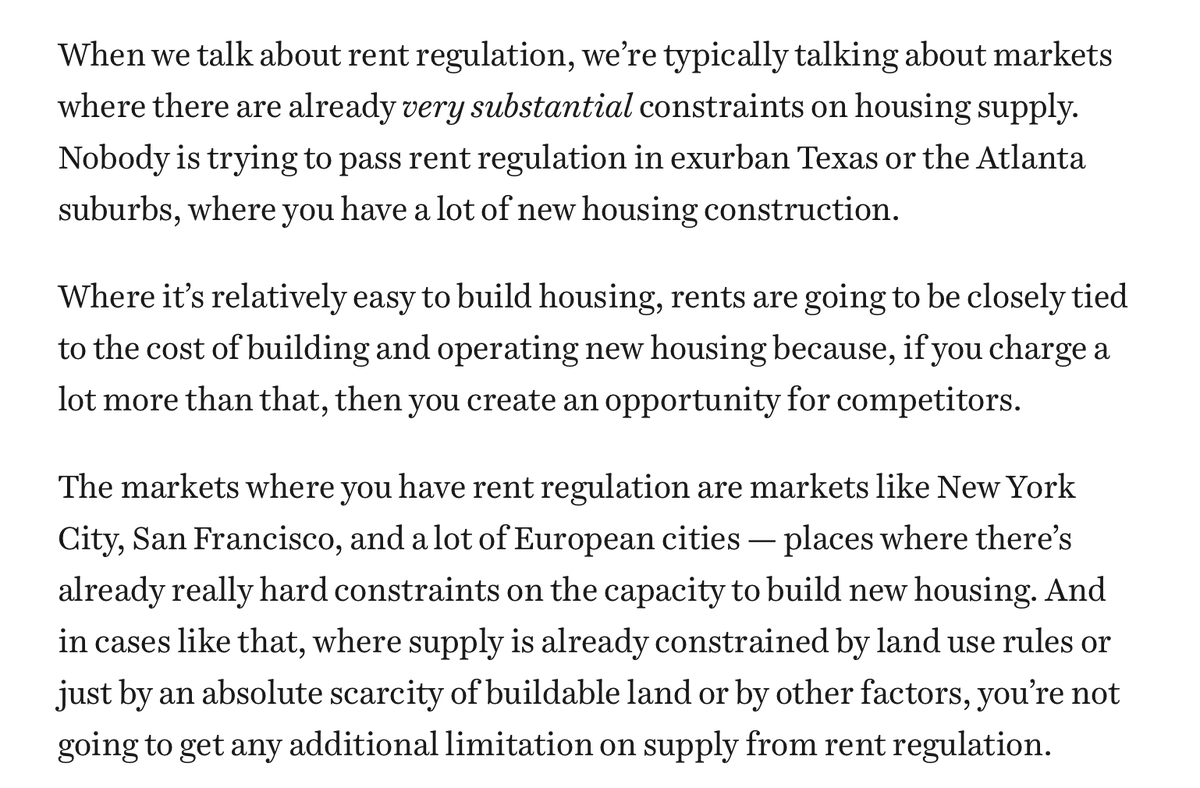
Most economists say that rent control backfires, reducing housing supply and boosting rents in the long run
But JW Mason, an economist at John Jay, thinks this orthodoxy is misguided. We spoke about his case for rent control and the arguments against it:
https://t.co/AlFdOXHVWh
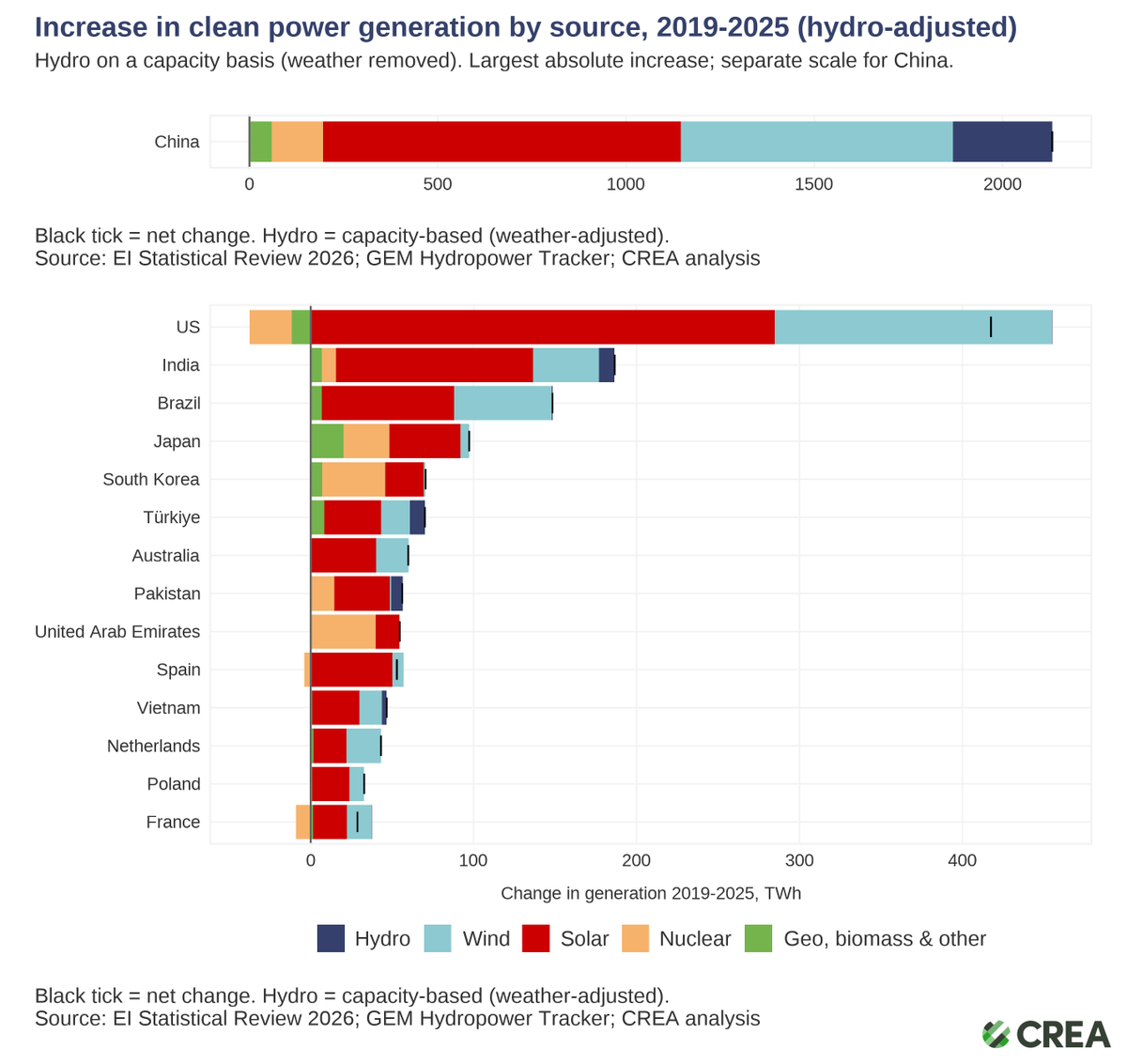
Which countries are actually succeeding in building clean energy? China leads in absolute volumes, no surprises there, but relative to the size of the energy system, five other countries achieved larger increases in the past six years.
“I would call him Napoleon, but Napoleon made his way to empire over broken oaths and through a sea of blood. This man never broke his word. I would call him Cromwell, but Cromwell was only a soldier, and the state he founded went down with him into his grave. I would call him Washington, but the great Virginian held slaves. This man risked his empire rather than permit the slave trade in the humblest village of his dominions. You think me a fanatic, for you read history, not with your eyes, but with your prejudices. But fifty years hence, when Truth gets a hearing, the Muse of history will put Phocion for the Greek, Brutus for the Roman, Hampden for the English, La Fayette for France, choose Washington as the bright, consummate flower of our earlier civilization, then, dipping her pen in the sunlight, will write in the clear blue, above them all, the name of the soldier, the statesman, the martyr, Toussaint L’Ouverture.”
-Wendell Phillips
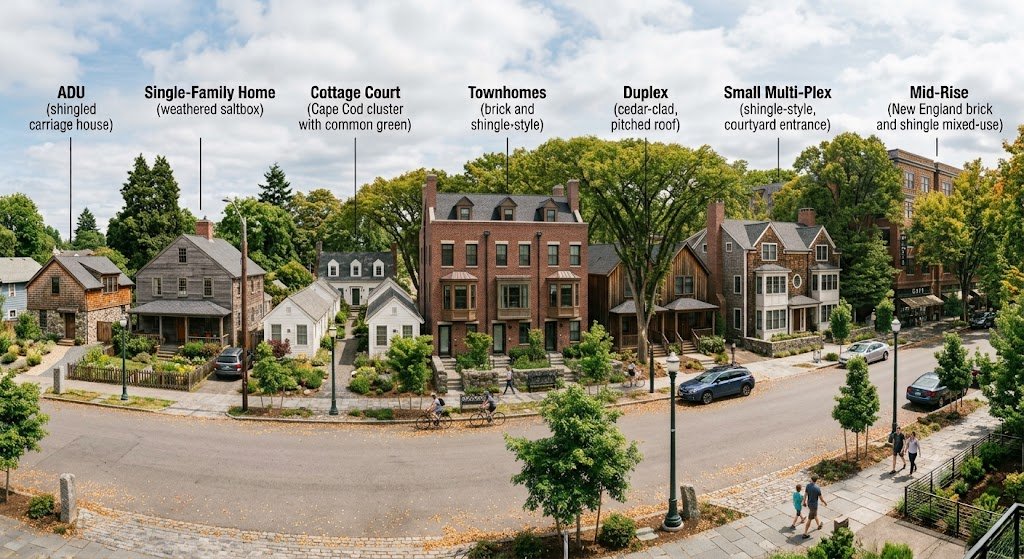
The housing shortage isn’t just about not enough homes, it’s about not having enough options in all of our communities.
People’s needs change over time, but many neighborhoods only offer one kind of housing. We need more choices in the places people actually want to live.
Vietnam is showing us exactly how brick is supposed to be used.
The brick on this kindergarten in Pleiku, Vietnam is not standard issue. It was custom designed for this building, carefully arranged to create a breathable facade that filters heat, drives natural ventilation through the corridors and produces patterns of light and shadow across every surface children move through during the day.
Gia Lai Kindergarten. Pleiku, Vietnam. H2 Architects.
At the core is an open courtyard where natural light and fresh air circulate freely. A continuous ramp rises from the ground to a rooftop garden, turning daily circulation into the children’s journey through the building rather than a corridor they pass through to get somewhere else. No mechanical cooling. The brick handles the heat.
This is what brick looks like when someone takes it seriously. It does not age badly. It ages into itself, deeper in colour, richer in character, still standing while everything around it deteriorates.
We can do this. We just have to decide to.
H2 Architects | Gia Lai Kindergarten | Pleiku, Vietnam
A small outdoor cinema, folded into a pavilion.
This is Cineorama – Pavilion of Moving Images, a temporary projection space designed by artist Erika Hock and first installed in Düsseldorf’s Jacobigarten in 2012.
The structure combines seating, roof, and screen into one compact form, turning a park setting into an intimate place for film screenings, talks, and shared viewing.
Et puisqu'on reparle des arbres en ville en ce moment, une vidéo avec zéro IA, que du réel, de quelques plantation d'arbres faites dans des rues de Paris ces dernières années :
Alexandria wants to use $135 MILLION in public financing to help a handful of institutional developers turn an old waterplant into another megaproject
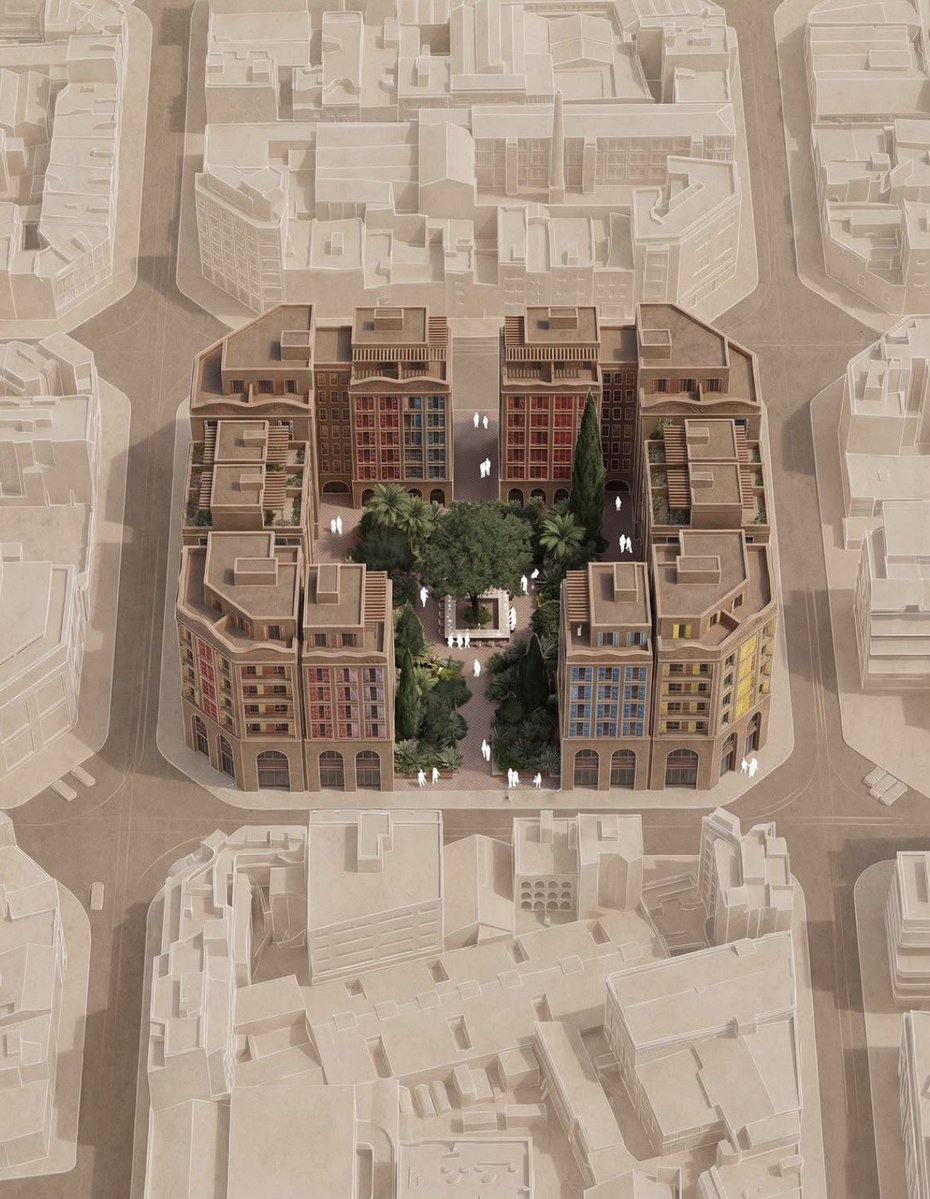
They could use public capital to build shared infrastructure and then subdivide the 19-acre site into MANY SMALL PARCELS and allow MANY different developers to build a fine-grained neighborhood (like right)
Fund the remediation, streets, utilities, flood protection, parks, and waterfront public spaces publicly. Then create fine-grained blocks that can be built parcel by parcel by multiple developers, architects, and owners.
With a great code, you can even facilitate the development of courtyard blocks that will allow middle-income families to live in the neighborhood as well as smaller households.
Small parcels lower the barrier to entry for local and midsized developers. They allow buildings to evolve independently, create more architectural variety, support smaller commercial spaces, and distribute development risk across many actors.
They also look better