Work crews pulled a cannon out of Lake LaVerne on Thursday afternoon. It's one of many items being uncovered during the Lake LaVerne's restoration. https://t.co/H0KhB54dqT
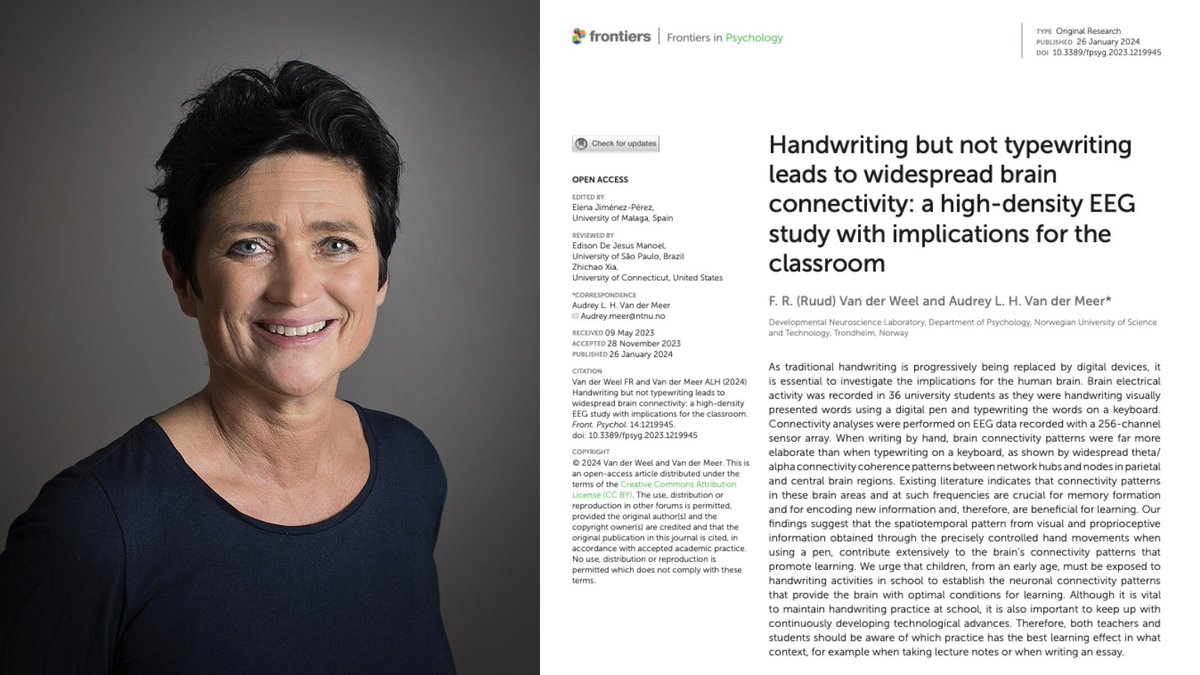
A Norwegian neuroscientist spent 20 years proving that the act of writing by hand changes the human brain in ways typing physically cannot, and almost nobody outside her field has read the paper.
Her name is Audrey van der Meer.
She runs a brain research lab in Trondheim, and the paper that closed the argument was published in 2024 in a journal called Frontiers in Psychology. The finding is brutal enough that it should have changed every classroom on Earth.
The experiment was simple. She recruited 36 university students and put each one in a cap with 256 sensors pressed against their scalp to record brain activity. Words flashed on a screen one at a time.
Sometimes the students wrote the word by hand on a touchscreen using a digital pen, and sometimes they typed the same word on a keyboard. Every neural response was recorded for the full five seconds the word stayed on screen.
Then her team looked at the part of the data most researchers had ignored for years, which is how different parts of the brain were communicating with each other during the task.
When the students wrote by hand, the brain lit up everywhere at once.
The regions responsible for memory, sensory integration, and the encoding of new information were all firing together in a coordinated pattern that spread across the entire cortex. The whole network was awake and connected.
When the same students typed the same word, that pattern collapsed almost completely.
Most of the brain went quiet, and the connections between regions that had been alive seconds earlier were nowhere to be found on the EEG.
Same word, same brain, same person, and two completely different neurological events.
The reason turned out to be something nobody had really paid attention to before her work. Writing by hand is not one motion but a sequence of thousands of tiny micro-movements coordinated with your eyes in real time, where each letter is a different shape that requires the brain to solve a slightly different spatial problem.
Your fingers, wrist, vision, and the parts of your brain that track position in space are all working together to produce one letter, then the next, then the next.
Typing throws all of that away. Every key on a keyboard requires the exact same finger motion regardless of which letter you are pressing, which means the brain has almost nothing to integrate and almost no problem to solve.
Van der Meer said it plainly in her interviews.
Pressing the same key with the same finger over and over does not stimulate the brain in any meaningful way, and she pointed out something that should scare every parent who handed their kid an iPad.
Children who learn to read and write on tablets often cannot tell letters like b and d apart, because they have never physically felt with their bodies what it takes to actually produce those letters on a page.
A decade before her, two researchers at Princeton ran the same fight using a completely different method and ended up at the same answer. Pam Mueller and Daniel Oppenheimer tested 327 students across three experiments, where half took notes on laptops with the internet disabled and half took notes by hand, before testing everyone on what they actually understood from the lectures they had watched.
The handwriting group won by a wide margin on every question that required real understanding rather than surface recall.
The reason was hiding in the transcripts of what the two groups had actually written down.
The laptop students typed almost word for word, capturing more total content but processing almost none of it as they went, while the handwriting students physically could not write fast enough to transcribe a lecture in real time, which forced them to listen carefully, decide what actually mattered, and put it in their own words on the page.
That single act of choosing what to keep was the learning itself, and the keyboard had quietly skipped the choosing and skipped the learning along with it.
Two studies. Two countries. Same answer.
Handwriting makes the brain work. Typing lets it coast.
Every note you have ever typed instead of written went into your brain through a thinner pipe. Every meeting, every book highlight, every idea you captured on your phone instead of on paper was processed at half depth.
You did not forget those things because your memory is bad. You forgot them because typing never woke the part of the brain that would have made them stick.
The fix is the thing your grandmother already knew.
Pick up a pen. Write the thing down. The slower road is the faster one.
At its opening, Parks was just 35,000 square feet sprawling across three floors, nine times smaller than the current structure. https://t.co/1qUL5jsJIq
🦔A researcher invented a fake eye condition called bixonimania, uploaded two obviously fraudulent papers about it to an academic server, and watched major AI systems present it as real medicine within weeks.
The fake papers thanked Starfleet Academy, cited funding from the Professor Sideshow Bob Foundation and the University of Fellowship of the Ring, and stated mid-paper that the entire thing was made up. Google's Gemini told users it was caused by blue light. Perplexity cited its prevalence at one in 90,000 people.
ChatGPT advised users whether their symptoms matched. The fake research was then cited in a peer-reviewed journal that only retracted it after Nature contacted the publisher.
My Take
The researcher made the papers as obviously fake as possible on purpose. The AI systems didn't catch it. Neither did the human researchers who cited it in real journals, which means people are feeding AI-generated references into their work without reading what they're actually citing.
I've covered the FDA using AI for drug review, the NYC hospital CEO ready to replace radiologists, and ChatGPT Health launching this year. All of that is happening in the same environment where a condition funded by a Simpsons character and endorsed by the crew of the Enterprise was being presented as emerging medical consensus. The people making these deployment decisions seem to believe the pipeline from research to AI to patient is more supervised than it actually is. This experiment suggests it isn't supervised much at all.
Hedgie🤗
https://t.co/8Kg8FOrgHW
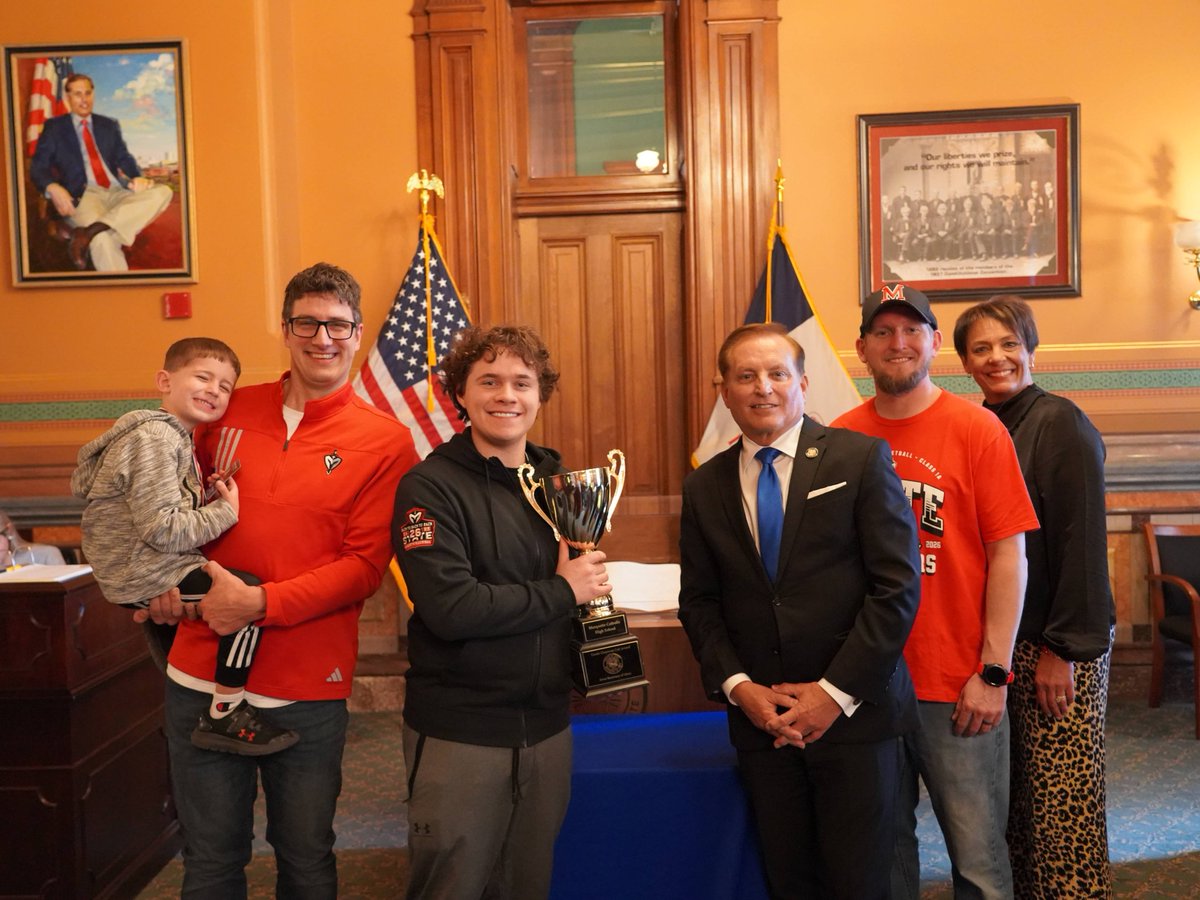
Six years in. Six trophies. 100% senior registration. Marquette Catholic High School is setting the standard for what civic engagement looks like, and they make it look easy. Congratulations on another well-earned Carrie Chapman Catt Award!🏆
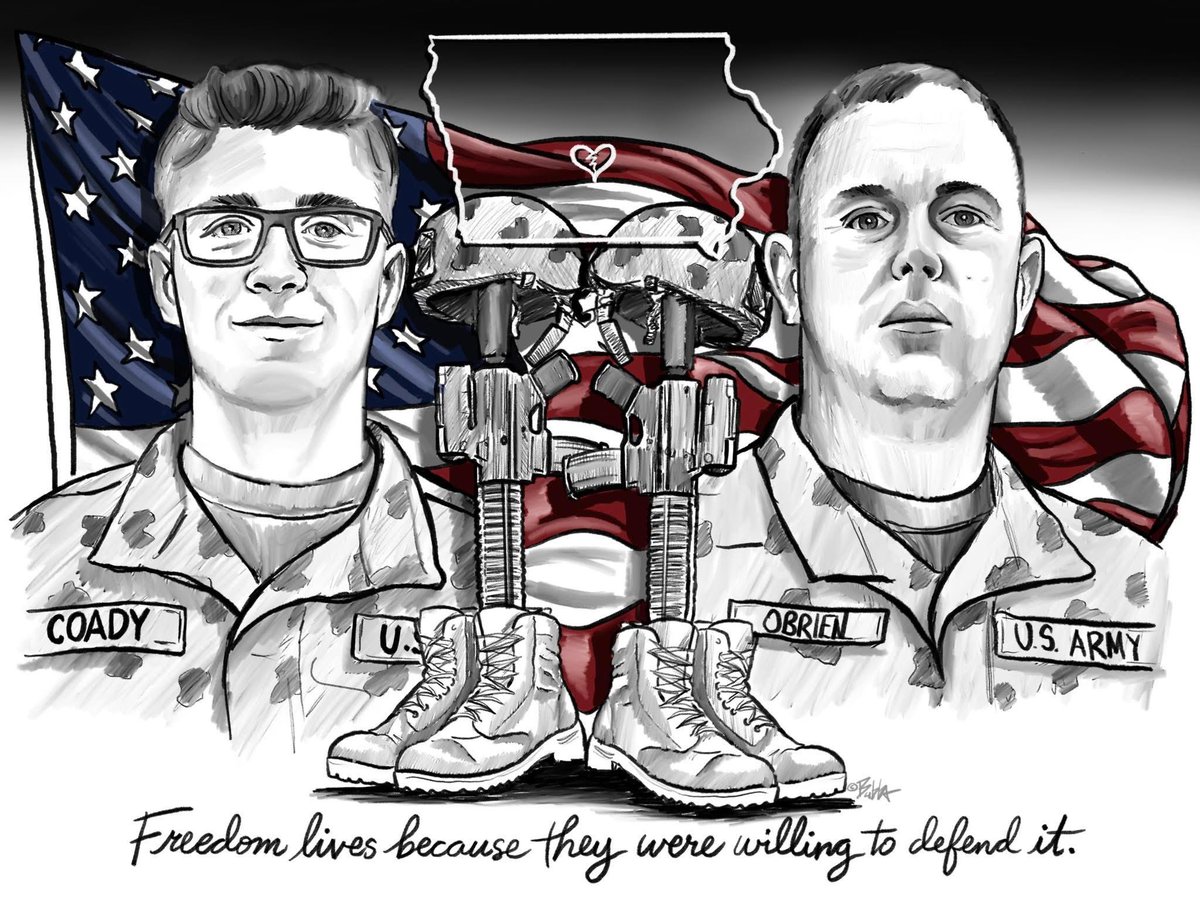
I can’t contribute much, but I like to create artwork to honor those who serve our country. I don’t always get to put as much time and effort into these sketches as I would like, but here is a rough tribute honoring two Iowa soldiers who gave their lives in the recent Iranian attack in Kuwait.
Maj. Jeffrey O’Brien, 45, of Waukee, and Sgt. Declan Coady, 20, of West Des Moines, answered the call of duty and represented the very best of our state and our country. Their sacrifice is a reminder that the freedoms we enjoy are defended every day by men and women willing to stand in harm’s way for the rest of us.
My prayers are with their families, their fellow soldiers, and the communities that raised them.
We are also learning of a third service member with ties to West Des Moines who may have been lost in the same attack. As more details are confirmed, our hearts and prayers will be with that family as well.
Freedom lives because they were willing to defend it.
🇺🇸 Iowa will remember.
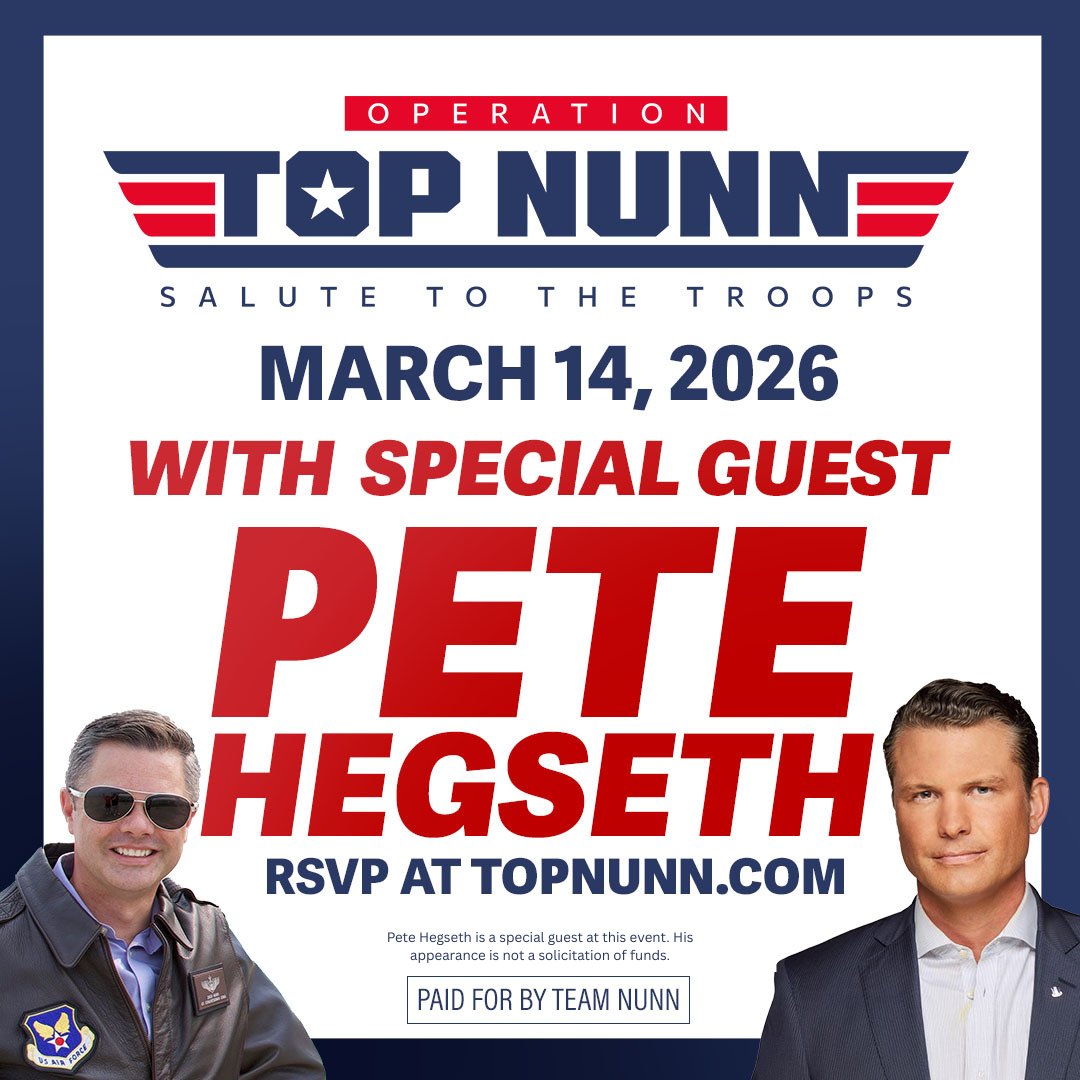
I’m proud to announce that Pete Hegseth will be joining us as the special guest at Top Nunn: Salute to the Troops! 🇺🇸
This event is all about honoring the brave men and women who have worn the uniform and defending the freedoms they fought for.
Join us:
📍 Ankeny Regional Airport
🗓 Saturday, March 14
🕛 12:00 PM
Get your tickets today at https://t.co/iUdelUFdHR and be part of this special tribute to our veterans!
WATCH: University of Nebraska-Omaha Public Safety security cameras show the moment two vehicles fell into a sinkhole on Tuesday — and how the drivers were able to get out.
Details: https://t.co/BI8L0WKoUN
Registration is open for @BizHorizonsIowa 2026!
Iowa students in grades 9–12 can build leadership, teamwork, and entrepreneurial skills during this week-long summer program, July 19–23 at Grand View University.
🔗 Read the full press release: https://t.co/6DWmjSDgoO