You test your code. But do you audit your workflows?
Flow Guard gives you:
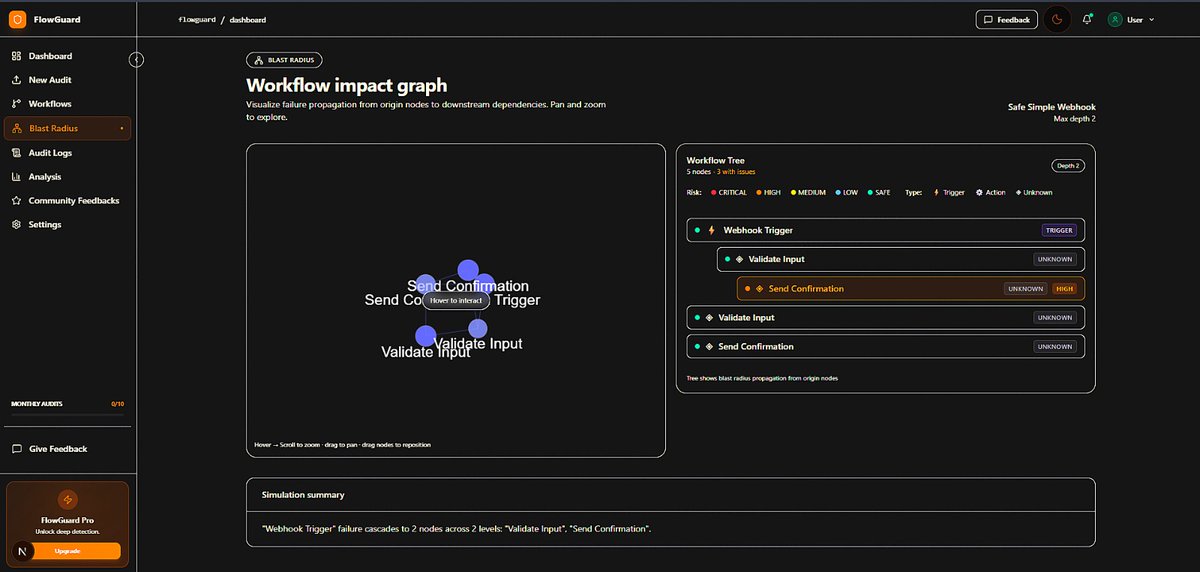
Blast radius analysis
Risk timelines
GitHub auto-audits on every PR
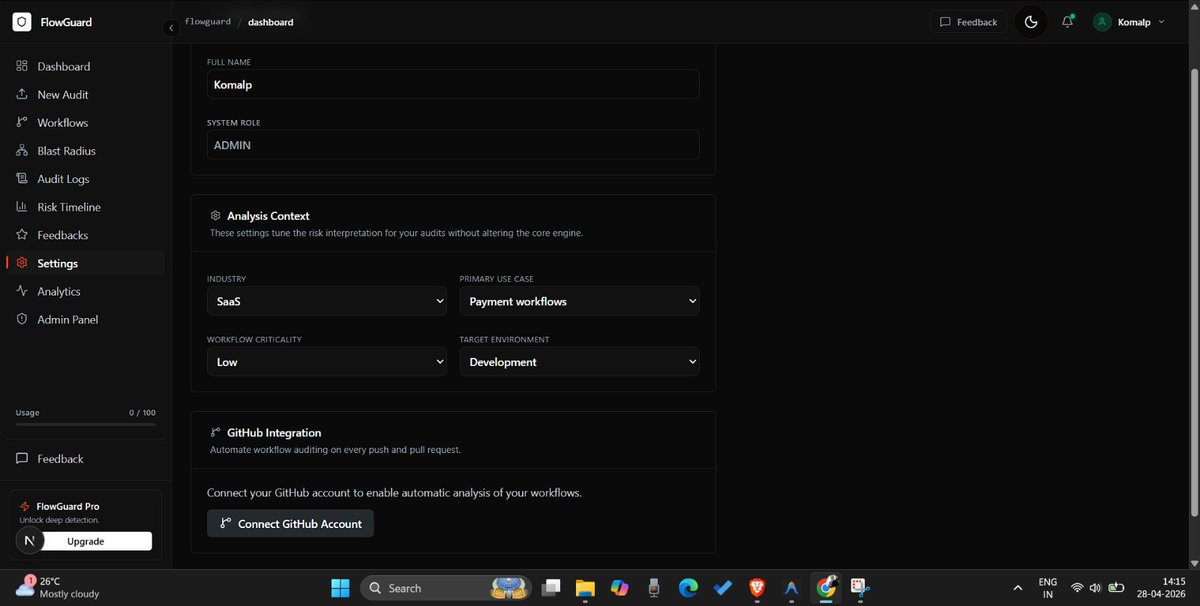
Context-aware risk scoring
Your workflows deserve the same rigor as your code.
You test your code. But do you audit your workflows?
Flow Guard gives you:
Blast radius analysis
Risk timelines
GitHub auto-audits on every PR
Context-aware risk scoring
Your workflows deserve the same rigor as your code.
Building FlowGuard to catch invisible failures in business automation.
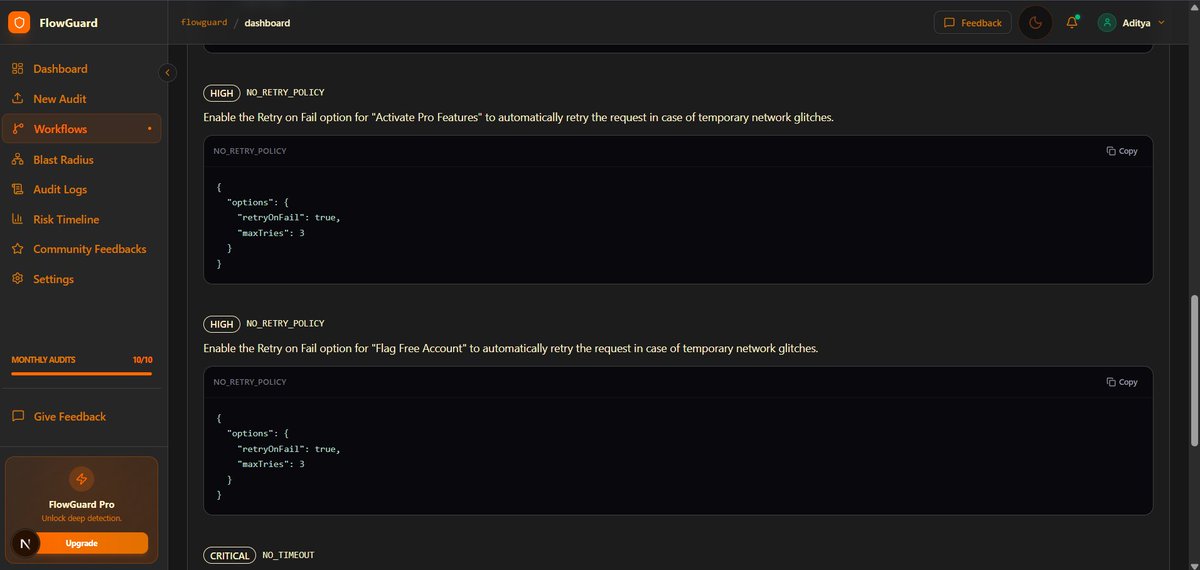
Automated workflows (like N8n) often lack safety nets our dashboard identifies critical vulnerabilities like missing error branches or retry policies before they break your operations.
Building FlowGuard to catch invisible failures in business automation.
Automated workflows (like N8n) often lack safety nets our dashboard identifies critical vulnerabilities like missing error branches or retry policies before they break your operations.
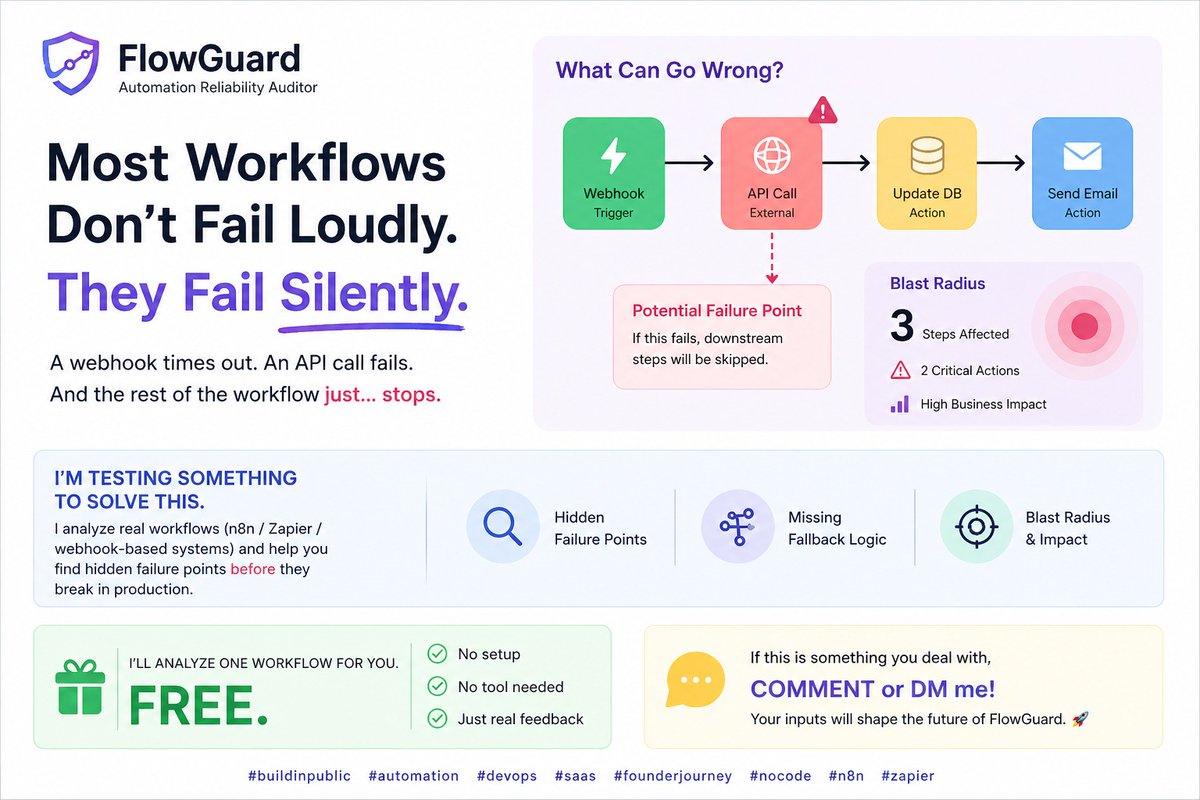
Three of us kept hitting the same issue—workflows failing silently in prod.
No logs, no warning, just things breaking.
Got tired of debugging it… so we built FlowGuard.
It checks your workflows before they go live shows weak points and what breaks if something fails.
Three of us kept hitting the same issue—workflows failing silently in prod.
No logs, no warning, just things breaking.
Got tired of debugging it… so we built FlowGuard.
It checks your workflows before they go live shows weak points and what breaks if something fails.
Your automation workflow is not tested. You think it is. You ran it in staging. It passed. You shipped it. But you never simulated what happens when one node silently dies at 2AM and takes 8 downstream steps with it.
That is not testing. That is hoping.
Your automation workflow is not tested. You think it is. You ran it in staging. It passed. You shipped it. But you never simulated what happens when one node silently dies at 2AM and takes 8 downstream steps with it.
That is not testing. That is hoping.
FlowGuard works in 3 steps: it converts your workflow JSON into a DAG, detects missing timeouts, retries, error branches, and bottlenecks, then simulates failure impact (BFS) to show what breaks and how far it spreads. 100% deterministic—no LLM, no production access.
FlowGuard works in 3 steps: it converts your workflow JSON into a DAG, detects missing timeouts, retries, error branches, and bottlenecks, then simulates failure impact (BFS) to show what breaks and how far it spreads. 100% deterministic—no LLM, no production access.
I was spending way too much time debugging failed workflows instead of actually building features.
To escape that matrix, our team built a simple internal tool. Just something that could audit workflows and predict what might fail before it happened.
Launching soon! 🚀
Most builders hope for the best.
Engineers plan for failure.
What happens when one step in your workflow fails?
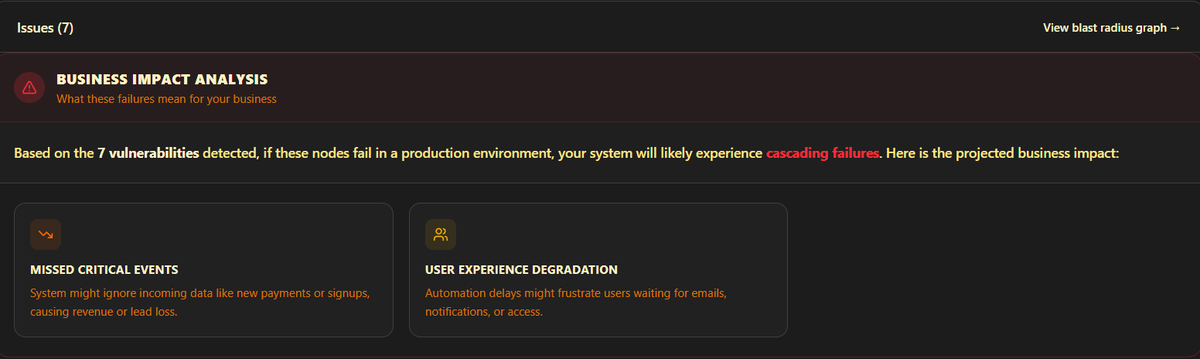
It doesn’t just stop. It cascades.
This is the Blast Radius of automation the silent killer of systems.
Most workflows fail silently and you don't notice until it's too late. A webhook chain fails at the end, and customers complain days later.
Fix it:
Connect error branches
Avoid long chains; use sub-workflows
Understand your blast radius
Build resilient pipelines,not fragile ones
We just audited a Stripe automation that looked perfect on the surface.
Under the hood? It was a minefield of hidden reliability risks that could’ve crushed their payments and UX.
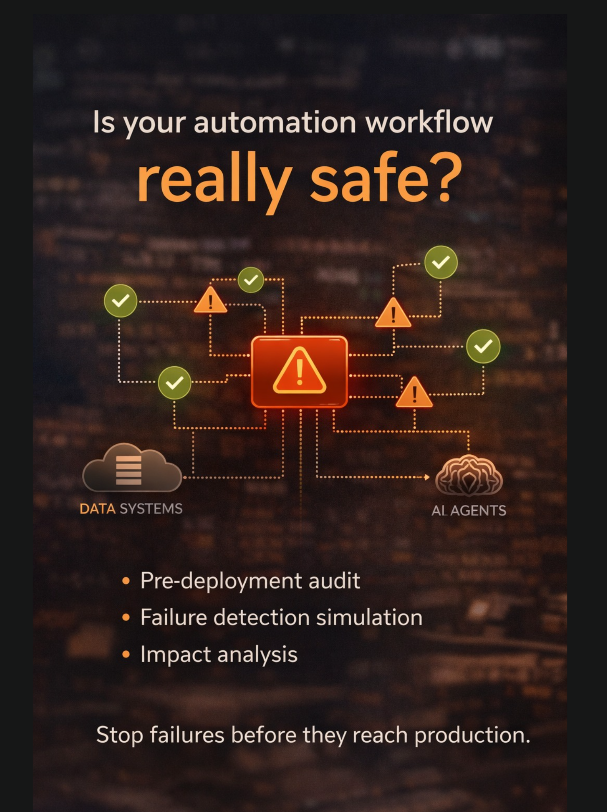
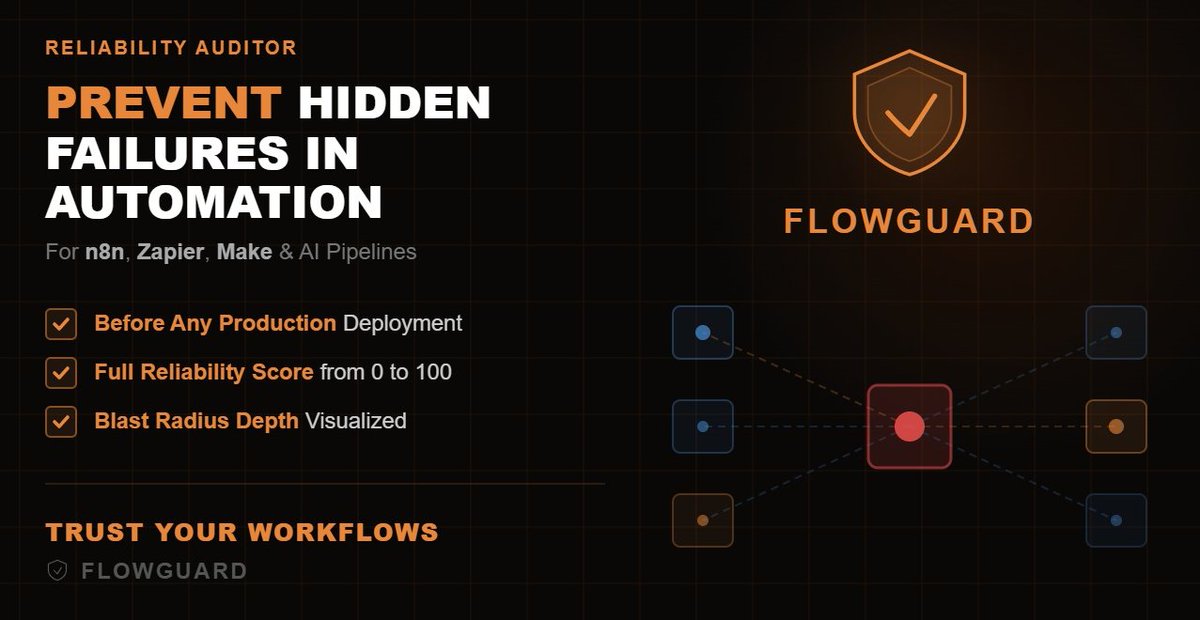
Most teams ship automation without testing how it fails. We’re fixing that with FlowGuard.
Your onboarding workflow might be failing silently.
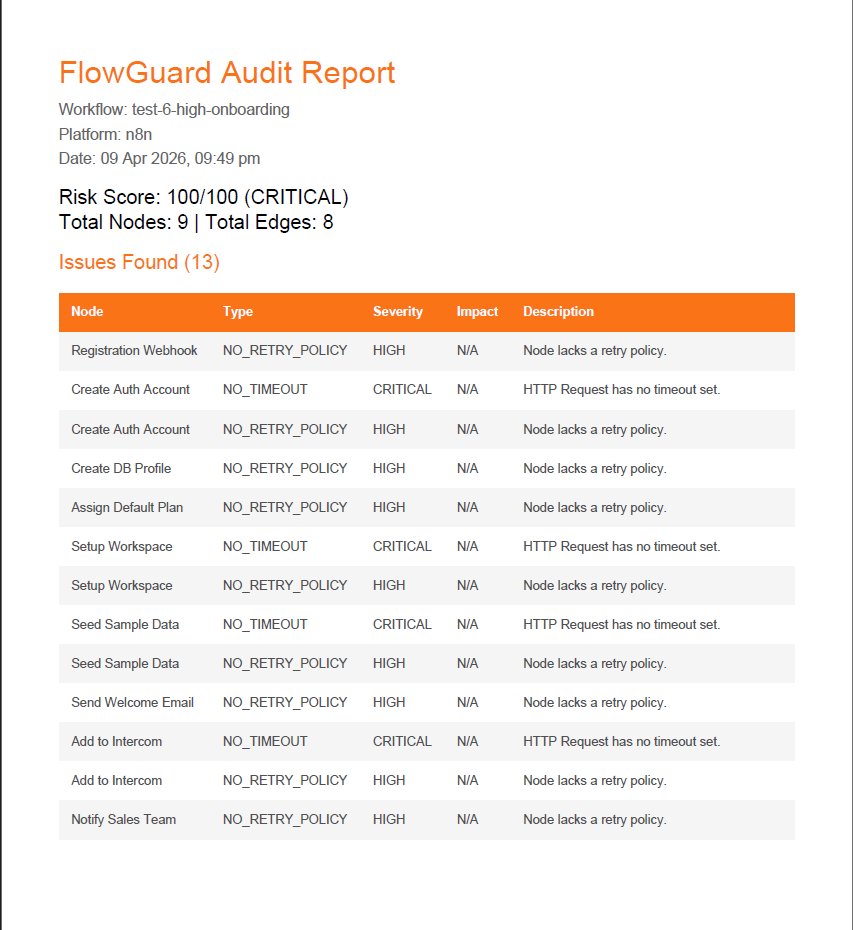
n8n audit: 100/100 risk — 9 nodes, 13 issues.
No retries → lost data
No timeouts → stuck work flows Works in testing. Breaks in real-world.
Automation fails silently.
Audit your workflows.
Most automation workflows are one silent failure away from a production disaster.
Not because developers are careless. Because there has never been a proper engineering discipline around auditing automation reliability before deployment.
Here is how we built to change that.
Production automation failures are predictable.
Not rare. Not random.
You trace a 20-node workflow…
only to find:
→ missing timeout
→ no error handling
→ retry = never configured
4-minute fix.
Hours of damage.
Nothing broke in production.
It was already broken.
Production automation failures are predictable.
Not rare. Not random.
You trace a 20-node workflow…
only to find:
→ missing timeout
→ no error handling
→ retry = never configured
4-minute fix.
Hours of damage.
Nothing broke in production.
It was already broken.
Most automation workflows are one silent failure away from a production disaster.
Not because developers are careless. Because there has never been a proper engineering discipline around auditing automation reliability before deployment.
Here is how we built to change that.