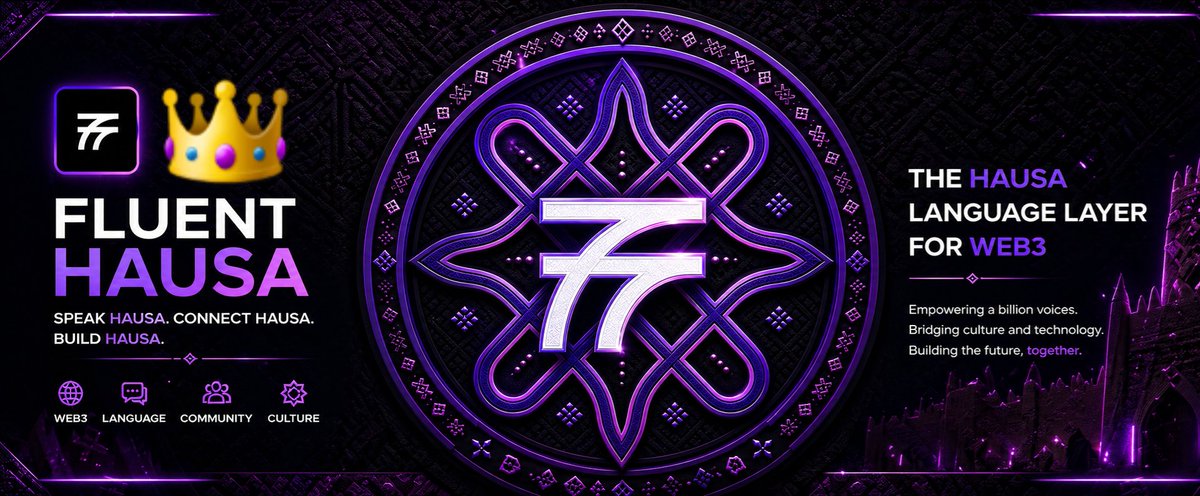
A movement for northern Nigeria and the Hausa speaking population, one of the largest language communities in Africa need to know about @fluentxyz the Blended Execution Layer will be preached in our dialect.
Courtesy @BornBlackSeed@Abdulkarim2 .
[NEW MARKETS]
The World Cup deserves its own category
So we made one
50+ World Cup markets are now live on Pulse
Time to find out if you know ball
Predict now: https://t.co/r1btexKBed
Where did @fantasy_top_ go wrong? And right?
For our first app-building cycle, we're exploring people's desire to speculate on other people, and Fantasy Top was naturally a great case study.
We're investigating which user personas want to do this, what the motivating factors are, which people are compelling to speculate on, which performance dimensions are most intuitive, how best to capture and measure those dimensions and what product experience would be most attractive.
We're directionally confident there's something here. Our job is to understand the problem space at a fundamental level and determine which elements are worth focusing on.
We've started speaking with Fantasy Top users and others who enjoy this type of gameplay. If you know anyone who'd be good to talk to, tag them here or DM me.
The core message of this article is.
Crypto will not reach mainstream adoption through financial assets alone. It needs “cultural assets” that people emotionally care about.
@blendino argues that most crypto today is built around finance:
payments, trading, stablecoins, prediction markets, investing, and memecoins.
These work for institutions and traders, but normal people don’t emotionally connect with them. Your friends and family are unlikely to care about:
- hedging commodities,
- BTC trades,
- perps, or memecoin speculation.
So, the article introduces “cultural assets”: tokenized assets connected to people, creators, moments, fandoms, or collectibles that already have emotional/social meaning.
Examples:
- athlete or musician linked assets,
- creator performance markets,
- Pokémon cards,
- fantasy creator games,
- time/tokenized access to creators,
- prediction markets around pop culture.
The article then explains why previous attempts failed:
Pumpfun and Zora failed because they used memecoin mechanics that turned fans into exit liquidity.
Fantasy Top worked temporarily because it had better mechanics, but CT influencers didn’t have deep emotional fandoms.
Collector Crypt may work because Pokémon already has decades of real cultural meaning and passionate fans.
If creators profit mainly by dumping tokens on fans, trust collapses.
Instead, successful cultural crypto products should: separate fans from traders,
- avoid constant price chart speculation in social experiences,
- derive value from real attention/fandom,
- enhance existing cultural behavior rather than financialize everything directly.
Another important point:
The strongest assets come from emotional attachment, not speculation.
So Dino’s broader thesis is:
1. Financial crypto will grow institutions.
2. Cultural crypto could grow mainstream consumer adoption.
3. The next breakthrough crypto apps will likely look more like entertainment, fandom, collectibles, or social products than trading terminals.
This is the quietest @fluentxyz week you'll see for the foreseeable future. Took a breathe, reflected on launch, optimized some things, sharpened the strategy for our next chapter of growth.
Let's get it



![PulsePredictor's tweet photo. [NEW MARKETS]
The World Cup deserves its own category
So we made one
50+ World Cup markets are now live on Pulse
Time to find out if you know ball
Predict now: https://t.co/r1btexKBed https://t.co/OZCJBb6zmd](https://pbs.twimg.com/media/HKiqtgEXsAABMoI.jpg)





