Chief Futurist at Apprentice, Inventor, Pharma Manufacturing, Podcaster, Science Educator, husband to my MBA sweetheart, & father to an extraordinary daughter.
Our company name wasn't an accident.
When @angelostracq founded Apprentice, he believed we were heading toward a future where humans and intelligent machines would work together to create outcomes that neither could achieve alone.
That belief has guided everything we've built since.
Our team will be at the @AutomateShow next week.
If you'll be there, let's meet up — we'd love to chat about what we're working on and hear what's on your radar.
Find us on the floor and let's talk.
Humanoid robots are getting a lot of hype — but in GMP manufacturing, the conversation is more nuanced.
As we head to the the @AutomateShow next week in Chicago, this topic is front and center.
@angelostracq's take? The future of manufacturing is humans + tools — not humans replaced by them.
Will AI take my job?
The short answer is no.
The threat isn't AI. It's staying manual in a world that's automating.
The opportunity? Doubling down on what makes you irreplaceable.
@angelostracq dives into how technology amplifies capabilities 👇
@TaraBull I did a podcast episode on the same topic. It’s not really T-rex leather and is more about the ultra-wealthy spending money for a good story. But the underlying technology will be good for us all, so let them spend the money to build the field out - https://t.co/LSrPVFftrH
@SexyLikeMeiosis Anthropic’s Fable always kicks me down to the training wheels model anytime I ask it anything close to biotechnology and pharmaceuticals. I feel your pain.
The future of manufacturing AI is event-driven.
Thousands of intelligent actions on the shop floor, every day.
Agents that navigate systems, message the right people, and interface directly with equipment — all from a single shop floor event.
This is how AI moves from a productivity tool for knowledge workers to an operational layer for the factory floor.
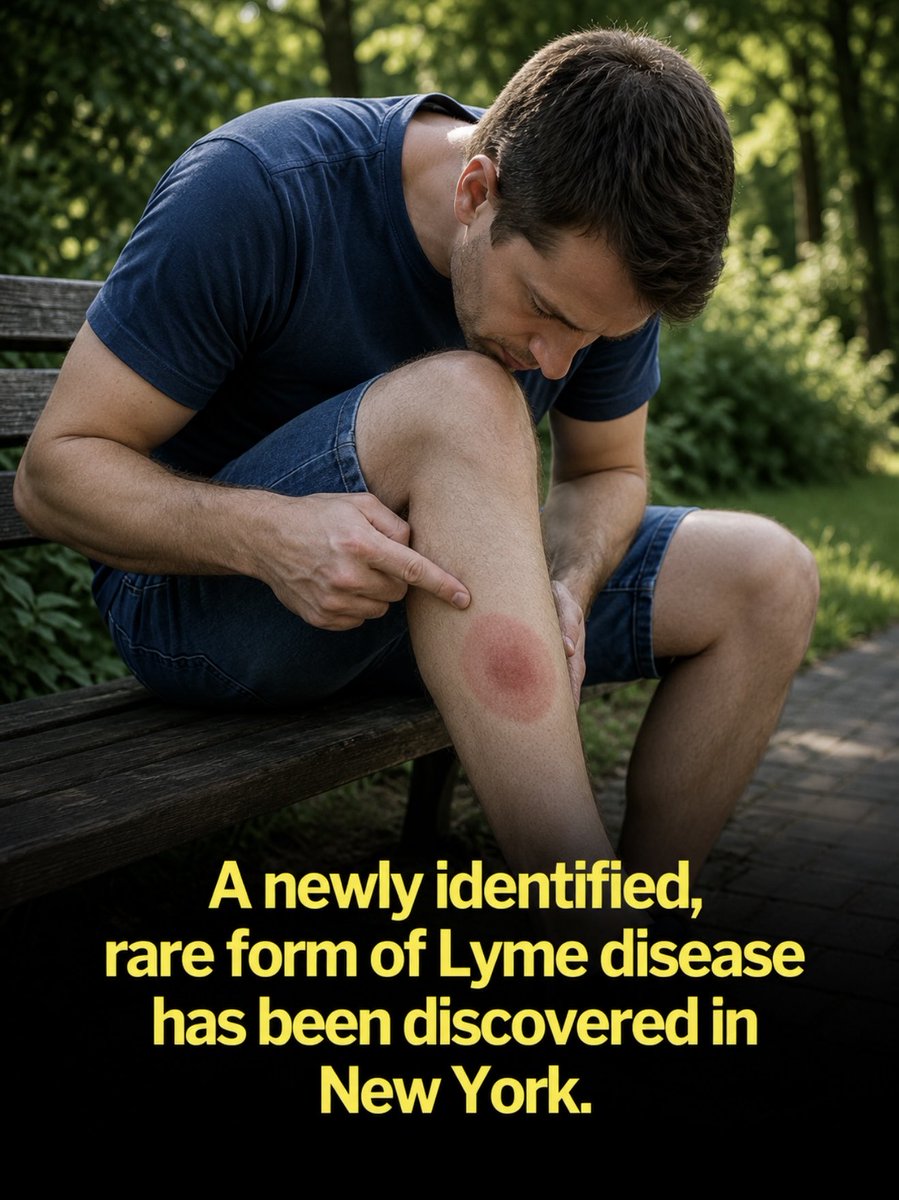
A rare strain of Lyme disease has been identified in New York for the first time, marking an unexpected development for researchers studying tick borne illnesses.
Most Lyme disease infections in the United States are caused by the bacterium Borrelia burgdorferi. However, scientists have now confirmed the presence of Borrelia mayonii, a much less common Lyme disease bacterium that until now had only been found in Minnesota and Wisconsin.
The discovery was made after an adult living in upstate New York became ill last summer. Follow up investigations led researchers to find ticks carrying the bacterium on the person’s wooded property in Herkimer County near the Adirondack Mountains.
Because the individual had not traveled recently, experts believe the infection was acquired locally, indicating that the bacterium is present within the state.
Researchers are still uncertain how Borrelia mayonii arrived in New York. One theory suggests infected ticks may have been transported by migrating birds traveling from the Upper Midwest. Scientists also believe the bacterium could have been circulating undetected in a small area for years before it was finally identified.
While Borrelia mayonii causes Lyme disease, its symptoms can differ from those commonly associated with the illness. People infected with this strain may be more likely to experience nausea, vomiting, and neurological problems. Instead of the well known bullseye rash, some patients develop a more widespread skin rash.
Health officials stress that the bacterium remains extremely uncommon. Following the initial case, more than 1,500 ticks collected from 24 counties across New York were tested, with no signs that the bacterium is widely established.
The finding comes as Lyme disease continues to increase across the northeastern United States. In New York alone, reported infection rates rose by nearly 450 percent between 2020 and 2024.
Experts say changing climate conditions are helping ticks expand into new regions. Rising temperatures are creating more favorable environments for ticks, allowing them to survive and spread farther north than in previous decades.
If you're looking for practical insights into how AI is reshaping the future of factory-floor work + how you can leverage AI Agents in your operations without implementation struggles, then this episode of @MfgHappyHour with @CWLuecke featuring @angelostracq is for you.
🔗 in comments
@RosannaPansino Oh My God Roe. That is awful to happen to you and especially during a birthday celebration. You should’ve led with - you should see the other guy I took out. You’re going to be like the Bionic Woman where they build you back better and stronger than ever. Rest up & Recovery well.
@allisonoconn If you need a refresher on RAS inhibitors you can check the podcast I did on KRAS cancers including RAS(ON) Inhibitors like Zoldonrasib - https://t.co/325io2Kmyw
@AMAZlNGNATURE I published a podcast on the topic of feline chronic kidney disease (CKD), if you are interested in checking it out. My father is going through the same issue with his older cats - https://t.co/gsDiNf9eXw
@olivetheoil I published a podcast on the topic of feline chronic kidney disease (CKD), if you are interested in checking it out. My father is going through the same issue with his older cats - https://t.co/gsDiNf9eXw
@tanpukunokami I just published a new podcast episode on feline chronic kidney disease (ckd) if anyone is interested in further information- https://t.co/gsDiNf9eXw
The p-tau217 breakthrough blood test replicated again, predicting Alzheimer's disease in a large cohort mean age 61. The cover of the new issue is telling @TheLancet https://t.co/Qre6mCkpMV