🚗✨ Explore nostalgia and innovation! From movies to vintage cars, we cover entertainment, science, tech, and politics. Join us for captivating stories! 🎬🔧🌍
@zerohedge Well they will be playing TACO trade. They will be shorting the top, which will start tomorrow or day after. DJT has made these trades so predictable.
@MarcNixon24 What would you do if you were in Carney’s place? Would you just keep wagging your tail in front of White House up until they throw a bone?
🏰The Fall of Constantinople: A Battle of Willpower and Strategy
In April 1453, Sultan Mehmed II, determined to expand the Ottoman Empire, laid siege to the legendary city of Constantinople, the heart of the Byzantine Empire. The city was heavily fortified with impressive walls, and its defenders, led by the last Byzantine emperor, Constantine XI, were vastly outnumbered, with only around 7,000 soldiers against an Ottoman army of over 80,000. Mehmed's forces included a fleet to cut off sea access, while his troops set up massive artillery, including giant cannons capable of breaching the ancient walls. Despite the Byzantines' best efforts to resist, the siege stretched on for weeks, testing both the resolve and resources of the defenders.
Some weirdest rituals of the ancient world, which are obsolete now.
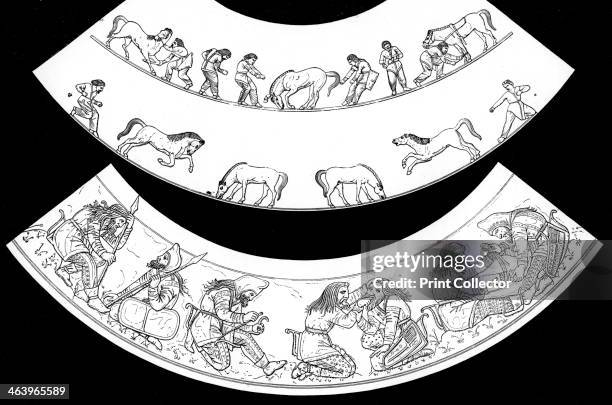
The Scythians (8th century BC to 2nd century AD): Eurasian steppes (modern-day Ukraine, southern Russia, and Central Asia).
Nomadic warriors known for their ferocity and horsemanship. The Scythians were famous for their elaborate tombs and the "Scythian mummification" process. They also practiced ritualized human sacrifice, sometimes using a "blood-drinking" ceremony. Their society was one of raiders, and they even had a reputation for violence, but also rich art and social structures. Their customs included the use of tattoos, and they made extravagant burial mounds for their elite.
The Fall of an Empire: The Battle of Waterloo and Napoleon's Final Defeat
The Battle of Waterloo, fought on June 18, 1815, marked the final confrontation of Napoleon Bonaparte’s rule and the end of the Napoleonic Wars. After escaping from exile on the island of Elba earlier that year, Napoleon returned to France and reasserted his power, which led to the formation of the Seventh Coalition. The coalition was a military alliance composed of Britain, the Netherlands, Prussia, Austria, and several other European powers, all determined to defeat Napoleon and prevent him from re-establishing an empire. Napoleon’s strategy was to strike first, hoping to defeat the allied armies before they could unite and launch a coordinated attack against him. The battle took place near the small village of Waterloo, located in present-day Belgium, and would decide the fate of Europe.
The Fierce Women of the Arena: Ancient Female Gladiators
Female gladiators, or gladiatrices, were rare but captivating figures in Ancient Rome, defying gender norms by participating in brutal arena combat. Active from the reign of Emperor Augustus, these women trained alongside men, using similar weapons and armor. Though their presence was often seen as a novelty, they represented a striking challenge to Roman society’s expectations of femininity. Most notably, Emperor Domitian's reign saw public spectacles featuring female fighters, but by the 4th century CE, the practice was banned. Today, female gladiators continue to fascinate, inspiring depictions in modern media as symbols of strength and defiance.
Star forts (bastion forts) were designed in the 15th–16th centuries to resist cannon fire. They feature angular bastions, low sloped walls, and geometric layouts to maximize defense. Moats and outworks added extra protection against attackers. Originating in Italy, the design spread across Europe and to colonies worldwide. Famous examples include Palmanova (Italy) and Fort McHenry (USA). By the 19th century, advances in artillery made them obsolete. Today, many serve as historical sites and tourist attractions.
Alexander the Great: The Rise, Reign, and Tragic Fall of a Legendary Conqueror
Early Life and Rise to FameAlexander the Great was born in 356 BCE in Pella, the ancient capital of Macedonia, to King Philip II and Queen Olympias. From a young age, he was tutored by the philosopher Aristotle, who instilled in him a love for knowledge and the arts, as well as a passion for conquest. By the age of 20, Alexander ascended to the throne after the assassination of his father in 336 BCE. His early reign was marked by a series of military campaigns to consolidate power, including the defeat of local rebellions and the establishment of Macedonian dominance over Greece.
Conquest and Expansion
Alexander's ambition drove him to embark on an unprecedented military campaign against the Persian Empire. Beginning in 334 BCE, he led his army through Asia Minor, achieving significant victories at battles such as Granicus, Issus, and Gaugamela. His conquests extended through Egypt, where he was hailed as a liberator, and into the heart of Persia, where he established cities that spread Greek culture, known as Hellenization. By the time of his untimely death in 323 BCE, Alexander had created one of the largest empires in history, stretching from Greece to northwestern India.
Challenges and Demise
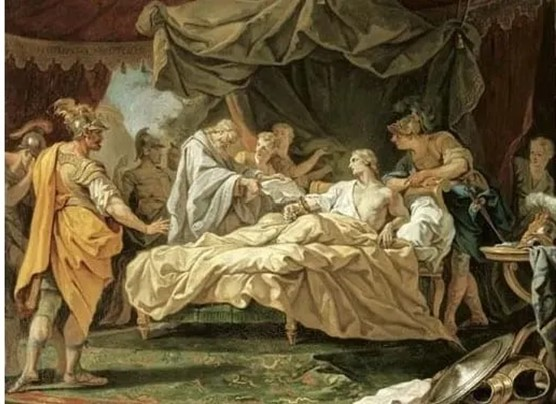
Despite his military genius, Alexander faced numerous challenges, including resistance from conquered peoples and logistical issues in managing such a vast empire. His troops, weary from years of campaigning, ultimately refused to march further into India after the Battle of the Hydaspes in 326 BCE. Returning westward, Alexander struggled with his own health, reportedly succumbing to fever and possibly malaria in Babylon in 323 BCE. His death at the age of 32 left a power vacuum, leading to the fragmentation of his empire and the rise of the Hellenistic period.
MEXICO: The EPIC Origin Story You Never Knew! 🏰
In 1519, a rugged Spanish conquistador named Hernán Cortés sails into the crystal waters of Cozumel, about to change history forever. 🚢 What he discovers isn't just a new land, but a civilization so complex and powerful it would make your history books come alive! The Aztecs, masters of engineering, astronomy, and warrior culture, ruled a breathtaking empire that would soon be transformed forever.
The name "Mexico" isn't just a word - it's a thunderbolt of cultural identity! Rooted in the Nahuatl language, it literally means "place of the Mexica" - those legendary warriors who carved an empire from volcanic landscapes. When Cortés arrived, he didn't just see a territory; he witnessed a civilization so advanced that European kingdoms would be stunned by their architectural and mathematical brilliance. The Aztec capital, Tenochtitlan, was a marvel that would make modern city planners weep with its intricate canal systems and massive pyramids! 🏙️
🔥But here's the mind-blowing twist: Mexico's true birth came in 1821, when independence erupted like a volcanic revolution! 💥 Agustín de Iturbide transformed "New Spain" into the Mexican Empire, reclaiming a name that honored indigenous roots while declaring freedom from colonial chains. This wasn't just a name change - it was a cultural resurrection, a phoenix rising from centuries of conquest. Today's Mexico carries that DNA of resilience, a nation born from the collision of worlds, cultures, and unstoppable human spirit! 🦅🌟#MexicanHistory #History